Best Refrigerant Leak Sealers for Older Cars (2026): we compared
Pick a refrigerant leak sealer only for small, slow leaks in hose O-rings, Schrader valves, or minor aluminum seepage; skip it for compressor, evaporator, or cracked-line failures. Use it on the wrong fault, and it can clog the expansion valve, contaminate recovery gear, and turn a cheap fix into a much bigger AC bill. This guide ranks sealers by failure mode, leak size, and how long an older car needs to stay mobile.
This guide is part of our Car cooling and climate control guide series.
Quick comparison
| Product | Badge | Best for | Price | ||
|---|---|---|---|---|---|
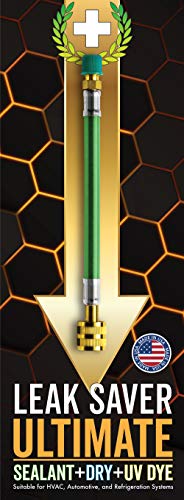 |
Leak Saver Direct Inject Ultimate 3-in-1 | AC RefrigerantLeak Saver | Our pick | 3-in-1 AC Refrigerant Leak Sealer | $46.95
Price as of 29 Sep 2026
|
View |
 |
BlueDevil Products Red Angel Automotive A/C Stop Leak &BlueDevil Products | Also great | Automotive A/C Stop Leak & Conditioner | $32.80
Price as of 29 Sep 2026
|
View |
 |
Blueseal – R134a A/C Stop Leak with UV Dye – 2 oz withblueseal | Budget pick | R134a A/C Stop Leak with UV Dye | $34.99
Price as of 29 Sep 2026
|
View |
 |
Chemours R-1234yf Refrigerant with Leak Stop,12-OunceOpteon | Upgrade pick | R-1234yf Refrigerant with Leak Stop | $59.00
Price as of 29 Sep 2026
|
View |
The right pick depends on what is leaking, not on the label. I’ve seen older cars with a known R-134a system do fine with a true stop-leak formula, while mixed-history R-12 retrofit cars and systems that may already be contaminated call for much more caution.
How we chose
The comparison here is built around four filters: leak size, likely failure mode, system history, and contamination risk. A product that might buy time on a sweating O-ring is a bad idea on an evaporator, a compressor shaft seal, or any system that is nearly empty.
Compatibility matters too. R-134a systems, R-12 retrofit systems, and unknown-conversion cars do not all react the same way to sealants, oil types, and service equipment. The best value is the product that solves the problem without making the next repair harder.

Leak Saver Direct Inject Ultimate 3-in-1: best for small O-ring and hose seepage
This is the strongest all-around choice for an older car that still has refrigerant, still cools somewhat, and is losing charge through small seals or hose seepage. On the spec sheet and in owner reports, the added UV dye and moisture remover make it more useful when the goal is a temporary seal and a better shot at finding the leak later.
The drawback is plain: it is still a sealant product, so it is not a repair for a condenser puncture, evaporator leak, or shaft-seal failure. It also asks you to be more careful about future service equipment contamination than you would be with plain refrigerant alone.
BlueDevil Products Red Angel Automotive A/C Stop Leak & Conditioner: best for very small seepage
This is the right style of product for a system that is only leaking a little and needs time, not a full HVAC rebuild. It fits best when the car is older, the leak is believed to be limited to seals or light aluminum seepage, and the owner wants a stop-gap without adding dye or extra mix-ins.
The honest limitation is reach. When the leak is bigger than seepage, or when the system has an evaporator, compressor shaft seal, or cracked component failure, this type of additive is usually too light-duty to hold the charge for long.
Blueseal R134a A/C Stop Leak with UV Dye: best for finding and slowing a leak
This is the pick when the system still cools enough to diagnose but you need help locating the leak first. The UV dye is the main advantage here; it helps trace O-rings, service valves, hose crimps, and some external seepage points that are hard to see on an older car.
The drawback is that dye is not a cure, and the stop-leak side still carries the same contamination concerns as any sealant. If the system is already nearly empty or has a history of mixed refrigerant service, this is the kind of can that can create more questions than answers.
Opteon R-1234yf Refrigerant with Leak Stop: best for 1234yf cars, not older retrofits
This one is only for vehicles that actually call for R-1234yf. It belongs in the conversation because some newer cars use a self-sealing can format, and the leak-stop approach is aimed at small leaks in hoses and seals, not major hardware damage.
The drawback for the older-car reader is obvious: it is the wrong product for a normal R-134a car and the wrong instinct for many retrofit or unknown-history systems. An older vehicle with unclear refrigerant history is not where a 1234yf-specific can belongs.
What is the best refrigerant leak sealer for an older car?
For a typical older car with a small, slow R-134a leak, Leak Saver Direct Inject Ultimate 3-in-1 is the best balance of sealant, dye, and moisture control. It is the most sensible pick when the leak is likely in an O-ring, hose crimp, or service valve and the goal is to buy time before a real repair.
That does not make it universal. If the system is nearly empty, if the car has an unknown refrigerant history, or if the leak is coming from the evaporator or compressor shaft seal, the better answer is repair, not sealer.
Do AC leak sealers actually work on car air conditioners?
They can work, but only within a narrow lane. On older cars, a sealer may slow a small leak at an O-ring, Schrader valve, or slight hose seepage long enough to keep the system usable for weeks or months, but it will not rebuild a split hose or close a cracked condenser tank.
The big mistake is treating every leak the same. A product that helps a sweating fitting can do nothing for an evaporator core leak hidden in the dash, and it can make future service harder if it coats recovery equipment or the expansion valve.
What sealers can help with
They have the best odds on small external leaks: hose crimps, service ports, low-rate O-ring seepage, and minor aluminum porosity. These are the faults most likely to show a slow oil stain and a gradual loss of cooling rather than a sudden empty system.
What sealers usually cannot fix
Condenser punctures, cracked lines, evaporator leaks, and compressor shaft seal failures are usually beyond stop-leak chemistry. Those failures often move too much refrigerant, too quickly, for a sealant to hold, and the underlying part is already damaged.
Can I use a leak sealer in an older R-134a car?
Yes, sometimes, but only if the system is actually R-134a and the leak is small. Many older cars were converted from R-12 to R-134a, and that matters because retrofit systems may have mixed seals, mixed oils, and unknown service history that make any additive a riskier choice.
If the car cools weakly but not zero, and the leak appears to be a small external seep rather than a hardware failure, a sealer can be a temporary option. If the system has been repeatedly topped off, the chance of contamination and poor long-term results rises fast.
R-134a systems versus R-12 retrofit systems
Factory R-134a systems are at least predictable in refrigerant and oil type. R-12 retrofits can be messier: ester oil, PAG oil, legacy seals, and old component swaps may all be in the same car, which makes sealant compatibility less certain and later repairs more complicated.
Compressor oil and sealant interaction
PAG oil is common in R-134a systems, while ester oil shows up often in retrofits. Sealants that react with moisture or cure in the presence of air can be a problem if the system is contaminated, and a clogged expansion valve or orifice tube is a very real repair bill.
Will a refrigerant sealant damage my compressor or recovery machine?
It can. The risk is not that every can ruins a system, but that some sealants are designed to harden when exposed to moisture or air, which is exactly the kind of chemistry that can foul gauges, recovery machines, service ports, and small passages in the HVAC circuit.
That is why professional shops dislike mystery cans in unknown systems. If the car may later need a real evacuation and recharge, or if the system is already contaminated, sealant can turn a simple service into extra cleanup time.
Why receiver-driers and accumulators matter
Receiver-driers and accumulators are moisture-sensitive parts. If a system has been open, very low on charge, or repaired with the wrong parts before, those components often need replacement during the real fix, not just a recharge and another additive can.
Why future repairs get harder
Even a small amount of stop-leak residue can complicate refrigerant recovery and diagnosis. A technician can still repair a contaminated system, but it often takes more flushing, more time, and more caution with the recovery machine than a clean system would require.
How long does AC leak sealer last in a car?
Usually it is a temporary fix, not a permanent one. On a slow O-ring or service-valve leak, it may hold long enough to stretch a season or more, but on a larger fault or a system that already needs frequent recharges, the benefit can fade quickly.
The practical rule is this: if the car needs another can every few weeks or the cooling drops off again fast, the leak is too large for sealer. At that point, the car is telling you the real repair is overdue.
What is the difference between stop leak and UV dye?
Stop leak tries to seal a small escape path. UV dye does not seal anything; it simply makes refrigerant oil visible under UV light so the leak can be found later. Many consumer cans combine the two, but the jobs are still different.
If the goal is diagnosis first, dye is the cleaner choice. If the system is already poorly charged, empty, or contaminated, adding more chemistry just to find the leak can be wasteful when a proper leak test would be smarter.
When dye is the better choice
Use dye when the leak is suspected but not obvious, especially on condensers, hose crimps, service valves, and slow external seepage. Dye can save time during inspection because the leak path often shows up after a drive cycle or two.
When dye-plus-sealer is still a compromise
A dye-plus-sealer can make sense when the car needs both temporary cooling and a clue about where the loss is happening. It is still not a fix for an empty system, an evaporator leak, or a car that needs long-term HVAC reliability.
Is leak sealer worth it for a small AC leak in an older car?
Sometimes yes. If the car is worth keeping on the road for another season, the leak is minor, and the fault is probably in a seal or hose crimp, a sealer can be a cheap bridge to a later repair. That is the narrow case where it earns its keep.
If the car is a daily driver with a slowly worsening leak, sealer is only worth it if the owner accepts the risk of future contamination and treats it as a short-term workaround. If the leak is hidden in the evaporator or compressor, the money is better spent on parts.
Practical buy/no-buy threshold
- Buy if the system still cools, the leak is slow, and the likely fault is an O-ring, Schrader valve, or mild hose seepage.
- Maybe buy if the car has a known R-134a system and just needs one more season before a planned repair.
- Do not buy if the system is nearly empty, has unknown refrigerant history, or has a condenser, evaporator, or shaft-seal failure.
What signs mean my car AC leak is too big for sealer?
If the system loses cooling quickly after every recharge, if oil residue is visible at a joint or component seam, or if the air stops getting cold within days or weeks, the leak is too large for a can. Big leaks need diagnosis, parts, and proper evacuation service, not another additive.
Other red flags include a system that is empty, noisy, contaminated by previous stop-leak use, or built from a questionable R-12 conversion. In those cases, a sealer is more likely to mask the problem than solve it.
Failure-mode decision table: when to use sealer and when to repair
| Leak point | Sealer fit | Why | What to do instead when it is not enough |
|---|---|---|---|
| O-ring | Appropriate for small seepage | Common age-related leak, often slow and external | Replace the O-ring and evacuate/recharge |
| Hose crimp | Marginal | Minor seepage may slow, but a failing crimp usually worsens | Replace the hose assembly |
| Service valve / Schrader | Appropriate to marginal | Can help if the leak is very slow and external | Replace the valve core or service port parts |
| Condenser | Marginal to bad idea | Small porosity may slow, but punctures and cracks usually need parts | Replace the condenser |
| Evaporator | Bad idea | Usually hidden, often not a small external seep | Replace the evaporator |
| Compressor shaft seal | Bad idea to marginal | Often worsens with age and heat; sealants rarely last | Repair or replace the compressor |
Quick checklist for signs the system needs real repair instead
- The air goes warm again within days or a few weeks.
- There is visible oily residue around a fitting, tank, or hose end.
- The system is almost or completely empty.
- The car has an unknown R-12 retrofit history.
- A previous shop already found contamination or sealant residue.
- The leak appears to be in the evaporator or compressor.
Which one should you buy?
If the car is worth keeping and the leak is small, buy Leak Saver Direct Inject Ultimate 3-in-1. It has the best balance of sealant, dye, and moisture control for an older R-134a system that still has some life left.
If the goal is the cheapest temporary fix and the leak is clearly tiny, BlueDevil Red Angel A/C Stop Leak & Conditioner is the simpler play. If you first need to locate the leak, Blueseal R134a A/C Stop Leak with UV Dye is the better diagnostic aid, though not a cure.
Skip sealers entirely if the system is empty, the leak is large, or the car has a mixed-history retrofit that may already be contaminated. At that point, the money belongs in diagnosis and parts, not another can.
One-line note on can-style recharge kits
Can-style refrigerant recharge kits are fine for topping up a known-safe, small-loss system, but they do not fix the leak and can lead to overcharging if used without a pressure check and a clear diagnosis.
Products related to this article
Sponsored / affiliate links. As an Amazon Associate I earn from qualifying purchases. I may earn additional commission from eligible campaigns.