Best OBD2 Scanners for HVAC Codes (2026): research shows
The best OBD2 scanner for HVAC trouble codes is one with OEM live data, bi-directional controls, and access to the climate-control module; basic code readers only help with engine-side faults. Miss that, and you can swap actuators, sensors, or panels on guesswork and burn real money. This guide matches scanner features to HVAC failures, from electrical faults and stuck actuators to sensor drift and module-level problems.
This guide is part of our Car cooling and climate control guide series.
Quick comparison
| Product | Badge | Best for | Price | ||
|---|---|---|---|---|---|
 |
ANCEL AD410 Enhanced OBD2 Scanner, Vehicle Code Reader forANCEL | Budget pick | Basic OBD2 code reader | $38.96
Price as of 28 Sep 2026
|
View |
 |
Autel Obd2 Scanner Diagnostic Tool MaxiCOM MK808Z: 2026Autel | Our pick | All-system bidirectional scan tool | $479.00
Price as of 28 Sep 2026
|
View |
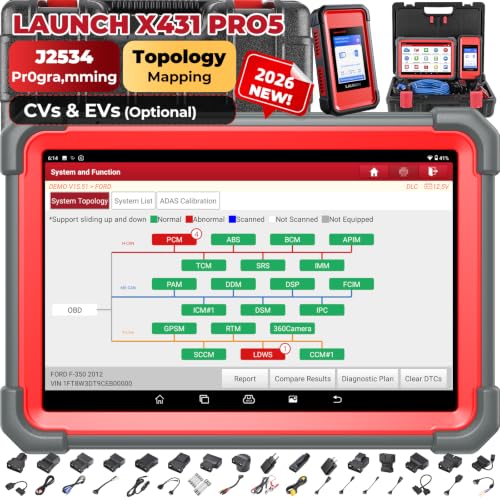 |
Launch X431 Scanner PRO5 J2534 Pr0gram ECU Coding,LAUNCH | Upgrade pick | Pro ECU coding scanner | $1,499.00
Price as of 28 Sep 2026
|
View |
 |
FOXWELL NT510 Elite OBD2 Scanner fit for Porsche DiagnosticFOXWELL | Also great | Porsche-specific diagnostic tool | $161.49
Price as of 28 Sep 2026
|
View |
HVAC diagnosis starts with the failure mode. A cheap reader can be enough for a stored code, while actuator tests and module faults need higher-tier tools with live data or bi-directional control.
How we chose
The shortlist focuses on four points: HVAC diagnosis depth, live data and freeze-frame support, multi-system coverage, and value for DIY troubleshooting. That keeps the pick matched to the fault, not to the biggest feature count on the box.
We also weighed whether the tool can help beyond engine codes. For climate-control work, ABS and SRS coverage can matter because many mid-tier scanners bundle those systems, and service resets matter only when the repair calls for a relearn or related reset.
Compatibility limits matter too. HVAC faults may sit in engine, body, HVAC-adjacent, ABS, SRS, or transmission modules, and some enhanced features vary by make, model, and year.
Failure mode to tool matrix
| HVAC symptom or failure mode | Scanner capability that fits | What the scanner can tell you | When manual testing is still required | Short recommendation |
|---|---|---|---|---|
| No blower, dead display, odd fan speed behavior | Basic OBD2 or live data | Stored DTCs, freeze frame, battery or charging clues, some body-module data on better tools | Fuse checks, relay checks, power and ground testing | Start with a basic reader if a code is already stored; move up only if the fault is intermittent. |
| Weak heat, weak cooling, inconsistent vent temperature | Live data | Coolant temperature, RPM, sensor graphs, and related data that can expose sensor drift or electrical faults | Thermostat testing, refrigerant pressure checks, actuator sweep checks | Choose a scanner with live data; this is often the least expensive feature that still adds real diagnostic value. |
| Stuck hot/cold mix, vent always defrost, mode door acts wrong | Enhanced diagnostics or bi-directional support | Module access, actuator commands, calibration or relearn requests on supported vehicles | Physical blend-door inspection, actuator removal, HVAC case inspection | Do not buy a basic reader for this job; command support is the useful feature. |
| HVAC warning lights with ABS, SRS, or transmission complaints | Multi-system diagnostics | Cross-system codes that may point to shared power, communication, or module issues | Wiring inspection, battery and charging tests, network checks | Mid-tier scanners are worth it when the fault spans more than one system. |
| Repeated repair with no stored HVAC code | Bi-directional support and enhanced diagnostics | Actuator tests, module commands, and deeper manufacturer-specific data | Hands-on component testing remains necessary | Buy up only if the symptom is active but the fault is not being stored clearly. |
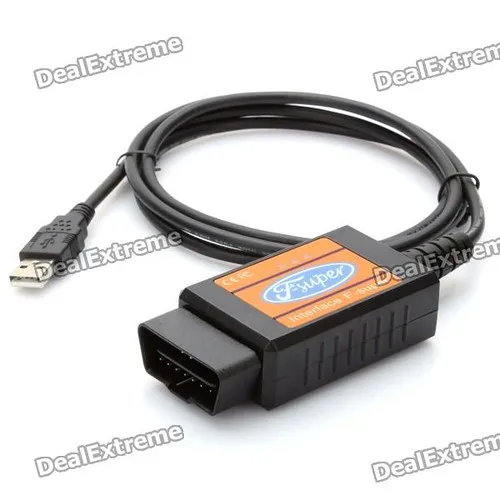
ANCEL AD410: best for a cheap first pass
The ANCEL AD410 is the right starting point for DIY owners who need to read a climate-related fault code without paying for a full scan tool. It reads and clears engine codes, shows basic live engine data, and its 42,000+ built-in DTC lookups help turn a code into a workable starting point.
For HVAC-related troubleshooting, that makes sense when the problem is indirect: a cooling-system fault, a power issue, or an EVAP-related condition that is affecting climate performance. It also offers I/M readiness plus O2 and EVAP tests, which helps when the concern overlaps with emissions or a check-engine light.
The drawback is clear. It is a basic OBD2 code reader, so it usually cannot command actuators, access manufacturer-specific HVAC data, or separate a blend-door problem from a panel-control failure. If the complaint is a stuck vent or mixed-up temperature control with no engine code, this tier may stop too early.
FOXWELL NT510 Elite: best for brand-specific actuator testing
This FOXWELL makes sense for drivers who own a Porsche and want deeper control than a generic reader can offer. Its bi-directional control and over 25 Porsche-specific reset services put it in the zone where HVAC actuator testing, relearns, and other component commands can matter.
That is the useful part for climate-control diagnosis. A stuck blend door, a vent mode issue, or a module that needs a command test can require more than reading codes. A bi-directional scanner can send requests that a basic reader simply cannot.
The drawback is scope. It is Porsche-specific, so it is a poor fit for mixed-vehicle DIY use. It also makes less sense if the only problem is a stored code that a cheaper reader can already display.
What OBD2 scanner can read HVAC trouble codes?
An OBD2 scanner can read HVAC trouble codes only when the vehicle stores them in a module the tool can access, such as engine, body, HVAC-adjacent, ABS, SRS, or transmission systems. Basic readers catch only a slice of that, while enhanced scanners can reach far more vehicle-specific data.
That split matters. A climate complaint with a code stored in the engine module may be easy to see with an entry-level reader. A manufacturer-specific HVAC fault in the body or climate module usually needs enhanced diagnostics, and some faults never appear as a simple generic code at all.
Best fit by diagnosis depth
- Basic code reading: Good for stored engine-side faults that affect HVAC indirectly.
- Live data: Useful when sensor drift, coolant temperature, or RPM behavior needs to be checked against the complaint.
- Enhanced diagnostics: Better when the fault lives in a body, HVAC, ABS, SRS, or transmission module.
- Bi-directional support: Best when the job requires actuator commands or relearn procedures.
Do I need a bidirectional scanner for car HVAC problems?
Not always. A bidirectional scanner is worth the money when the fault involves an actuator, a mode-door command, a calibration issue, or a module that needs to be told to move. For simple stored codes or obvious power-loss faults, a cheaper scanner is usually enough.
That is why overbuying is common. Many HVAC complaints begin as electrical or sensor issues, and those can often be narrowed down with code reading and live data. Buy bidirectional support when the symptom points to a part that must be commanded, not merely read.
When bi-directional control pays for itself
- Intermittent vent-position faults that need actuator command testing.
- Blend-door problems where the motor may move under command but still fail in normal operation.
- Calibration or relearn work after a battery disconnect or component replacement.
- Cases where the HVAC module stores no obvious generic code.
Can OBD2 scanners reset HVAC-related warning lights?
Sometimes, but only if the warning light is tied to a system the scanner can access and the vehicle allows that reset. Many tools clear stored codes, but that is different from a service reset or a module relearn, and HVAC lights often need more than a simple erase.
Service reset functions are secondary for HVAC diagnosis. Oil reset, EPB, SAS calibration, throttle relearn, and ABS bleeding help in certain repair chains, but they are not the main reason to buy a scanner for climate-control troubleshooting. XTOOL D5S, for example, offers 16 reset functions and adds CAN FD plus FCA AutoAuth support, which matters more on newer or protected vehicles than on a simple HVAC code read.
Which scanner has live data for HVAC diagnosis?
Live data matters because many HVAC complaints are really sensor or signal problems. A scanner that graphs coolant temperature, RPM, and related inputs can show whether the climate issue is being driven by an electrical fault, a drifting sensor, or another system that is changing how the car behaves.
That is why live data belongs near the top of the shopping list, not the bottom. BlueDriver supports live data streaming and freeze-frame analysis, which helps when the issue is intermittent. It also provides technician-verified repair reports matched to the vehicle VIN, but those reports do not replace live data or hands-on checks.
Why live data beats guesswork
- It shows whether coolant temperature is plausible.
- It can expose erratic RPM or sensor readings during the fault.
- It helps separate an electrical issue from a mechanical one.
- It gives context before parts are replaced.
BlueDriver: best for Bluetooth diagnostics and repair reports
BlueDriver fits DIY owners who want phone-based scanning with stronger-than-basic fault insight. It pairs Bluetooth convenience with live data streaming, freeze-frame analysis, and technician-verified repair reports matched to the vehicle VIN, which can shorten the first pass at HVAC diagnosis.
For climate-control work, that mix helps when the complaint looks electrical or sensor-based and the owner wants a fast way to inspect data without carrying a handheld unit. No subscription fees also keep ownership simple over time.
The drawback is that repair reports are not a substitute for component testing, and enhanced diagnostics still depend on vehicle support. It is a strong middle-ground choice, but it is not the tool for commanding every actuator or tackling deeper module work on every make.
What is the best scanner for ABS, SRS, and HVAC-related faults?
The best scanner in that category is usually a mid-tier multi-system tool, because climate complaints often overlap with shared power, communication, or module issues. ABS and SRS coverage matters when the HVAC symptom appears alongside other warning lights or when a body-network fault is suspected.
FOXWELL NT604 Elite fits that need well as a 5-in-1 scanner with Engine, ABS, SRS, and Transmission coverage, plus live data and a DTC library. The limitation is that it does not offer full maintenance resets, so it is better as a diagnosis tool than as a do-everything service tool.
FOXWELL NT604 Elite: best for multi-system coverage
This scanner is for the DIY owner who wants more than engine codes but does not need a full pro-level tablet. Its 5-in-1 positioning, live data, and DTC library make it useful when HVAC symptoms sit beside ABS, SRS, transmission, or engine faults.
That matters for diagnosis because climate-control issues sometimes share a root cause with another system. A voltage problem, communication fault, or module issue may show up outside the HVAC screen, and a tool with broader coverage is more likely to catch it.
The drawback is the missing maintenance depth. It is not the right pick if the repair path needs regular service resets, actuator commands, or deeper bidirectional testing. It is a smart mid-tier reader, not a full active-test platform.
Can an OBD2 scanner diagnose blend door actuator issues?
Sometimes, but only if the scanner can go beyond generic codes. Blend-door actuator problems often need live data, enhanced module access, or bi-directional control to confirm whether the actuator is receiving commands, moving correctly, or failing under load.
A basic reader can miss the problem entirely. If the actuator motor is stuck, stripped, miscalibrated, or being blocked by a door inside the HVAC case, code reading alone may not identify the culprit. That is where command tests and manual inspection still matter.
Will a basic code reader work for climate control problems?
A basic code reader works for some climate-control problems, but not all of them. It is fine for stored engine-side faults, some emissions-related issues, and a quick check of readiness or freeze frame on supported tools, but it usually stops short of actuator tests and module-specific HVAC data.
That makes it a budget-friendly first pass, not a complete answer. The ANCEL AD410 is the clearest example in this group: good for basic code reading, lookup support, readiness, and simple tests, but not the right tool for deep climate-control diagnosis.
Are Bluetooth scanners good for HVAC troubleshooting?
Bluetooth scanners are good for HVAC troubleshooting when convenience matters and the problem needs live data more than heavy service functions. They work well for quick checks, freeze-frame review, and basic data review on a phone, especially when the fault is intermittent.
The tradeoff is depth. App-based tools can be quick, but some wired handheld scanners offer broader system access, better on-tool navigation, and fewer compatibility surprises. For DIY owners who only need a first-pass diagnosis, Bluetooth can be enough; for actuator commands or expanded module coverage, a wired tool is often the safer choice.
What scanner is best for DIY car AC diagnostics?
The best scanner for DIY car AC diagnostics is the one that matches the fault, not the one with the biggest feature list. For a cheap first pass, use a basic code reader. For mixed electrical or module faults, choose a mid-tier scanner with live data and multi-system coverage. For actuator work, buy bi-directional control.
XTOOL D5S sits higher on the ladder with full OBD2 diagnostics, 16 reset functions, CAN FD support, and FCA AutoAuth support, so it fits owners who regularly face newer vehicle platforms or more complex repairs. The downside is cost and complexity, which is easy to justify only when the work calls for it.
Which one should you buy?
Choose the cheapest tool that can answer the fault mode in front of you. If the car has a simple stored code and you only need to confirm whether the climate issue is indirect, an entry-level reader is enough. If the complaint crosses modules or needs live data, step up one tier.
Best choice for a cheap first pass: ANCEL AD410. It is the right fit when you want code reading, DTC lookups, readiness checks, and basic tests without paying for unused functions.
Best choice for mixed electrical and module faults: FOXWELL NT604 Elite. It adds broader system coverage, live data, and useful HVAC-adjacent visibility without jumping to a pro-level budget.
Best choice for actuator testing and deeper diagnosis: FOXWELL NT510 Elite or XTOOL D5S, depending on vehicle mix. Use the FOXWELL for Porsche-specific work; choose the XTOOL when resets, CAN FD support, and broader diagnostics matter more.
Best choice if you also work on ABS and SRS: FOXWELL NT604 Elite is the practical mid-tier pick, while XTOOL D5S makes more sense when you want resets and newer-vehicle support too.
BlueDriver belongs on the shortlist for Bluetooth-first buyers who want live data, freeze-frame review, and VIN-matched repair reports. It is a smart value pick when the HVAC issue looks like a sensor or electrical fault and you do not need a heavy handheld.
For pure climate-control diagnosis, avoid paying for service resets or all-system features you will not use. The right scanner is the one that gets you from symptom to testable fault with the fewest wasted steps.
Products related to this article
Sponsored / affiliate links. As an Amazon Associate I earn from qualifying purchases. I may earn additional commission from eligible campaigns.