Bissell Little Green Car Cleaner Review: Is It Worth It?
The Bissell Little Green is a compact extractor for seats, mats, and pet spots, but it is best for targeted cleanup, not whole-car detailing, because the hose, tank, and drying time slow the job down. Pick the wrong model and you can burn time, buy too much solution, and still leave moisture or stain rings behind. This review covers car use, hose reach, tank size, cleaning power, newer Little Green variants, and ownership costs.
Verdict on the Little Green


The Little Green makes sense if your main job is spot-cleaning car interiors. It sprays solution, agitates with the 3-inch tough-stain tool, then pulls dirty water into a separate tank. That setup fits seats, floor mats, and small carpeted areas. It is weaker for large dirty jobs that need repeated refills and longer drying time.
For a commuter sedan with the occasional coffee drip, muddy shoe mark, or pet mess on one rear seat, the Little Green is easy to justify. For a full cabin reset after months of buildup, a larger extractor saves time and usually leaves less back-and-forth.
Best use cases for car interiors
The Little Green fits the cleanup most owners face: a spill on one seat, tracked-in dirt on one mat, or a wet pet mark in the cargo area. Bob Vila describes it as able to clean upholstery and automobile interiors, and Clean Home Picks specifically calls out car seats and interior carpet. That matches how a compact extractor earns its keep.
Where it falls short on tougher jobs
It is weaker on grease, dyed spills, embedded sand, headliners, and old salt stains. Those jobs often need pre-treatment, several passes, and more drying time than a small portable machine can handle well. Set-in stains can improve, but some spots need repeated treatment or a larger extractor with more suction and a wider tool.
Value for the price
The Little Green is often priced at around or under $150, which can make it accessible for car owners who do not want a pro extractor. That said, ownership cost is not only the machine. Formula refills, occasional extra rinsing, and the time spent drying a seat all matter. If you clean interiors often, a Pet Pro or Max Pet bundle may be the smarter buy.
How it works in a car
The Little Green is a spray-and-suction machine with two water reservoirs, one clean and one dirty. You wet the stain with formula and water, work it with the tool, then extract the loosened soil and liquid into the dirty tank. That basic loop is why it works well on car fabric, but not as a replacement for a vacuum.
Why pre-vacuuming matters
Dry debris gets in the way fast. Sand, crumbs, grit, and pet hair block the fabric surface and make the extractor chase loose debris instead of the stain itself. Vacuum first, especially around seat seams and carpet edges. That step shortens cleanup time and reduces the chance of turning grit into muddy slurry.
What the 48-ounce tank means in practice
Taste of Home lists a 48-ounce dirty tank capacity, and that size is fine for a single seat or a small spill area. It is not enough for a big sedan detail without refills. On a typical car job, one fill may cover a front seat and part of a rear cushion, but larger messes usually need at least one refill and sometimes more.
The 15-foot power cord is the other real limit. It works inside a garage, but many driveways and larger vehicles will need an extension cord to reach both sides of the car. The cord does not make the machine hard to use. It just keeps the workflow tied to where power is available.
Use it in three stages: prep, extract, and dry. The machine works best if you remove loose dirt first, lightly wet the spot, and make several controlled passes rather than flooding the fabric. That method keeps moisture down and gives the suction a better chance to pull out stain residue.
Prep the seat or carpet
Start by vacuuming the area thoroughly. Remove floor mats if you can, then shake out loose grit. If the stain is old or greasy, blot first and apply a small amount of the correct Bissell formula to the spot. Avoid soaking headliners or delicate trim. The Little Green is made for targeted extraction, not wetting every surface around the stain.
Apply solution and extract
Fill the clean tank with water and the recommended formula. Bissell cleaning formula options often include trial-size or bundled solution, and common choices include Febreze Freshness, Pet Formula, Pro Oxy, and PET PRO OXY. The right formula depends on the mess: odor control for pet spots, oxygen-based cleaning for organic stains, and a general formula for mixed interior dirt.
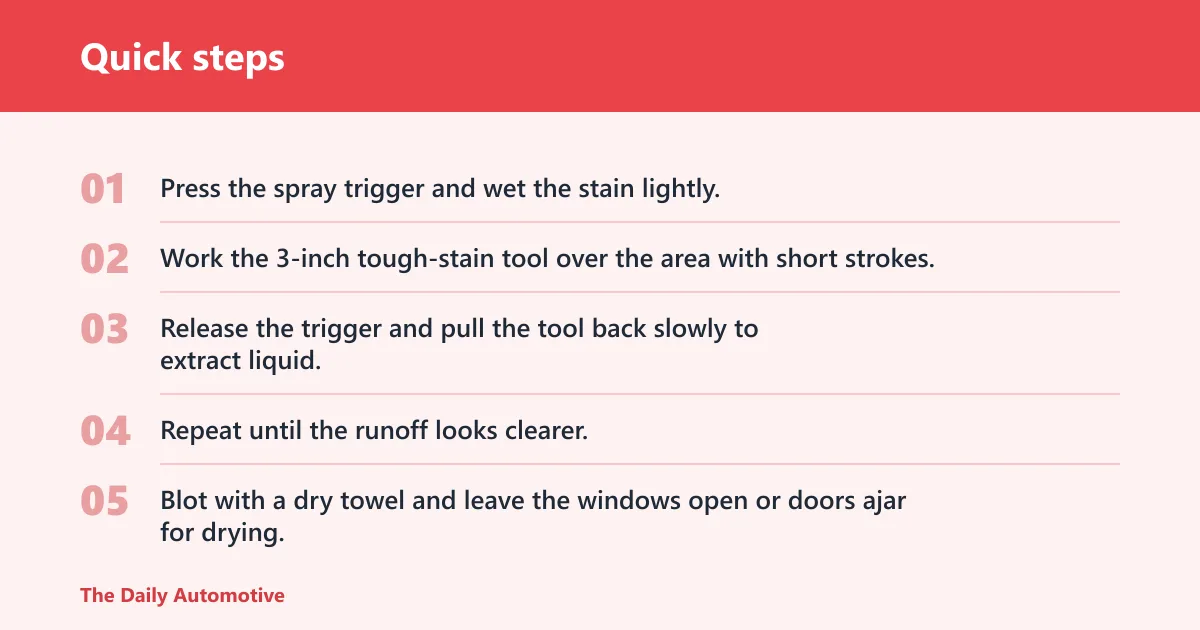
- Press the spray trigger and wet the stain lightly.
- Work the 3-inch tough-stain tool over the area with short strokes.
- Release the trigger and pull the tool back slowly to extract liquid.
- Repeat until the runoff looks clearer.
- Blot with a dry towel and leave the windows open or doors ajar for drying.
The 3-inch tough-stain tool matters because the scrubbing brushes help lift spots on seat fabric and in seams. It is small enough to control, which is exactly what you want near bolsters, stitched panels, and tight corners.
Repeat passes and dry the area
Do not chase a stain with one heavy soak. Two or three lighter passes work better than one drenched pass. A common first-timer mistake is over-wetting a seat and then wondering why it takes all day to dry. The Little Green can remove a lot of soil, but drying still depends on airflow and restraint with the spray trigger.
Car cleaner decision table
This table gives a practical use-case answer. It assumes a vacuum first, then extraction. If the stain covers more than a few square feet, or if the car has multiple problem areas, step up to a larger extractor instead of trying to solve everything with repeated refills.
| Use case | Prep | Tool | Formula | Pass count | Little Green enough? |
|---|---|---|---|---|---|
| Fresh drink spill | Blot immediately, vacuum crumbs or ice | 3-inch tough-stain tool | General Bissell formula or Pro Oxy | 1 to 2 wet passes, 1 dry pass | Yes |
| Muddy seat | Let mud dry, vacuum loose dirt first | 3-inch tough-stain tool | Pet Formula or general cleaning formula | 2 to 4 passes after pre-vacuuming | Usually yes, if the mud is isolated |
| Pet mess | Remove hair and solids, pre-vacuum edges | 3-inch tough-stain tool, HydroRinse after | PET PRO OXY or Pet Formula | 2 to 3 wet passes, then rinse pass | Yes for spots; larger areas may need a bigger model |
| Set-in stain | Pre-treat and wait, then vacuum residue | 3-inch tough-stain tool | Pro Oxy or PET PRO OXY | 3 to 5 passes, often with refills | Sometimes; a larger extractor may be better |
Is the Bissell Little Green good for car seats?
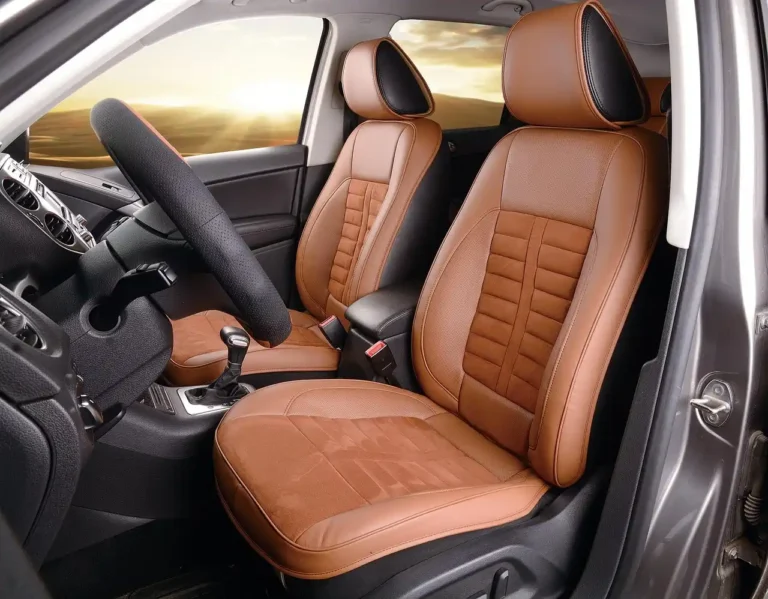
Yes, for cloth car seats and spot cleanup it is a good fit. It can handle fresh spills, muddy spots, and pet accidents on fabric seats without the bulk of a full-size extractor. It is less ideal for leather, heavily textured trim, or any area where too much moisture can linger and cause trouble.
Cloth seats
Cloth seats are the Little Green’s best match. The spray-and-suction setup works well on woven fabric, stitched bolsters, and seat cushions with light to moderate staining. It is also easy to aim the 3-inch tool into seams where spills tend to collect. For wide seat sections, plan on several overlapping passes.
Floor mats and carpet
Floor mats and carpet are also fair targets, especially if the problem is local and not deeply packed into the backing. The machine can refresh a front mat, a rear footwell, or a cargo spot. If the carpet is covered in embedded sand or salt, vacuuming becomes even more important before any wet pass.
Headliners and delicate trim
Headliners are the wrong place to be aggressive. They can sag if oversaturated, and delicate trim can trap moisture. Use a light touch and minimal spray, or skip the extractor and use a safer detailing method if the area is small and fragile. The Little Green is a spot cleaner first, not a general-purpose wetting tool.
Pros and cons
For car owners, the Little Green earns points for being compact, easy to carry, and able to handle the messes that matter most. But it is also limited by hose reach, tank size, and the fact that cleaning cars well still takes time and airflow.
Pros
- Compact and portable enough to carry to a driveway or garage.
- Works on car interiors, upholstery, carpets, and rugs.
- The 3-inch tough-stain tool is useful for spots and seams.
- Two reservoirs keep clean and dirty water separate.
- Included trial-size or bundled formula can get you started quickly.
Cons
- The 15-foot power cord can be short for vehicle work without an extension cord.
- The 48-ounce tank means refills on bigger jobs.
- It is loud; Bob Vila reports about 76 decibels.
- It is not a vacuum for dry debris or pet hair.
- Set-in stains, grease, and salt marks may need repeated passes or a larger extractor.
Size matters here too. Taste of Home lists the Little Green at 10 pounds, which keeps it easy to move between the house, garage, and vehicle. That is light enough to store on a shelf, but the portability only helps if you also have power and a place to dry the work area afterward.
Suppose a rear seat has a half-cup coffee spill and a few crumbs. The Little Green can handle that well with one pre-vacuum, a small amount of formula, and a couple of extraction passes. Change one variable, add dried-in mud across half the cushion. The same machine still works, but the refill count and drying time rise fast.
Which Little Green model should you buy?
Buy the standard Little Green if you want a general car spot cleaner and do not expect frequent pet cleanup. Move to the Little Green Max Pet or Little Green Pet Pro if pet messes are common and you want the newer hose and pet-focused tools. Those newer versions are better choices when car use overlaps with home pet cleanup.
Standard little green
The base model is the best fit for a car owner who mostly wants to clean occasional stains, food spills, and dirt on seats or mats. It is compact, usually below $150, and covers the core job without extra pet hardware you may never use. For many drivers, that is enough.
Little Green Max Pet
Taste of Home says the Little Green Max Pet is a newer version with a slightly longer hose and specialized pet hair removal tools. It is aimed at pet owners who need more than spot extraction. Around $150, it makes sense if your vehicle sees regular dog hair, muddy paws, and odor-prone messes.
Little Green Pet Pro
The Little Green Pet Pro is the step-up choice for homes where pet cleanup happens often. Taste of Home also lists it as a newer version with a slightly longer hose and specialized pet tools. If your car is often the transport zone for pets, this version is easier to justify than buying the base model and wishing for more reach.
Cleaning the machine after use matters because leftover moisture, dirty water, and hair can cause odor and clog the hose. The good news is that the process is straightforward. Flush the hose, rinse both tanks, and let every wet part dry fully before storing it.
Flush the hose
If your bundle includes the HydroRinse hose tool, use it at the end of a job. It helps flush debris out of the hose, which matters after pet messes, cloudy runoff, or formula-heavy cleaning. If your model does not include it, run clean water through the hose and tool until the water comes out clearer.
Clean the tanks
Empty the dirty tank right away. Rinse both tanks with warm water, then let them air-dry with the lids open if the design allows. This prevents lingering odor and helps keep residue from building up. The clean tank should not be left with formula sitting in it overnight if you can avoid that.
Prevent odor and mildew
After flushing, leave the hose, tool, and tanks separated so air can circulate. Wipe down the exterior, clear trapped hair from the brushes, and make sure the machine is fully dry before storage. That simple routine keeps the next job from starting with stale smell or sticky residue.
Frequently asked questions
What’s the difference between Little Green and Little Green Max pet?
The Little Green Max Pet is the more pet-focused version. Taste of Home says it has a slightly longer hose and specialized pet hair removal tools, while the base Little Green is the simpler general-use option. If your car cleaning is mostly pet-related, the Max Pet is easier to justify.
Can the Bissell Little Green remove set-in stains?
It can improve many set-in stains, but not all of them disappear cleanly. The key is pre-treating, using the right formula, and making several passes with patience. Old grease, dyed spills, and salt stains may need repeat work or a larger extractor with more capacity and suction.
Is the Bissell Little Green worth it for pet hair and car interiors?
Yes, if you want a portable spot-cleaner rather than a vacuum replacement. It is useful for pet messes, wet cleanup, and interior stains, but it does not remove dry hair well on its own. For pet-heavy households, the Max Pet or Pet Pro versions make more sense than the base model.
Products related to this article
Sponsored / affiliate links. As an Amazon Associate I earn from qualifying purchases. I may earn additional commission from eligible campaigns.