Can Executor Drive Deceased Car: Essential Guide
Yes, an executor can often drive a deceased person’s car, but only after legally taking control of the estate and with proper insurance. This guide explains the steps and considerations to ensure you’re driving legally and safely.
Losing a loved one is tough, and dealing with their possessions can add to the stress. One question that often comes up is about their car: can the executor drive it? It’s a common concern, and you’re not alone if you’re wondering about the rules. You want to do the right thing, but the details can feel confusing. This guide is here to help! We’ll walk you through everything you need to know, step-by-step, so you can handle this with confidence. Let’s make this process as smooth as possible.
Understanding the Executor’s Role with a Vehicle
When someone passes away, their assets, including their car, become part of their estate. The executor is the person named in the will to manage this estate. This means they are responsible for handling the deceased’s property, paying debts, and distributing assets to the beneficiaries. For a car, this involves understanding its legal status, ensuring it’s properly cared for, and deciding its future – whether that’s selling it, keeping it, or using it temporarily.
Key Responsibilities of an Executor
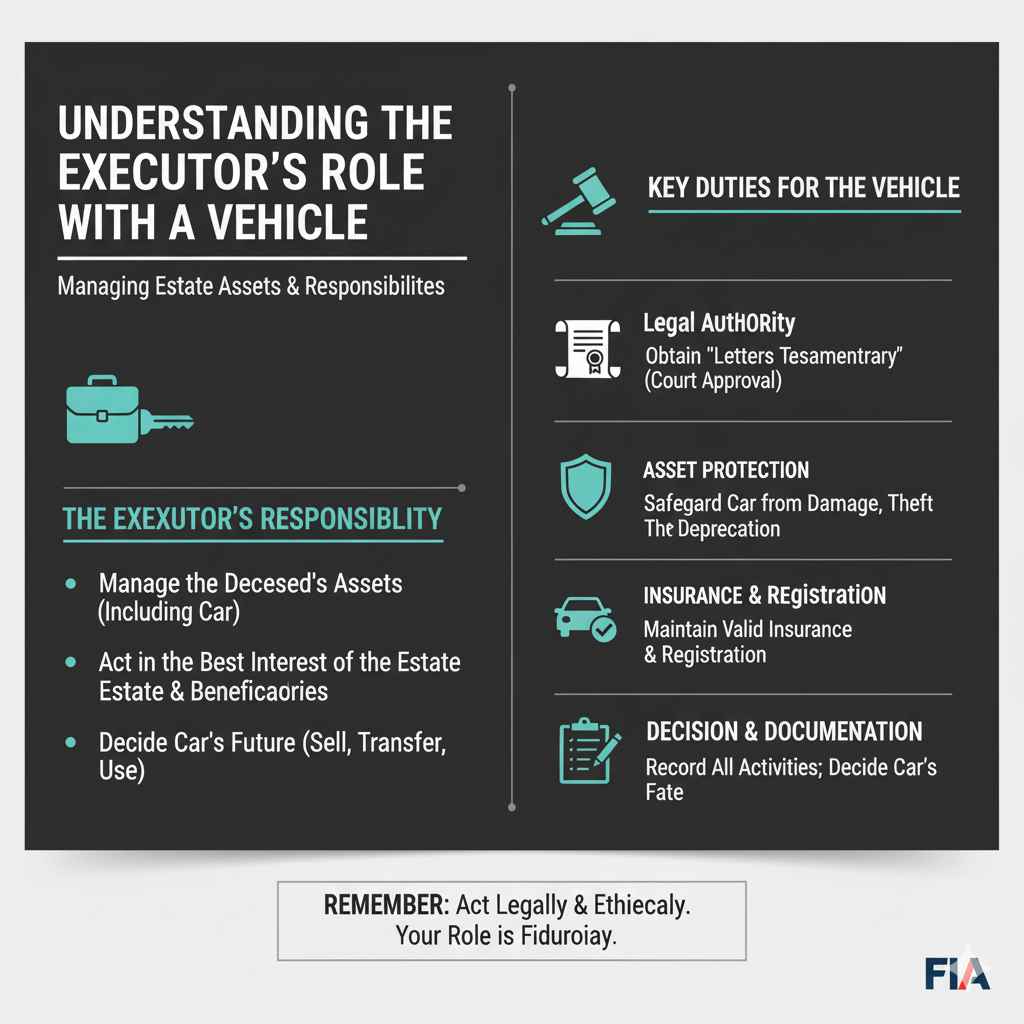
As an executor, your primary duty is to act in the best interest of the estate and its beneficiaries. This involves several key responsibilities:
- Legal Authority: You can only act once you have official court approval (Letters Testamentary or similar document, depending on your location).
- Asset Protection: You must protect the car from damage, theft, or depreciation.
- Insurance and Registration: Ensure the car is properly insured and any necessary registrations are maintained.
- Decision Making: Decide whether to sell the car, transfer ownership, or use it.
- Documentation: Keep detailed records of all activities related to the car.
Before You Get Behind the Wheel: Legal and Insurance First
It’s crucial to understand that you can’t just hop in the deceased’s car and start driving as if it were your own. There are important legal and insurance steps to take first. Driving a car that is still registered in the deceased’s name, without proper authorization and insurance, can lead to serious trouble, including fines, legal issues, and denial of claims if an accident occurs.
Step 1: Obtain Legal Authority
The very first thing any executor needs is official authority to act on behalf of the estate. This usually means going through probate court. The court will issue documents, often called Letters Testamentary or Letters of Administration, which formally recognize you as the executor.
Until you have these official documents, you are not legally empowered to make decisions or take possession of the deceased’s assets, including their car. Any actions taken before receiving this authority could be considered unauthorized.
Step 2: Review the Will and Estate Plan
Your actions should align with the deceased’s wishes as expressed in their will. The will might specifically mention the car – who it should go to, or what should happen with it. Reviewing this document thoroughly will guide your decisions and ensure you are honoring the deceased’s intentions. If there’s no will, the estate will be handled according to state intestacy laws.
Step 3: Understand the Car’s Insurance Status
This is perhaps the most critical step for driving. Until the estate is settled and ownership is transferred, the car’s insurance policy needs to be addressed. Here’s what you need to consider:
- Existing Policy: Check if the deceased had an active insurance policy on the car.
- Policy Coverage Dates: When does the current policy expire? You cannot drive the car after it expires without a new policy.
- Executor as Driver: Does the current policy cover other drivers, or specifically the deceased? You need to know if you are automatically covered.
- Notification of Death: Inform the deceased’s insurance company about the death. They will advise on how to proceed.
Often, the deceased’s insurance policy will extend coverage for a limited time to the executor or administrator of the estate for necessary tasks like maintaining the vehicle or preparing it for sale. However, this is not always the case, and the duration can vary significantly. It’s essential to get confirmation in writing.
Step 4: Arrange for Executor Insurance
If the deceased’s policy doesn’t cover you, or if it has lapsed, you will need to secure your own insurance. This might involve:
- Adding yourself to the deceased’s policy: Some insurers may allow this temporarily once you have Letters Testamentary. This is often the most straightforward approach if possible.
- Securing a “non-owner” policy: This might be an option if you don’t own a car yourself but need temporary coverage for a vehicle you’re driving.
- Securing a policy in your name: If you plan to keep the car and transfer ownership to yourself (with beneficiary consent), you might need to get a new policy in your name.
Without valid insurance, driving the car is illegal and risky. You can find more information about auto insurance requirements on government websites like the USA.gov page on auto insurance.
Step 5: Check the Vehicle Registration and Tags
Similar to insurance, the car’s registration and license plates need to be valid. If the registration is expired, you’ll need to renew it to drive legally. The process for doing this as an executor will vary by state. You may need to present proof of your executor status and possibly proof of insurance. Contact your local Department of Motor Vehicles (DMV) or equivalent agency for specific instructions. They often have detailed guides on their websites, such as the DMV.org resource, which provides state-specific information.
When Can the Executor Drive the Deceased’s Car? The Guidelines
Once you have officially obtained your Letters Testamentary, confirmed the insurance situation, and ensured the registration is valid, you are generally in a position to drive the deceased’s car. However, the purpose for driving matters.
Permitted Uses for an Executor
As an executor, your driving should be limited to tasks directly related to managing the estate. This typically includes:
- Transportation of the vehicle: Moving the car to a secure location, to a mechanic for an appraisal or necessary repairs, or to the DMV for inspection.
- Preparation for sale: Driving the car to a dealership for trade-in, to a detailer for cleaning, or to capture photos for an advertisement.
- Transferring ownership: Driving the car to the registry of motor vehicles if required for title transfer.
- Temporary personal use (with caution): In some limited circumstances, and with the explicit consent of all beneficiaries and clear documentation, temporary personal use might be permissible. However, this is a grey area and best avoided unless absolutely necessary and agreed upon by everyone involved. It’s always best to consult with an estate attorney on this.
What to Avoid
It’s crucial to avoid using the car for extensive personal errands or long-distance travel unless it’s a direct and documented part of managing the estate. Driving the car for personal convenience before the estate is settled can create legal complications, potential liability issues, and may be seen as a breach of your fiduciary duty to the estate.
Alternatives to Driving the Deceased’s Car
Sometimes, even if you are legally allowed to drive the car, it might not be the best option. Here are some alternatives:
- Keep it parked safely: If the car isn’t needed for estate tasks, the safest option might be to keep it parked in a secure location.
- Tow it: If you need to move the car to a storage facility or repair shop and don’t have current insurance or are uncomfortable driving it, consider hiring a towing service.
- Consult beneficiaries: Discuss your plans and any concerns with the beneficiaries of the estate. They may have specific wishes or concerns about the car.
Managing the Car as an Estate Asset
Beyond just driving it, the car is an asset that needs careful management. Here’s how to approach it:
Step 7: Assess the Car’s Condition and Value
Before deciding the car’s fate, take an inventory of its condition. Note any damage, maintenance history, and current mileage. You might consider getting a professional appraisal to understand its market value. This is important whether you plan to sell it, keep it, or distribute it to a beneficiary.
Step 8: Decide the Car’s Future
Based on the will, beneficiary wishes, and the car’s value, you have a few options:
| Option | Description | Considerations |
|---|---|---|
| Sell the Car | Liquidate the asset to distribute cash to beneficiaries or pay estate debts. | Requires clear title, proper advertising, and negotiation. Ensure you get a fair market price. |
| Keep the Car (for a beneficiary) | Transfer ownership directly to a named beneficiary who wants it. | Requires their consent and understanding of any associated costs (transfer fees, insurance, maintenance). |
| Keep the Car (for the estate) | Hold onto the car temporarily if its value is significant or if a specific beneficiary will receive it later. | Requires continued insurance and maintenance, which incurs costs for the estate. |
| Donate the Car | Give the car to a charity. This can provide a tax deduction for the estate. | Arrange for pickup and ensure you receive proper donation documentation for tax purposes. |
Step 9: Transferring Ownership
If you decide to sell the car or transfer ownership to a beneficiary, you’ll need to handle the title transfer. The process varies by state and often involves paperwork at the DMV. You’ll typically need:
- The car’s title, properly signed over.
- Proof of your executor authority (Letters Testamentary).
- A bill of sale if you are selling it.
- Payment for title and registration fees.
Visit your local DMV website for the exact requirements. For example, the California DMV has a comprehensive guide on transferring ownership of a vehicle through the probate process.
Important Considerations and Potential Pitfalls
Navigating estate matters can be tricky. Here are some common issues and how to avoid them:
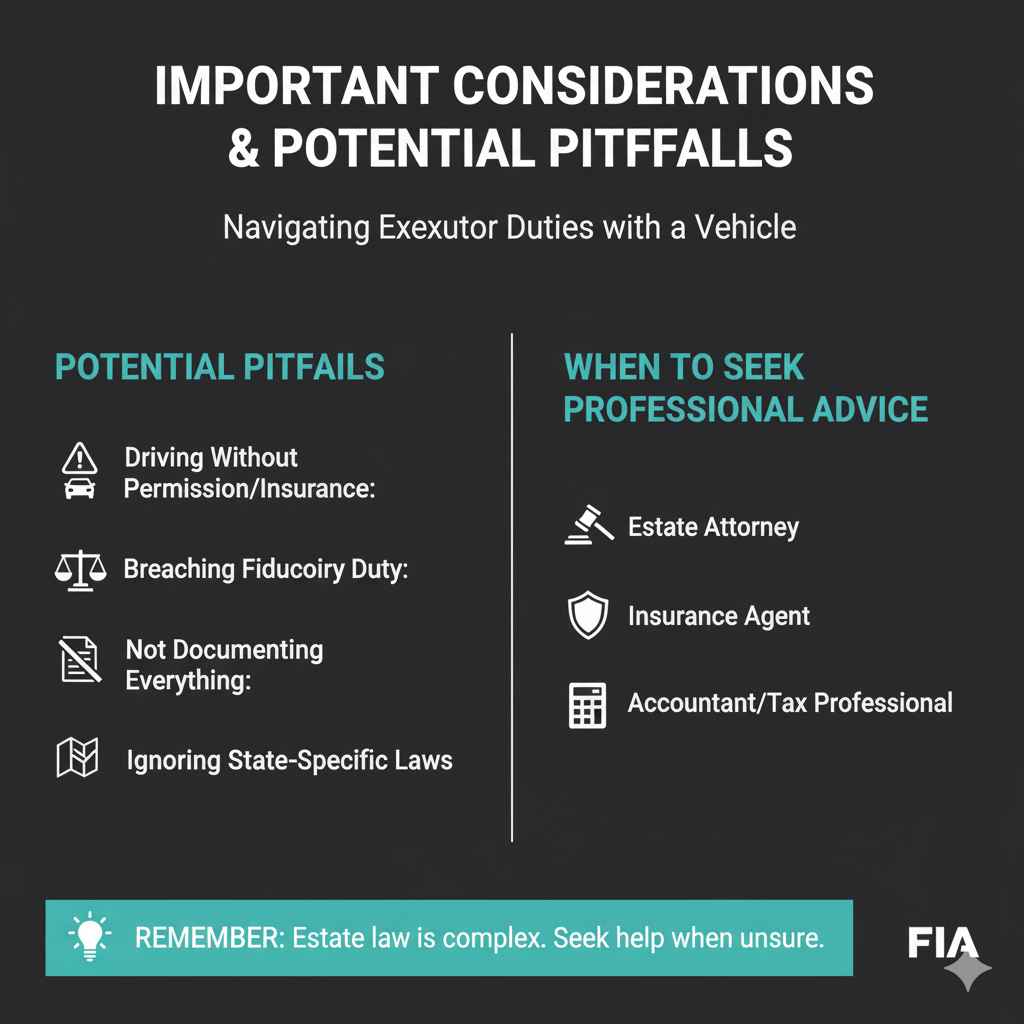
Potential Pitfalls
- Driving without permission or insurance: This is the most significant risk and can lead to liability for the executor and the estate.
- Breaching fiduciary duty: Using the car for personal gain or failing to act in the best interest of the estate.
- Not documenting everything: Proper record-keeping is vital for accounting to beneficiaries and the court.
- Ignoring state-specific laws: Rules regarding estate administration and vehicle transfer differ by state.
When to Seek Professional Advice
While this guide aims to be comprehensive, estate law is complex. If you are unsure about any aspect of your role, the car’s status, or how to proceed, don’t hesitate to seek professional help:
- Estate Attorney: They can provide guidance on your legal responsibilities, help interpret the will, and advise on complex situations. You can often find reputable estate attorneys through your local bar association.
- Insurance Agent: They can clarify coverage details and help you secure appropriate insurance for the estate vehicle.
- Accountant or Tax Professional: They can advise on tax implications related to selling or donating the car.
FAQ: Executor Driving Deceased Car
Q1: Can I drive my spouse’s car after they pass away?
Generally, yes, but only after you have been officially appointed as the executor or administrator of their estate by the court and have confirmed that the car’s insurance policy covers you or have secured appropriate coverage. You must also ensure the registration is valid.
Q2: What insurance do I need to drive the deceased’s car?
You need to ensure the car is adequately insured. This could be by being added to the deceased’s existing policy (if the insurer allows and it’s still active), or by obtaining a new policy in your name or specifically for the estate. Driving uninsured is illegal and risky.
Q3: Do I need to get the car’s registration changed immediately?
You need to ensure the registration is valid while you are using or managing the car. The process to formally transfer ownership or re-register the vehicle under the estate’s name (or a beneficiary’s name) will depend on your state’s laws, and usually happens when the estate is settled.
Q4: What if the will gives the car to someone else?
If the will designates a specific beneficiary for the car, you should not drive it extensively or make major decisions about it without consulting that beneficiary. Your primary role is to facilitate the transfer of the asset to them according to the will’s instructions. This might involve driving it to their home or a mechanic for their inspection.
Q5: Can I use the deceased’s car for my own errands?
It is generally not advisable to use the deceased’s car for your own personal errands before the estate is fully settled. Your actions should solely benefit the estate. Driving for personal convenience can create legal issues and may be seen as a misuse of estate assets.
Q6: What happens if I get into an accident while driving the deceased’s car?
If you get into an accident, the outcome depends heavily on whether you had proper insurance and legal authority. If you were insured and acting within your executor duties, the estate’s insurance should cover the damages. If not, you could be personally liable for damages, and it could complicate the estate settlement.
Conclusion: Driving Forward with Confidence
As an executor, managing a deceased loved one’s car involves important steps to ensure you’re acting legally and responsibly. The key is to approach this task with careful planning and a clear understanding of your authority and responsibilities. By securing legal documentation like Letters Testamentary, confirming insurance coverage, and ensuring the vehicle registration is current, you can confidently drive the car when necessary for estate management purposes. Remember to always prioritize the deceased’s wishes, the beneficiaries’ interests, and thorough record-keeping. If you ever feel unsure, seeking advice from an estate attorney is a wise step.