Car Door Lock Cylinder Cost: What You’ll Pay
A car door lock cylinder often costs about $100 to $350 to replace at an independent shop, while simple rekeying can run about $40 to $150 if the cylinder is still usable. Ignore it and you can end up with a door you cannot secure, a key that no longer matches, or a larger bill if the actuator or handle is damaged. Here’s how car door lock cylinder pricing breaks down, when rekeying is the cheaper fix, and when full replacement is the only sane path.
How the cylinder works and where it sits in the door
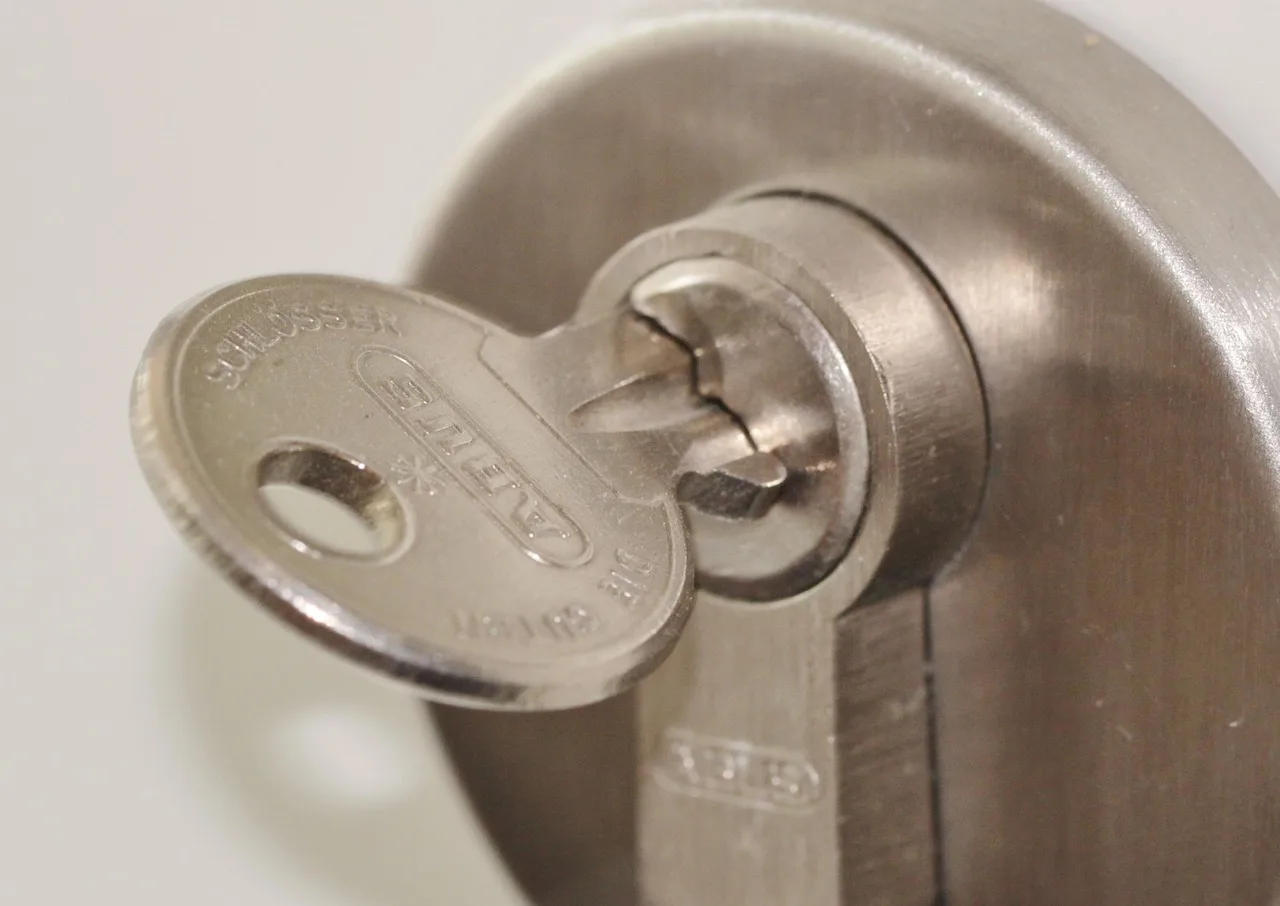
The car door lock cylinder is the keyed mechanical part inside the door lock or handle assembly. It turns with the key, moves a rod or cable, and tells the latch to lock or open. On some vehicles it sells alone. On others, it comes as part of a matched cylinder, a lock set, or a door handle assembly.
Where it sits in the door
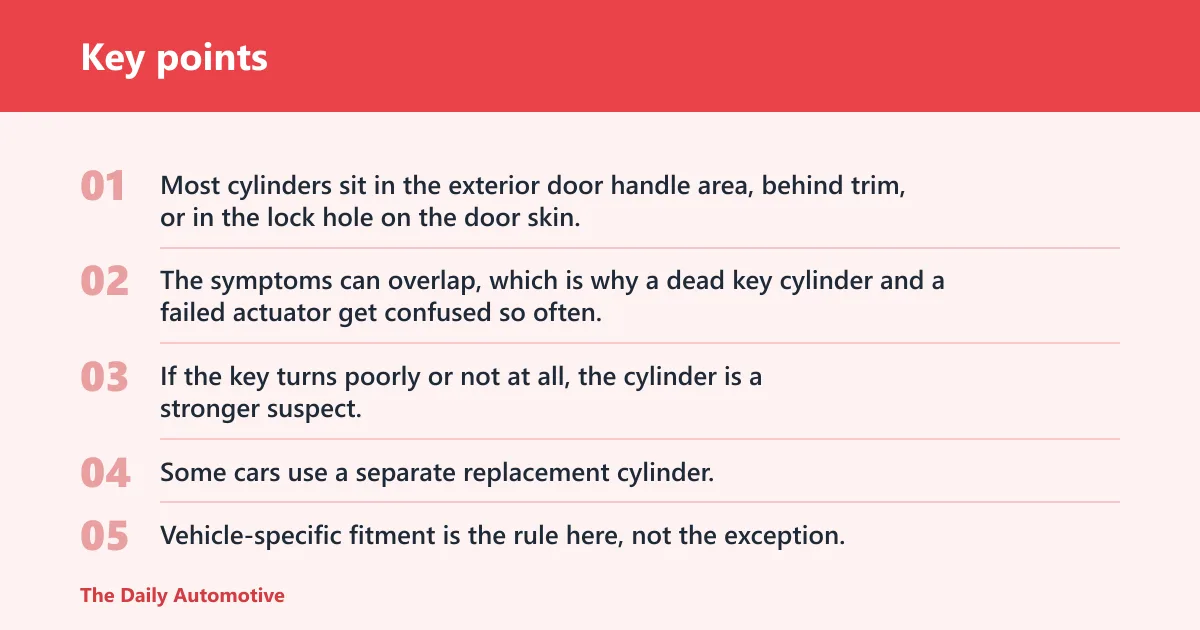
Most cylinders sit in the exterior door handle area, behind trim, or in the lock hole on the door skin. Access can be simple on older vehicles with exposed hardware, or slow on newer cars with hidden fasteners, vapor barriers, and side-impact trim.
That access time matters. The part itself may be inexpensive, but labor rises fast when the technician must remove the door panel, disconnect the lock rod or cable, swap the cylinder, then test the key and power lock operation.
How it differs from the actuator
The cylinder is mechanical. The door lock actuator is the electric motor and gear unit that moves the lock when you press the switch or use a remote. The symptoms can overlap, which is why a dead key cylinder and a failed actuator get confused so often.
If the key turns poorly or not at all, the cylinder is a stronger suspect. If the power lock works from the switch but the key does nothing, the cylinder may still be bad, but the actuator can also be involved if the latch or linkage is binding.
When the cylinder is sold alone versus with the handle
Some cars use a separate replacement cylinder. Others use a handle assembly that includes the cylinder, or a cylinder that must be ordered as a matched set with the ignition or other doors. Vehicle-specific fitment is the rule here, not the exception.
That is why two cars with the same body style can have very different bills. Front and rear doors may use different hardware. Left and right sides can differ too. Trim level and model year can change the part number and the labor time.
How much does a car door lock cylinder cost?
The total cost depends on the repair path. A DIY aftermarket cylinder can be the cheapest route if the part fits and the old key can still be matched. A locksmith rekey usually costs less than full replacement. A mechanic or dealer often charges more because access, programming, and exact-match parts can add time and cost.
DIY aftermarket cylinder
A DIY aftermarket cylinder usually runs $20 to $80 for the part, with $0 labor if you do the work yourself. The total can still climb if the cylinder needs rekeying, the trim clips break, or the replacement part does not match the original handle design.
Locksmith rekey
A locksmith rekey commonly costs about $40 to $150. This is the least expensive path when the cylinder body is still good and only the tumbler pattern needs to match your existing key. If the key code is missing or the cylinder is worn out, the price moves up.
Mechanic replacement
An independent shop usually charges about $100 to $350 total for a straightforward replacement. That range includes parts and labor on many common vehicles, but it can rise when the door panel must come off, the lock rod is buried, or the handle assembly has to be removed first.
Dealer OEM replacement
A dealer OEM replacement often costs about $200 to $600 or more, especially if the part is VIN-matched or tied to a key code. OEM parts usually cost more than aftermarket pieces, but they are the safer pick when fitment is tight or the vehicle uses a matched cylinder set.
Car door lock cylinder matrix
| Repair path | Parts range | Labor range | Total range | What pushes it higher | Key requirement |
|---|---|---|---|---|---|
| DIY aftermarket cylinder | $20 to $80 | $0 | $20 to $80 | Hard-to-fit handle design, broken clips, rekey service after purchase | May need rekeying to match existing key |
| Locksmith rekey | $10 to $40 for tumblers and service materials | $30 to $110 | $40 to $150 | No key code, lost key, seized cylinder, need for a mobile call-out | Rekeyed to an existing key or cut key code |
| Mechanic replacement | $40 to $180 | $60 to $250 | $100 to $350 | Door panel removal, lock rod or cable access, handle removal, trim complexity | Often rekeyed or matched to existing key code |
| Dealer OEM replacement | $80 to $300+ | $120 to $350+ | $200 to $600+ | VIN-matched OEM part, key code lookup, integrated handle or matched cylinder set | Usually VIN-matched or keyed to factory code |
Say a compact sedan uses a separate exterior cylinder and the old key still turns it, but feels sticky. A locksmith may be able to rekey the cylinder for under $150 total instead of replacing the full handle assembly. That keeps the original key and avoids a parts-heavy repair.
What changes the price?
Price changes mostly because of fitment and access. A simple cylinder on a door with clear access costs less. A cylinder buried in a handle assembly, tied to a cable, or sold only as a VIN-matched OEM part costs more. Door side, trim level, and lost-key work can all move the bill.
Vehicle-specific fitment
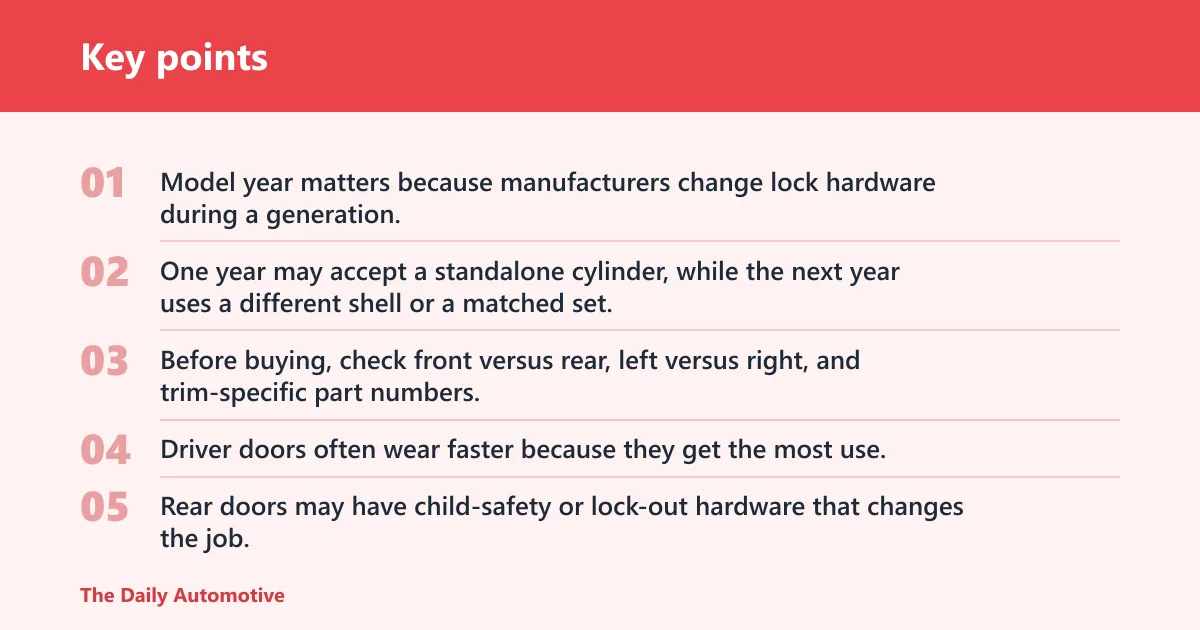
Model year matters because manufacturers change lock hardware during a generation. One year may accept a standalone cylinder, while the next year uses a different shell or a matched set. Before buying, check front versus rear, left versus right, and trim-specific part numbers.
Door side and trim differences
Driver doors often wear faster because they get the most use. Rear doors may have child-safety or lock-out hardware that changes the job. Higher trims can hide the cylinder behind painted caps, integrated handles, or extra trim pieces that add labor time.
Handle or panel removal
Some jobs are fast because the cylinder comes out from the outside after a clip or screw is removed. Others require the full door panel off, then the moisture barrier, then the rod or cable, then the handle. Every extra layer adds time, and time is what most shops charge for.
Lost key or broken key situations
When keys are lost or broken, the price often includes more than cylinder work. A locksmith or dealer may need a key code or VIN lookup to cut or match a key. If the cylinder is stuck and the key is missing, removal can take longer and cost more.
OEM vs aftermarket part source
OEM lock cylinders from a dealer are usually more expensive than aftermarket parts. The tradeoff is tighter fitment confidence and better odds of matching the original hardware. Aftermarket parts can save money, but compatibility should be checked by exact year, body style, and door position.
Can you rekey a car door lock cylinder instead of replacing it?
Yes, if the cylinder body is still in good shape, rekeying is often the cheaper fix. A locksmith can change the internal tumblers so the cylinder matches your existing key. If the cylinder is worn, broken, or seized, rekeying will not solve the underlying problem.
When rekeying makes sense
Rekeying makes sense when the lock still turns, the key is correct but mismatched, or you want one key for all doors. It also helps when the part is rare and a full replacement would be expensive or slow to source.
When replacement is unavoidable
Replacement is unavoidable when the cylinder body is cracked, the key will not turn at all, the tumblers are damaged beyond service, or the part is integrated into a handle assembly that cannot be serviced separately. In those cases, rekeying only delays the real repair.
Key code and VIN lookup
A key code or VIN lookup can reduce guesswork when keys are lost or a dealer needs to cut a factory-matched key. That lookup can add cost, but it can also prevent buying the wrong cylinder or paying for a second visit.
-
Check the key action.
Turn the key slowly and note whether it sticks, grinds, or will not enter fully. That helps separate a worn cylinder from a latch or actuator issue before you buy parts. -
Verify the exact fitment.
Match the year, door side, trim, and handle style before ordering anything. A cylinder that fits one door may not fit the opposite side or a different trim. -
Ask about rekey options.
If the body is intact, ask a locksmith whether the cylinder can be rekeyed to your existing key. That can save money when the part itself is still serviceable.
Signs the cylinder may not be the problem
Stuck key, worn tumblers, and a key that spins without locking are all cylinder clues, but they are not the only cause. If the power locks work from the switch and the remote, the actuator may be fine. If manual key use fails while the latch behaves normally, the cylinder is more likely at fault.
Stuck key or worn tumblers
A key that inserts only halfway, needs wiggling, or feels rough on the turn usually points to wear inside the cylinder. Dirt and corrosion can cause the same feel, but a badly worn cylinder often needs rekeying or replacement rather than more lubricant.
Power lock works but the key does not
That pattern often points to a mechanical cylinder problem, not an actuator failure. The actuator can still be involved if the latch is binding, but the fact that the switch works means the electric side is at least partly alive.
Door lock actuator symptoms
A weak actuator usually makes clicking, slow movement, or no movement from the switch or key fob. That is different from a cylinder issue, where the key itself is the problem. Do not pay for a cylinder if the actual failure is the electric lock motor.
Picture a late-model SUV with a hidden handle cylinder and a dead power lock on one door. If the remote will not move that lock and the key is not the main complaint, the actuator may be the real repair. Swapping the cylinder alone would miss the fault and waste labor.
How to reduce the repair bill
You can cut cost by matching the repair to the fault. If the cylinder still works, rekey it. If the part is separate and available aftermarket, compare that price with OEM. If access is hard, get quotes that break out parts and labor so you can see where the money goes.
-
Confirm compatibility first.
Check the exact year, trim, and door position before buying a cylinder. A wrong part can turn a cheap job into a return, a delay, and a second labor charge. -
Compare three quotes.
Ask a locksmith, an independent mechanic, and a dealer for separate parts and labor numbers. That shows whether the big difference is the part source or the time needed to reach it. -
Decide on key matching.
If you want one key for all doors, say so up front. If you only need the door working again, a separate cylinder or rekey-only fix may cost less.
Frequently asked questions
How much is labor to replace a car door lock cylinder?
Labor commonly runs about $60 to $250 at an independent shop, and can be more if the handle, rods, or cable must come out first. A simple cylinder swap on an easy-access door can be quick. A buried assembly with trim removal will cost more because the labor time is higher.
Can you replace just the lock cylinder instead of the whole door lock?
Often, yes. Many vehicles use a separate cylinder that can be replaced or rekeyed without changing the full latch. Some models integrate the cylinder into the handle or sell it only as a matched set, which means the entire assembly has to be replaced instead.
Is a car door lock cylinder cheaper than an ignition lock cylinder?
Usually, a door cylinder is cheaper than an ignition lock cylinder, but the gap depends on the vehicle. Door locks are often simpler and easier to access. Ignition work can involve steering-column parts, security coding, or more labor, which raises the bill.
Why does a door lock cylinder cost so much on some cars?
Cost rises when the part is VIN-matched, built into the handle, or hard to access. Labor goes up if the door panel, handle, or cable must come apart before the cylinder can be removed. Newer vehicles and higher trims often use more complex hardware.
Products related to this article
Sponsored / affiliate links. As an Amazon Associate I earn from qualifying purchases. I may earn additional commission from eligible campaigns.
 Slim-Line Bear Jaw Car Door Latch Kit, Suitable for Standard/Suicide Doors, Works with Rod/Cable Mechanisms, for Steel and Fiberglass Doors, Includes Latches, Striker Pins, Cage Nuts
 Dwvksz Ignition Lock Cylinder for Dodge Dakota 1987 1988 1989 3.9L V6, for Dodge D150, D100 1986 1987 1988 1989 5.2L V8, 1-PC