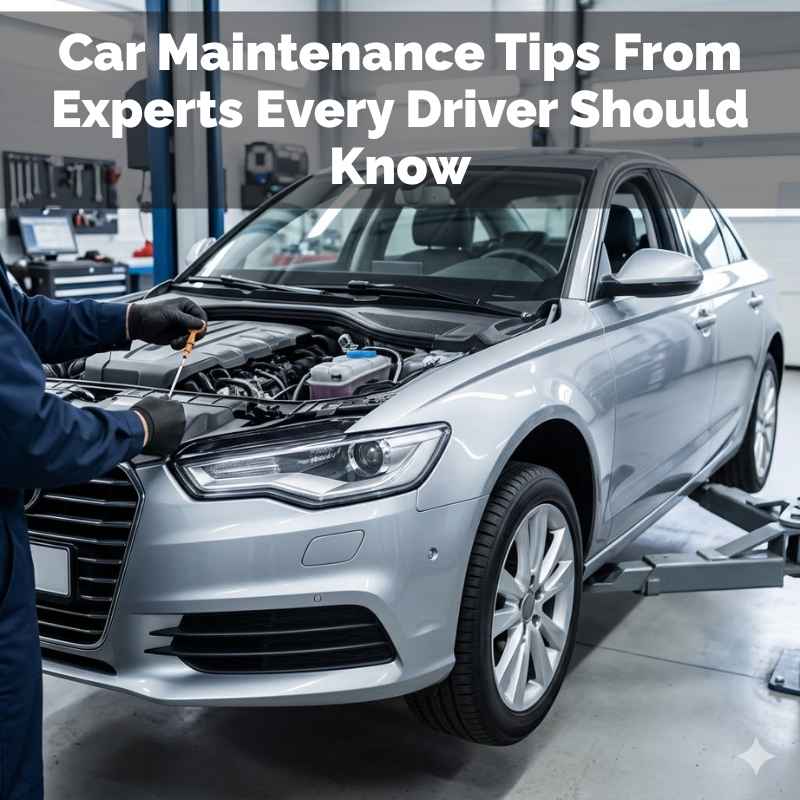
Car Maintenance Tips From Experts Every Driver Should Know
Understanding your car’s basic maintenance needs can save you money and prevent unexpected breakdowns. Regular checks and simple tasks help your vehicle run better for longer. This guide explains key car care tips that every driver should know. It covers common issues and how to spot them early.
The Heart of Your Car: Why Regular Checks Matter
Think of your car like your body. It needs regular check-ups to stay healthy. Ignoring small signs can lead to big, expensive problems later.
This is true for any car maintenance tips. Regular checks help catch issues early. This means less money spent on repairs.
It also means your car is safer for you and your family. You won’t have to worry as much when you’re driving.
A well-maintained car runs better. It uses fuel more wisely. It also lasts much longer.
Imagine driving a car that feels smooth and reliable. That’s the goal. It’s not about being a mechanic.
It’s about being a smart car owner. Knowing what to look for is key. This guide will help you learn these simple steps.
My First Car: A Leaky Hose and a Big Scare
I remember my first car. It was a little blue sedan. I loved it, but I knew nothing about cars.
One hot summer day, I was driving home from work. The temperature gauge started creeping up. Then, I saw smoke coming from under the hood.
Panic set in. I pulled over quickly. A friendly stranger helped me.
He pointed out a leaky hose. Coolant was spraying everywhere. It was a simple fix, but the scare made me realize how important it is to pay attention.
I was lucky it wasn’t worse. That day taught me a lot about being proactive with my car.
The stranger explained how important coolant is. He showed me where to check the levels. It wasn’t a huge repair.
But if I had ignored the temperature gauge, it could have been. The engine could have overheated badly. That would have cost a lot more to fix.
It was a real wake-up call. Since then, I always try to notice little changes in my car. The way it sounds, the way it feels, or any odd lights on the dashboard.
Quick Car Health Checklist: What to Look For
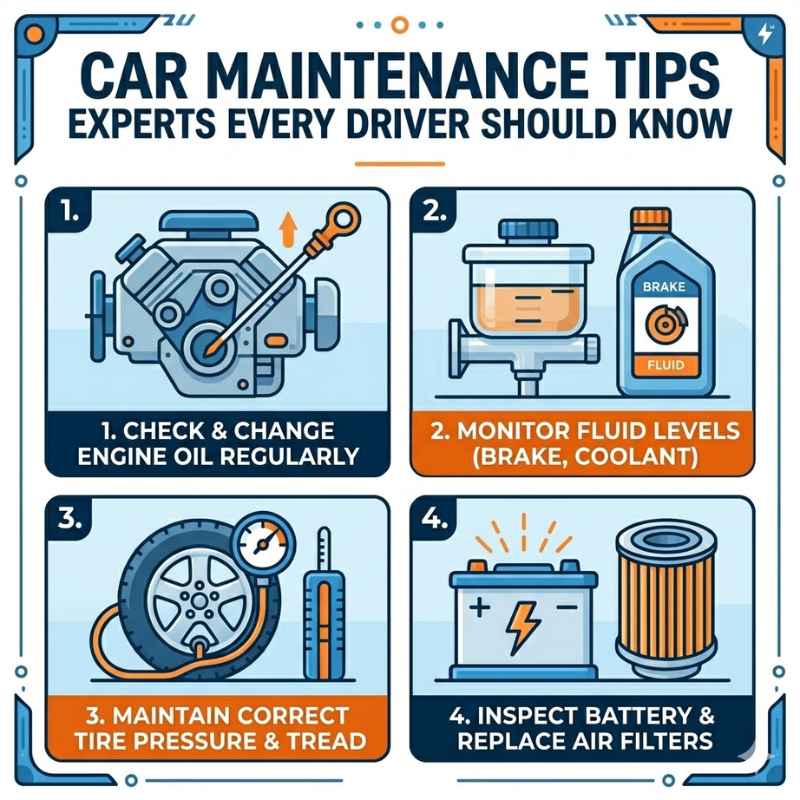
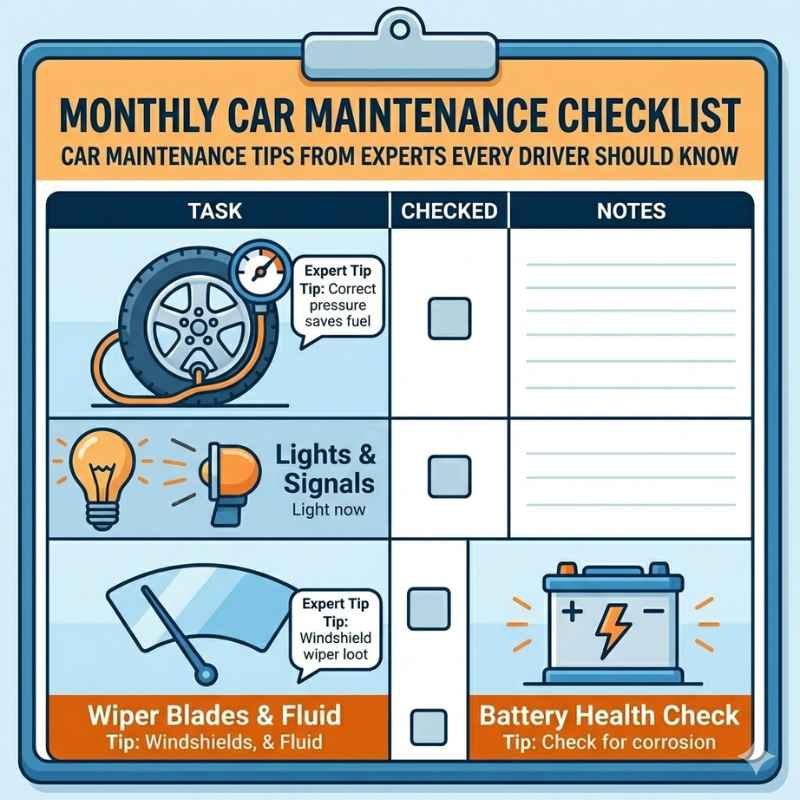
Tires: Check pressure and tread wear.
Fluids: Look at oil, coolant, and brake fluid levels.
Lights: Test headlights, taillights, and blinkers.
Brakes: Listen for strange noises when braking.
Wipers: Make sure they clear the windshield well.
Understanding Your Tires: More Than Just Round Things
Your tires are the only part of your car touching the road. They are super important. Car maintenance tips must include tire care.
Properly inflated tires are safer. They help your car handle better. They also save you money on gas.
Underinflated tires wear out faster. They make your engine work harder. This uses more fuel.
Check your tire pressure often. The best time is when the tires are cold. You can find the correct pressure on a sticker in your driver’s side doorjamb.
Or check your car’s owner’s manual. Don’t guess. Use a tire pressure gauge.
They are cheap and easy to use. You can get one at any auto parts store. Most gas stations have air pumps.
Some are free, some you pay for.
Look at your tires for wear. Do they look smooth in some spots? Or are they worn more on one side?
This can mean your tires need balancing or your car needs an alignment. Uneven wear means your tires won’t last as long. It can also affect how your car drives.
It might pull to one side. This is a sign you need a professional to look at it. Always check for bulges or cuts too.
These are dangerous. Replace damaged tires right away.
Tire Pressure Basics
Why it matters: Safety, fuel economy, tire life.
How to check: Use a tire pressure gauge on cold tires.
Where to find info: Driver’s side doorjamb sticker or owner’s manual.
Frequency: At least once a month, and before long trips.
Fluid Levels: The Lifeblood of Your Vehicle
Cars use many different fluids. These fluids keep everything running smoothly. Checking them is a vital part of car maintenance tips.
You don’t need to be a mechanic to do this. Most fluid checks are simple. Just pop the hood.
Find the right reservoirs. Your owner’s manual will show you exactly where everything is.
Engine oil is the most important. It keeps your engine parts from rubbing together. Too little oil causes serious damage.
Check your oil level often. Do it when the engine is warm but not running. Pull out the dipstick.
Wipe it clean. Put it back in. Pull it out again.
The oil level should be between the “add” and “full” marks. If it’s low, add the correct type of oil. Your manual tells you which kind.
You’ll need to change your oil regularly. Follow the schedule in your manual. Or ask your mechanic.
Coolant (also called antifreeze) keeps your engine from overheating or freezing. Check the coolant reservoir. It’s usually a clear or colored plastic tank.
Look for the “min” and “max” lines. Never open a hot radiator cap. It’s under pressure and can spray hot fluid.
If your coolant is low, add a mix of coolant and water. The correct ratio is usually 50/50. Your manual will have details.
Brake fluid is critical for stopping your car. If the fluid is low, you might have a leak or worn brake pads. Check the brake fluid reservoir.
It’s usually a small, clear plastic container near the driver’s side firewall. If it’s low, have your brakes checked by a professional. Don’t ignore this.
Stopping is important.
Windshield washer fluid is for visibility. Keep it topped up. This fluid helps clear dirt and bugs from your windshield.
It’s easy to add. Just open the cap and pour. Make sure you use the correct type of washer fluid.
Some are for winter and prevent freezing.
Key Fluids to Monitor
Engine Oil: For lubrication and cooling.
Coolant: Prevents overheating and freezing.
Brake Fluid: Essential for stopping power.
Washer Fluid: For clear visibility.
Lights, Wipers, and Brakes: Your Safety Network
Your car’s lights, wipers, and brakes are crucial for safety. Ignoring them is dangerous. These are simple checks that make a big difference.
They are part of essential car maintenance tips for everyone.
Lights: Walk around your car. Turn on your headlights. Then your high beams.
Check your taillights. And your brake lights. Have someone stand behind your car while you press the brake pedal.
Make sure the brake lights work. Check your turn signals too. Front and back.
One burnt-out bulb can make you invisible to other drivers. This is a big safety risk.
Wipers: Your windshield wipers keep your view clear in rain or snow. If they streak, chatter, or leave parts of the windshield dry, it’s time for new ones. Worn wipers can seriously reduce your visibility.
This is especially dangerous at night or in bad weather. Replacing them is usually very simple. Most auto parts stores can help you find the right size.
Brakes: Listen for any unusual sounds when you brake. A squealing noise might mean your brake pads are worn. A grinding sound is more serious.
It could mean metal on metal, which can damage your rotors. If your brake pedal feels soft or spongy, or if you have to push it to the floor, get your brakes checked immediately. Your brakes are your most important safety feature.
Safety Checks: The Essentials
- Headlights: Low and high beams
- Taillights: Always on
- Brake Lights: With pedal press
- Turn Signals: Front and rear
- Wiper Blades: Clear view
- Brake System: Listen for sounds, check pedal feel
The Air Filter: Giving Your Car Room to Breathe
Your car’s engine needs air to run. The air filter stops dirt and debris from getting into the engine. A dirty air filter can choke your engine.
This makes it work harder. It reduces fuel efficiency. And it can even hurt your engine’s performance.
Checking and replacing the air filter is one of the easiest car maintenance tips you can do yourself.
To check it, find the air filter box. It’s usually a black plastic box under the hood. There will be clips or screws holding it closed.
Open it up. Take out the old filter. Hold it up to the light.
If you can’t see light through it, it’s dirty. If it looks clogged with dust and bugs, it’s time for a new one.
New air filters are not expensive. You can buy them at auto parts stores. They are usually very easy to install.
Just put the new one in the same way the old one came out. Close the air filter box securely. It’s a simple task that can make a noticeable difference in how your car runs.
Many people forget this simple maintenance.
Air Filter: Simple Fix, Big Impact
What it does: Keeps dirt out of the engine.
Signs it’s dirty: Reduced power, poor gas mileage.
How to check: Visual inspection, hold to light.
Replacement: Easy DIY task, inexpensive.
Your Car Battery: The Silent Powerhouse
Your car’s battery is essential. It starts the engine. It powers your car’s electronics.
Batteries don’t last forever. They usually last about 3 to 5 years. But many factors can affect their lifespan.
Extreme temperatures are hard on batteries. So are short trips where the battery doesn’t get fully recharged.
Regularly check the battery terminals. These are the metal posts where the battery cables connect. They can get corroded.
Corrosion looks like a white or bluish powder. It can prevent the battery from making good contact. You can clean it yourself.
Disconnect the cables carefully. Use a wire brush and a mixture of baking soda and water. Clean the terminals and the cable ends.
Then reconnect them tightly. Make sure you disconnect the negative cable first. And reconnect it last.
If your car is slow to start, or if your headlights seem dim, your battery might be weak. Many auto parts stores can test your battery for free. They can tell you if it’s time for a replacement.
Getting a new battery before yours dies completely can save you a lot of hassle. You won’t be stranded somewhere.
Battery Care Essentials
Lifespan: Typically 3-5 years.
Corrosion: Check terminals for powder buildup.
Cleaning: Use baking soda and water, wire brush.
Signs of weakness: Slow start, dim lights.
Testing: Free at most auto parts stores.
Cabin Air Filter: Breathe Easier Inside
Did you know your car has a cabin air filter? This filter cleans the air you breathe inside your car. It traps dust, pollen, and other pollutants.
If it gets clogged, the air coming from your vents will be reduced. It might also smell musty. This is another simple item on our car maintenance tips list that directly affects you.
The cabin air filter is often located behind the glove compartment. Or sometimes under the dashboard. Replacing it is usually quite easy.
Your owner’s manual will show you where it is and how to change it. If you notice reduced airflow from your vents or a strange smell, it’s probably time for a new cabin air filter. Clean air makes your driving experience much more pleasant.
Cabin Air Filter Benefits
Purpose: Cleans interior air.
Impact of dirty filter: Reduced airflow, musty smells.
Location: Often behind glove box or under dash.
DIY friendly: Yes, often a simple replacement.
Belts and Hoses: The Unsung Heroes
Your car has many belts and hoses. These carry fluids and power various components. They are made of rubber.
Rubber can crack and degrade over time. Especially with heat and age. Checking belts and hoses is an important but often overlooked part of car maintenance tips.
Look at the belts. Do you see any cracks, fraying, or glazing? Glazing makes the belt shiny and smooth.
This means it can slip. A worn belt can break. This can cause loss of power steering.
Or your alternator might stop working. Your car could overheat if the water pump belt breaks.
Inspect the hoses. Look for cracks, bulges, or leaks. Squeeze them gently.
They should feel firm, not mushy or brittle. If a hose feels too soft, it could burst. If you see any signs of wear on belts or hoses, get them checked.
Replacing them is usually much cheaper than the damage they can cause if they fail.
Belts and Hoses: Spotting Trouble
Belts: Check for cracks, fraying, glazing.
Hoses: Look for cracks, bulges, leaks, mushy feel.
Importance: Power essential systems, prevent leaks.
Replacement: Crucial to prevent major failures.
When to Call a Professional: Knowing Your Limits
While these basic car maintenance tips can save you time and money, there are times you need an expert. Don’t try to fix things you’re not comfortable with. Some repairs involve complex systems.
Or they require special tools. It’s always better to be safe.
If you hear strange noises that don’t go away. Or if warning lights stay on your dashboard. Especially the engine light, brake light, or oil light.
If your car is behaving oddly. Like shaking, pulling, or not starting. These are signs something needs professional attention.
You can trust your mechanic. Ask them to explain what they find. And what needs to be done.
A good mechanic will be happy to do this.
It’s also wise to have a professional check your car before a long road trip. They can give it a thorough inspection. They can catch potential problems you might have missed.
Building a relationship with a trusted mechanic is valuable. They can help you keep your car in top shape for years.
Real-World Scenarios: What These Tips Look Like in Action
Let’s think about some common situations. Picture this: You’re on your way to an important meeting. Your car starts making a weird clunking noise.
You remember checking your tires last week. They seemed fine. But you didn’t check the fluid levels.
You pull over. You check the oil. It’s very low.
That’s the clunking noise. You have a bottle of oil in your trunk from a previous oil change. You add enough to get you to a gas station.
You buy more oil and top it up. You also notice a small leak from a hose. You decide to get it fixed right after your meeting.
This could have been worse if you didn’t have any oil.
Or consider this. It’s winter. Your car struggles to start one morning.
You haven’t thought about the battery in a while. It’s three years old. You get a friend to give you a jump start.
Then you drive straight to the auto parts store. They test your battery. It’s weak.
You buy a new one. You install it yourself. This avoids being stranded in the cold.
It’s these small proactive steps that make a difference.
Another scenario: You’re driving down the highway. It starts to rain hard. Your windshield wipers just smear the water around.
You can barely see. You realize you’ve been putting off replacing them. This is a real safety hazard.
You end up pulling over. You wait for the rain to stop. You make a mental note to get new wipers as soon as possible.
These everyday examples show why knowing these car maintenance tips is so important.
Scenario Spotlight: The Unexpected Roadblock
Problem: Car makes strange noise.
Owner’s Action: Checks fluids due to past experience.
Discovery: Low oil level and a leaking hose.
Resolution: Adds oil, schedules hose repair.
Lesson: Regular checks prevent bigger issues.
What This Means For You: Taking Control of Your Car’s Health
Knowing these car maintenance tips puts you in control. It means you’re less likely to face surprise repair bills. It means your car will be more reliable.
And safer. Most of these checks take just a few minutes. You can do many of them yourself.
When is it normal? It’s normal to check your tire pressure monthly. It’s normal to check your oil every other fuel fill-up.
It’s normal to replace wiper blades once a year or when they start to fail. It’s normal to have your battery tested every couple of years. These are all routine things.
When should you worry? You should worry if a warning light stays on. You should worry if you hear loud, persistent, or unusual noises.
You should worry if your car starts to behave erratically. If your brakes feel weak or make grinding sounds, that’s a major concern. If you notice a significant fluid leak, it needs immediate attention.
Don’t ignore these signs. They are your car’s way of telling you something is wrong.
Quick Fixes & Simple Tips for Everyday Drivers
Here are some easy things you can do. Keep a small toolkit in your trunk. It might have basic wrenches, a screwdriver, and a tire pressure gauge.
Always have a rag or paper towels handy. They are useful for checking fluids or cleaning up small spills.
Familiarize yourself with your owner’s manual. It has a wealth of information specific to your car. Learn where all the fluid reservoirs are located.
Know the recommended tire pressure. Understand the dashboard warning lights.
Wash your car regularly. This not only makes it look good but also helps prevent rust and corrosion. Pay attention to the undercarriage, especially in areas where roads are salted in winter.
Check for any signs of rust or damage. Keeping your car clean can reveal potential problems early.
Everyday Driver’s Toolkit
- Tire Pressure Gauge: Essential for tire care.
- Basic Wrench Set: For minor adjustments.
- Screwdrivers: Flathead and Phillips.
- Rags/Paper Towels: For checking fluids and cleaning.
- Owner’s Manual: Your car’s guide.
Frequently Asked Questions About Car Maintenance
How often should I check my car’s oil?
It’s a good practice to check your engine oil at least once a month. Many people check it every time they fill up their gas tank. This ensures the oil level stays within the safe range.
What’s the most important fluid to check?
Engine oil is often considered the most critical fluid. It lubricates and cools the engine. Low oil levels can cause severe and expensive engine damage very quickly.
How do I know when to replace my tires?
Check your tire tread depth regularly. You can use a penny: if you can see the top of Lincoln’s head when inserted into the tread grooves, your tires are likely worn and need replacing. Also, look for uneven wear patterns or any visible damage like cracks or bulges.
Can I really change my own air filter?
Yes, for most cars, changing the engine air filter is a very simple DIY task. It usually involves opening a plastic housing under the hood and swapping out the old filter for a new one. It can save you money on labor costs.
What does the “check engine” light mean?
The check engine light can indicate a wide range of issues, from a loose gas cap to a more serious engine problem. It’s best to get it diagnosed by a mechanic as soon as possible. They can read the diagnostic trouble codes (DTCs) to pinpoint the exact issue.
How often should I get an oil change?
The frequency of oil changes depends on your car’s make and model, the type of oil used, and your driving habits. Check your owner’s manual for the manufacturer’s recommendation. For many modern cars using synthetic oil, it can be every 7,500 to 15,000 miles.
Conclusion: Drive Smarter, Not Harder
Taking care of your car doesn’t need to be complicated. By following these simple car maintenance tips, you can keep your vehicle running smoothly and safely. You’ll save money and avoid stress.
Regular checks are like a conversation with your car. Listen to what it tells you. Be proactive.
You’ll enjoy a more reliable and enjoyable driving experience.
Products related to this article
Sponsored / affiliate links. As an Amazon Associate I earn from qualifying purchases. I may earn additional commission from eligible campaigns.