Best Car Seat Covers for Back Support (Lumbar Cushions)
Choose a seat cover with a built-in lumbar pad or an adjustable strap-on cushion if your pain is in the lower back; pick a simple padded cover only if you want padding, not support. The wrong setup can leave you slouching, shifting, or chasing relief that never reaches the lumbar curve. This guide compares attachment styles, seat shapes, and pain patterns so you can pick the right back-support cushion for your car. The top pick for most drivers is a strap-on lumbar pillow with firm memory foam and a breathable cover, because it supports the lower back without turning the seat into a soft, unstable pad.
Quick comparison
| Product | Badge | Best for | Price | ||
|---|---|---|---|---|---|
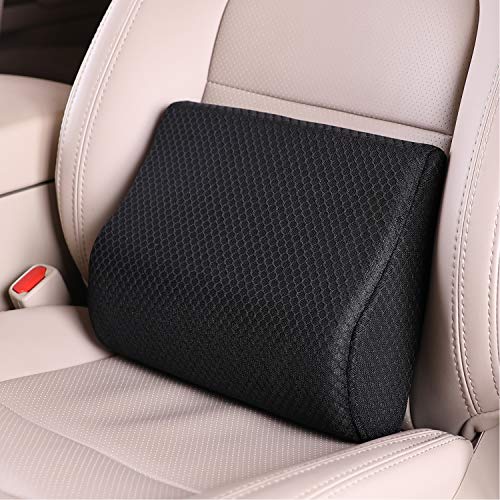 |
TISHIJIE Memory Foam Lumbar Support Pillow for Car – LowerTISHIJIE | Our pick | Memory foam lumbar pillow · black | $21.99
Price as of 30 Oct 2026
|
View |
 |
Lumbar Support Pillow for Car, Back Support Cushion forBangled | Budget pick | Memory foam lumbar support · black | $12.99
Price as of 30 Oct 2026
|
View |
 |
Nisuez Seat Cushion with Back Support,Memory Foam ErgonomicNisuez | Pair with it | Seat cushion with back support · black | $32.99
Price as of 30 Oct 2026
|
View |
 |
Samsonite Cooling Memory Foam Lumbar Support Pillow forSamsonite | Also great | Cooling memory foam lumbar pillow | $26.99
Price as of 30 Oct 2026
|
View |
This section is the fast filter. Use it to separate lower-back support, tailbone pressure relief, and full-back posture support before you compare materials or prices.
If your seat shape is unusual, fit matters more than brand name. A cushion that looks comfortable on paper can fail the moment it hits a bucket seat, a shell-shaped seat, or a truck seat with a pronounced bolster.
How we chose
We compared manufacturer specs, listing details, and published buyer feedback, then sorted each product by support type, attachment method, and seat fit. Also check whether the listing clearly points to lower-back support, pelvic pressure relief, or full-torso support, because those are not the same problem.
That matters in real use. A lumbar cushion that stays put behind the curve of your spine does a different job from a seat cushion that spreads pressure across the sit bones.
We also looked for the practical features that keep a cushion usable in a moving car: a grippy underside, strap attachment, washable cover, and a shape that matches the seat rather than fighting it.
Lumbar support cushions: best for lower back pain
TISHIJIE Memory Foam Lumbar Support Pillow suits drivers who want firm lower-back support with a straightforward strap-on setup. It uses high-density memory foam, has a breathable mesh cover, and attaches with straps, which makes it a better match for a driver who needs support behind the lumbar curve rather than extra padding under the hips.
The drawback is fit. A lumbar pillow can feel too thick in a short-torso driving position, and it can sit awkwardly if the seatback is deeply contoured or very narrow.
Placed correctly, this type of cushion supports the lower back and lordosis. It is not a seat cushion, so it will not do much for tailbone pressure on its own.
Seat cushions: best for tailbone pressure
Nisuez Seat Cushion with Back Support fits drivers who need more help under the pelvis and sit bones than behind the lumbar curve. Its contoured shape, grippy bottom, and memory foam build point to pressure relief and steadier seating during long drives, especially when tailbone soreness or seat-bottom pressure is the bigger complaint.
The honest drawback is that it is still a seat cushion first. If your pain sits high in the low back, this design may feel supportive under you but leave the lumbar area untouched.
That split matters. Seat cushions support the pelvis and sit bones; lumbar cushions support the lower back. If the wrong area is doing all the work, the seat will still feel wrong after an hour behind the wheel.
Backrest cushions: best for full-torso support
Samsonite Cooling Memory Foam Lumbar Support Pillow is the best fit for drivers who want a firmer backrest-style support with secure placement and some airflow. Its contoured support, adjustable straps, and cooling gel element make it a sensible choice for longer sits when heat buildup and posture drift are part of the problem.
The drawback is size and placement. A backrest-style cushion can feel bulky in smaller car seats, and it may crowd the driving position if the seat already has a pronounced lumbar bulge.
Core Products lists 11 backrest cushion products in its lumbar support collection, and says most of its backrest cushions are firm. That is useful context: backrest cushions are usually sold for posture and positioning, not for softening the seat pan.
Memory foam vs. gel cushions
Memory foam and gel are not interchangeable. Memory foam is usually chosen for contouring and pressure relief, while gel seat cushion designs are usually aimed at cooling and pressure spread, especially in cars, offices, and wheelchairs. If you want shape-holding support, memory foam usually makes more sense. If heat and long-sit pressure are the issue, gel can be the better match.
What each material does
Memory foam lumbar cushions typically follow the curve of the lower back and can feel more structured when you need the pad to stay in one spot. Gel seat cushions are more common under the pelvis and tailbone area, where pressure relief matters more than lumbar shape.
Vive Health lists a wheelchair gel seat cushion at $39.99, and its honeycomb gel seat cushion is listed for cars, office, and wheelchairs. That is a clear sign that gel is often treated as a pressure-management material rather than a pure lumbar-support material.
Say your commute is 50 minutes and your main complaint is heat plus tailbone pressure. A gel seat cushion makes more sense than a lumbar pillow, because the problem is under you, not behind you.
When gel is the better call
Gel is worth a look if your seat feels hot, hard, or flat, and your pain sits around the sit bones or tailbone. It is less useful if you need to restore the lumbar curve. In that case, gel may feel comfortable at first while still leaving your back unsupported.
When memory foam is the better call
Memory foam is usually the safer pick for drivers who want a defined lower-back contour and a steadier feel over time. It is also the better fit when a cushion needs to stay behind the lower back with straps, rather than sit loose on the seat pan.
Lumbar cushion decision matrix
This matrix separates lower-back support, pelvic support, and pressure relief. Use the fail-case column first; it tells you when the cushion type is likely to disappoint, even if the listing sounds good.
| Driver scenario | Best cushion shape | Material | Attachment method | Fail case |
|---|---|---|---|---|
| Long commute | Firm lumbar support cushion | Memory foam | Strap attachment | Will not help much if the seat bottom is the real source of pressure. |
| Short torso | Low-profile lumbar cushion | Firm memory foam | Non-slip base plus light straps | Can push the driver forward or sit too high on the backrest. |
| Sciatica | Orthopedic seat cushion with cutout or contour | Memory foam or gel foam | Non-slip base | Fails if the pain comes mainly from the lower back and needs lumbar shaping instead. |
| Tailbone pain | U-shaped seat cushion | Gel foam or memory foam | Non-slip base | Will not solve posture problems if the back is collapsing without lumbar support. |
| Bucket seat | Shaped lumbar cushion with slim profile | Firm memory foam | Straps | Can slip into the side bolsters or interfere with the seat’s molded shape. |
| Shell-shaped seat | Thin backrest cushion | Firm foam | Strap attachment | Often fails because the shell shape leaves little flat surface for the cushion to sit on. |
| Truck seat | Firm lumbar support cushion | Memory foam | Straps plus non-slip backing | May slide on a wide, upright seat if the straps are too loose or the cushion is too short. |
| Wheelchair use | Orthopedic seat cushion or gel seat cushion | Gel or memory foam | Non-slip base | Will not work well if the chair back needs lumbar support and the cushion only addresses the seat pan. |
That table is the simplest way to avoid the most common buying mistake: picking a cushion by material first and by seat shape second. Fit failure usually starts with geometry, not foam quality.
Which one should you buy?
Choose the cushion that matches the pain pattern first, then check the seat shape. If your ache sits in the low back, start with a lumbar support cushion with straps. If the pain sits at the tailbone or sit bones, start with a seat cushion. If you need both, look for a firmer backrest cushion plus a separate seat cushion rather than one vague “comfort” pad.
Halfords’ category snapshot shows how varied this market is: it lists 38 results in its car seat covers and cushions category, including a padded seat cushion specifically labeled for back support, a dedicated lumbar support car seat cover, and a separate D-shape lumbar cushion. That split mirrors the real decision you need to make: back support, seat pressure relief, or both.
For bucket seats, choose a slim cushion with straps and a narrow profile. For shell-shaped seats, be cautious; molded shells often give you too little flat surface for a cushion to sit properly. For trucks, a wider and firmer lumbar pad often holds position better than a soft one.
Picture a driver with a short torso in a deep bucket seat. A thick lumbar pillow may force the shoulders forward and make the seat feel worse, not better. In that case, a thinner cushion with a grippy base is the safer starting point.
4Knines sells a front seat bucket seat cover, which is useful to know because some buyers want a seat-cover-style product rather than a loose cushion. The company also says its split rear seat cover allows access to all three seat belts and lets you fold seats without removing the cover. Those are the kinds of fit details that matter when the vehicle layout is complex.
Benergo markets a lumbar support product as part of its posture-support cushion line, and says its lumbar support is available in six colors. Color matters less than shape, but the listing still signals that lumbar support is a separate category from a general seat pad.
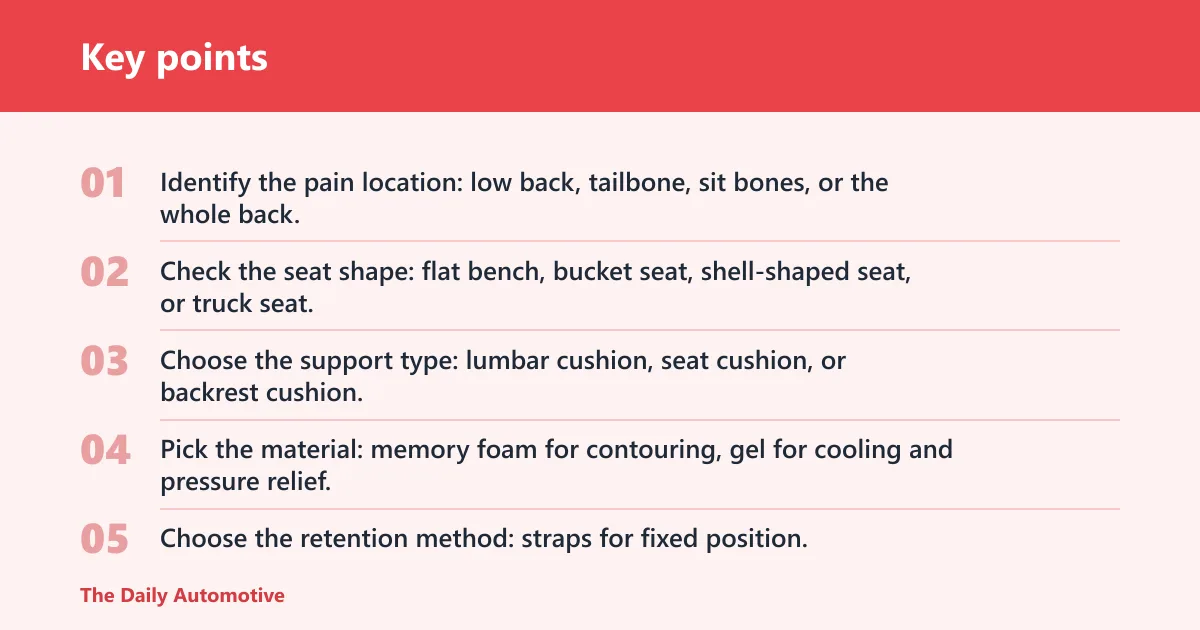
- Identify the pain location: low back, tailbone, sit bones, or the whole back.
- Check the seat shape: flat bench, bucket seat, shell-shaped seat, or truck seat.
- Choose the support type: lumbar cushion, seat cushion, or backrest cushion.
- Pick the material: memory foam for contouring, gel for cooling and pressure relief.
- Choose the retention method: straps for fixed position, non-slip base for quicker placement.
- Check the listing for seat compatibility before you buy, especially for bucket seats and molded shells.
Do not assume a cushion that works in an office chair will work in a car. The seatback angle, bolsters, and headrest spacing can change the way the cushion sits, even when the listing says “universal.”
Frequently asked questions
What are the best car seat covers for back support?
The best options are not always full seat covers. For lower-back pain, a seat cover with a built-in lumbar pad or a separate lumbar support cushion is usually the better match. If the complaint is tailbone pressure, a seat cushion with a contour or cutout is more useful than a generic padded cover.
Do lumbar cushions really help with lower back pain while driving?
They can help when the problem is loss of lumbar support during seated driving. A lumbar cushion supports the lower back and lordosis, which can reduce the slumped posture that builds during a long drive. It will not fix every cause of pain, and it will not help much if the real issue is pressure under the pelvis.
What’s the difference between a seat cover and a lumbar cushion?
A seat cover mainly changes the surface you sit on. A lumbar cushion sits behind the lower back and is meant to support the spine’s curve. A seat cushion sits under you and targets the pelvis, sit bones, or tailbone. They solve different problems.
Which car seat cushion is best for long drives?
For long drives, the best cushion depends on where the discomfort starts. Use a lumbar cushion if your low back tires first. Use a seat cushion if pressure builds in the tailbone or sit bones. A backrest cushion can help when you need firmer full-back support and better positioning over time.
Can I use a lumbar support cushion in any car seat?
No. You need enough flat surface and enough room behind your back for the cushion to sit properly. Bucket seats, shell-shaped seats, and seats with deep bolsters can cause fit problems. Check the manufacturer’s listing for your model, and match the cushion shape to the seat geometry.
How do I keep a seat cushion from sliding in the car?
Use a grippy base, strap attachment, or both. A grippy base helps stop movement on smoother seats, while straps are better for keeping a lumbar or backrest cushion anchored over time. If a cushion still moves, the seat shape may be the problem rather than the grip surface.
Products related to this article
Sponsored / affiliate links. As an Amazon Associate I earn from qualifying purchases. I may earn additional commission from eligible campaigns.
 FLORICH Leather Seat Cover, Car Seat Covers Front Set, Waterproof Car Seat Protectors, Front Seat Covers 2 Pack, Breathable Automotive Seat Covers Protector Fit for Most Cars Trucks SUV
 Huidasource Beige Car Seat Covers Front Seats, Front Seat Cover for Cars, Nappa Leather Automotive Car Seat Cushion Protector Universal Fit for Most Cars,Vans,Trucks, SUVs (Front Pair/Beige)