Are Car Wash Foam Cannons Worth It? Verdict and Picks
Car wash foam cannons are worth it only if you wash often, have access to a pressure washer, and want extra lubrication for dirty paint. For light weekly washes, a bucket or rinseless wash is usually the better buy. Used wrong, they waste money and can still leave wash-marring behind. This guide covers compatibility, cost, what foam can and cannot do, and when to skip the purchase.
Verdict
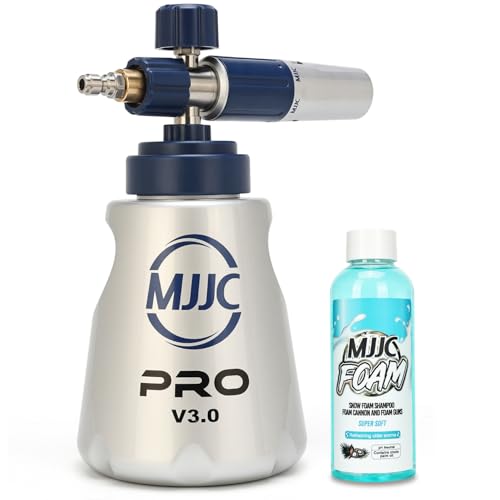
- Corrosion-resistant stainless steel construction for durability
- Wide PSI range support with three included nozzles
- Standard 1/4 inch quick connector for easy setup
Buy one if you already own a compatible pressure washer and you will actually use the pre-wash step before contact washing. Skip it if you want the cheapest safe wash method or do not have pressure-washer access. Use an alternative if you live in an apartment, wash in winter with limited water access, or want lower setup cost.
📊 Car and Driver tested foam cannons with a stated pressure range of 800–3500 psi. Source: Best Foam Cannons of 2026, Tested.
Specs at a glance
| Spec | What matters | Why it affects the decision |
|---|---|---|
| Tool type | Pressure-washer attachment | It mixes soap and water into dense foam before hand washing |
| Pressure washer fit | Compatible washer required; Car and Driver tested 800–3500 psi | Too little pressure makes weak foam; the wrong setup hurts performance |
| Bottle volume | 32–34 oz typical; Car and Driver’s best overall unit had a 34.0 oz bottle | More volume usually means fewer refills during one wash |
| Adjustments | Spray pattern adjustment and soap draw adjustment | These control coverage width, foam distribution, and concentration |
| Role in wash | Pre-wash tool | It helps loosen grime before contact, but it does not replace careful technique |
Who it is for
A foam cannon makes the most sense for daily drivers that pick up road film, ceramic-coated cars that still need safe dirt removal before touching paint, and winter salt cleanup. Car and Driver describes foam cannons as an easier, more effective pre-wash, and Gibby Car Wash says foam and agitation can soften dirt and cut friction during washing.
It is a better fit when you wash more than occasionally. If you already own a pressure washer, the added setup can save time on the dirtiest part of the wash and reduce the chance of dragging grit across the paint. If you do not own one, the cannon is only half of a system.
Suppose your car gets a week of pollen and road film. Two minutes of foam before mitt contact can help clear the loose layer first. Suppose you live in an apartment with no pressure washer and a shared spigot, the cannon becomes an extra purchase that does not solve the actual access problem.
What works
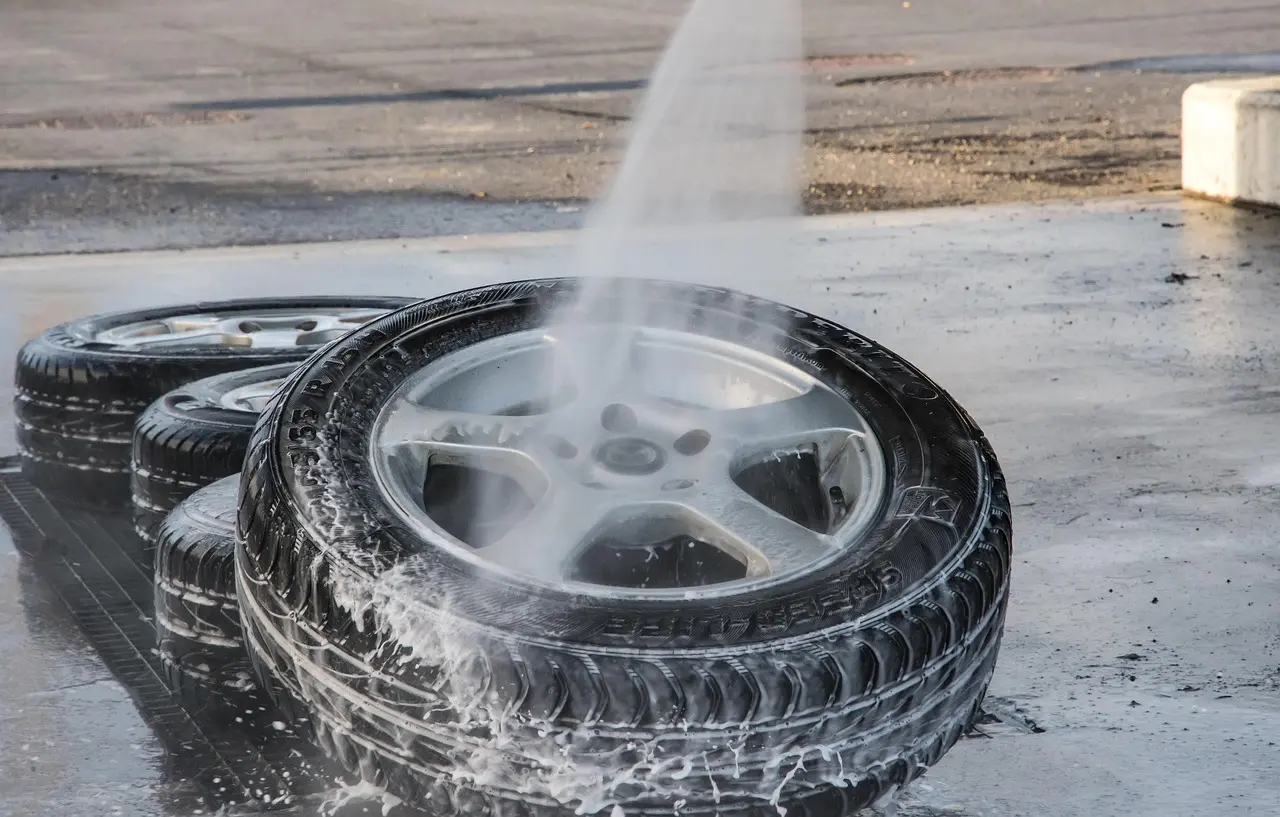
What foam cannons do well is simple: they coat the car in a dense, shaving-cream foam that clings to the panel, then let that foam sit long enough to loosen dirt before you touch the paint. Gibby Car Wash defines the tool as a pressure-washer attachment that sprays thick layers of soapy foam, and that pre-wash step is where the value lives.
Dwell time matters. Foam that clings for a short period can soften loose grime, road film, and winter residue so your wash mitt does less dragging across the surface. That is why foam can help reduce swirl marks and micro-scratches from improper contact washing, but only when the rest of the wash method is also careful.
Soap choice matters more than foam drama. A pH-balanced car wash soap is the safe starting point, and dilution ratio changes the result a lot. Car wash soaps that include wax or sealant additives can add temporary slickness, but they should not be treated as a substitute for proper rinsing or drying.
What the controls actually do
- Spray pattern adjustment: widens or narrows coverage, which changes how evenly the foam lands on large panels, glass, and tight areas.
- Soap draw adjustment: changes concentration, which affects foam thickness and how much soap is used per wash.
- Bottle volume: a 32- to 34-ounce bottle is usually enough for one session on a normal sedan, but refill frequency rises on larger vehicles.
Car and Driver lists adjustable spray pattern and adjustable soap draw on its best overall cannon, which is exactly what you want from this tool. Those adjustments let you tune coverage and concentration instead of accepting whatever the cannon happens to produce out of the box.
What does not work
Foam alone does not stop swirl marks, and thick foam is not proof of better cleaning. If you still rub dirty panels with a dry or poorly rinsed mitt, the paint can still pick up marring. The cannon is a pre-wash step, not a replacement for careful contact washing.
Weak foam is common when the washer is incompatible, the PSI is too low, the soap is wrong, or the mix is too weak. Car and Driver’s tested range of 800–3500 psi shows why compatibility matters. If your washer sits outside the cannon’s working window, the result can be watery foam or poor coverage.
Hard water can also make results look worse than expected. It can interfere with foam quality and leave the impression that the cannon is “bad” when the real issue is water chemistry, detergent choice, or a poor soap-to-water ratio. Storage and cleanup add another penalty, since the bottle, straw, and nozzle need rinsing after use.
Failure cases to watch for
- Wrong soap that does not foam well.
- Low PSI or poor washer compatibility.
- Poor dilution that makes thin foam or wastes soap.
- Hard water that kills cling and leaves residue.
- Skipping the hand wash and expecting foam to do all the work.
Alternatives

- Attaches directly to standard garden hoses
- Adjustable dial customizes foam thickness and coverage
- Reduces risk of swirl marks with thick suds
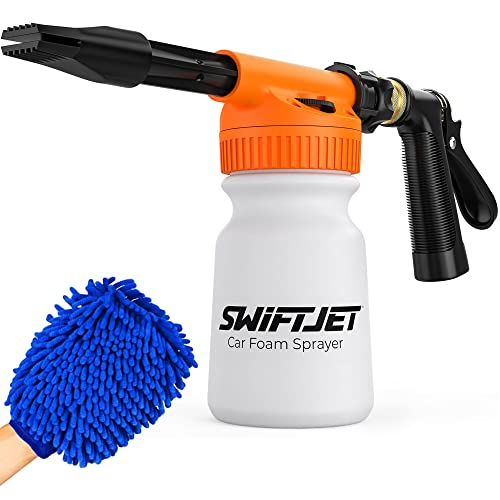
Chemical Guys’ TORQ Foam Blaster 6 is the main non-pressure-washer alternative here because it attaches to a standard garden hose. That makes it a better fit for driveway access without a pressure washer, but it is also a compromise: hose-fed foam is usually less forceful than pressure-washer foam, so the pre-wash effect is typically weaker.
If you need lower entry cost and already have a hose, this is easier to justify than buying a full pressure-washer setup. Based on the spec sheet and the product type, the drawback is obvious: you give up the aeration and punch that make a true foam cannon useful in the first place.

- Includes 5 adjustable spray tips for versatile tasks
- 1/4 inch quick connector fits most pressure washers
- All-in-one kit with gun and accessories included
Novastry’s pressure washer foam cannon gun and sprayer kit makes sense if you want the cannon plus a gun and multiple spray tips in one package. The 1/4 inch quick connector is useful for broad compatibility, but the kit still depends on a pressure washer, so it does not solve the access problem for apartment dwellers or anyone without one.
As a value-minded option, it can be practical for frequent washers who need the accessory set anyway. The tradeoff is that all-in-one kits often spread the budget across extras, so the foam-cannon portion may not be as refined as a higher-end standalone unit.
For owners who do not need foam at all, a two-bucket wash is the safer low-cost route. It costs less, avoids the pressure-washer requirement, and remains a strong choice when you are willing to wash slowly and rinse your mitt often. A rinseless wash is usually better for apartment dwellers, winter-limited setups, and drivers who want less water use and less equipment.
Should you buy it
Buy a foam cannon only if you already own a compatible pressure washer and wash often enough to use the pre-wash step. That is where the benefit shows up: less loose grit on the panel before your mitt touches paint. If you wash infrequently, the setup cost and storage hassle make the case much weaker.
A simple way to think about cost per wash is to add the cannon price, soap cost, and the number of washes you expect to get from one bottle fill. If a cannon costs $40 to $120 and you use it a few times a month, the per-wash cost can fall quickly. If you use it once in a while, the cost stays high and the payoff is small.
A common first-timer mistake is choosing a foam cannon with the wrong pressure rating and discovering it barely produces any suds. Another is filling the bottle with whatever soap is already on hand, then blaming the tool when the foam collapses in a few seconds. The tool is only as useful as the washer, soap, and dilution behind it.
Decision table
| User type | Water setup | Wash frequency | Recommendation | Simple cost-per-wash estimate | Failure-mode checklist |
|---|---|---|---|---|---|
| Enthusiast with pressure washer | Dedicated washer, garage or driveway | Weekly or more | Buy a foam cannon | Higher at purchase, then low per use if the cannon gets regular use | Check PSI compatibility, soap draw, and rinse cleanup |
| Daily driver owner | Pressure washer on hand | Every 1-2 weeks | Buy if pre-wash speed matters | Moderate after the first few washes if you already own the washer | Make sure the soap foams well and dwell time is long enough |
| Ceramic-coated car owner | Pressure washer available | Regular but careful washes | Buy if you still do a contact wash | Worth it when it reduces grime before mitt contact | Do not assume coating means no pre-wash is needed |
| Apartment dweller | No pressure washer | Any | Skip it; use rinseless wash | Lower than buying a cannon and washer | No washer access, storage hassle, weak foam from hose-only setups |
| Lightly dirty weekend car | Hose and bucket only | Occasional | Use a two-bucket or simple hose-and-bucket wash | Lowest total cost | Foam cannon adds expense without much gain |
If your main goal is lower risk, the question is not whether foam looks thick. It is whether the cannon reduces contact with loose grit before the wash mitt touches the paint. If the answer is no because you lack a washer, wash only lightly dirty cars, or need a low-cost method, skip the cannon and choose the simpler wash.
Frequently asked questions
What is a car wash foam cannon?
A car wash foam cannon is a pressure-washer attachment that mixes soap and water into thick foam, then sprays it onto the vehicle as a pre-wash step. The foam helps loosen dirt and carry away loose grit before contact washing, which is why many owners use it before the mitt or sponge.
Can you use car wash soap in a foam cannon?
Yes, but the soap needs to foam well and be mixed at the right dilution. pH-balanced car wash soap is usually the safe choice, and some formulas add wax or sealant for extra slickness. If the dilution is off, even good soap can produce thin foam and weak cling.
Can you put any car wash soap in a foam cannon?
No. Some soaps are too thin, too concentrated, or simply not designed to foam through a cannon. That leads to weak coverage, poor dwell time, and wasted product. The best results usually come from soap made for foam application, used at the manufacturer’s recommended ratio.
Are car wash foam cannons worth it for regular washing?
They are worth it for regular washing if you already own a compatible pressure washer and use the pre-wash every time. If you wash only occasionally, the purchase tends to be poor value because the setup cost and cleanup effort are spread over too few washes.
Do foam cannons reduce swirl marks and scratches?
They can help reduce swirl marks and micro-scratches by loosening dirt before hand contact, but they do not guarantee a scratch-free wash. Technique matters more than foam alone. If you drag a dirty mitt across the paint, the risk remains even with a thick foam layer.
Do you need a pressure washer for a foam cannon?
Yes. A true foam cannon depends on a pressure washer to aerate the soap mix and throw it across the panel. Car and Driver’s tested range of 800–3500 psi shows why compatibility matters. Without a pressure washer, a hose-fed alternative is the better fit.
Products related to this article
Sponsored / affiliate links. As an Amazon Associate I earn from qualifying purchases. I may earn additional commission from eligible campaigns.