Car Window Fan for Dogs: Keep Your Pet Cool and Safe
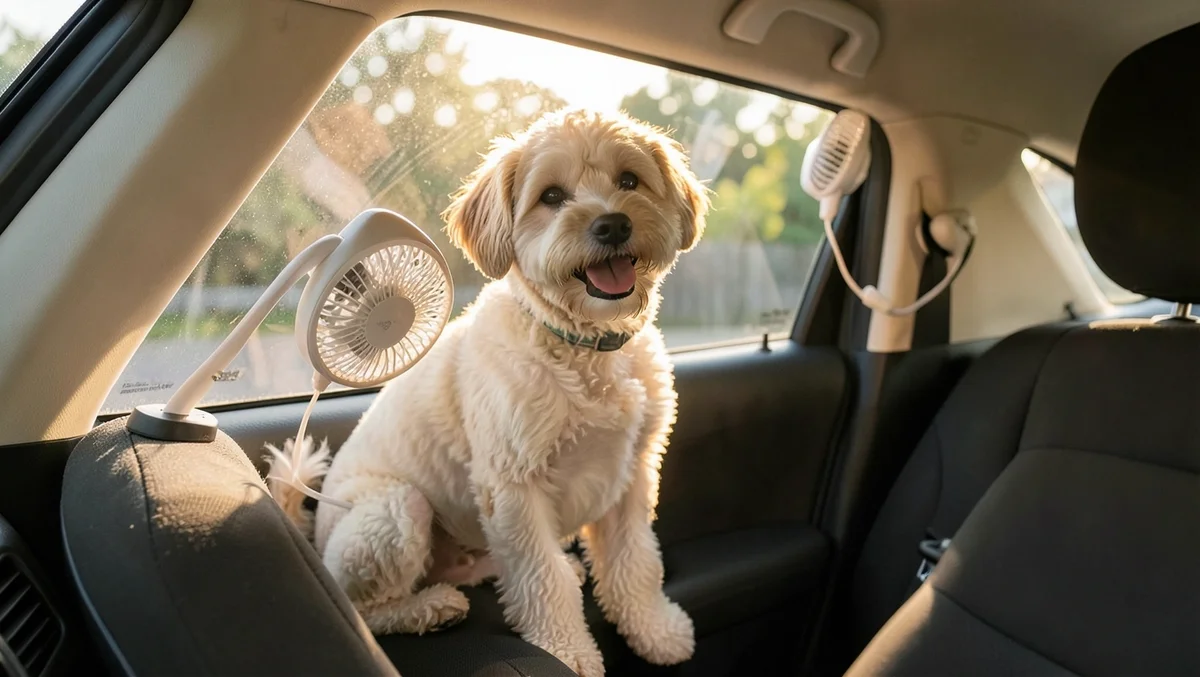
A car window fan for dogs can move air at low speeds or while parked in full shade, but it cannot cool a hot car. If the cabin is above the outdoor temperature, treat it as a comfort aid, not protection. Used badly, a fan can create a false sense of safety while your dog still overheats. This guide compares window fans with safer backups, explains when airflow helps, and shows when to leave the dog out of the car.
What a car window fan can do
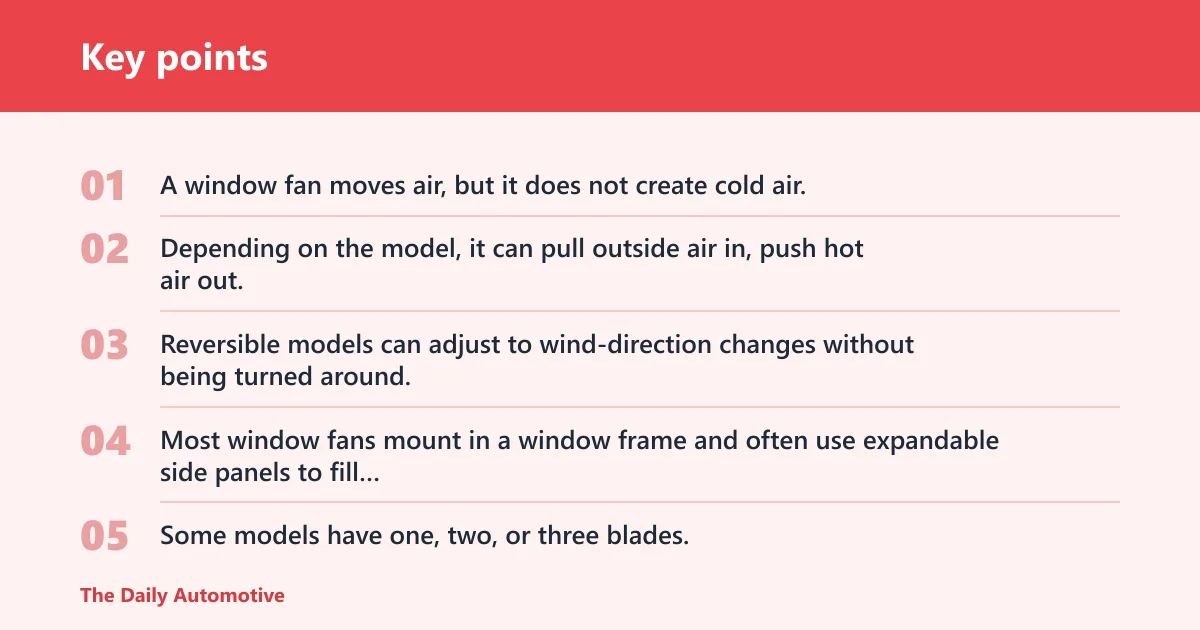
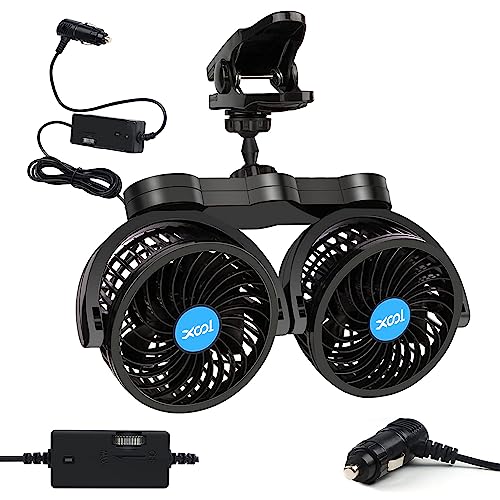
A window fan moves air, but it does not create cold air. Depending on the model, it can pull outside air in, push hot air out, or exchange air in both directions. Reversible models can adjust to wind-direction changes without being turned around, which makes them more useful for changing traffic and parking conditions.
Air intake, exhaust, and exchange
Most window fans mount in a window frame and often use expandable side panels to fill the opening. Some models have one, two, or three blades, and some use electronically reversible motors with three speeds. That matters for a dog because the fan’s job is moving air, not cooling the cabin.
In a moving car, airflow can reduce the stuffy feeling near the back seat or cargo area. In a parked car, it may move stale air, but it is not enough to make the car safe for a dog. The simplest model is this: airflow can improve comfort, while shade, air conditioning, and trip timing control the heat load.
Where a fan helps most
A fan is most useful when the cabin already has some other cooling plan in place. If the air conditioner is on, the fan can support circulation. If the car is parked and the driver is present, it can help reduce stagnant air for a short period. If the car is hot, the fan is not a fix.
Picture a sedan with the air conditioner running and a reversible window fan mounted at the rear window. The fan may help move cooled air toward the cargo area. Picture the same car parked in the sun with the fan running and no air conditioning. The fan still moves air, but the dog remains in a dangerous heat load.
When is a window fan enough?
A window fan is “enough” only in narrow situations, and even then it is a support tool rather than a primary cooling method. It makes the most sense during moving-car travel with active air conditioning, or as a short-lived ventilation aid while the driver is right there and the vehicle is shaded. It is generally not enough for an unattended parked car.
Moving car with air conditioning
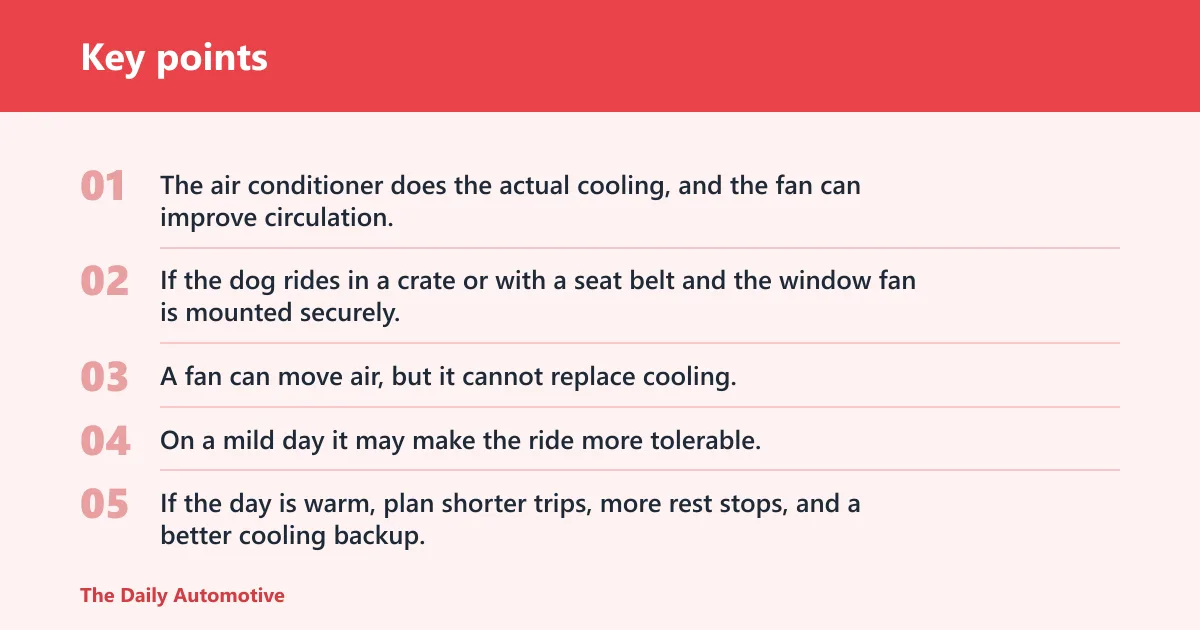
This is the best case for a window fan. The air conditioner does the actual cooling, and the fan can improve circulation. If the dog rides in a crate or with a seat belt and the window fan is mounted securely, it can help move conditioned air across the cabin.
Moving car without air conditioning
This is a weaker setup. A fan can move air, but it cannot replace cooling. On a mild day it may make the ride more tolerable, yet it still leaves the dog dependent on outdoor temperature, shade, and speed. If the day is warm, plan shorter trips, more rest stops, and a better cooling backup.
Parked car with driver present
This can work only as a brief stopgap. The driver must stay with the dog, the car should be in shade, and the fan should not be treated as a reason to delay. If the cabin starts warming up, the better response is to leave, not to keep the dog there longer because the fan is running.
Quick stop in shade
A shaded stop is safer than a sun-exposed one, but it is still not a free pass. A fan may help air movement while you load supplies or pay for fuel, yet the stop should stay short. If the errand takes longer than planned, the dog should not remain in the car.
Heat-risk dogs: brachycephalic, senior, overweight
Dogs with flatter faces, older dogs, and overweight dogs are commonly reported to have less tolerance for heat stress. For them, a fan should be used with lower expectations and more caution. These dogs need a stronger cooling plan than ventilation alone, plus shorter travel blocks, more frequent checks, and a lower threshold for canceling the trip.
Window fan decision matrix
Use this table to decide whether a car window fan is enough for the situation. The point is not whether the fan “works” in a technical sense. The point is whether it changes risk enough to matter for your dog.
| Scenario | Expected benefit | Risk level | Best backup |
|---|---|---|---|
| Moving car with AC | Helps move cooled air through the cabin and toward the dog | Low if the dog is restrained and the fan is mounted securely | Use the vehicle AC first; add shade and a spill-proof water bowl |
| Moving car without AC | Improves airflow, but does not cool the cabin | Moderate to high on warm days | Shorten the trip, add window shades, and plan frequent stops |
| Parked car with driver present | Can move stale air during a very short stop | High if the cabin is already warm | Keep the stop brief, park in shade, and return to motion or leave the dog out of the car |
| Quick stop in shade | Limited ventilation aid during loading or unloading | High if the stop drags on | Use full-window shades, keep the engine and AC plan clear, and avoid waiting periods |
| Dog at heat-risk | Small comfort gain only; not enough on its own | Very high without active cooling | Use AC, shorten the ride, and avoid leaving the dog in the vehicle at all |
What is safer than a fan alone?
Safer backups matter more than the fan itself. Shade, air conditioning, and travel timing do more for comfort than a window fan by itself. For parked situations, the answer is not more airflow, it is less time in the car.
Window shades on all windows
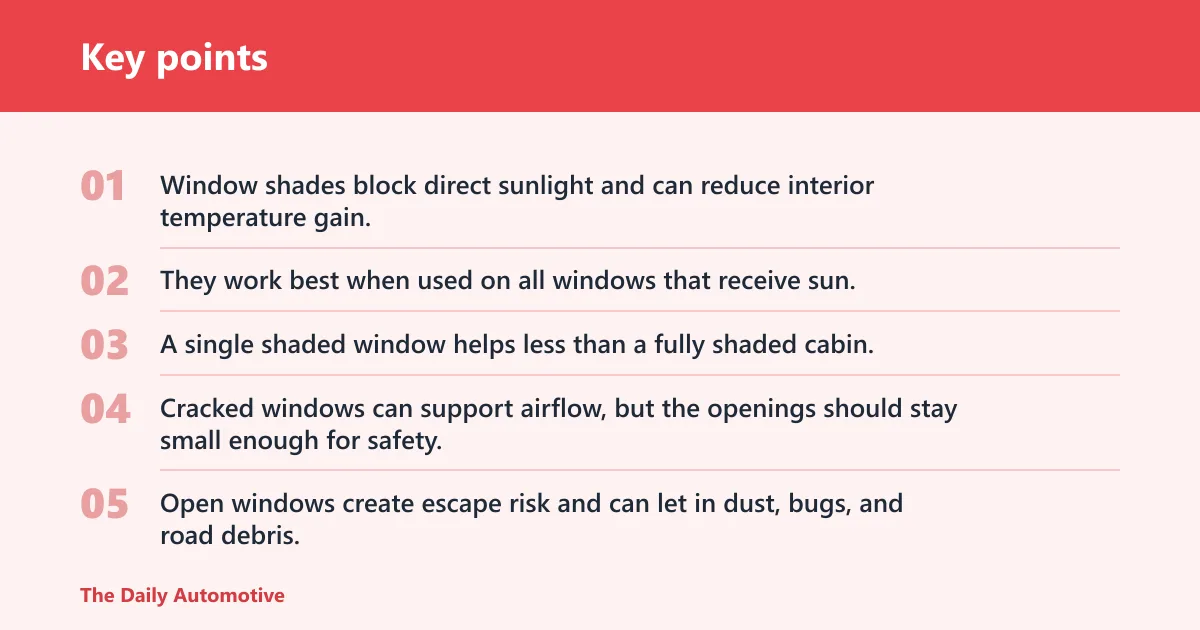
Window shades block direct sunlight and can reduce interior temperature gain. They work best when used on all windows that receive sun. A single shaded window helps less than a fully shaded cabin, especially on a bright day with long exposure.
Cracked windows for airflow
Cracked windows can support airflow, but the openings should stay small enough for safety. Open windows create escape risk and can let in dust, bugs, and road debris. A fan can pair with cracked windows only as a ventilation aid, not as permission to leave a dog unattended in a hot car.
Hydration bowl in the car
A portable water bowl should be spill-proof for car use. Keep it filled and within reach before you leave. Water does not cool the cabin, but it helps the dog recover between stops and gives you a practical check: a dog that refuses water may need a rest, shade, or a stop in travel.
Cooling mat as a comfort aid
Cooling mats contain a gel that activates when the dog lies on them. They can make a crate or back seat more comfortable, but they do not replace vehicle cooling. Think of the mat as a resting surface, not as a substitute for AC or shade.
Portable battery-powered AC for longer trips
A portable battery-powered air conditioning unit is a better option than a fan if the trip is long and the vehicle setup allows it. Check the manufacturer’s listing for power source, runtime, and vehicle compatibility. Do not assume any accessory can be used safely without confirming the manual and local rules first.
How should you set up the dog in the car?
Set up the dog for restraint first, then ventilation. A pet seat belt or a crate keeps the dog from moving into unsafe positions near windows, dash panels, or loose gear. A fan cannot compensate for a dog that is unrestrained and able to jump, twist, or be thrown in a sudden stop.
Pet seat belt for travel
A pet seat belt is recommended for safety because it helps restrain an unrestrained dog during travel. Use it with a properly fitted harness, not a collar. Follow the vehicle and product manual, never exceed the vehicle’s rated roof, hitch, or tow limit if you are carrying gear, keep items out of airbag zones and the driver’s view, and check local laws.
Crate as the safer restraint option
A crate is often the safer restraint option because it helps prevent jumping from windows and keeps the dog contained if the car stops suddenly. Choose a crate sized for the dog and secure it so it cannot slide. The crate should not block the driver’s view or sit where an airbag could deploy into it.
Why loose dogs are a problem near open windows
Unrestrained dogs can be injured by sudden stops or flying debris. Open windows also invite escape behavior, especially if the dog sees another animal, hears a noise, or leans toward airflow. A fan does nothing to reduce that risk.
Keeping items out of airbag zones and the driver’s view
Any fan, crate, seat belt anchor, shade, or water bowl must stay clear of airbag zones and the driver’s view. If a setup blocks mirrors, interferes with pedals, or could become a projectile, it needs to be moved before the trip begins. Follow the vehicle manual for placement rules.
What are the limits and risks?
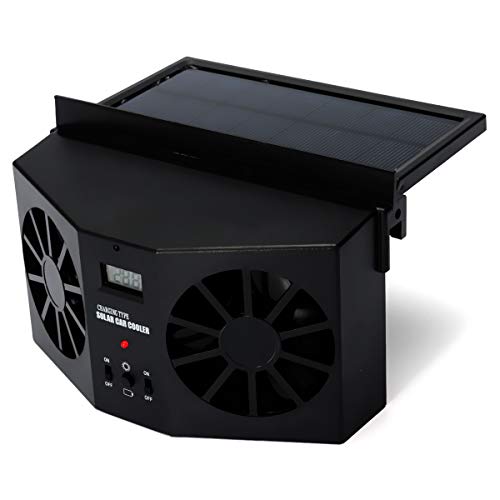
Window fans have real limits. Mounting can loosen, airflow can give a false sense of safety, and open-window setups can expose the dog to debris or escape. A solar-powered fan may help with ventilation without draining the battery, but it still cannot substitute for cooling. A battery-powered fan can also run down or underperform if the vehicle power setup is weak.
Loose mounting and escape risk
A window fan usually depends on the window frame and expandable side panels for support. If the mount shifts, rattles, or leaves gaps, the fan can become a hazard. Loose mounting is a bigger problem if the dog can reach it or if the window opening is large enough to tempt jumping.
Debris, dust, and eye protection
Open-window travel can kick up dust and small objects. Dog goggles are an optional add-on for open-window travel when the dog’s eyes are exposed, but they are not necessary for every trip and do not solve heat risk. They are about eye protection, not cooling.
A common first-timer mistake is thinking a cracked window plus a fan equals a safe parked setup. It does not. If the cabin is heating up, the better answer is to shorten the stop or remove the dog from the situation altogether.
Solar-powered fan and battery draw limits
A solar-powered fan can help with ventilation without draining the battery, but only within its own limits and only when it gets enough light. A 5V miniature cooling fan uses 0.2 A current and measures 30 mm by 30 mm by 8 mm, which shows how small some auxiliary fans are compared with full-size vehicle cooling needs.
Why a fan can create false confidence
Fans move air, which can feel reassuring, but they do not tell you whether the cabin temperature is still rising. That is why a dog can look “fine” for a short period and still be at risk. If the setup depends on a fan to make a hot car acceptable, the setup is wrong.
Frequently asked questions
Are car window fans safe for dogs in the car?
They can be safe only as a ventilation aid during travel or during a very brief stop with the driver present. They are not safe as a primary cooling method, and they do not make a parked car safe. Use restraint, shade, and air conditioning first.
Do window fans actually keep a dog cool in a parked car?
No. They can move air, but they cannot remove enough heat from a parked car to protect a dog. In a parked vehicle, the safer choice is to avoid leaving the dog there at all. Shade and a fan are support tools, not a solution.
What type of fan is best for a dog in the car?
A reversible window fan is the most useful window-mounted option because it can pull air in or push hot air out, and some models can adjust to wind-direction changes. For longer trips, a battery-powered portable air conditioning unit is a better cooling choice than any fan.
How do I keep my dog cool on car rides without air conditioning?
Use full-window shades, cracked windows for small amounts of airflow, short travel blocks, and frequent rest stops. Bring a spill-proof water bowl and limit exposure on warm days. If the dog is brachycephalic, senior, or overweight, shorten the trip further or avoid it.
Can I leave a fan running in the car for my dog?
Only if the dog is supervised and the product manual allows that use with your vehicle power source. A fan should never be the reason you leave the dog in a hot car. If you cannot stay with the dog, do not rely on the fan to keep the cabin safe.
How often should I stop to give my dog water on a road trip?
A practical rule is a break every hour to prevent dehydration. Offer water at each stop, using a spill-proof bowl so the car stays usable. If the dog is panting hard, seems restless, or refuses water, cut the drive shorter and reassess the cooling setup.
Should my dog wear a seat belt or crate when using a car fan?
Yes. A pet seat belt or a crate is recommended because it keeps the dog restrained if the car stops suddenly and helps prevent jumping from windows. The crate is often the safer restraint option, while the seat belt works well when fitted correctly and used with a proper harness.
Products related to this article
Sponsored / affiliate links. As an Amazon Associate I earn from qualifying purchases. I may earn additional commission from eligible campaigns.