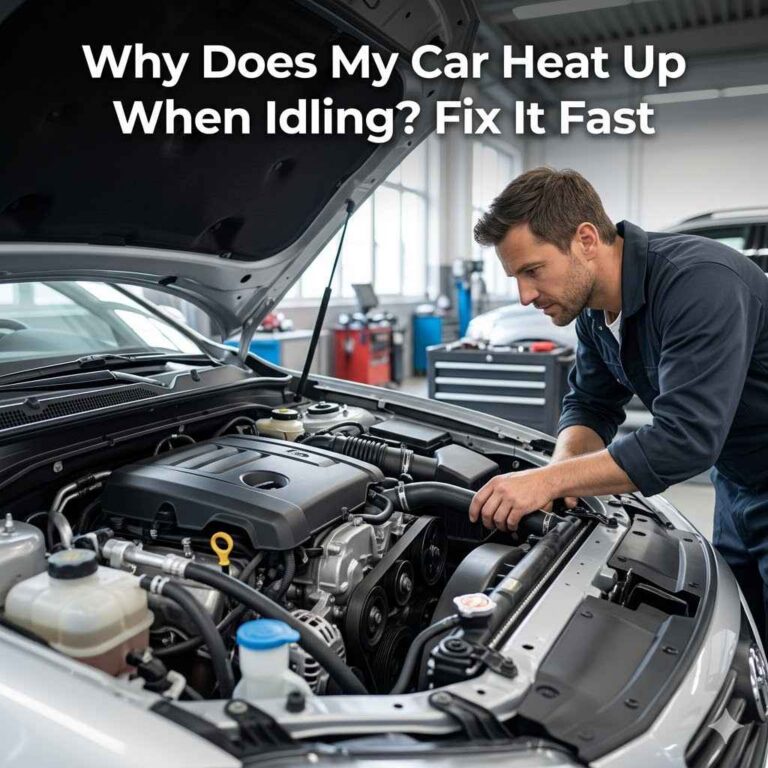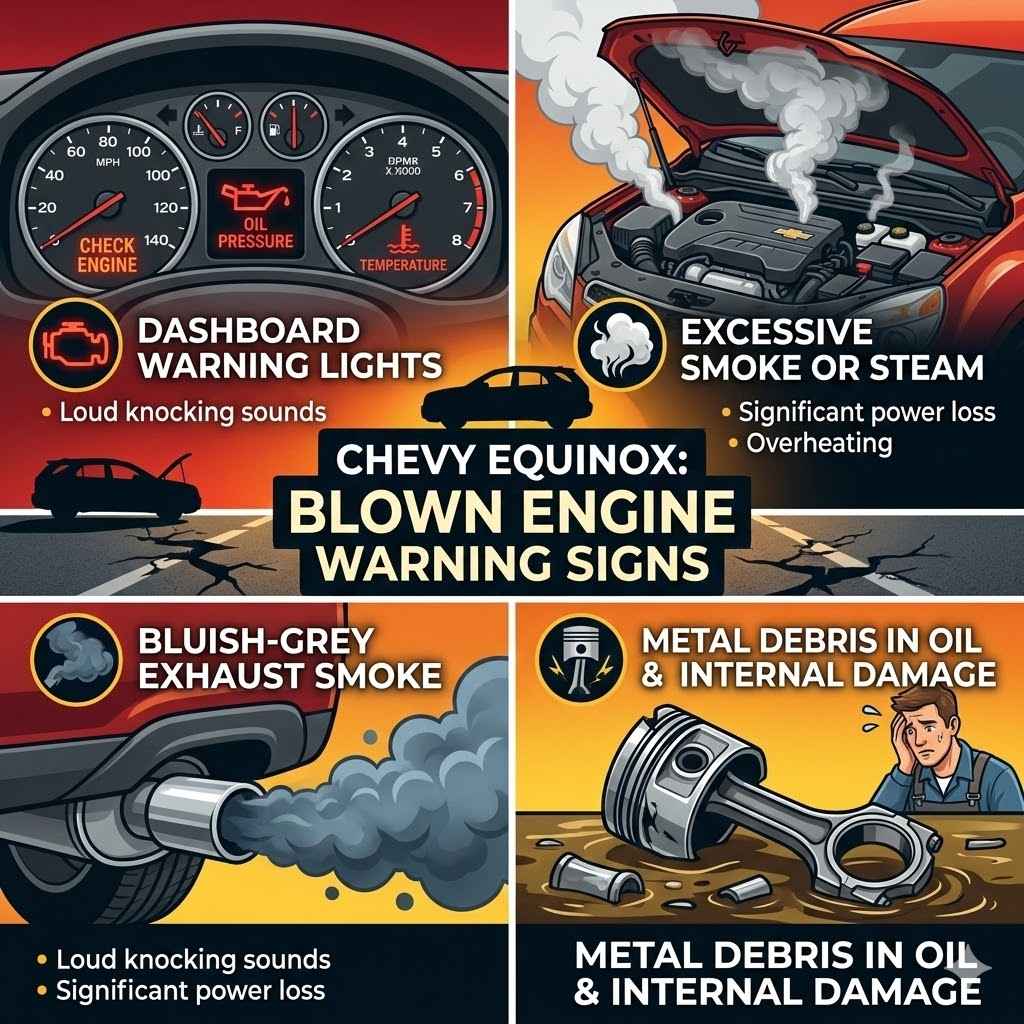
Chevy Equinox Blown Engine Warning Signs
Figuring out if your Chevy Equinox engine is having big problems can feel tricky, especially if you’re new to car stuff. It’s like a puzzle, and you want to solve it before it gets worse. You might hear strange noises or see odd lights, and wonder what they mean.
This guide makes it simple. We’ll walk you through the clear signs that point to a blown engine, step by step. No confusing jargon, just straightforward advice to help you know what’s happening with your SUV.
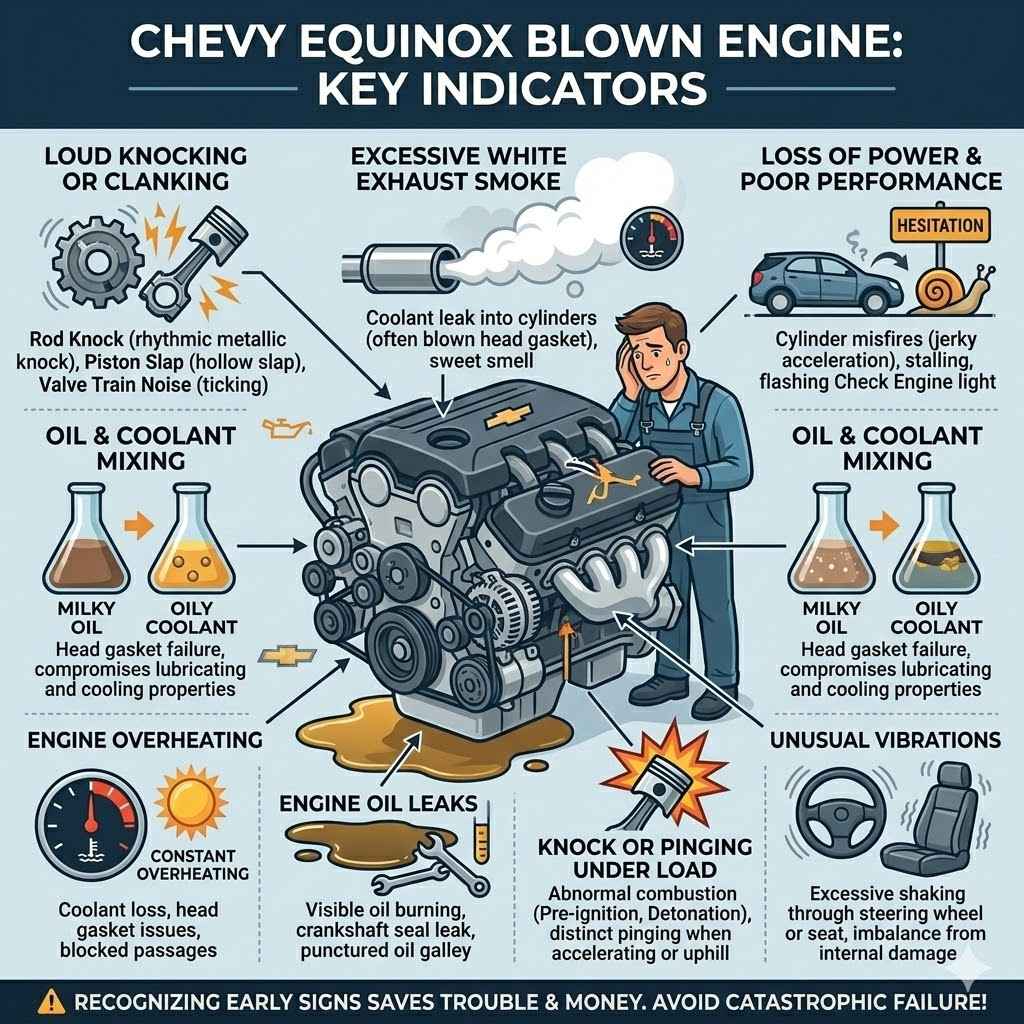
Chevy Equinox Blown Engine Key Indicators
When an engine is seriously damaged, it doesn’t usually keep its problems a secret. There are often loud, noticeable symptoms that tell you something is very wrong. Recognizing these early signs can save you a lot of trouble and money down the road.
Ignoring them often leads to more expensive repairs. We will look at the most common ways an engine might signal it’s blown or close to it. These indicators are your car’s way of asking for help.
Loud Knocking or Clanking Noises
A persistent, loud knocking or clanking sound coming from your engine is a major red flag. This noise often means that metal parts inside the engine are hitting each other in ways they shouldn’t. It can be caused by a rod bearing failing, where the connecting rod detaches from the crankshaft.
This leads to a significant loss of lubrication and forces.
- Rod Knock: This is perhaps the most notorious sound of a failing engine. It sounds like a deep, rhythmic metallic knocking that often gets louder with engine speed. It suggests that the connecting rod bearings are worn out, and the rod is banging against the crankshaft.
- Piston Slap: This occurs when the piston is loose inside the cylinder. It creates a hollow, slapping sound, especially when the engine is cold. As the engine warms up, the piston expands, and the noise might lessen or disappear.
- Valve Train Noise: Issues with valves, lifters, or camshafts can create ticking or rattling sounds. While not always indicating a “blown” engine, persistent and loud valve train noise can point to internal wear or lubrication problems that could escalate.
These sounds are your engine’s distress calls. A healthy engine should run smoothly without these aggressive metallic noises. If you hear anything like this, it’s best to stop driving and get it checked immediately.
Continuing to drive could cause catastrophic engine failure, making the repair much more costly.
Excessive White Smoke from the Exhaust
Seeing a large amount of white smoke coming from your exhaust pipe is a serious sign of trouble. This smoke usually means that coolant is leaking into the combustion chambers. Coolant burning off inside the engine creates this thick, white vapor.
- Coolant Leak into Cylinders: The most common cause of excessive white smoke is a blown head gasket. The head gasket seals the engine block and cylinder head. When it fails, coolant can seep into the cylinders.
- Burning Coolant Smell: You might also notice a sweet, burning smell. This is the smell of the coolant itself being burned. It’s a distinctive odor that often accompanies the white smoke.
- Overheating Engine: A leaking head gasket often leads to the engine overheating because coolant is escaping the system. If your temperature gauge is rising rapidly, and you see white smoke, it’s a strong indicator of a major internal engine issue.
A small amount of white vapor when the engine is first started on a cold day is normal, as it’s just condensation. However, if the smoke is thick, persistent, and smells sweet, it’s a clear sign that coolant is getting where it shouldn’t be. This can quickly damage engine components due to overheating and corrosion.
Loss of Engine Power and Poor Performance
When an engine is blown, it struggles to perform its basic functions. This means you’ll likely notice a significant drop in power. The car may feel sluggish, hesitate when you press the gas pedal, or even stall unexpectedly.
- Misfires: A blown engine can cause cylinders to lose compression. This leads to engine misfires, where one or more cylinders aren’t firing correctly. You might feel jerky acceleration or a rough idle.
- Hesitation and Stalling: If the engine can’t build enough power, it will hesitate when you try to accelerate. In severe cases, it might not be able to keep running, leading to unexpected stalling.
- Check Engine Light: A persistent and flashing Check Engine light often indicates a severe misfire or other critical engine problem. This is a universal signal that something is very wrong with your engine’s operation.
This lack of power isn’t just annoying; it can be dangerous, especially when merging into traffic or climbing hills. It signifies that the engine’s internal components are not working together efficiently anymore.
Oil and Coolant Mixing
Seeing oil in your coolant reservoir, or coolant in your oil, is a sure sign of a serious internal leak. This typically happens when the head gasket fails. The gasket separates the oil passages from the coolant passages.
- Milky Oil: Check your engine oil. If it looks like chocolate milk or has a frothy, tan appearance, it means coolant has mixed with the oil. This is extremely damaging as oil loses its lubricating properties.
- Oily Coolant: Look at your coolant reservoir. If you see a layer of oil floating on top of the coolant, or the coolant has a sludgy, dark appearance, oil is entering the cooling system. This can cause overheating and blockages.
- Head Gasket Failure: This mixing of fluids is a classic symptom of a blown head gasket. The gasket is compromised, allowing the two critical fluids to contaminate each other.
Oil and coolant are designed to stay separate. When they mix, both fluids are compromised, and engine damage is imminent. This is a situation that requires immediate attention to prevent further destruction of engine parts.
Engine Overheating
An engine that constantly overheats is a strong indicator of internal problems. While a faulty thermostat or radiator can cause overheating, persistent issues often point to deeper engine damage.
- Coolant Loss: If you are frequently adding coolant and still experiencing overheating, it means coolant is escaping the system. This could be a slow internal leak into a cylinder or oil.
- Head Gasket Issues: A blown head gasket can allow hot exhaust gases to enter the cooling system. This can rapidly increase coolant temperature and pressure, leading to overheating.
- Blocked Passages: Internal corrosion or sludge can block coolant passages within the engine. This prevents proper circulation and heat dissipation, causing the engine to run too hot.
Overheating is very hard on an engine. It can warp metal parts, damage seals, and cause further component failures. If your temperature gauge is frequently in the red zone, it’s a critical warning.
Engine Oil Leaks
While minor oil leaks can sometimes be simple fixes like a worn seal, major oil leaks can signal a blown engine. This often happens if an internal component has failed and punctured the engine block or a major oil galley.
- Crankshaft Seal Leak: A blown crankshaft seal can cause a significant amount of oil to leak. This seal is at the front or rear of the engine where the crankshaft exits.
- Oil Pan Damage: A severe impact can damage the oil pan, leading to a large leak. However, a blown engine might also cause internal pressure that blows out a seal or gasket.
- Visible Oil Burning: If oil is leaking onto hot engine parts, you’ll see smoke and smell it burning. A large, uncontrolled leak is a sign of severe damage.
It’s crucial to keep an eye on your oil level. A sudden and drastic drop in oil level, especially accompanied by visible leaks, is a serious concern. Low oil pressure can quickly lead to complete engine failure.
Engine Knock or Pinging Under Load
A distinct pinging or knocking sound that occurs when you accelerate or go uphill can indicate serious internal engine issues. This is often related to abnormal combustion within the cylinders.
- Pre-ignition: This happens when the fuel-air mixture ignites before the spark plug fires. Hot spots in the combustion chamber, often caused by carbon buildup or damage, can cause this.
- Detonation: This is a more violent explosion that occurs after the spark plug fires, but the fuel-air mixture explodes unevenly. It’s often described as a rapid series of sharp metallic knocks.
- Low Octane Fuel: While using a lower octane fuel than recommended can cause pinging, if it happens even with the correct fuel, it signals an internal problem. A blown engine can lead to uneven compression, which contributes to these abnormal combustion events.
This type of sound puts immense stress on engine components. It can lead to piston damage, cylinder head issues, and even damage to the crankshaft. It’s a clear sign that the combustion process is not happening correctly inside your engine.
Unusual Vibrations
While some engine vibration is normal, excessive or new vibrations can point to serious internal engine problems. These can be felt through the steering wheel, the seat, or the entire car.
- Imbalance from Internal Damage: If pistons, connecting rods, or valves are damaged or not moving in sync, it can create an imbalance within the rotating assembly of the engine. This imbalance is felt as a strong vibration.
- Engine Mounts: While broken engine mounts can cause vibrations, if the engine itself is severely damaged, it can put excessive stress on the mounts, leading to their failure and amplified vibrations.
- Misfires: As mentioned, misfires cause the engine to run unevenly. This uneven running can manifest as a persistent vibration that the car shakes with.
These vibrations are not just uncomfortable; they indicate that something is physically wrong with how the engine is operating. It could be a sign of major internal component failure.
Chevy Equinox Blown Engine Diagnosis Steps
If you suspect your Chevy Equinox engine might be blown, it’s essential to confirm it through a few key diagnostic steps. This isn’t about performing complex repairs yourself, but rather gathering information to understand the severity of the problem. These checks can help you communicate better with a mechanic and make informed decisions.
We will guide you through simple checks you can do.
Compression Test
A compression test is a crucial tool for diagnosing engine health. It measures the pressure built up inside each cylinder when the piston is at the top of its stroke. Low compression in one or more cylinders is a strong indicator of internal engine damage.
- How it Works: A compression tester is a gauge that screws into the spark plug hole. You crank the engine with all spark plugs removed, and the gauge shows the peak pressure in that cylinder.
- Interpreting Results: Healthy engines have consistent compression across all cylinders, usually within a specific PSI range for that model. A significant drop in compression (more than 10-15% difference between cylinders) or very low readings suggests problems like worn piston rings, damaged valves, or a blown head gasket.
- Example: If your Chevy Equinox is supposed to have 150 PSI in each cylinder and one cylinder reads only 80 PSI, it’s a clear sign that this cylinder isn’t sealing properly, likely due to internal damage.
This test provides a clear, quantifiable measure of your engine’s mechanical integrity. It’s a fundamental step in confirming if an engine is truly “blown.”
Leak-Down Test
A leak-down test is more detailed than a compression test. It specifically identifies where compressed air is escaping from the cylinder, helping pinpoint the source of the compression loss.
- Procedure: With the piston at the top of its compression stroke ( TDC – Top Dead Center), compressed air is introduced into the cylinder. The tester measures the percentage of air that leaks out.
- Identifying Leaks: You listen for escaping air. Air hissing from the exhaust pipe means leaking exhaust valves. Air from the intake means leaking intake valves. Air from the oil fill cap or dipstick tube indicates leaking piston rings. Air from the coolant reservoir or radiator means a blown head gasket or cracked cylinder head.
- Scenario: If you perform a leak-down test and hear significant hissing from the coolant reservoir, it strongly suggests coolant is entering the cylinder, confirming a head gasket failure.
This test is excellent for differentiating between various types of internal engine damage. It gives mechanics a precise location of the fault.
Oil Analysis
Sending a sample of your engine oil to a lab for analysis can reveal a lot about internal engine wear and contamination. This is a proactive way to detect problems before they become catastrophic.
- Detecting Wear Metals: The lab can detect high levels of metals like iron, aluminum, or copper in your oil. These indicate excessive wear on engine components like bearings, pistons, or the cylinder walls.
- Contamination: Oil analysis can also identify contaminants like coolant (glycol) or fuel. The presence of glycol is a direct sign of a coolant leak into the oil system.
- Example: A report showing elevated iron levels coupled with traces of glycol would be a strong indicator of a blown head gasket and internal engine wear.
This scientific approach provides data-driven evidence of engine health or decline. It’s particularly useful for identifying gradual wear or subtle contamination issues.
Visual Inspection of Spark Plugs
The condition of your spark plugs can offer clues about what’s happening inside your engine’s combustion chambers. Different issues will leave distinct marks on the spark plug electrodes and ceramic insulator.
- Oily Plugs: If a spark plug is coated in oil, it means oil is getting into the combustion chamber, likely past worn piston rings or valve seals.
- Coolant-Soaked Plugs: Spark plugs that look wet or stained with a white or greenish residue suggest that coolant is entering the combustion chamber. This is a strong sign of a blown head gasket or cracked cylinder head.
- Deposits: Excessive carbon deposits or metal fragments on the plug can indicate incomplete combustion or internal engine damage.
Removing and examining your spark plugs is a relatively easy check. The visual evidence they provide can be quite revealing about the internal state of the engine.
Listening to the Engine
As emphasized before, the sounds your engine makes are critical diagnostic tools. Trust your ears to detect anomalies.
- Knocking/Clanking: Deep metallic sounds suggest internal component failure, like rod bearings or pistons.
- Hissing: A hissing sound can indicate a vacuum leak or, more seriously, escaping combustion gasses into the cooling system or crankcase.
- Ticking/Rattling: These sounds might point to valve train issues, but if they are loud and persistent, they could also be related to low oil pressure and internal wear.
Don’t dismiss unusual noises. If a sound is new, loud, or concerning, it warrants further investigation. It’s often the first sign something is seriously wrong.
What to Do If Your Chevy Equinox Engine Is Blown
Discovering that your Chevy Equinox engine is blown is disheartening, but there are clear steps to take. The immediate priority is to prevent further damage and figure out the best course of action. This involves stopping the car and assessing your repair options.
Stop Driving Immediately
The most crucial step if you suspect a blown engine is to stop driving the vehicle as soon as it is safe to do so. Continuing to drive, even for a short distance, can turn a repairable problem into an irreparable one.
- Prevent Further Damage: Continued operation with a blown engine can lead to complete mechanical failure. This means pieces of the engine could break apart, destroying other components and making repairs astronomically expensive.
- Safety Risk: A failing engine can stall unexpectedly, potentially putting you and other drivers in a dangerous situation. It can also overheat, leading to fires.
- Peace of Mind: Stopping early prevents you from breaking down in a more dangerous location and allows you to calmly consider your next steps.
Pull over to the side of the road, turn off the engine, and call for a tow truck. Do not try to restart the engine if you suspect a major issue.
Get a Professional Diagnosis
Once your car is safely towed, the next step is to have a qualified mechanic perform a thorough diagnosis. They have the tools and expertise to confirm if the engine is blown and determine the extent of the damage.
- Expert Assessment: Mechanics can perform advanced tests like cylinder leak-down tests, engine scope analysis, and oil pressure tests that are beyond the capabilities of most DIYers.
- Accurate Repair Estimate: A professional diagnosis will give you a clear understanding of the problem and a precise estimate for the repair costs. This is vital for making an informed decision.
- Trusted Recommendations: A good mechanic can advise you on whether repair is feasible and cost-effective, or if replacing the engine is a better option.
Don’t skip this step. Guessing about engine problems can lead to unnecessary expenses or incorrect repairs.
Consider Repair vs. Replacement
When faced with a blown engine, you generally have two main options: repair the existing engine or replace it. The decision often comes down to cost, age of the vehicle, and the severity of the damage.
- Repairing the Engine: This might involve replacing specific damaged parts like pistons, rods, valves, or the head gasket. It can be cheaper if only a few components are affected, but it’s not always possible if the engine block itself is damaged.
- Replacing the Engine: This involves installing a new, remanufactured, or used engine. Remanufactured engines often come with a warranty and are a good balance of cost and reliability. Used engines are cheaper but carry more risk.
- Cost-Benefit Analysis: A mechanic can help you weigh the costs. If the vehicle is old and has other potential issues, investing in a costly engine repair might not be wise. For newer or well-maintained vehicles, a full replacement might be the better long-term solution.
It’s important to get quotes for both options. Sometimes, repairing a blown engine can be nearly as expensive as a full replacement, especially if specialized parts or extensive labor are required.
Evaluate the Vehicle’s Value
Before committing to expensive repairs or replacement, consider the overall value of your Chevy Equinox. If the vehicle is older or has high mileage, the cost of an engine replacement might exceed its market value.
- Market Value: Research the current market value of your Chevy Equinox in good condition. Use online car valuation tools or check local listings.
- Repair Cost vs. Value: Compare the estimated cost of repair or replacement to the vehicle’s value. If the repair cost is more than 50-75% of the car’s value, it might be more practical to sell it as-is or trade it in for a newer vehicle.
- Future Reliability: Even after repairs, an older vehicle might have other components nearing the end of their lifespan. Factor this into your decision.
This evaluation helps you avoid over-investing in a vehicle that might not provide a good return. Sometimes, it’s more financially sound to cut your losses and move on to a more reliable vehicle.
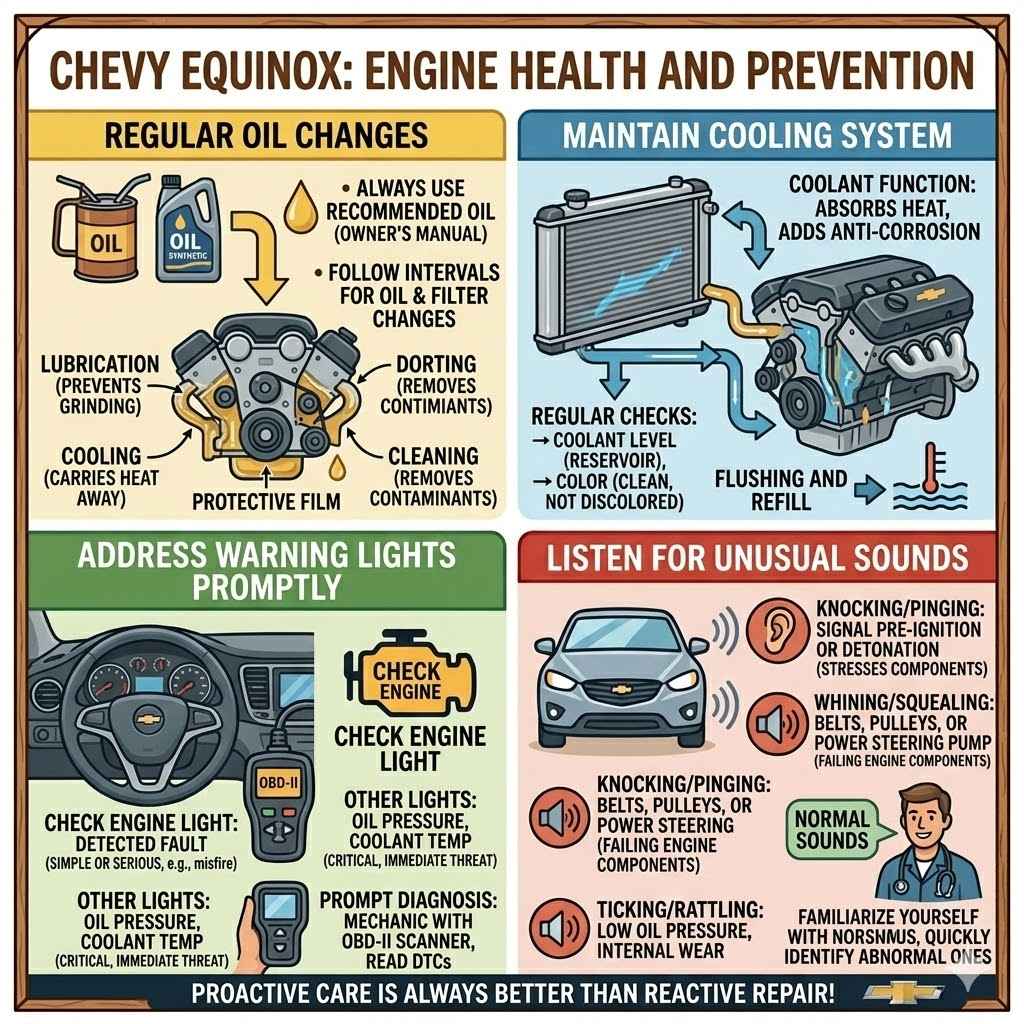
Chevy Equinox Engine Health and Prevention
While some engine failures are unavoidable, good maintenance practices can significantly extend the life of your Chevy Equinox engine and help prevent major issues. Proactive care is always better than reactive repair.
Regular Oil Changes
Clean engine oil is the lifeblood of your engine. It lubricates moving parts, reduces friction, and helps dissipate heat. Neglecting oil changes is one of the quickest ways to cause engine damage.
- Lubrication: Oil forms a protective film between metal surfaces, preventing them from grinding against each other. Worn-out oil loses its lubricating properties.
- Cooling: Oil circulates through the engine, picking up heat from components like pistons and the crankshaft, and carrying it away to the oil pan or an oil cooler.
- Cleaning: As oil circulates, it picks up contaminants like dirt, metal shavings, and combustion byproducts. Regular changes remove these harmful particles from the engine.
Always use the type and viscosity of oil recommended in your Chevy Equinox owner’s manual. Follow the manufacturer’s recommended intervals for oil and filter changes, or change it more often if you drive in severe conditions.
Maintain Cooling System
An engine’s cooling system is vital for preventing overheating, which is a major cause of engine damage. This involves keeping the coolant level correct and ensuring the system is free of leaks and blockages.
- Coolant Function: Coolant absorbs heat from the engine and carries it to the radiator, where it’s dissipated into the air. It also contains additives to prevent corrosion and freezing.
- Regular Checks: Periodically check your coolant level in the reservoir. Ensure the coolant is clean and not discolored, which might indicate rust or contamination.
- Flushing and
A simple coolant check can prevent a catastrophic overheating event. If you notice any leaks or low coolant levels, have the system inspected and repaired promptly.
Address Warning Lights Promptly
Your Chevy Equinox has a sophisticated onboard diagnostic system that monitors engine performance. Ignoring warning lights, especially the Check Engine light, can lead to minor issues becoming major ones.
- Check Engine Light: This light indicates a detected fault in the engine or emissions system. It could be something as simple as a loose gas cap or as serious as a misfire.
- Other Warning Lights: Lights for oil pressure, coolant temperature, or battery charge are also critical. These indicate immediate threats to engine health.
- Prompt Diagnosis: If a warning light illuminates, have it checked by a mechanic as soon as possible. They can use an OBD-II scanner to read the diagnostic trouble codes (DTCs) and identify the problem.
Early detection and repair of minor issues are far less expensive than fixing the major damage they can cause if left unaddressed.
Listen for Unusual Sounds
Your ears are one of your best diagnostic tools. Pay attention to how your engine sounds during normal operation. Any new or unusual noises should be investigated.
- Knocking/Pinging: As discussed, these can signal pre-ignition or detonation, which stresses engine components.
- Whining/Squealing: These sounds can indicate issues with belts, pulleys, or the power steering pump, but can also sometimes be related to failing engine components.
- Ticking/Rattling: While some ticking is normal, loud or persistent rattling can mean low oil pressure or internal wear.
Familiarize yourself with the normal sounds of your engine so you can quickly identify when something is out of the ordinary.
Frequently Asked Questions
Question: Can a blown engine be repaired?
Answer: Yes, a blown engine can sometimes be repaired if the damage is localized, such as a failed head gasket or connecting rod. However, if the engine block is cracked or severely damaged, replacement is usually the only option.
Question: How much does it cost to fix a blown engine?
Answer: The cost to fix or replace a blown engine can range widely from $3,000 to $8,000 or more, depending on the extent of the damage, the cost of parts, and labor rates in your area. A full engine replacement is typically more expensive than repairing specific parts.
Question: How long does a blown engine take to fix?
Answer: Repairing or replacing an engine is a labor-intensive job. It can take anywhere from a few days to a couple of weeks, depending on parts availability, the complexity of the repair, and the mechanic’s schedule.
Question: What is the difference between a blown engine and a damaged engine?
Answer: A “blown engine” is a term often used for severe, catastrophic internal damage that renders the engine inoperable. A “damaged engine” can refer to a wider range of issues, some of which might be less severe and potentially repairable without full replacement.
Question: Should I buy a car with a blown engine?
Answer: Buying a car with a blown engine is generally not recommended unless you are an experienced mechanic or are getting an exceptionally low price and have budgeted for a full engine replacement. The repair costs can be very high.
Summary
Recognizing Chevy Equinox: Signs Your Engine Is Blown is key. Listen for loud noises, watch for excessive white smoke, and notice performance drops. Check for mixed oil and coolant, overheating, leaks, and vibrations.
Performing basic checks like compression and leak-down tests can confirm your suspicions. If your engine is indeed blown, stop driving immediately, get a professional diagnosis, and consider repair versus replacement based on cost and vehicle value. Regular maintenance is your best defense.