Cooler Freezer for Car: How They Work and What to Buy
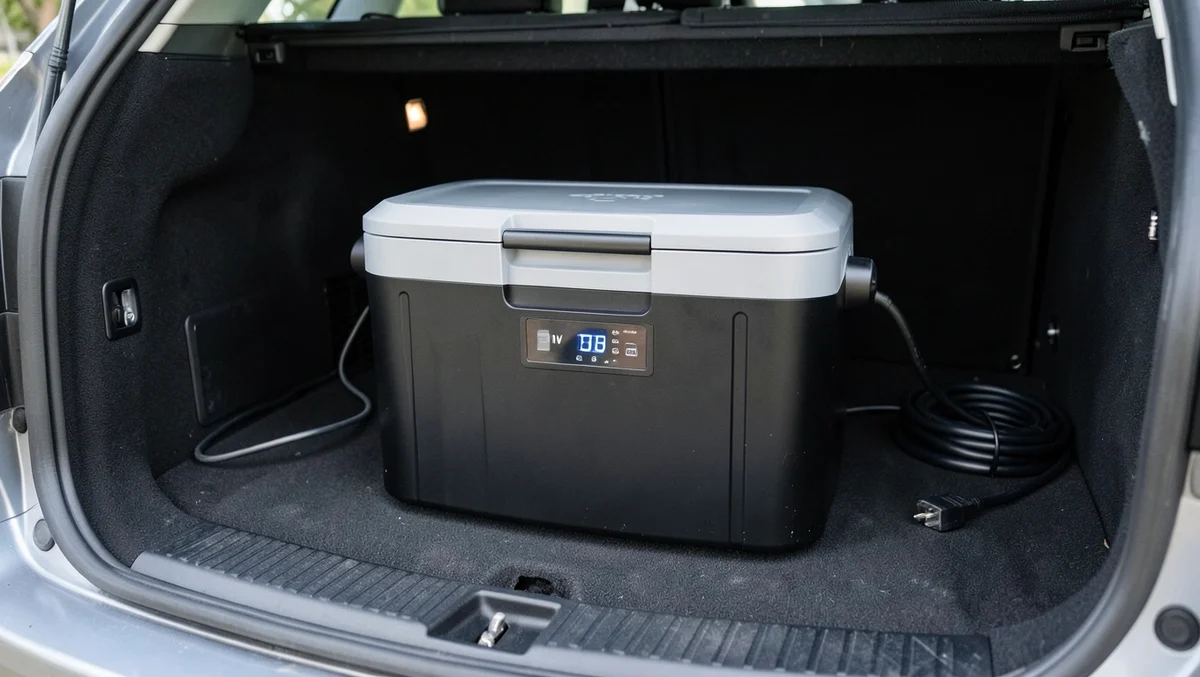
A cooler freezer for your car is a portable box that plugs into your 12V outlet and does more than a basic ice chest — the good ones can actually reach freezer temperatures, not just “cool.” That distinction matters more than it sounds, because the term covers two very different technologies, and only one of them can genuinely freeze food solid.
Below is how these units actually work, why some can freeze and others can only chill, how much they draw from your car battery, and what to check before you buy one.
How Does a Cooler Freezer for a Car Work?
Actually Freezes, -4°F Low Setting
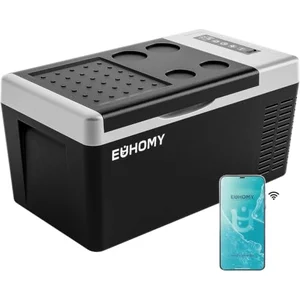 |
EUHOMY 19QT 12 Volt Refrigerator, -4℉~68℉ Electric Cooler for Car – $134.96 A true compressor fridge, not a thermoelectric cooler, so it can chill drinks at 40℉ or drop all the way to -4℉ to actually freeze food, and it holds that temperature no matter how hot it gets outside.
|
Most car “cooler freezers” on the market today use one of two different cooling methods, and they are not interchangeable in what they can do. A compressor fridge works the same way the refrigerator in your kitchen does: a small compressor circulates refrigerant through a sealed system, pulling heat out of the box and pushing it outside. This is real, active refrigeration, so it can drop well below freezing and hold that temperature regardless of how hot it is outside the box. A thermoelectric cooler, by contrast, uses a Peltier plate — a solid-state chip that gets cold on one side when you run current through it. It has no moving parts and is cheaper and quieter, but it can only cool the inside of the box to roughly 30–40°F below the outside air temperature. On a 95°F day in a parked car, that is nowhere near freezing.
Compressor vs. Thermoelectric: Which One Can Actually Freeze?
If the name “cooler freezer” matters to you — meaning you actually want to freeze meat, ice packs, or fish on a trip, not just keep sodas cold — a compressor unit is the only option that reliably delivers that. Here is the practical difference:
| Compressor Fridge | Thermoelectric Cooler | |
|---|---|---|
| Can it freeze? | Yes, typically down to -4°F to 0°F | No — cools relative to outside air only |
| Works in hot weather? | Yes, temperature holds regardless of ambient heat | Loses effectiveness fast above 90°F outside |
| Typical price range | $120–$400+ | $40–$120 |
| Power draw | Higher, but cycles on and off | Lower, runs continuously while on |
| Noise | Quiet hum when the compressor cycles on | Silent, no moving parts |
A thermoelectric cooler is still a fine choice if you mainly want cold drinks on short trips and want to save money and battery power. But if the plan involves actual frozen food, ice packs that stay solid, or a multi-day trip in hot weather, a compressor model is worth the extra cost.
How Long Will a Cooler Freezer Run on Your Car Battery?
A 12V compressor fridge typically draws 2.5 to 5 amps while the compressor is actively running, and it cycles on and off rather than running constantly — on average it is drawing power roughly 25—50% of the time, depending on the outside temperature. That works out to somewhere around 20 to 30 amp-hours a day in mild conditions. A car’s own starting battery, left connected with the engine off, generally powers a fridge for about 4 to 8 hours before the battery gets low enough to risk not starting the engine — the exact number depends on your battery’s size, the fridge’s draw, and how hot the box gets sitting in a parked car.
- Running the engine for 30–60 minutes a day recharges what the fridge used overnight.
- Parking in shade or covering the fridge cuts its power draw noticeably, since heat leaking in from a hot exterior is what makes the compressor cycle more often.
- For overnight or multi-day use away from the engine, a dedicated second (deep-cycle) battery with a DC-to-DC charger keeps the fridge running without any risk to your starting battery.
- Most compressor fridges include a low-voltage cutoff with adjustable protection levels (high/medium/low) that shuts the unit off before it can fully drain a battery — check that your model has this and set it to a conservative level if you are running off your car’s main battery.
How to Choose a Cooler Freezer for Your Car
Once you know whether you need a compressor unit or a thermoelectric one, a handful of details separate a genuinely useful car fridge from one that ends up in the garage after one trip.
- Capacity vs. vehicle space. Measure where it will actually sit — the trunk, back seat floor, or between the front seats — before buying based on quart or liter capacity alone. An 18–25 quart unit fits most cars for a weekend; go bigger only if you have the floor space to spare.
- Temperature range. If freezing matters, confirm the low end of the range in the listing (look for a figure at or below 0°F), not just “keeps food cold.”
- Dual power input. A model that accepts both 12/24V DC and 100–240V AC works in the car and plugs into a wall outlet at a campsite or hotel, which most single-voltage coolers cannot do.
- Battery protection. Look specifically for an adjustable low-voltage cutoff. Without one, a compressor fridge will keep running until your starting battery is too weak to crank the engine.
- Portability features. Wheels and a telescoping handle matter more than they sound once the unit is loaded with 20+ pounds of food and ice packs and you are pulling it across a campsite.
- Noise level. Compressor units make a quiet hum when cycling; if the fridge will sit near where you sleep in a car or RV, check reviews specifically for noise complaints.
How to Use a Car Cooler Freezer Safely
- Pre-chill the box for 15–20 minutes before loading food, and pre-chill drinks and food where possible — asking the compressor to cool room-temperature items from scratch uses far more power than maintaining an already-cold load.
- Leave a small gap around the vents on the unit’s exterior. Compressor fridges need airflow to dump heat, and blocking the vents with luggage makes the compressor work harder and draw more power.
- Set the low-voltage cutoff before you park and leave the fridge running, especially overnight, so a weak battery does not leave you stranded.
- Do not run the unit off a standard 12V cigarette lighter socket for more current than the socket’s fuse is rated for — check your fridge’s amp draw against the socket’s fuse rating (commonly 10–15A) before relying on it for hours at a time.
- Keep the box off direct sunlight and out of a hot trunk when possible; parking in shade measurably reduces how often the compressor has to cycle.
Frequently Asked Questions
How Does a Cooler Freezer for a Car Work?
A compressor-based car cooler freezer works like a mini version of your home refrigerator: a small compressor circulates refrigerant through a sealed system, pulling heat out of the box. It plugs into your car’s 12V outlet or a wall AC outlet and can hold a set temperature as low as -4°F regardless of how hot it is outside.
Can a Car Cooler Freezer Actually Make Ice?
A compressor model that reaches 0°F or below can freeze water solid, so yes, it can make ice given enough time, though it is not designed as a fast ice maker. A thermoelectric cooler cannot make ice on its own because it only cools relative to the outside temperature and rarely drops below the mid-30s°F.
Will a Car Cooler Freezer Drain My Car Battery?
It can if you leave it running with the engine off for many hours — a compressor fridge draws roughly 20 to 30 amp-hours a day in mild weather. Most fridges include a low-voltage cutoff to shut off before your starting battery gets too weak to crank the engine, and running the engine 30–60 minutes a day, or using a second battery, avoids the issue entirely.
What Is the Difference Between a Car Cooler and a Car Fridge?
In practice, “cooler” usually refers to a thermoelectric unit that only chills relative to the outside air, while “fridge” or “cooler freezer” usually refers to a compressor unit that provides true, ambient-independent cooling and can freeze. The terms are used loosely by manufacturers, so check the actual temperature range in the specs rather than relying on the product name.
How Cold Can a 12-Volt Car Cooler Freezer Get?
Compressor models commonly reach -4°F to 0°F on their lowest setting, cold enough to freeze meat and fish solid. Thermoelectric coolers typically bottom out around 30–40°F below the outside air temperature and cannot reach true freezing on a hot day.
Do I Need a Second Battery for a Car Fridge?
Not for short trips where you drive regularly, since the engine recharges what the fridge uses. For camping or long stretches parked with the fridge running, a dedicated deep-cycle battery with a DC-to-DC charger is worth adding so the fridge cannot leave your starting battery too weak to start the car.
Conclusion
A cooler freezer for your car is worth the investment mainly if you actually need freezing temperatures — for a weekend of cold drinks, a simpler and cheaper thermoelectric cooler does the job. For camping, hot-weather road trips, or anywhere you need food to stay genuinely frozen rather than just chilled, a compressor unit with a low-voltage cutoff and dual power input is the one that will not let you down. If you want a wider side-by-side of specific compressor models, see our full 12V car refrigerator comparison.
Products related to this article
Sponsored / affiliate links. As an Amazon Associate I earn from qualifying purchases. I may earn additional commission from eligible campaigns.