De-Icer Spray for Car Doors: Windshield vs. Lock Formulas
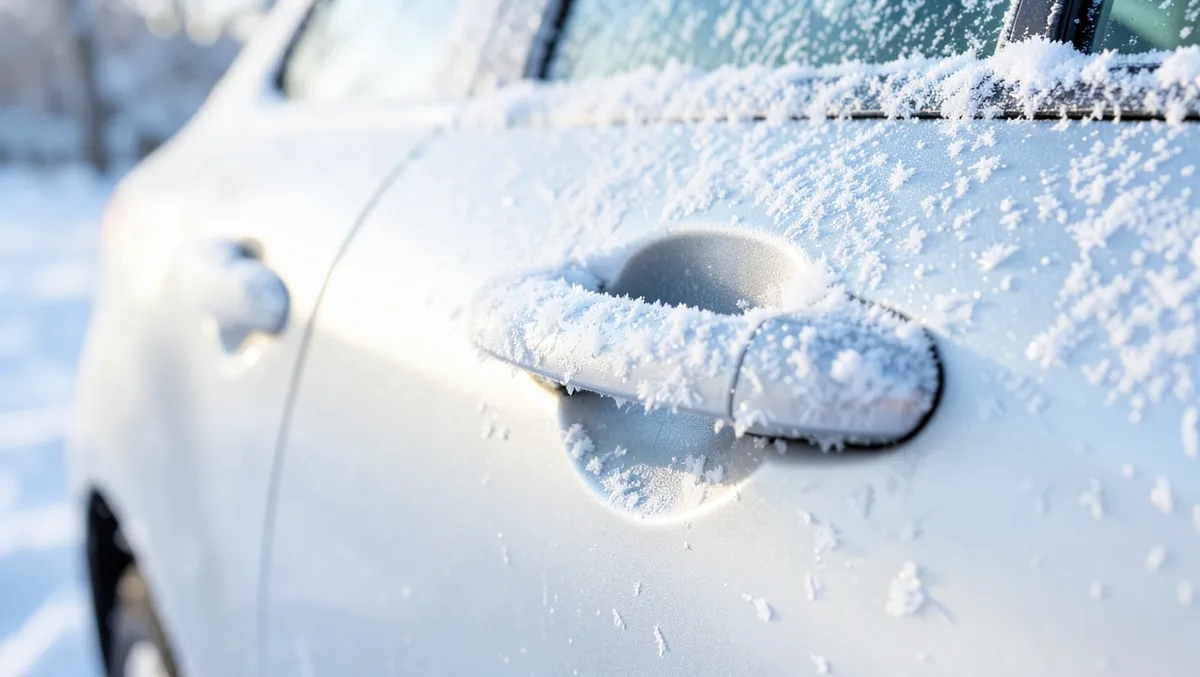
A de-icer spray thaws a frozen car door lock, seal, or handle in under a minute by chemically lowering the freezing point of the ice, so it lets go without scraping, prying, or pouring hot water that can crack cold glass.
Most bottles sold as a “windshield de-icer” are labeled safe for door seals, mirrors, and key locks too, since the same alcohol- or glycol-based formula that breaks up ice on glass also works on rubber and metal. Spray the frozen spot, give it 10 to 30 seconds to soak in, then open the door or turn the key as usual. Below are three de-icers built for that job, along with the difference between a general-purpose spray and a dedicated lock de-icer.
Windshield De-Icer vs. Dedicated Lock De-Icer: Which One Do You Need?
Not every de-icer is built the same way, even though most bottles claim to handle “doors, windows, and locks” on the label. There are really two categories worth knowing about before you buy:
- Windshield/multi-surface sprays (like the three below) come in larger 12 to 32 oz bottles with a trigger or aerosol nozzle wide enough to cover a whole pane of glass. They are the right pick when ice has built up across the windshield, mirrors, and door seals all at once.
- Dedicated lock de-icers are small aerosol tubes, usually under 1 oz, with a thin straw nozzle sized to fit directly into a keyhole. They are made specifically for a key lock or latch that has iced over so completely the key will not turn at all, and many include a light lubricant to help the lock resist refreezing the next cold morning.
All three sprays reviewed here fall into the first category and work fine on door seals and latches along with the glass. If the actual problem is a key that will not go into the lock or will not turn once it is in, a pocket-sized lock de-icer gets into that narrow gap more reliably than a wide spray pattern. And if the lock still will not turn after the ice is gone, the mechanism itself may be worn or corroded rather than frozen; our guide on how to fix a car door that will not lock covers what to check next.
CRC Ice-Off Windshield Spray De-Icer
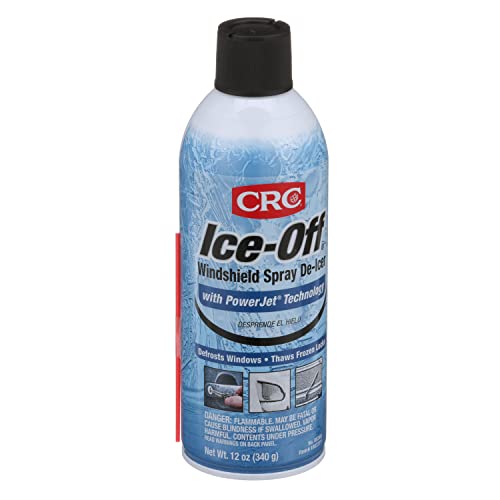
The CRC Ice-Off Windshield Spray De-Icer is a good fit for anyone who parks outside overnight in a cold climate and wants a fast, no-mess way to clear a windshield before a commute. It is a 12 oz aerosol can, not a trigger bottle, so it sprays evenly across the glass rather than pooling in one spot.
Pros:
- Fast-acting formula that clears frost and thin ice in under a minute on most mornings.
- Aerosol can design gives even coverage across the windshield without a trigger to squeeze.
- Compact size fits in a glovebox or door pocket for quick access.
- Colorless formula leaves no residue or streaking on glass.
Cons:
- Only 12 oz, which can run out partway through a heavy ice season for daily commuters.
- Thick ice sheets may need a second application.
At 2.63 inches wide and 7.75 inches tall, the can is small enough to store in a car for the whole winter. CRC’s aerosol delivery is what sets it apart from the trigger sprays below: instead of manually pumping a nozzle in freezing temperatures, you press one button and the propellant does the work, which matters when your fingers are already cold.
SPLASH Red Hot De-Icer Windshield Trigger Spray

The SPLASH Red Hot De-Icer Windshield Trigger Spray is built for drivers in genuinely harsh winters who go through a lot of de-icer over a season. It ships as a pack of three 32 oz trigger bottles, which is more than four times the volume of the CRC can above, ensuring a clear and safe view before hitting the road all winter without a mid-season restock.
Pros:
- Large 32 oz bottles cut down on how often you need to buy more.
- Trigger spray nozzle lets you aim directly at thick ice instead of a fine mist.
- Pack of three means one bottle can live in the trunk as a backup.
- 6 lbs total weight across the pack, light enough to carry into the house between uses.
Cons:
- Can need multiple pulls of the trigger on thicker overnight ice.
- The label specifies windshields as the intended surface, so use sparingly on painted panels.
The trigger mechanism is the main difference from an aerosol can: it puts more liquid down in one squeeze, which helps on a windshield that iced over completely rather than just frosted. Because it comes three to a pack, most buyers keep one bottle in the car and the others in the garage, so there is always a full bottle on hand when the first one runs dry mid-winter.
Melt It! E-Z-R Windshield De-Icer

The Melt It! E-Z-R Windshield De-Icer is the option that names key locks and latches directly on the bottle, not just windshields and mirrors, which makes it a reasonable middle ground for someone who wants one product to cover both the glass and the door lock without buying a second, smaller can.
Pros:
- Labeled for locks and latches in addition to glass, mirrors, and windows.
- 17 oz 2-pack gives a reasonable supply for a full season.
- Trigger spray with a narrow stream option for aiming at a specific frozen spot.
Cons:
- Extreme cold can still call for a second application.
- Made by Concept Laboratories, a smaller brand than CRC, so stock varies by retailer.
Because it is rated for latches and key locks specifically, this is the closest of the three to a true dual-purpose spray. It still applies more liquid at once than a dedicated pocket lock de-icer, so it works best when the whole door area is iced over rather than just the keyhole.
Frequently Asked Questions
How Does De-Icer Spray Work on Car Doors?
De-icer sprays contain alcohol- or glycol-based chemicals that lower the freezing point of water, which breaks the bond between ice and the surface underneath it. Spray it on the frozen area, wait 10 to 30 seconds, then wipe away the loosened ice or gently work the door or key as usual.
Can De-Icer Spray Damage Car Paint?
Most de-icer sprays sold for windshields are safe on nearby paint in normal use, but they are formulated for glass and rubber first. Follow the label’s instructions, avoid soaking large painted panels, and rinse the area with water afterward if you are unsure about a specific finish.
Is De-Icer Spray Safe for All Car Types?
De-icer sprays are generally safe across windshields, mirrors, and standard door seals, but material compatibility can vary by product. Check the label for any surfaces it warns against, and test a small, hidden spot first if your car has an unusual trim or aftermarket tint.
How Often Should I Use De-Icer Spray?
Use it as needed whenever ice or frost builds up, which can mean daily during a cold snap. There is no harm in frequent use as long as you follow the label’s directions, and keeping a bottle in the car means you are never stuck scraping with a credit card on a rushed morning.
Can De-Icer Spray Be Used on Locks?
Yes, as long as the product label lists locks and latches as an approved surface, which is true for the SPLASH and Melt It! options above. Spray directly into the keyhole, wait a few seconds for the ice to melt, then turn the key gently rather than forcing it.
Is a Windshield De-Icer the Same as a Lock De-Icer?
Not exactly. A windshield de-icer is a larger bottle meant to cover a whole pane of glass, while a dedicated lock de-icer is a small aerosol tube with a thin straw nozzle made to fit directly into a keyhole. Many windshield sprays are also labeled safe for locks, but a true lock de-icer is the better tool when only the keyhole itself is frozen shut.
Conclusion
A de-icer spray takes the guesswork out of a frozen car door, melting ice on the glass, the seal, or the lock in about the time it takes to walk from the front door to the driveway. The CRC Ice-Off is the most compact option for a glovebox or door pocket, the SPLASH Red Hot pack of three is the better buy for a household that goes through a lot of de-icer each winter, and the Melt It! E-Z-R is the one to reach for when the key lock itself, not just the glass, is what iced over.
Keep a bottle in the car rather than the garage, since it does no good sitting on a shelf when the windshield is already frozen at 6 a.m. Whichever option you pick, a de-icer spray is a faster and safer habit than scraping ice or pouring hot water on cold glass.
Products related to this article
Sponsored / affiliate links. As an Amazon Associate I earn from qualifying purchases. I may earn additional commission from eligible campaigns.