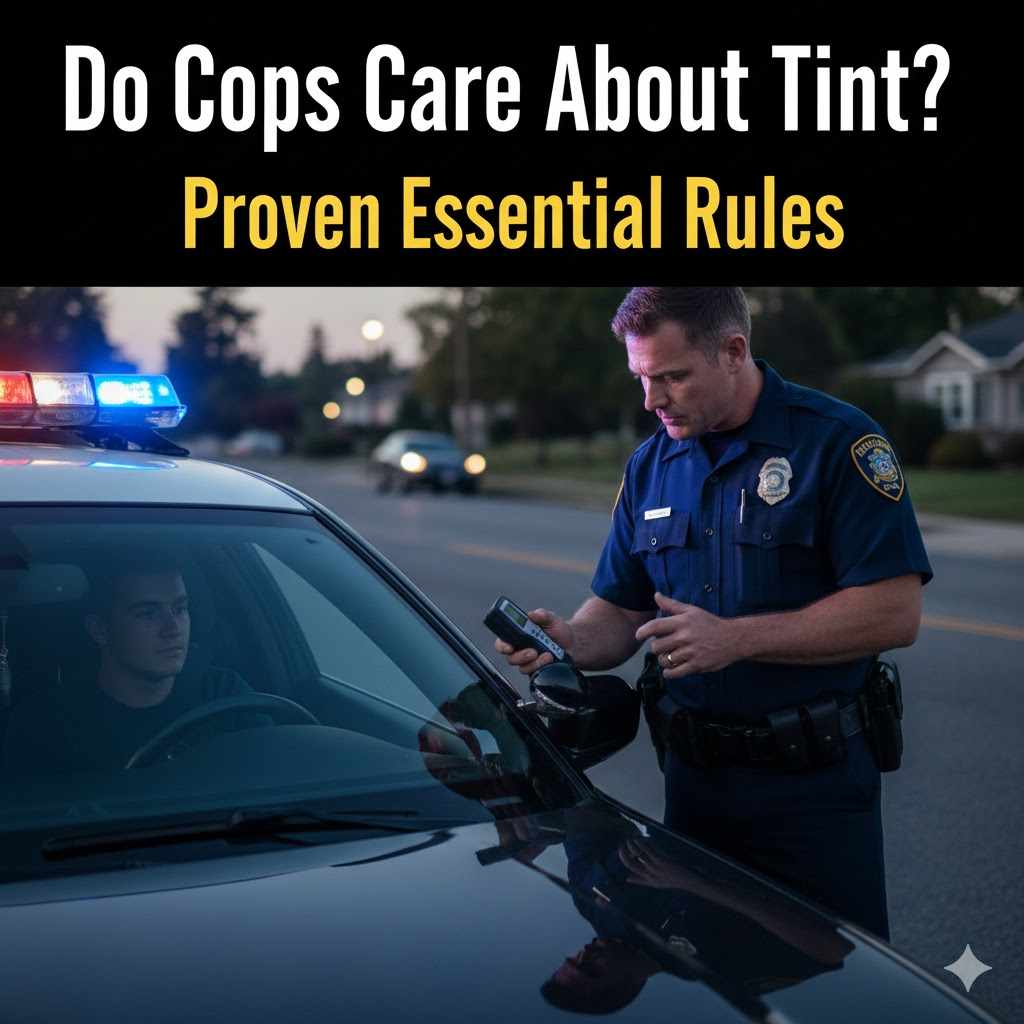
Do Cops Care About Tint? Proven Essential Rules
Do cops care about tint? Yes, cops absolutely care about window tint, primarily because excessive tint violates safety and visibility laws. To avoid tickets, you must strictly follow the Visible Light Transmission (VLT) percentage laws set by your specific state or local jurisdiction.
So, you just got your car windows tinted, and they look amazing! But now a little worry creeps in: “Will a police officer pull me over just for this?” It is a common question many drivers have. Tint adds style and keeps your car cool, but the rules are serious, and knowing them saves you money and hassle. Cops definitely care about tint because it affects safety. This guide cuts through the confusion. We will break down exactly what officers look for, the key rules you must follow, and how to make sure your tint is legal everywhere you drive. Let’s get your confidence back on the road!
Why Do Cops Care About Window Tint? It’s All About Safety
It might feel like police are just looking for reasons to write tickets, but when it comes to window tint, the reason is rooted in safety laws. Understanding the “why” helps you follow the “how.”
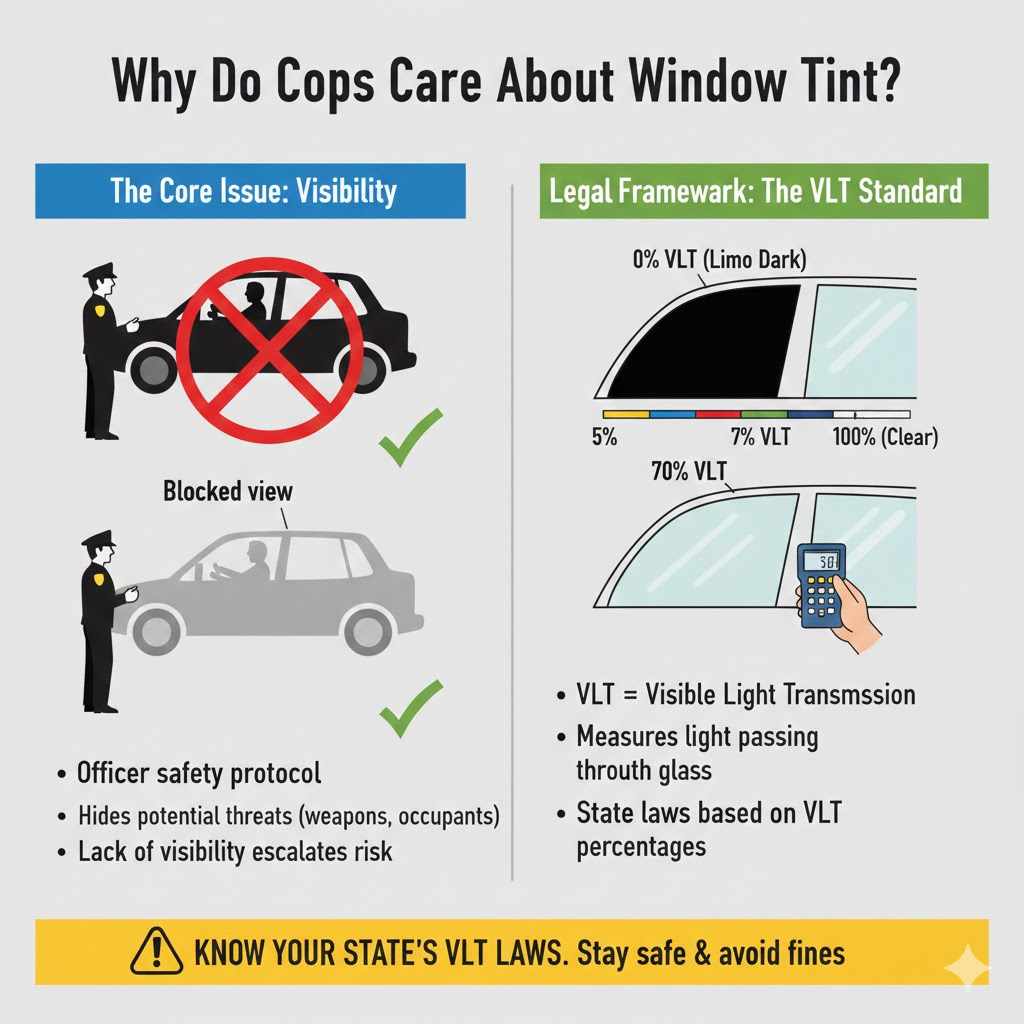
The Core Issue: Visibility
The main concern for law enforcement is visibility. Officers need to see who is inside your vehicle quickly and clearly for safety reasons.
When an officer approaches a stopped car, their first priority is officer safety. Dark tint hides potential threats, like weapons or multiple occupants, making routine traffic stops much riskier for them. This isn’t about judging your style; it’s a critical safety protocol.
If an officer cannot see your face or hands, the stop instantly becomes higher risk. This simple lack of visibility is the number one reason police enforce tint laws.
Legal Framework: The VLT Standard
Laws surrounding window tint are generally based on a measurement called Visible Light Transmission (VLT).
VLT measures how much visible light passes through your window. A low VLT percentage means the window is very dark (less light gets through). A high VLT percentage means the window is nearly clear (more light gets through).
For example, a 5% tint is limo dark, letting only 5% of light through. A 70% tint lets 70% of light through, making it much lighter.
Almost every state bases its legality on these VLT numbers. You must know your state’s specific VLT requirement to stay on the right side of the law.
The Essential Rules: Proven Guidelines for Legal Tint
To answer “do cops care about tint” with practical advice, you need to know the specific areas they check and the common rules that apply nationwide (though you must always check local laws).
Rule 1: Know Your State’s VLT Laws
This is the most important rule. Tint laws are set at the state level, and they vary significantly. What is legal in sunny Arizona might be illegal in cool Oregon.
You can usually find your state’s specific regulations by searching for “[Your State] VLT laws” or checking your state’s Department of Motor Vehicles (DMV) website. For example, many states follow federal guidelines suggesting at least 35% VLT for side and rear windows.
For authoritative guidance, many state laws align with recommendations often discussed in transportation safety guidelines. The National Highway Traffic Safety Administration (NHTSA) often provides general safety context that influences state legislation.
Rule 2: Front Side Windows Are Non-Negotiable
This is where most tickets are issued. Front side windows (the ones next to the driver and front passenger) must allow enough light in for visibility and officer safety.
In most states, the legal minimum VLT for front side windows ranges between 30% and 50%. Tinting these windows darker than the legal limit is almost guaranteed to draw police attention.
Rule 3: Rear Windows Have More Flexibility (Usually)
Generally, the rear side windows and the rear windshield have less strict limits. If a state allows 35% VLT on the front, it often allows 20% or even “non-reflective” (meaning nearly any darkness, provided it meets the VLT) on the back windows.
However, even on the back, if you choose a very dark tint (like 5%), be aware that some areas have specific exceptions, especially concerning the rear windshield if the car lacks two functional side mirrors.
Rule 4: Reflectivity Matters (The Mirror Effect)
Some tints are not just dark; they are also highly reflective, often called “mirror tint.” Police dislike these because they block light and prevent the officer from seeing inside, even if the VLT technically meets the number requirement.
Most states regulate reflective tint. If your tint looks like a mirror during the day, it is likely illegal, regardless of the VLT number posted by the installer.
Rule 5: The Front Windshield Exception
Tinting the entire front windshield is illegal in nearly every jurisdiction. The only exception allowed is usually a small strip across the very top.
This top strip is meant to block the sun glare coming from above. This strip typically cannot extend below the AS-1 line (the manufacturer’s designation mark usually found near the top edge of the glass) or more than a few inches down from the roof.
How Cops Check Your Tint: The Tools of the Trade
When a police officer suspects your tint is too dark, they don’t just guess. They use specialized tools to prove a violation. Knowing what these tools are helps you understand the process.
The Tint Meter (The Essential Tool)
The primary tool police use is called a tint meter or a light transmission meter.
This device has two parts: a light source and a sensor. The officer places one side against the glass (usually the outside) and the sensor on the inside (or vice versa). The meter then measures exactly how much light passes through the film and displays the VLT percentage instantly.
How to Use a Tint Meter (Simplified for Reference)
- Calibration: The officer first tests the meter on an untinted piece of glass or calibrates it according to the manufacturer’s instructions.
- Placement: The light emitter is placed on one side of the window film.
- Measurement: The sensor is placed directly opposite the light source on the other side of the glass.
- Reading: The device calculates and displays the VLT percentage directly on the screen.
If the reading falls below the legal limit for that specific window (e.g., the law says 35% VLT, but the meter reads 28%), you have been cited for a violation.
Visual Inspection (The Quick Glance)
Before pulling out the meter, an officer performs a quick visual check, especially during the day. If the car looks like a black box driving down the road, they have probable cause to stop you and check further.
If you have extremely dark tint on the front, they don’t need to use the meter immediately; the visual disparity between the legal front windows and the illegal rear windows is enough for an initial stop.
State-by-State Comparison: A Look at the VLT Landscape
Since laws vary widely, seeing a comparison helps illustrate why you cannot rely on a generic rule. Remember, these figures are examples and MUST be verified locally.
The table below summarizes common VLT requirements. Note how strict some states are versus others.
| Window Location | State Example A (Strict) | State Example B (Moderate) | State Example C (Lenient) |
|---|---|---|---|
| Front Side Windows | 40% VLT Minimum | 35% VLT Minimum | 25% VLT Minimum |
| Rear Side Windows | 35% VLT Minimum | 20% VLT Minimum | Any darkness (must have two mirrors) |
| Rear Windshield | 35% VLT Minimum | 20% VLT Minimum | Any darkness (must have two mirrors) |
| Top Strip (Windshield) | AS-1 Line or 5 inches | AS-1 Line or 5 inches | AS-1 Line or 6 inches |
Note from your guide: Do not assume that because a neighbor got away with a certain tint level, it is legal for you. Enforcement is localized, and laws change. Always check the official Department of Motor Vehicles (DMV) or Highway Patrol website for your current state.
The Role of Medical Exemptions
What if you or a passenger have a medical condition that requires very dark windows for sun sensitivity or skin conditions? This is where official exemptions come into play.
How Medical Exemptions Work
If your prescription requires extremely dark windows for health reasons, you usually cannot simply tint your windows and hope for the best. You must follow a formal process.
- Doctor’s Note: Obtain a signed letter from your licensed physician detailing the medical necessity for light restriction.
- Application: In many states, you must apply to the state police or DMV for a special decal or sticker.
- Placement: This decal must be prominently displayed on the vehicle, often on the driver’s side door jamb or on the passenger window itself, proving to an officer that the non-standard tint is authorized.
Without this official paperwork and decal, an officer has no way to verify your medical need during a stop, and you will likely receive a citation.
Dealing with a Tint Ticket: What Happens Next?
If you are pulled over and cited for illegal tint, it’s frustrating, but you have options. Knowing the typical outcome reduces anxiety.
Common Penalties for Tint Violations
Tint violations are usually categorized as equipment violations, which are often less severe than moving violations (like speeding), but they still cost money and time.
- Fine: A monetary penalty, which varies widely by county and state.
- Fix-It Ticket: In some jurisdictions, you receive a “correctable” violation. You must have the tint removed (or corrected to the legal limit) and then have a police station or inspection station sign off on the correction. Once signed off, you might only pay a small administrative fee instead of the full fine.
- Mandatory Removal: In rare or repeat offenses, a judge might order the immediate removal of the film before you can drive the vehicle legally again.
The Practical Path Forward: Removing or Adjusting Tint
If you receive a fix-it ticket, the fastest way to resolve it is usually to get the illegal tint removed.
Removing Tint Safely:
While professional removal is best, if you are handy, you can often remove tint film yourself. It typically involves spraying the interior side of the window heavily with soapy water or ammonia-based glass cleaner, letting it soak under a heat source (like a hairdryer), and then carefully peeling the film off with a razor blade or plastic scraper.
If you choose to have it removed professionally, ensure the shop provides a receipt showing the work was done to meet the legal VLT requirements.
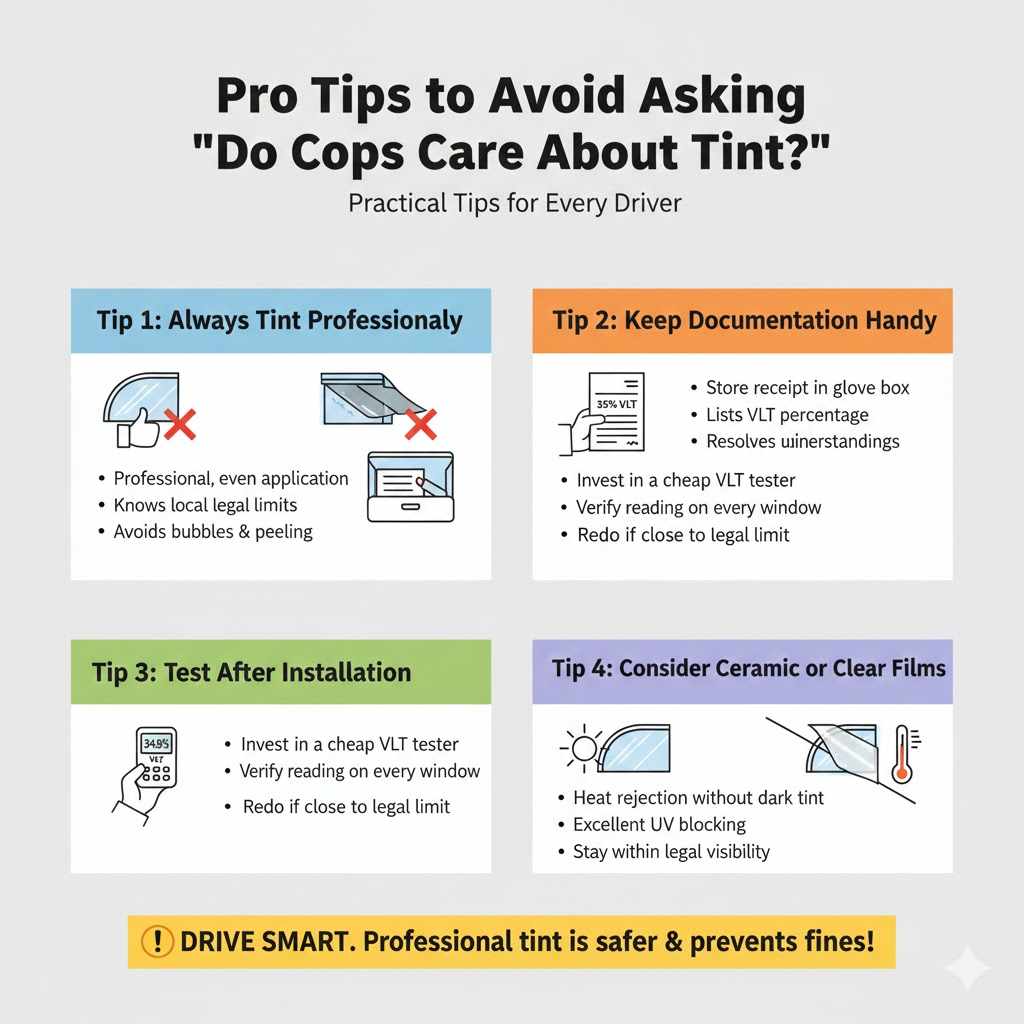
Pro Tips to Avoid Asking “Do Cops Care About Tint?”
The best way to handle tint laws is to never give an officer a reason to check in the first place. Here are practical tips for every driver.
Tip 1: Always Tint Professionally
DIY tint jobs often look uneven, bubble, or start peeling quickly, which makes your car look poorly maintained and can attract unwanted attention. Professionals use high-quality film and know the local legal limits for every window on your specific vehicle. They will often refuse to install illegal tint.
Tip 2: Keep Documentation Handy
If you had your tint professionally installed legally, keep the invoice or receipt in your glove compartment. This document usually lists the VLT percentage applied. If you are stopped, politely pointing to the receipt showing 35% VLT can quickly resolve a misunderstanding with an officer.
Tip 3: Test After Installation
Before driving around for weeks, invest a small amount of money in a cheap VLT tester online, or ask your tint shop to let you borrow one for a minute. Test every window yourself. If the reading is close to the legal limit (e.g., 36% in a 35% zone), it’s safer to get it redone, as slight variations can occur due to ambient light or the meter itself.
Tip 4: Consider Ceramic or Clear Films for Heat Rejection
If your primary reason for tinting is heat rejection (keeping the car cool), modern ceramic films offer excellent UV and heat blocking properties without having to go extremely dark (low VLT). You can achieve significant heat reduction while staying well within legal visibility limits.
Frequently Asked Questions About Car Tint and Police
Here are quick answers to the most common questions beginner drivers have about window tint enforcement.
| Question | Beginner-Friendly Answer |
|---|---|
| Can a police officer ticket me without a tint meter? | Yes, if the tint is visibly and obviously too dark (e.g., limo tint on front windows), they can issue a ticket based on visual judgment, often classifying it as a correctable offense. |
| Do tint laws change when the sun goes down? | No. The VLT law (how much light passes through) is constant, day or night. However, visibility during nighttime hours is the reason the law exists, making very dark tint even more dangerous after dark. |
| Is metallic or carbon tint illegal? | Not inherently. The illegality comes from reflectivity (if it mirrors the officer) or if the dark color makes the VLT too low. Check if your state specifically bans metallic films due to signal interference (like GPS or toll readers). |
| What is the AS-1 line on my windshield? | It’s a small manufacturer marking etched near the top edge of the glass that designates the maximum height for any non-regulatory sticker or tint strip on the front windshield. |
| If my rear windows are tinted darker than the front, will I get pulled over? | It is less likely than having dark front windows, but officers can pull you over if they see the mismatch or if the rear tint is excessively dark (like 5%) and they need to confirm safety compliance, especially if you only have one working side mirror. |
| Can I legally tint my headlights or taillights? | Generally, no. Headlights must be clear or specific colors (usually white/yellow for front, red for rear). Tinting these usually causes an immediate equipment violation because it reduces the light output necessary for safe driving. |
A Confident Conclusion on Tint Legality
Navigating vehicle modification laws can feel tricky, but when it comes to window tint, the rules boil down to one clear principle: visibility equals safety. Cops care about tint because they need to see you clearly to ensure a safe traffic stop for everyone involved.
By understanding VLT percentages, knowing the specific rules for your front side windows, and avoiding highly reflective films, you can enjoy the benefits of window tint—style, privacy, and heat reduction—without the constant fear of a ticket. Always verify your state’s local laws. When in doubt, err on the side of lighter tint on the driver and passenger windows. Follow these proven guidelines, keep your paperwork ready, and drive confidently, knowing you’ve done your homework to keep your ride both cool and compliant.