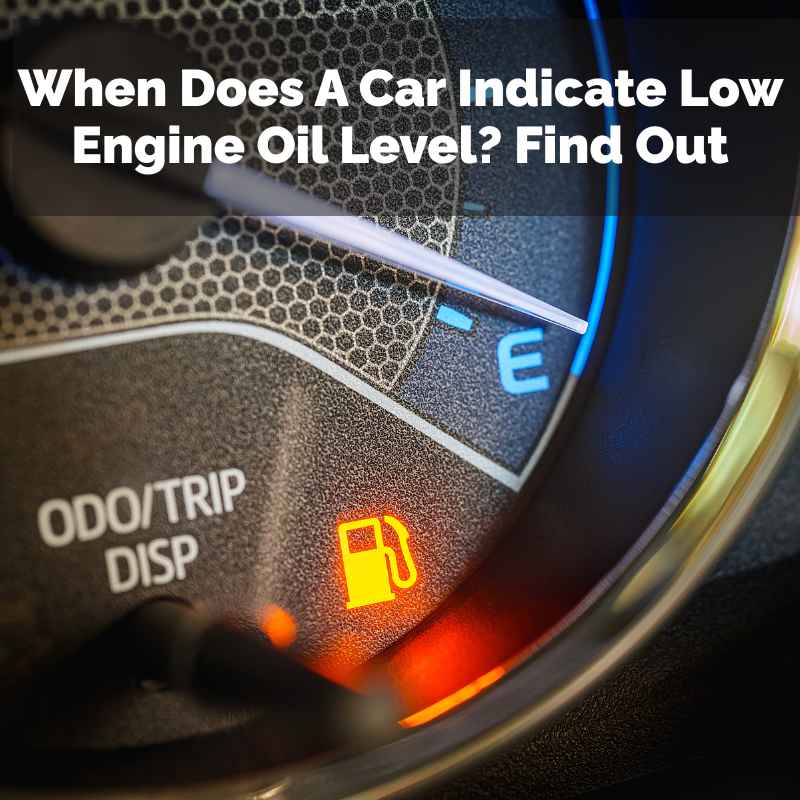
When Does A Car Indicate Low Engine Oil Level? Find Out
It’s a moment that can send a chill down any driver’s spine: that little light blinking on your dashboard. You know your car is trying to tell you something, but what? When your car indicates low engine oil, it’s a serious warning.
Ignoring it can lead to costly damage. But don’t worry, we’re here to help you understand what it means and what to do.
Understanding the Low Engine Oil Light
That tiny oil can symbol on your dashboard is one of your car’s most important alerts. It means the oil pressure in your engine is too low. This can happen if the oil level itself is too low.
Or, it could mean there’s a problem with the oil pump or other parts of the oil system. Your engine needs oil to work. Oil keeps parts moving smoothly.
It also keeps them cool. It cleans them too.
When this light comes on, it’s not just a suggestion. It’s a critical warning. Your engine parts are rubbing together.
This creates heat. It also causes wear. If you keep driving, you can cause permanent harm.
This harm can be very expensive to fix. Sometimes, the engine might even fail completely.
The low engine oil light signifies critically low oil pressure, often due to a low oil level. This condition risks severe engine damage from friction and overheating. Immediate action is required to prevent costly repairs or total engine failure.
What Does Low Engine Oil Actually Mean?
Think of engine oil like the blood in your body. It flows everywhere. It does many jobs.
It lubricates moving parts. This stops metal from grinding on metal. It carries away heat.
This stops parts from getting too hot. It also cleans out dirt and debris. It traps these things in the oil filter.
When your car indicates low engine oil, it means one or more of these vital jobs is not being done right. The oil level is likely too low. This means there isn’t enough oil to reach all the parts that need it.
Or, the oil pressure is too low for the oil to pump where it needs to go. This is a serious situation for your engine.
Oil levels drop over time. Cars use some oil. This is normal.
Oil can burn off in small amounts. It can also leak out of seals. But if the level gets too low, the warning light will turn on.
It’s designed to tell you before big problems start.
Signs Your Car Might Be Low on Oil
Sometimes, the light is the first thing you see. But there are other signs. You might hear new noises.
Your engine might sound different. It could be a knocking sound. This happens when parts are hitting each other.
It might sound like a ticking. This is also a sign of poor lubrication.
You might also notice your engine running hotter than usual. Overheating is a common side effect of low oil. The oil helps cool things down.
Less oil means less cooling. You might even smell burning oil. This can happen if oil is leaking onto hot engine parts.
Or, if the engine is getting too hot itself.
Another sign is poor engine performance. Your car might feel sluggish. It might not accelerate as well.
This is because parts aren’t moving freely. They are working harder. All these signs point to a problem.
The most common problem is low oil.
I remember a time when I was driving home from a trip. I was tired and just wanted to get to my bed. The radio was on, and I wasn’t paying super close attention.
Then, I heard a faint knocking sound. It wasn’t loud at first. I thought maybe it was just the road.
But it got louder. Then, the oil light came on. My heart sank.
I pulled over right away. It turned out I was very low on oil. I had missed checking it before I left.
That knocking sound was my engine screaming for help. It was a close call, and a big lesson learned.
Common Oil Warning Signs
Dashboard Light: The iconic oil can symbol. It flashes or stays lit.
Strange Noises: Knocking or ticking sounds from the engine.
Overheating: Temperature gauge climbs higher than normal.
Burning Smell: A distinct odor of burning oil.
Performance Issues: Car feels slower or less responsive.
How to Check Your Engine Oil Level
Checking your oil is simple. You can do it yourself. It only takes a few minutes.
First, make sure your car is parked on a flat surface. This is important for an accurate reading. Let the engine cool down for about 10-15 minutes.
This ensures the oil has drained back into the oil pan.
Locate the oil dipstick. It’s usually a brightly colored loop or handle. It’s often yellow or orange.
Pull the dipstick out. Wipe it clean with a rag or paper towel. Push it all the way back in.
Pull it out again. Look at the end of the dipstick.
You’ll see markings on the end. There are usually two marks. These might be labeled “Add” and “Full.” Or they might be lines.
If the oil level is between these two marks, it’s okay. If the oil level is at or below the “Add” mark, you need to add oil.
Don’t just guess if you need oil. Use the dipstick. If the oil looks very dark or gritty, it might be time for an oil change.
But for now, focus on the level. If it’s low, add the correct type of oil for your car. Check your car’s manual for the right type.
Quick Oil Check Steps
1. Park on Level Ground
Ensure your car is on a flat surface.
2. Let Engine Cool
Wait 10-15 minutes after turning off the engine.
3. Locate Dipstick
Find the colored handle or loop.
4. Wipe and Reinsert
Pull out, wipe clean, push back in fully.
5. Check Level
Pull out again and read the markings.
Why Does My Car Show a Low Engine Oil Light?
There are a few main reasons for this warning. The most common is simply that the oil level is too low. Cars burn oil.
This is normal, but sometimes it’s more than normal. Leaks are another big cause. A tiny drip can turn into a lot of lost oil over time.
Sometimes, the oil filter might be clogged. This stops oil from flowing properly. It can affect pressure.
The oil pump itself could be failing. This is a more serious mechanical issue. The oil pump circulates oil through the engine.
If it’s not working, no oil gets where it needs to go.
Another reason could be related to the oil pressure sensor. This sensor tells your car’s computer about the oil pressure. If the sensor is faulty, it might send false signals.
It could say the pressure is low when it’s actually fine. However, it’s best to assume the warning is real until proven otherwise.
I recall a friend who had this light come on. He was convinced it was a faulty sensor. He decided to drive it to the mechanic.
By the time he got there, there was a terrible grinding noise. The mechanic told him he was very lucky. He had burned up his oil pump.
It was a costly repair. He learned not to ignore that warning light. It’s better to be safe than very sorry.
Top Reasons for Low Oil Light
Low Oil Level
Normal oil consumption or excessive burning.
Oil Leaks
Faulty seals or gaskets causing oil to escape.
Clogged Oil Filter
Restricted oil flow through the filter.
Failing Oil Pump
The pump is not circulating oil effectively.
Faulty Sensor
The oil pressure sensor is sending incorrect data.
When to Add Oil
If your dipstick shows the oil level is at or below the “Add” mark, it’s time to add oil. Don’t wait. Driving with low oil is dangerous for your engine.
You need to add enough oil to bring the level back up to the “Full” mark. But don’t overfill it. Overfilling can also cause problems.
When you add oil, do it slowly. Add a little at a time. Wait a minute or two.
Then check the dipstick again. Repeat until the level is correct. It’s better to add too little and check again than to add too much.
What kind of oil? Always use the type recommended in your car’s owner’s manual. Using the wrong type can harm your engine.
It might be synthetic or conventional. It will also have a specific weight, like 5W-30. Your manual has this exact information.
Adding Oil Safely
Check Dipstick
Ensure the level is indeed low.
Use Correct Oil Type
Consult your owner’s manual.
Add Small Amounts
Pour a little at a time.
Re-Check Level
Wait, then check the dipstick often.
Avoid Overfilling
Stop when the level reaches the “Full” mark.
When to Call a Mechanic Immediately
If your car indicates low engine oil, and you add oil, but the light stays on, you need a mechanic. This means the problem is likely not just a low oil level. It could be a faulty oil pump or a serious leak.
There might be a blockage in the oil passages.
Also, if you see a lot of oil under your car, call a mechanic. This indicates a significant leak. If you hear loud knocking or grinding noises from the engine, stop driving immediately.
These sounds are signs of severe damage happening right now.
Don’t try to drive far with the oil light on, especially if you’ve added oil and it’s still lit. The risk of destroying your engine is very high. A tow to the mechanic is much cheaper than a new engine.
Trust your car’s warnings. They are there for a reason.
When to Seek Professional Help
Light Stays On After Adding Oil
Indicates a deeper issue.
Significant Oil Leaks
Large puddles of oil under the car.
Loud Engine Noises
Knocking, grinding, or squealing sounds.
Sudden Performance Drop
Engine loses power dramatically.
Burning Oil Smell Persists
Even after checking levels.
How Much Oil Does My Car Need?
The amount of oil your car needs varies by make and model. Most passenger cars use between 4 and 6 quarts of oil. Some larger SUVs or trucks might use more.
Small cars might use a bit less. Your car’s owner’s manual is the best source for this information.
It will tell you the exact oil capacity for your engine. It will also tell you the correct type of oil to use. Using the wrong type or amount can cause problems.
Too little oil won’t lubricate properly. Too much oil can cause the engine to run rough. It can also damage seals and gaskets.
When you check your oil, always refer to the dipstick for the correct level. Don’t just pour in a set amount. The dipstick reading is the most accurate way to know where your oil level is.
Oil Capacity Facts
Owner’s Manual is Key
Always check for your specific car.
Typical Range
Most cars use 4-6 quarts.
Larger Vehicles
May require more than 6 quarts.
Correct Type Matters
Use the oil recommended by the manufacturer.
Dipstick is Your Guide
Use it to confirm the right level after adding oil.
The Lifesaving Role of Engine Oil
Engine oil is more than just a lubricant. It’s a multi-tasking fluid. It reduces friction between moving engine parts.
This is its primary job. Without it, metal-on-metal contact would quickly destroy your engine. Think of it as a protective film.
Oil also helps cool the engine. As it circulates, it picks up heat from hot engine components. It then carries this heat to the oil pan or to the oil cooler.
This helps prevent parts from overheating and warping. It’s a vital part of the engine’s cooling system.
Oil also cleans the engine. It suspends dirt, soot, and metal particles. These are then carried to the oil filter.
The filter traps these contaminants. This keeps the engine’s internal passages clean. Without oil, these particles would build up.
They would cause wear and blockages.
Finally, oil seals engine parts. It creates a seal between piston rings and cylinder walls. This improves compression.
It also prevents combustion gases from escaping into the crankcase. This is called blow-by. A good seal makes the engine run more efficiently.
Oil’s Many Jobs
Lubrication
Reduces friction between moving parts.
Cooling
Carries heat away from engine components.
Cleaning
Suspends and removes dirt and debris.
Sealing
Improves compression and reduces blow-by.
Corrosion Prevention
Protects metal parts from rust.
What If I Keep Driving with Low Oil?
This is where things get serious. If your car indicates low engine oil and you ignore it, you’re playing a dangerous game. The first thing that happens is increased friction.
Parts start to grind against each other. This creates a lot of heat. Metal begins to wear down rapidly.
The engine components might start to seize up. This means they get stuck. They can’t move freely anymore.
This can lead to catastrophic engine failure. The connecting rods can break. Pistons can melt.
The engine block itself can crack. All of this is incredibly expensive to fix. It often means you need a new engine, or a new car.
Even if the engine doesn’t completely fail, the internal parts will be damaged. They will be worn out much faster than they should be. This means your engine’s lifespan will be significantly reduced.
It might start to have problems sooner. It might not run as smoothly.
I had a neighbor who used to do this. He thought he could save money by not changing his oil often. He would drive until the light came on.
Then he would add a quart. He did this for years. His car eventually started making horrible noises.
The engine just gave out. He had to buy a new car. He later said he wished he had listened to the warnings.
That little light is a lifesaver for your engine.
Consequences of Ignoring Low Oil
Extreme Friction
Metal parts grinding together.
Overheating
Engine temperature rises dangerously high.
Component Seizure
Moving parts get stuck and break.
Catastrophic Failure
Engine can be completely destroyed.
Reduced Lifespan
Even if not total failure, engine wears out faster.
Oil Changes: Prevention is Key
The best way to avoid the low engine oil light is regular maintenance. This includes timely oil changes. Your car’s oil degrades over time.
It gets dirty and loses its lubricating properties. Manufacturers recommend oil change intervals. These are usually based on mileage or time.
For most cars, changing the oil every 5,000 to 7,500 miles is a good idea. Some newer cars with synthetic oil can go longer, maybe up to 10,000 miles. Always check your owner’s manual.
It will tell you the exact schedule for your vehicle.
During an oil change, old oil is drained. A new oil filter is installed. Then, fresh oil of the correct type and amount is added.
This keeps your engine running smoothly. It prevents those costly problems down the road.
Don’t wait for the warning light. Make oil changes part of your car’s routine. It’s one of the most important things you can do for its health.
It’s also a relatively inexpensive service that saves a lot of money and stress in the long run.
Preventive Maintenance: Oil Changes
Follow Schedule
Adhere to manufacturer’s recommendations (mileage/time).
Use Correct Oil
Always use the specified type and weight.
Replace Filter
Always install a new oil filter with new oil.
Check for Leaks
Inspect for any signs of oil leaks during service.
Record Service
Keep track of when your last oil change was.
Different Types of Oil Lights
It’s important to note that not all oil lights are the same. Some cars have an oil pressure light. This is the one we’ve been talking about, the oil can symbol.
It means oil pressure is too low. This is the most urgent warning.
Other cars might have an oil level warning light. This might be a separate symbol, or it might be part of the infotainment system. It will often say “Low Oil Level” or something similar.
This light usually means the oil level itself is low, but the pressure might still be okay for a short time.
Regardless of the exact symbol, any oil-related warning should be taken seriously. Low pressure is usually a more immediate threat than just low level, but both need attention. Always check your owner’s manual to understand the specific lights and symbols on your dashboard.
Understanding Oil Warning Lights
Oil Pressure Light (Oil Can Symbol)
Indicates low oil pressure. Usually red. Most urgent.
Oil Level Light (Often Text-Based)
Indicates low oil level. Might be yellow or message-based. Still serious.
Consult Manual
Always refer to your car’s specific warning light guide.
What About Oil Consumption in Older Cars?
It’s common for older cars to use more oil than newer ones. As engines age, seals can become less effective. Piston rings can wear down.
This allows more oil to enter the combustion chamber and burn. It’s a normal part of an engine’s life cycle.
If you have an older car, you might need to check your oil level more often. Perhaps every other fuel fill-up. Even if the oil light hasn’t come on, it’s good practice.
This helps you catch any issues before they become critical.
Using a slightly thicker oil might help reduce consumption in some older engines. Always consult your owner’s manual or a trusted mechanic before changing oil types. They can advise if a different viscosity is appropriate for your specific vehicle and its age.
Older Cars and Oil
Increased Consumption
Normal as engines age.
Frequent Checks Needed
Check oil level more often than for new cars.
Potential Oil Additives
Can sometimes help reduce burning (consult expert).
Thicker Oil Option
May be suitable for some older engines (verify first).
Conclusion
The moment your car indicates low engine oil, take it seriously. It’s a direct message from your vehicle. It’s telling you to act before damage occurs.
Check your oil level using the dipstick. If it’s low, add the correct type of oil. If the light stays on, or if you hear strange noises, stop driving and call a mechanic.
Regular oil changes and frequent checks are the best defense. They prevent these critical issues. Caring for your engine’s oil is caring for the heart of your car.
It keeps you safe and saves you money in the long run. Don’t let that little light become a big problem.
Frequently Asked Questions
What should I do immediately if my oil light comes on?
If your oil light comes on, find a safe place to pull over as soon as possible. Turn off the engine. Wait a few minutes for the oil to settle. Then, check your oil level with the dipstick. If it’s low, add oil. If it’s not low, or if the light stays on after adding oil, call a mechanic.
Can I drive my car with the oil light on?
It is strongly advised not to drive your car with the oil light on. The light indicates low oil pressure, which means critical engine parts are not being properly lubricated. Driving can cause rapid and severe engine damage, leading to very expensive repairs or complete engine failure.
How often should I check my engine oil level?
For most cars, checking your engine oil level once a month is a good habit. If your car is older or you notice it might be consuming oil, you should check it more frequently, perhaps every other time you refuel your car.
What is the difference between a low oil pressure light and a low oil level light?
The low oil pressure light (often an oil can symbol) indicates that the oil pump is not circulating oil effectively, meaning there isn’t enough pressure for lubrication. A low oil level light (often a text message) indicates the oil quantity in the pan is too low, which can lead to low pressure. Both are serious.
Will adding oil fix the low oil light problem?
Adding oil will fix the problem if the light is on solely because the oil level is too low. However, if the light stays on after adding the correct amount of oil, it suggests a more serious issue, such as a faulty oil pump, a leak, or a bad sensor, which requires professional attention.
How much oil can my engine lose before the light comes on?
This varies by car. Most cars have a minimum safe oil level. The light typically comes on when the oil pressure drops significantly, which happens when the oil level is already quite low. It’s best not to let it get to that point and to check regularly.
Products related to this article
Sponsored / affiliate links. As an Amazon Associate I earn from qualifying purchases. I may earn additional commission from eligible campaigns.
 DongJinK Engine Oil Level Gage Dipstick Compatible with Toyota 4Runner 1984-1995 for Toyota Celica 1984-1985 for Toyota Pickup 1984-1995 Replace# 15301-35020 1530135020
 Suifaqi Engine Oil Dipstick Oil Level Dipstick - Replace Part 120 589 07 21 00, 120589072100 - Compatible with Mercedes-Benz CLS55 AMG 2006(2026 NEW)