Do FWD Cars Have Differentials? Essential Guide
Yes, absolutely! Every Front-Wheel Drive (FWD) car must have a differential. This critical component is usually built right into the transaxle (the combination of the transmission and the final drive). The differential is essential for allowing your front wheels to turn at different speeds when you corner, ensuring smooth, safe driving.
Have you ever wondered how your car handles turns without the tires squealing or binding up? It’s a common question, especially once you start looking under your car or hearing terms like “driveshaft” and “differential.” Many people think differentials only belong in rear-wheel-drive (RWD) trucks, leading to confusion about Front-Wheel Drive (FWD) cars. Don’t worry! Understanding this vital part of your drivetrain doesn’t require a mechanic’s license. I’m Md Meraj, and I’m here to break down exactly what a differential is, why your FWD car needs one, and how it all fits together simply. By the end of this guide, you’ll feel much more confident about what’s happening under your hood and how your car stays steady on the road.
Why the Big Question: Do FWD Cars Have Differentials?
The short answer is yes, they do. The confusion often comes from how the system is built. In a traditional Rear-Wheel Drive (RWD) truck or older car, the differential is a separate, noticeable pumpkin-shaped unit sitting between the rear wheels. It’s easy to spot.
In an FWD car, however, the engine, transmission, and differential are all packed together into one unit called the transaxle. Because it’s integrated, it’s hidden away, making it seem like the differential is missing entirely.
The Core Job: What Even Is a Differential?
Think about driving around a tight corner. The outside wheel has to travel a longer distance than the inside wheel in the same amount of time. If both wheels were locked together, they would spin at the same speed, causing drag, tire wear, and making the car hard to steer.
The differential solves this problem. Its main job is simple:
- To split the power coming from the engine to the drive wheels (in an FWD car, this is the front two wheels).
- To allow those two wheels to spin at different speeds when necessary (like turning corners).
If you’ve ever left a tight parking spot, heard a slight scrubbing sound, or felt your car pull slightly, you are experiencing the work of the differential!
Anatomy 101: The Transaxle in FWD Cars
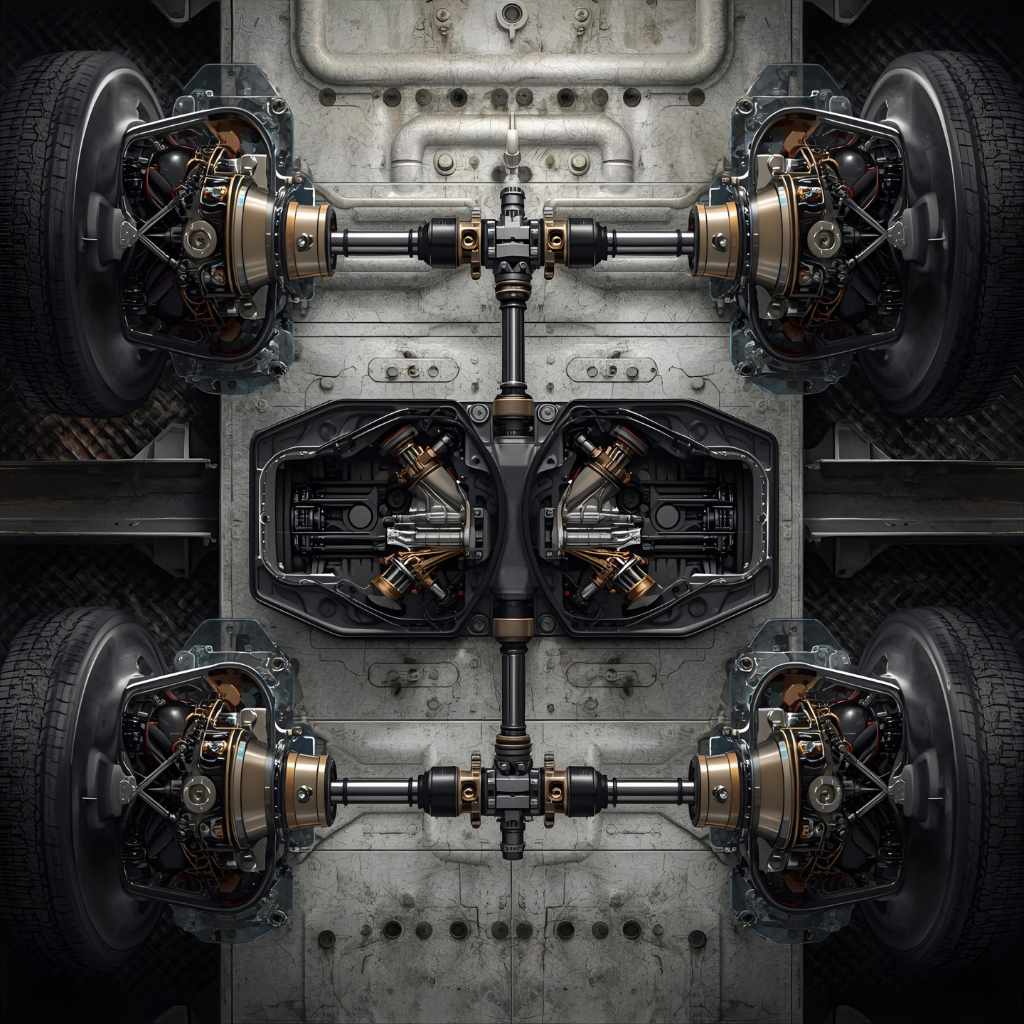
For FWD cars, the magic happens inside the transaxle. This clever design saves space, reduces weight, and improves fuel efficiency—all good things for the everyday driver.
What is a Transaxle?
A transaxle isn’t just one thing; it’s an assembly that combines three major parts:
- The Transmission: This part manages the gear ratios so your car can accelerate smoothly from a stop and cruise efficiently at highway speeds.
- The Differential: As we mentioned, this is the gearing unit that allows the left and right wheels to spin independently.
- The Final Drive Gears: These are the final sets of gears that adjust the speed coming out of the transmission before it heads to the axles.
The Differential’s Location in FWD
In a transverse FWD setup (where the engine sits sideways across the car, common in most modern sedans and crossovers), the entire drivetrain is bundled together:
Engine → Clutch/Torque Converter → Transmission → Differential → Axle Shafts → Wheels
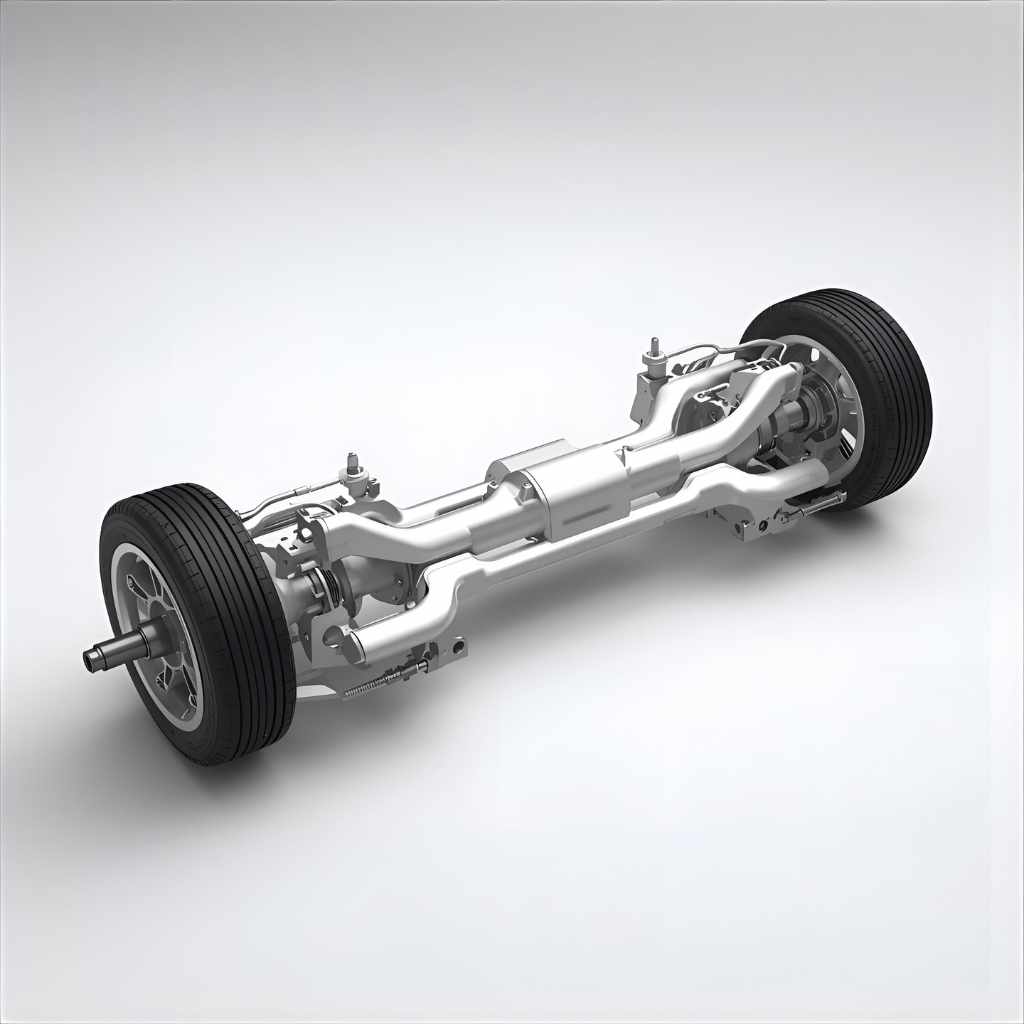
The differential sits directly between the two output shafts (axles) that connect to the wheels via the CV joints. Because everything is so compact, technicians often refer to the whole unit as the “transaxle assembly.”
How the Differential Works in FWD: A Simple Spin
Even though it’s tucked away, the internal gears of the FWD differential perform the same duty as a RWD one. It primarily uses a set of “spider gears” that ride around on a “ring gear.”
When you are driving straight, both wheels travel the same distance, and the spider gears barely move, sending equal power to both axles.
When you turn, the spider gears begin to rotate, allowing the outer wheel to receive more RPMs (revolutions per minute) than the inner wheel.
Visualizing the Difference
To help you see why this mechanism is so important, here is a comparison of where you typically find them:
| Drivetrain Type | Differential Location | Visual Appearance |
|---|---|---|
| FWD (Front-Wheel Drive) | Contained within the Transaxle assembly at the front. | Mostly hidden; part of a larger, compact unit. |
| RWD (Rear-Wheel Drive) | Separate housing (the “pumpkin”) located between the rear wheels. | Easily visible bolted underneath the center of the rear axle. |
| AWD/4WD | Has one differential for the front and one for the rear axles (plus a center differential/transfer case). | Similar to FWD in the front, separate in the rear. |
Types of Differentials Found in FWD Cars
While the standard differential (called an Open Differential) is the most common, some performance-oriented FWD cars or specialized family cars might use something a bit tougher to handle extra power.
1. The Open Differential (The Standard)
This is what you find in 95% of economy and family FWD vehicles.
Pros:
- Simple and inexpensive to manufacture.
- Provides smooth power delivery during normal driving.
- Requires less maintenance than complex types.
Cons:
- It sends power to the wheel with the least resistance. If one front wheel slips on ice or is lifted off the ground, almost all the power goes there, and the car gets stuck!
2. Limited-Slip Differential (LSD)
Some sporty FWD cars (think high-powered Honda Civics or certain hot hatches) use an LSD to manage their power better. An LSD has extra clutches or viscous fluid mechanisms inside that limit how much different the wheels can spin from each other. If one wheel starts to slip, the LSD frictionally transfers more power to the wheel that still has grip.
This is a major upgrade for handling and acceleration stability, especially if you drive aggressively or encounter low-grip situations.
Maintenance and Warning Signs for Your FWD Differential
Since the differential is sealed inside the transaxle in your FWD car, you don’t typically perform maintenance on the differential itself—you service the whole transaxle fluid. Think of this fluid as the “oil” for the gears inside that complex unit.
When to Change Transaxle Fluid (Differential Fluid)
The fluid inside serves two critical roles: lubrication and cooling. Over time, this fluid breaks down, loses its protective qualities, and picks up tiny metal shavings from normal gear wear.
For most modern FWD vehicles, the manufacturer specifies an interval for changing this fluid, usually somewhere between 60,000 and 100,000 miles. Always check your National Highway Traffic Safety Administration (NHTSA) guidelines or your owner’s manual for the exact schedule for your model. Skipping this can seriously shorten the life of your entire transaxle.
Warning Signs of Differential Trouble
Because it’s internal, you usually only notice differential issues when something is beginning to fail catastrophically. Here is what to listen and look out for:
Noises:
- Whining or Hum: A continuous humming or whirring sound that changes pitch with your speed (not the engine RPM) is a classic sign of worn differential bearings or damaged gears. This might be more noticeable when coasting.
- Clunking: Loud clunks or thuds when shifting from Park to Drive/Reverse (or when first taking off from a stop) suggest excessive looseness (play) in the gears.
Performance Issues:
- Poor Cornering: If your car “drags” or feels hesitant when turning, the differential may be failing to unlock properly.
- Uneven Tire Wear: While alignment is the usual culprit, if the wear patterns are strange and localized only to the front tires, the internal gears are likely not evenly distributing power.
DIY Check: Inspecting the Axle Boots (The Weak Link)
While you can’t easily check the internal gears, the way power leaves the differential is through the axle shafts, which are protected by flexible rubber boots called CV (Constant Velocity) boots. These boots are the first line of defense. If they tear, the grease flies out, and dirt gets in, which quickly destroys the joint—and sometimes puts strain on the differential connection itself.
Here is a quick check you can do in your driveway:
- Safety First: Park the car on a flat, level surface and apply the parking brake. If you plan to look underneath, use jack stands after lifting the car safely. Never work under a car supported only by a jack.
- Locate the Boots: Look near the front wheels where the metal axle shafts enter the center of the wheel hub assembly. You will see two rubber accordion-like boots attached to each axle shaft.
- Inspect for Tears: Look for any splits, rips, or holes in the rubber.
- Check for Grease Slingshot: If a boot has ripped, you will often see dark, sludgy grease flung around the inside of your wheel well, looking like black paint splatter.
- Action Required: If you see torn boots or excessive grease, the CV joint needs replacement immediately. Driving on a bad joint will lead to clicking noises and eventual failure.
The Importance of Correct Fluid for FWD Life
Since the differential shares housing with the transmission in your FWD car, using the right fluid is non-negotiable. Mechanics call for specific types of gear oil or specialized ATF (Automatic Transmission Fluid) depending on the manufacturer.
Why is fluid type so important? Because the transmission gears (for speed changes) often require a slightly different viscosity and lubricating package than the differential gears require for high shear loads (the twisting force).
Using generic oil or the wrong type can lead to:
- Shifting problems (if it’s an automatic transaxle).
- Overheating due to improper lubrication.
- Rapid pitting and wear on your differential gears.
Always source the fluid specified in your owner’s manual. For DIY fluid changes, specialized tools are often needed to ensure you put in the correct level of fluid, as filling procedures can be complex for integrated transaxles. If you are unsure, this is a great time to build confidence by asking a trusted local repair shop to handle the drain and refill, ensuring they document the service.
FWD vs. RWD Differentials: A Comparison of Complexity
The fundamental physics remain the same, but the packaging makes FWD systems feel different to the owner and the mechanic.
| Feature | FWD (Transaxle Integrated) | RWD Separate Differential |
|---|---|---|
| Service Accessibility | Difficult; the whole transaxle must often be removed or partially disassembled. | Easy; usually just a drain plug and fill plug on the housing. |
| Weight Distribution | Contributes to keeping weight over the driving wheels (better traction in light snow). | Weight is distributed widely across both axles. |
| Complexity for DIY | High; fluid changes require knowledge of precise filler points. | Relatively Low; simple bolt removal and refilling. |
| Primary Failure Point | Often linked to CV joint failure or transmission wear. | Usually gear wear or bearing failure within the pumpkin itself. |

Frequently Asked Questions (FAQs) About FWD Differentials
Q1: If my FWD car has a differential, does that mean it has four-wheel drive or all-wheel drive?
No. Having a differential in the front merely means the two front wheels (the ones getting power) can turn at different speeds. AWD/4WD cars have an additional differential (or system) to manage power going to the rear wheels as well.
Q2: Can I drive my FWD car if I hear a loud noise coming from the front wheel area?
It is not recommended. If the noise is a consistent grinding or clunking, it means the differential gears or the attached CV joints are failing. Continuing to drive risks total failure, which could leave you stranded somewhere unsafe.
Q3: Do FWD cars need differential service, or is it just for RWD cars?
Yes, FWD cars absolutely need service. The fluid in the transaxle (which includes the differential gears) must be changed according to your manufacturer’s schedule to keep the gears lubricated and cool. Skipping this service is the fastest way to destroy the entire drivetrain.
Q4: What is the difference between my regular transmission fluid and differential fluid?
In an FWD transaxle, they are often the same fluid (like specialized ATF). However, in older or certain performance models, the differential section might require a thicker gear oil for better extreme-pressure lubrication, while the transmission part uses ATF for smooth shifting. Always follow the manufacturer’s exact specification!
Q5: If I only get a clicking noise when I turn sharply, is that my differential?
That clicking sound when turning is almost always a failing Constant Velocity (CV) joint, which is the part connected directly to the axle coming out of the differential. While this isn’t the differential itself failing, it’s a closely related component that needs prompt attention.
Q6: Does an FWD differential improve traction in snow?
The presence of the differential itself doesn’t actively improve snow traction; in fact, open differentials struggle in slick conditions. However, the fact that the power goes to the front wheels on an FWD vehicle provides better natural grip in light snow compared to a rear-wheel-drive vehicle (unless the RWD vehicle has special snow tires).
Final Thoughts on Your FWD Drivetrain Confidence
It’s completely natural to be confused when mechanics pull out terms like “transaxle” or “limited-slip.” The key takeaway for every FWD owner is this: Your car absolutely relies on a differential to keep its front wheels working smoothly together.
Because modern FWD cars package the transmission and differential so tightly, you service them together by changing the transaxle or gearbox fluid on schedule. Pay attention to strange noises during turns or acceleration, and keep an eye on those rubber CV boots. Knowing that this complex part is thriving inside your car allows you to drive with greater confidence, knowing you are prepared for routine maintenance and can spot potential issues early. Keep listening to your vehicle, and regular check-ups will keep your FWD car rolling reliably for many miles to come!