Does Air Conditioning Leak Water Under A Car? Find Out
But here’s the good news: in most cases, water under your car from the air conditioning is totally normal. It’s actually a sign that your AC is working just as it should. We’re going to dive into why this happens, what you should look out for, and when you might actually need to be concerned.
You’ll feel much more confident understanding this common car behavior.
Yes, your car’s air conditioning system is designed to drip water. This is usually condensation from the evaporator, which is a normal byproduct of cooling the air. The water drips onto the road and is not typically a cause for concern unless the drip is excessive or accompanied by other issues.
How Your Car’s Air Conditioning Creates Water
Think about how air conditioning works. It’s basically a refrigerator for your car’s cabin. It takes warm, humid air from inside your car and cools it down.
As it cools the air, something interesting happens to the moisture in that air. It turns into tiny water droplets.
This process is very similar to what happens when you have a cold glass of water on a warm day. You see little beads of water form on the outside of the glass. That water didn’t leak from the glass itself.
It came from the moisture already in the air around the glass. The cold surface of the glass made that moisture turn back into liquid water.
Your car’s AC system has a part called the evaporator. This is a coil that gets very cold. When the warm, humid air from your car blows over this cold coil, the water vapor in the air cools down.
This cooling causes the water vapor to condense, or turn into liquid water.
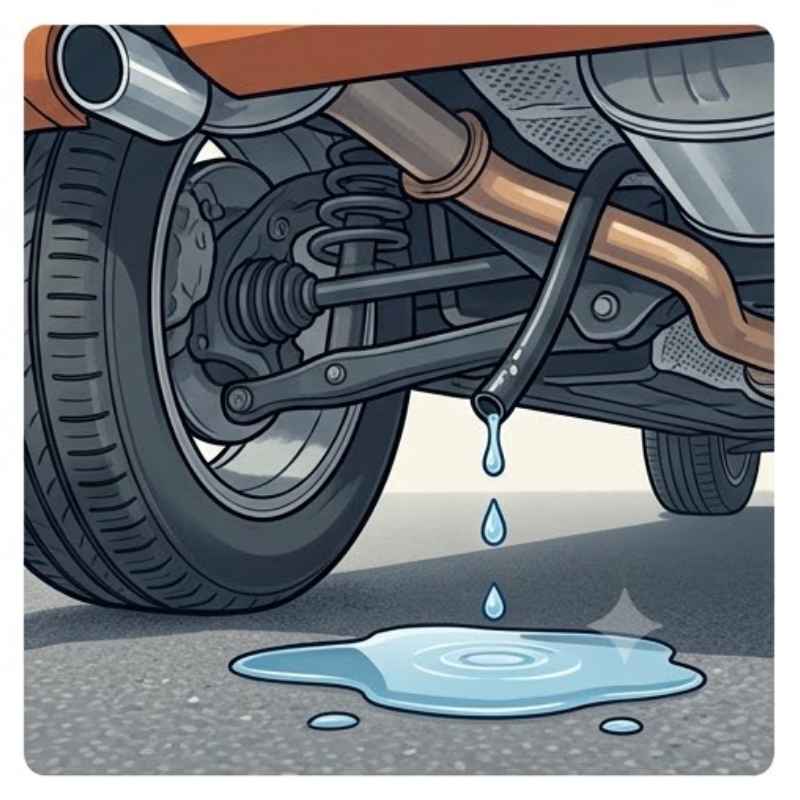
This liquid water then needs somewhere to go. It drips off the evaporator coil and collects in a small pan underneath it. This pan has a drain tube.
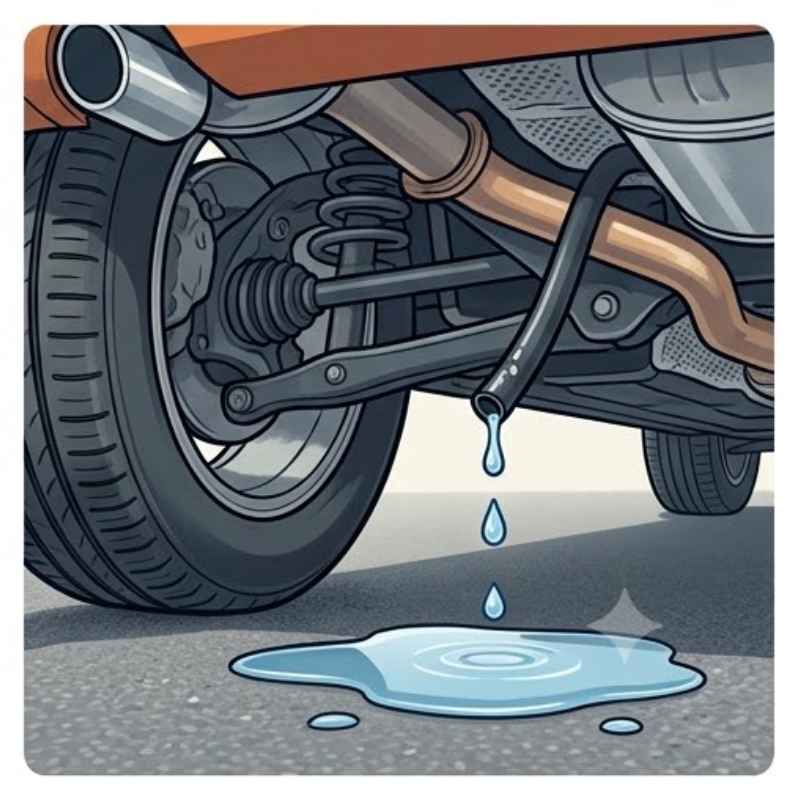
This drain tube leads outside your car, usually to the underside of the vehicle.
So, when you see that puddle, it’s just the water that has dripped out of that drain tube. It’s a sign that your AC is effectively removing humidity from the air inside your car. This makes the air feel cooler and much more comfortable, especially on hot, sticky days.
The amount of water you see can change. It depends a lot on how humid the outside air is. On a very humid day, your AC works harder to pull out moisture.
This means you might see a larger puddle. On a dry day, there might be very little water, or even none at all.
My Own “Uh Oh” Moment with AC Water
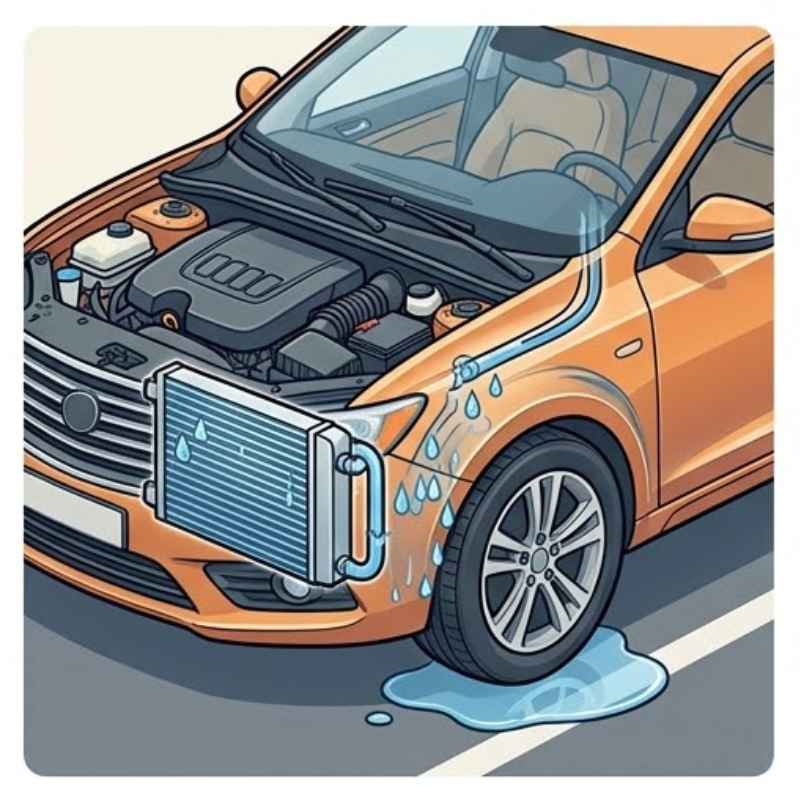
I remember one sweltering summer day a few years back. I had just picked up groceries and parked my car back home. As I was unloading, I noticed a pretty decent-sized puddle of water under my passenger side door.
My heart did a little flip. My first thought was, “Did I hit something? Is the gas tank leaking?
I quickly got on my hands and knees, peering under the car. It looked like clear water, not colored or oily. I smelled it – no strange smells either.
I spent the next hour nervously Googling “car leaking water” and scrolling through forums. It felt like a huge, impending disaster was about to happen.
Then, I remembered my mechanic mentioning something about AC condensation a while back. I turned on the AC again, and sure enough, after a few minutes, a small stream of water started dripping from the same spot. It was a huge relief.
That puddle was just normal AC condensation, and my car was perfectly fine. It taught me a valuable lesson: don’t jump to the worst conclusion right away. Understanding how your car works can save you a lot of stress (and money!).
AC Water: Normal vs. Not-So-Normal
Normal Condensation:
- Clear water.
- No strong smell.
- Drips only when AC is running.
- Amount varies with humidity.
- Usually drips from the middle to the front of the car, often on the passenger side.
Potential Issues:
- Colored water (e.g., green, pink, orange) – could be coolant leak.
- Strong chemical or sweet smell – could be coolant leak.
- Oily or dark fluid – could be oil or power steering fluid.
- Leaking when AC is OFF – might be a radiator leak or something else.
- Excessive pooling or no dripping at all when AC is on.
Where Does the Water Come From Exactly?
We’ve touched on the evaporator, but let’s get a little more specific. The entire air conditioning system in your car is a closed loop. It uses a special refrigerant gas that cycles through different states: gas and liquid.
This refrigerant is key to cooling.
The main components are the compressor, condenser, expansion valve, and evaporator. The compressor squeezes the refrigerant gas, making it hot. It then goes to the condenser, usually in front of your car’s radiator.
Here, it cools down and turns into a liquid. This liquid then passes through the expansion valve, which lowers its pressure and temperature dramatically.
This super-cold, low-pressure refrigerant then flows into the evaporator. The evaporator is located inside your car’s dashboard, often behind the glove box or center console. As the car’s fan blows air over the cold evaporator coils, the refrigerant absorbs heat from the air.
This is what cools the air.
As the refrigerant absorbs heat, it gets warmer. This process also causes the moisture in the air to condense onto the cold evaporator fins. This condensation is the water we’re talking about.
It’s a necessary part of the cooling process.
The water drips from the evaporator fins into a drain pan. From this pan, it flows through a rubber hose, called a condensate drain tube. This tube usually exits the car’s body near the firewall (the part between the engine and the cabin) or the transmission tunnel.
So, the water you see is essentially distilled water from the air inside your car. It’s pure and free of minerals, which is why it’s typically clear and odorless.
Real-World Scenarios: When You See the Drip
Most of the time, you’ll notice the water drip after you’ve been driving for a while with the AC on. This is because the system has had time to cool the cabin and condense a good amount of moisture.
Scenario 1: The Post-Commute Drip
You drive to work with the AC blasting. When you arrive and turn off the engine, you see a puddle forming under the front passenger side of your car. This is classic.
The system has been working hard, and the collected water is now draining out. It’s perfectly normal.
Scenario 2: The Grocery Run Puddle
You pop to the store on a hot afternoon. After parking and shutting off the engine, you notice water under the car. Again, this is the AC doing its job.
The longer the AC runs, the more condensation it produces.
Scenario 3: The Sticky Summer Night
It’s humid outside, even after sunset. You’ve had the AC on for a long drive. When you get home, the drip might be more noticeable than on a dry day.
The system is removing a lot of moisture from the air. This is a sign of effective dehumidification.
Scenario 4: No Drip in Winter or Mild Weather
In cooler or dry weather, your AC might not run as much, or at all. If the air isn’t humid, there’s less moisture for the system to condense. You might see no water under your car, and that’s also normal.
You only need the AC for cooling and dehumidifying.
The location of the drip can vary slightly by car model. Most often, it’s on the passenger side, towards the front. Some cars might have the drain tube positioned slightly differently.
When to Be Mindful: Signs of Trouble
What It Looks Like:
- Color: If the fluid is not clear, especially if it’s green, pink, or orange, it could be engine coolant. This is a more serious issue.
- Smell: A sweet or chemical smell often indicates a coolant leak.
- Consistency: Oily or dark fluid suggests an oil or power steering fluid leak.
When It Drips:
- AC Off: If you see a leak when the AC is not running, it’s unlikely to be AC condensation. It could be a coolant leak (radiator, hoses) or other fluid leak.
- Excessive Amounts: While normal condensation can be a decent amount, a constant, massive flow might suggest a blockage or a larger issue.
- No Drip: If you run the AC on a humid day and see absolutely no water, the drain tube might be clogged.
What If There’s No Water Dripping?
This is a question many people ask. If you’re running your AC on a humid, hot day and you don’t see any water under your car, it’s not always a disaster. However, it can point to a problem.
The most common reason for no dripping is a clogged AC drain tube. Over time, dust, leaves, dirt, and even mold can build up inside this small tube. When it gets clogged, the water can’t drain out.
It has to go somewhere, and it usually backs up into the air conditioning system.
This backup can cause a few issues:
- Water pooling inside the car: The water might start to drip inside your car. You might find a wet spot on the floor on the passenger side, especially near the front. This is a sure sign the drain is blocked.
- Musty smells: When water can’t drain, it sits in the drain pan and on the evaporator. This damp environment is perfect for mold and mildew to grow. You’ll start to notice a musty or moldy smell coming from your vents when you turn on the AC.
- Reduced cooling: A clogged drain can sometimes lead to a clogged evaporator, which can make your AC less effective at cooling.
Another, less common, reason for no dripping could be an issue with the AC system itself, perhaps a leak in the refrigerant line that’s preventing proper condensation. But usually, it’s the drain tube.
If you suspect a clogged drain tube, it’s best to have it checked by a mechanic. They can often clear the blockage relatively easily using compressed air or specialized tools. Ignoring it can lead to more expensive repairs down the line.
What If There’s Too Much Water Dripping?
On the flip side, what if it seems like your car is springing a major leak? While condensation can produce a good amount of water, a truly excessive amount might be worth a second look.
Usually, “too much” refers to a constant, heavy flow that seems out of proportion for the conditions. This is rare for AC condensation itself. If you’re seeing a large volume of water, especially if it’s not clear, you should investigate further.
Here’s what could be happening:
- Severe Blockage: A severely clogged drain tube could cause water to back up and potentially find other escape routes, though this is less common than interior pooling.
- Cracked Drain Pan: The drain pan under the evaporator could be cracked, allowing water to leak out in unintended places.
- Other Fluid Leaks: This is the most important concern. As mentioned, if the fluid isn’t clear, or if it has a smell, it’s probably not just AC water. It could be coolant (often bright green, pink, or orange) leaking from your radiator, hoses, or water pump. Or it could be oil or transmission fluid. These are serious issues that need immediate attention.
If you see a very large puddle or suspect it’s not just water, park the car and check the color and smell of the fluid. If it’s anything other than clear water, or if it’s an unusually large amount, it’s best to call a mechanic. Don’t drive the car if you suspect a major fluid leak, especially of coolant or oil.
Quick Checks You Can Do
Check Fluid Color:
- Is it clear like water? (Likely AC condensation)
- Is it green, pink, orange, or yellow? (Likely coolant)
- Is it dark brown or black? (Could be oil or transmission fluid)
Check Fluid Smell:
- No smell? (Good sign for AC water)
- Sweet or chemical smell? (Likely coolant)
- Burning smell? (Could be oil on hot engine parts)
Check When It Drips:
- Only when AC is on? (Most likely AC condensation)
- When AC is off? (Likely a different fluid leak – radiator, oil, etc.)
When to Worry: Red Flags for Your Car’s AC
While seeing water under your car is usually a good sign, there are definitely times when it signals a problem. It’s all about observing the details. Think of these as the “red flags” that mean you should pay closer attention or seek professional help.
1. The Smell Test Fail: If the water has a sweet, chemical, or unpleasant odor, it’s not just condensation. This often means coolant is leaking.
Coolant leaks can be serious, affecting your engine’s ability to stay cool.
2. The Wrong Color: Clear is good. Green, pink, orange, or even a dark brown fluid is not.
These colors usually indicate other vital fluids leaking from your engine or transmission. You need to get this checked immediately.
3. Leaking When AC is Off: Your AC system is designed to create condensation. If you see a leak while the AC is turned off, it means something else is dripping.
This could be coolant from your radiator, hoses, or heater core, or possibly oil.
4. No Dripping at All: As we discussed, if it’s a humid day and your AC is on high, and you see no water, the drain line is probably clogged. This needs clearing to prevent interior water damage and mold growth.
5. Water Inside the Car: If you notice damp carpets or puddles forming inside your car, especially on the passenger side floor, it’s a strong indicator that the AC condensation drain is blocked or there’s a leak in the system. This can lead to mold and electrical issues.
6. Strange Noises: While not directly about the water, if you hear grinding, squealing, or unusual noises from the AC system when it’s running, it could be a sign of a failing compressor or other component. This might indirectly affect condensation.
If you notice any of these red flags, it’s best to err on the side of caution. A quick visit to a trusted mechanic can diagnose the issue and prevent it from becoming a much larger, more expensive problem.
Simple Checks and What Mechanics Look For
When you take your car to a mechanic for an AC-related concern, they have a systematic way of checking things. They’ll often start with the basics, just like you can.
Mechanic’s Basic Checks:
- Visual Inspection: They’ll look under the car for leaks, noting the color and amount of fluid.
- AC Operation Test: They’ll run the AC to see if it’s cooling effectively and if condensation is forming and draining.
- Drain Tube Check: They will likely check the AC drain tube for blockages. They might use compressed air to blow it out or a flexible rod to clear it.
- Pan and Hose Inspection: They’ll inspect the drain pan for cracks and the hose for damage.
Deeper Checks (if needed):
- Pressure Testing: They can test the AC system’s pressure to ensure it’s holding refrigerant properly and that there are no major leaks in the sealed system.
- Dye Injection: A special UV dye can be added to the refrigerant. If there’s a leak anywhere in the system, the dye will show up under a UV light, making the leak source visible.
- Coolant System Check: If coolant is suspected, they’ll check the radiator, hoses, water pump, and heater core for leaks.
For most drivers, understanding the basic “normal” signs and knowing the red flags is enough. If you suspect an issue, don’t hesitate to seek expert advice. It’s always better to be safe than sorry with your vehicle.
AC Water Drip: Frequently Asked Questions
Is it normal for my car’s AC to drip water?
Yes, it is very normal for your car’s air conditioning system to drip water. This happens because the AC cools the air inside your car, which causes moisture to condense on the cold evaporator coils. This water then drains out from under the car.
What kind of water is dripping from my car’s AC?
The water dripping from your car’s AC is condensation. It’s essentially moisture from the air inside your car that has turned back into liquid water. It should be clear and odorless.
Where does the water drip from under my car?
The water typically drips from a drain tube that is connected to the AC system’s drain pan. This tube usually exits the car’s body towards the front and often on the passenger side of the vehicle.
Why would my car’s AC stop dripping water?
If your car’s AC stops dripping water, it usually means the AC drain tube is clogged with debris like leaves, dirt, or mold. This can cause water to back up and potentially leak inside your car.
What if the water dripping from my car is not clear?
If the fluid dripping from under your car is not clear—meaning it’s colored (like green, pink, or orange) or has an oily or sweet smell—it is likely not AC condensation. This could indicate a leak of engine coolant, oil, or transmission fluid, which are more serious issues requiring immediate attention.
Can a leaking AC cause damage inside my car?
Yes, if the AC drain tube is clogged, water can back up and leak into the cabin, often onto the passenger side floor. This can lead to water damage, mold growth, and potential electrical problems if left unaddressed.
How much water should my car’s AC drip?
The amount of water your car’s AC drips can vary greatly depending on the humidity and how long the AC has been running. On a hot, humid day, you might see a significant puddle. On a dry or cool day, you might see very little or no water.
A large amount is usually normal if it’s clear water and only when the AC is on.
Conclusion: A Sign of a Working System
Seeing a puddle of water under your car after using the air conditioning can be surprising at first. But now you know it’s almost always a sign that your car’s AC system is doing exactly what it’s supposed to do. It’s cooling the air and removing humidity, making your drive much more comfortable.
Remember to keep an eye on the color and smell of the water, and note if it drips when the AC is off. These details are key to spotting any potential problems. For the most part, that little drip is just your car giving you a thumbs-up for a job well done.
Products related to this article
Sponsored / affiliate links. As an Amazon Associate I earn from qualifying purchases. I may earn additional commission from eligible campaigns.