Essential Guide: How to Get Rid of Bed Bugs in Car
To get rid of bed bugs in your car, you’ll need to thoroughly clean and inspect every inch of the interior, focusing on cracks and crevices. Methods include vacuuming, steam cleaning, using heat treatments, and applying specific insecticides. Regular checks are key to preventing re-infestation.
Discovering bed bugs in your car can be quite a shock. These tiny pests aren’t just a problem for homes; they can hitch a ride anywhere, including your car, and make themselves unwelcome guests. It’s natural to feel a bit worried, but don’t fret! Getting your car back to a bug-free zone is definitely achievable. You have the power to tackle this and reclaim your comfortable ride. This guide will walk you through everything you need to know, step by step, so you can feel confident and have your car sparkling clean and pest-free again. We’ll cover identifying them, cleaning them out, and keeping them away for good.
Why Bed Bugs Invade Cars
Cars offer a surprisingly cozy environment for bed bugs. They’re looking for warm, dark places to hide and feed, and your car’s interior provides just that. Think about it: seats, carpets, and consoles have plenty of small spaces where these little critters can sneak in and set up shop. They can easily transfer from clothing, luggage, or even other infested items. Even if your home is clean, a quick trip to a hotel or public place could inadvertently bring them into your vehicle. They are resilient and can survive for a while without a meal, making them persistent invaders. Understanding why they like cars helps us know where to look and how to get rid of them effectively.
Identifying a Bed Bug Infestation in Your Car
The first step to tackling bed bugs is confirming they are indeed the culprits. Bed bugs are small, oval, and reddish-brown, about the size of an apple seed. You might not see them right away, as they often hide during the day. So, what should you look for?
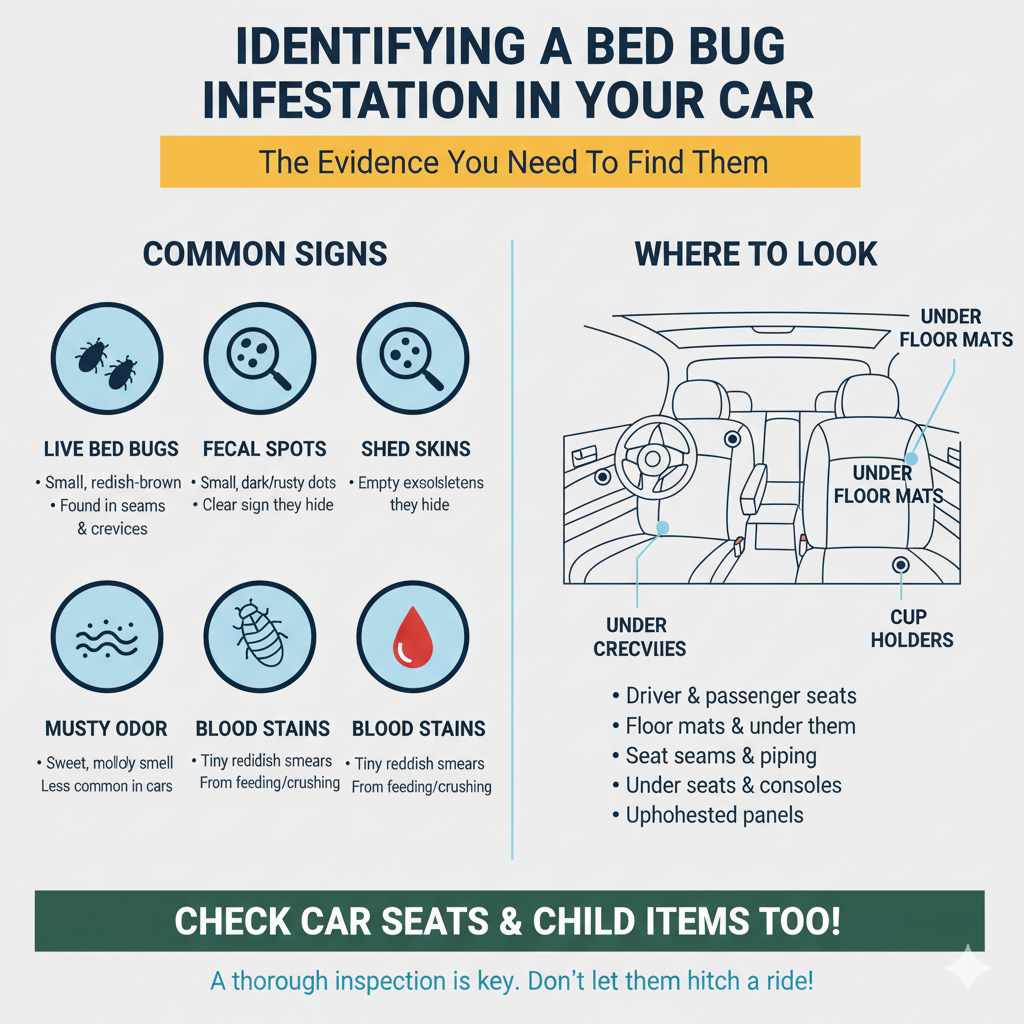
Here are the common signs of a bed bug infestation in your car:
- Live Bed Bugs: Spotting the actual bugs is the most direct evidence. They can be found in seams of seats, under floor mats, and in small crevices.
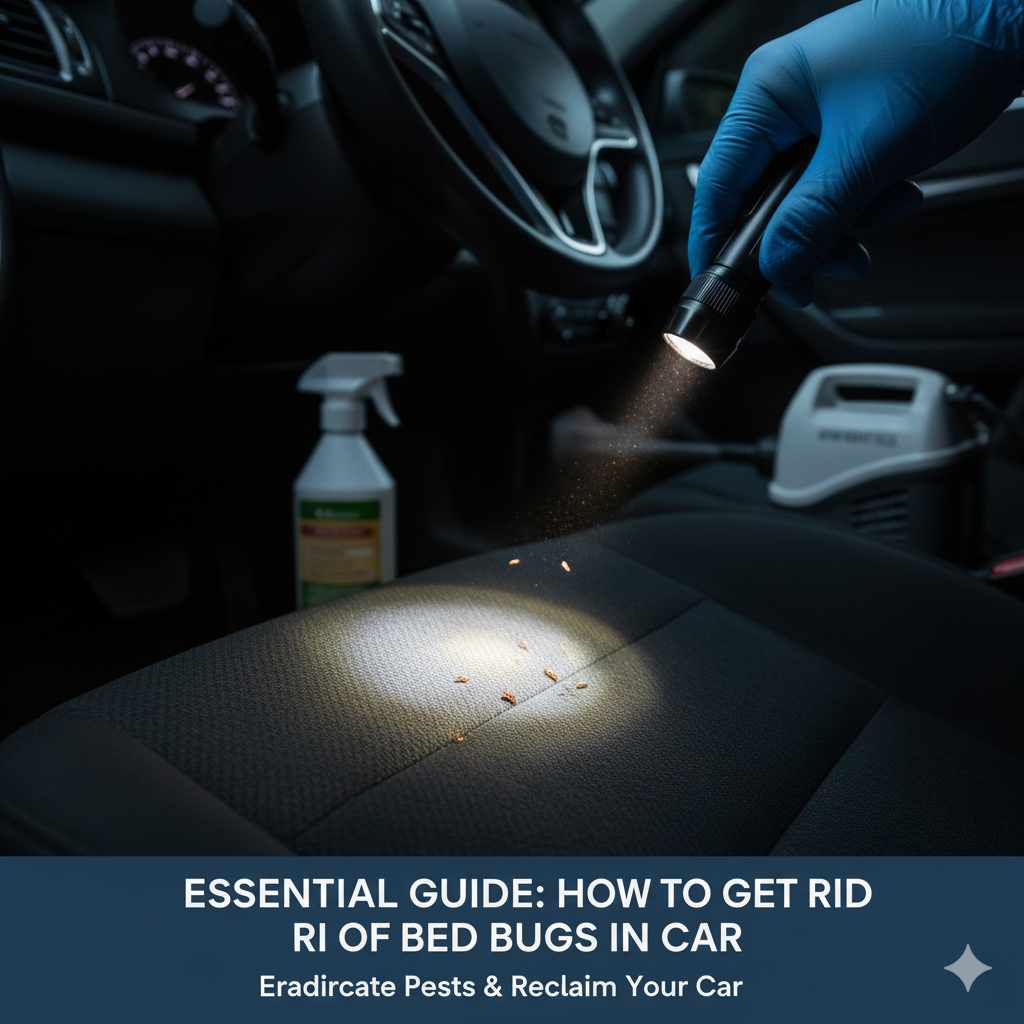
- Fecal Spots: These look like small, dark or rusty dots, often clustered together in areas where bed bugs hide. They are essentially dried blood and waste.
- Shed Skins: As bed bugs grow, they shed their exoskeletons. These empty, translucent shells are another clear sign.
- Blood Stains: Small, reddish stains on your car’s upholstery or floor mats can indicate that you or a passenger were bitten while the bugs were feeding.
- Musty Odor: In heavy infestations, a sweet, musty smell might be noticeable, though this is less common in cars due to the larger air volume compared to a home.
Pay close attention to areas where you or passengers spend a lot of time: the driver’s seat, passenger seats, and around the floor mats. Also, check under the seats, in cup holders, and any upholstered panels. It’s also wise to inspect car seats or any child-related items that spend time in the vehicle if you suspect an infestation has spread from your home.
Step-by-Step Guide to Eliminating Bed Bugs in Your Car
Getting rid of bed bugs requires a thorough and systematic approach. Don’t rush this process; patience is key to ensuring you eradicate them completely.
Step 1: Initial Inspection and Preparation
Before you start any cleaning, a detailed inspection is crucial. This helps you understand the extent of the problem and where to focus your efforts.
Tools you might need:
- Good flashlight
- Magnifying glass
- Disposable gloves
- Vacuum cleaner with a crevice tool and hose attachment
- Plastic bags (ziploc or garbage bags)
- Scraper or putty knife (for hard-to-reach spots)
Carefully inspect all seams, folds, and crevices in your car’s upholstery, under floor mats, in seat crevices, and around any plastic trim. Use your flashlight and magnifying glass to spot live bugs, eggs, or fecal matter.
Step 2: Thorough Vacuuming
Vacuuming is your first line of defense. It physically removes bed bugs, eggs, and even small amounts of their debris.
How to vacuum effectively:
- Use Attachments: Employ the crevice tool to get into every seam, crack, and difficult-to-reach spot. Use the hose attachment for larger areas like seats and carpets.
- Be Meticulous: Go over every surface slowly and deliberately. Don’t forget the trunk, under the seats, and even the headliner if it looks suspect.
- Dispose of the Bag Immediately: Once you’re finished vacuuming, immediately remove the vacuum bag or canister contents. Seal them tightly in a plastic bag and dispose of it outside your home to prevent re-infestation. Clean your vacuum cleaner’s attachments afterward.
Step 3: Deep Cleaning and Treatment Options
After vacuuming, it’s time for deeper cleaning and specific treatments. Here are several effective methods:
Option A: Steam Cleaning
High heat is one of the most effective ways to kill bed bugs and their eggs. Steam cleaners work by using hot, moist vapor to penetrate fabrics and kill pests on contact.
How to steam clean:
- Invest in or Rent a Steamer: Ensure the steamer reaches a high enough temperature (ideally over 120°F or 50°C).
- Slow and Steady: Move the steam nozzle slowly over all surfaces, especially any areas where you found bed bug signs. Ensure the steam penetrates the seams and crevices.
- Allow to Dry: Let the car interior dry completely afterward. This might take a few hours, so park it in the sun if possible, with windows slightly open for ventilation.
Important Note: Only use steam on fabrics that can withstand moisture. Check your car’s manual or test on an inconspicuous area first.
Option B: Heat Treatment (DIY and Professional)
Bed bugs die when exposed to high temperatures. Besides steam, other heat methods can be used. One DIY method is using a car interior heat system designed for this purpose, which essentially raises the car’s internal temperature to lethal levels for bed bugs. For severe infestations, consider professional car detailing services that offer heat treatments.
DIY Heat Tips:
- Sun Exposure: On a very hot, sunny day, park your car in direct sunlight with the windows rolled up. You can use a thermometer to monitor the interior temperature. While this may not reach lethal temperatures by itself, it can help make the environment less hospitable and encourage bugs to move, making them easier to find. Adding black plastic bags filled with water on the dashboard can help trap more heat.
Professional Heat Treatment: This is often the most effective and safest method for a thorough eradication. Professionals use specialized equipment to safely heat your car’s interior to temperatures that are lethal to bed bugs (above 120°F or 49°C) for an extended period, ensuring all life stages of the pest are eliminated. Many professional pest control services also offer this specialized automotive treatment. You can learn more about heat treatments for pest control on resources like the Environmental Protection Agency (EPA) website, which provides comprehensive information on pest management strategies.
Option C: Insecticides and Sprays
When other methods aren’t enough, or for residual protection, insecticides might be needed. Always choose products specifically approved for bed bugs and safe for use in vehicles. Read labels carefully and follow all instructions.
Considerations for Car Use:
- Vehicle-Specific Products: Look for products labeled for use on upholstery and in enclosed spaces like cars. Some general household insecticides might be too harsh or leave a residue that could damage your car’s interior.
- Application: Many bed bug sprays are contact killers. For a more lasting effect, some products are designed to leave a residual barrier. Apply them specifically to cracks, crevices, and seams where bed bugs hide.
- Ventilation: After application, ensure the car is well-ventilated before driving. It’s best to let it sit for a few hours or overnight if possible.
- Professional Products: For more potent solutions, consider hiring a pest control professional. They have access to treatments that are more effective and applied safely.
Natural Options: Diatomaceous earth (food-grade) can be used lightly in car crevices. It’s a natural desiccant that dries out insects. Be sure to use it sparingly, as too much can be messy. While not a spray, it offers a more natural approach to targeting hiding spots. Always research and ensure any product, natural or chemical, is safe for automotive use and won’t damage your car’s materials.
Step 4: Washing Removable Items
Any removable items in your car, like floor mats, seat covers, or even loose items like blankets or bags, should be cleaned separately.
How to clean:
- Laundering: Wash items in hot water (as hot as the fabric can tolerate) and dry on the highest heat setting for at least 30 minutes.
- Car Wash Hot Boxes: For items that cannot be washed, consider using a laundromat’s hot box dryer for at least 30 minutes.
- Steam or Vacuum: If washing isn’t an option, thoroughly steam or vacuum these items just as you did the car interior.
After cleaning, store these items in sealed plastic bags until you are confident the bed bug issue is resolved in the car.
Step 5: Sealing and Disposal
As mentioned earlier, proper disposal of anything removed from the car is crucial.
- Vacuum Debris: Seal vacuum bags or canister contents in a plastic bag and immediately take them outside to the trash.
- Discarded Items: If you decide some items are beyond saving and need to be thrown away, seal them in a plastic bag and label them clearly as “infested” to prevent others from taking them.
Step 6: Repeat Treatments and Monitoring
Bed bugs are notoriously difficult to eradicate completely in a single treatment. Their eggs can hatch days or even weeks after your initial cleaning.
Key to Success:
- Follow-Up Inspections: Schedule regular follow-up inspections, ideally every few days for the first couple of weeks, then monthly.
- Repeat Cleaning: Depending on the severity of the infestation and the methods used, you may need to repeat vacuuming, steaming, or insecticide applications.
- Be Patient: Don’t assume the problem is gone just because you don’t see bugs immediately after the first treatment.
Preventing Bed Bugs from Returning to Your Car
Once you’ve successfully rid your car of bed bugs, the next important step is to prevent them from coming back. Prevention is always easier than eradication!
Here are some proactive measures:
- Be Mindful of Where You Park: Avoid parking your car near known infested areas if possible.
- Inspect Items Before Bringing Them In: Be cautious about bringing used furniture or luggage into your car. Inspect them thoroughly for signs of bed bugs.
- Keep Your Car Clean: Regular vacuuming, especially in seams and crevices, can help catch any hitchhikers before they establish a colony.
- Travel Smartly: When traveling, inspect hotel rooms for bed bugs. Keep luggage off the floor and away from beds. If you suspect your luggage may have picked up bed bugs, isolate it and clean it thoroughly before bringing it back into your home or car.
- Educate Yourself and Family: Understanding how bed bugs travel can help everyone be more vigilant.
Tools and Products to Consider
Choosing the right tools and products can make a big difference in your battle against bed bugs in your car. Here’s a breakdown of some helpful items:
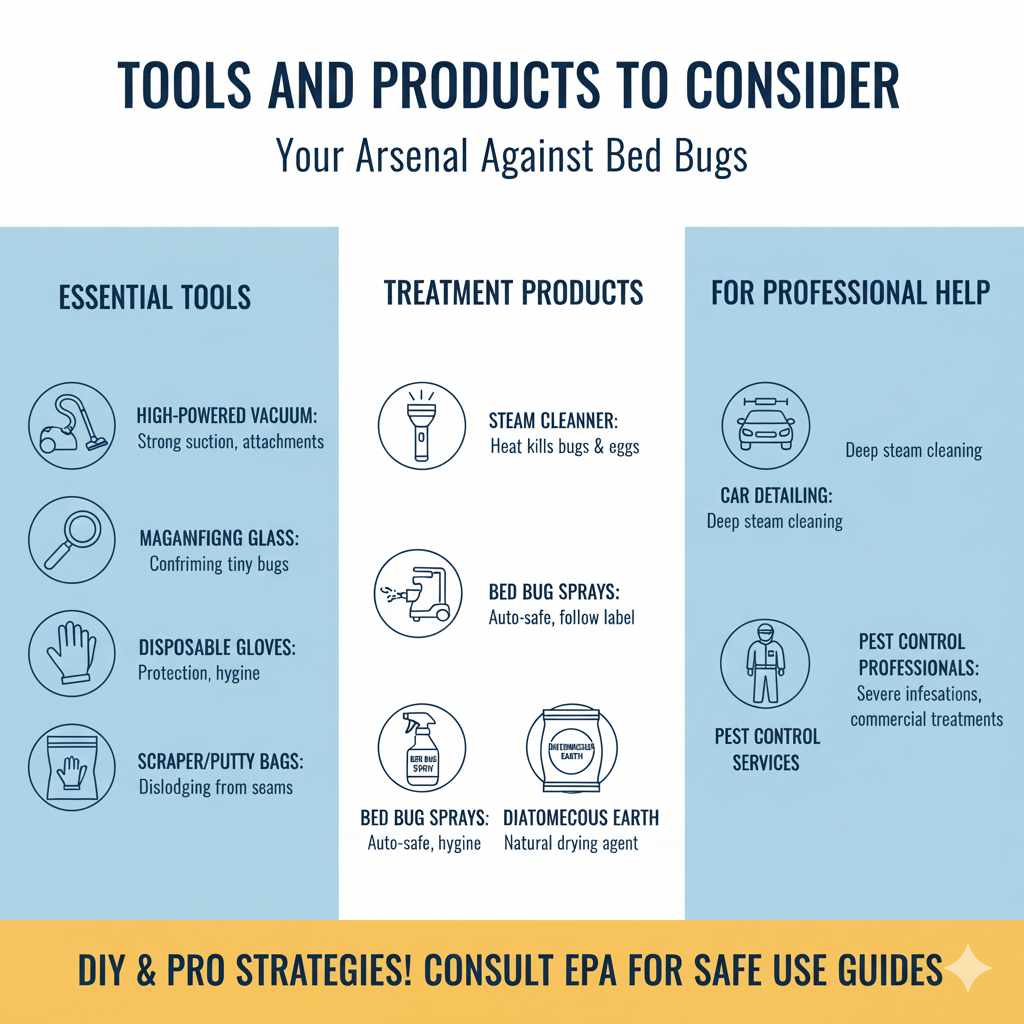
Essential Tools:
- High-Powered Vacuum Cleaner with Attachments: A good vacuum with a strong suction and a variety of attachments (especially a crevice tool) is non-negotiable.
- Good Flashlight: For spotting those tiny bugs and their signs in dark corners.
- Magnifying Glass: Helps to confirm what you’re seeing, especially in dim light.
- Disposable Gloves: To protect yourself and prevent spreading any potential contaminants.
- Scraper/Putty Knife: Useful for dislodging bugs or debris from tight seams.
- Plastic Bags (Sealed): For immediate disposal of vacuum contents and infested items.
Treatment Products:
- Steam Cleaner: A versatile tool that uses heat to kill bugs and eggs. Look for one with a nozzle attachment for getting into crevices.
- Bed Bug Sprays/Insecticides: Ensure they are labeled as effective against bed bugs and safe for automotive use. Look for products from reputable brands. Always follow label instructions.
- Diatomaceous Earth (Food-Grade): A natural powder that can be applied lightly to cracks and crevices as a drying agent for insects.
For Professional Help:
- Car Detailing Services: Some detailing businesses offer deep cleaning services that can include steam treatments, which are effective against bed bugs.
- Pest Control Professionals: For severe infestations, professional exterminators are the most reliable option. They have access to commercial-grade treatments and the expertise to apply them safely.
It’s a good idea to have a plan for both DIY methods and to know when to call in the pros. For more detailed information on pest control products and safe usage, the EPA’s Safe Pest Control page offers valuable guidance.
Bed Bugs vs. Other Pests in Cars
It’s important to correctly identify the pest you’re dealing with. While bed bugs are a serious concern, other small creatures can sometimes find their way into cars. Knowing the difference helps you choose the right treatment.
| Pest | Appearance | Common Locations in Car | Typical Signs | Treatment Focus |
|---|---|---|---|---|
| Bed Bugs | Flat, oval, reddish-brown, about ¼ inch long. | Seat seams, upholstery folds, crevices, headliner. | Fecal spots (dark dots), shed skins, blood stains. | Heat, vacuuming, insecticides targeting seams and voids. |
| Carpet Beetles (Larvae) | Larvae are hairy, caterpillar-like; adults are small, oval, often black or mottled. | Carpets, upholstery, fabric areas, under seats. | Shed skins (brittle, spiny), sometimes minor fabric damage. | Thorough vacuuming, steam cleaning, targeted insecticides. |
| Ants | Vary in size and color (black, red, brown); often seen in trails. | Anywhere food crumbs are found, near electrical components (seeking warmth/food). | Visible trails, nests (sometimes), sticky residue. | Baits, cleaning up food sources, home remedies. |
| Spiders | Eight legs, varying sizes and colors; create webs. | Corners, under seats, dashboards, vents. | Webs, egg sacs, the spiders themselves. | Vacuuming, general cleaning, removing webs. |
Bed bugs are unique in their feeding habits (blood) and their preferred hiding spots. If you’re unsure, capturing a sample of the pest (if possible) can help with identification by a pest control professional or through online resources. Understanding that bed bugs are stealthy, nocturnal feeders that hide in tiny cracks is key to differentiating them from other common car pests.
Frequently Asked Questions (FAQs)
Q1: How long does it take to get rid of bed bugs in a car?
A1: Eradication can take anywhere from one thorough treatment to several weeks, depending on the severity of the infestation, the methods used, and how diligent you are with follow-up treatments and monitoring. Bed bug eggs can hatch, requiring repeat interventions.
Q2: Can I use bed bug bombs or foggers in my car?
A2: It is generally not recommended to use foggers or “bombs” in a car. These products often don’t penetrate deep into cracks and crevices where bed bugs hide effectively. Furthermore, they can leave residues on surfaces that might be harmful and could potentially damage your car’s interior or electronics. Targeted treatments are more effective and safer.
Q3: Are bed bug bites in a car dangerous?
A3: Bed bug bites themselves are not typically dangerous in terms of transmitting diseases. However, they can cause itchy welts, allergic reactions in some individuals, and lead to secondary infections if scratched excessively. The primary concern is eliminating the infestation, not the bites themselves.
Q4: How much does it cost to professionally get rid of bed bugs in a car?
A4: The cost can vary widely based on your location, the extent of the infestation, and the chosen treatment method. Professional pest control services for a car might range from $200 to $800 or more. Heat treatments are typically more expensive than chemical treatments.
Q5: Can I just wash my car and that will get rid of bed bugs?
A5: A standard car wash alone is unlikely to eliminate a bed bug infestation. While hot water and high-pressure sprays might kill some bugs on exposed surfaces, they won’t reach the hidden eggs or bugs deep within seams and crevices. A comprehensive cleaning and treatment plan is necessary.
Q6: What if I think I brought bed bugs from my car into my house?
A6: If you suspect bed bugs have moved from your car to your home, it’s crucial to act fast. Inspect your home thoroughly, especially bedrooms. You may need to treat your home using methods similar to car treatments (vacuuming, steaming, insecticides). If the infestation is significant, consider contacting a professional pest control service for your home immediately.
Conclusion
Facing a bed bug infestation in your car might seem daunting, but by following this comprehensive guide, you’re well-equipped to take control. Remember, the key is a systematic approach: thorough inspection, meticulous cleaning, targeted treatments like vacuuming and steam cleaning, and diligent follow-up. Don’t get discouraged if you don’t see results immediately. Bed bugs are resilient, and persistence is your best ally. By understanding where they hide and employing effective methods, you can reclaim your car as a comfortable, pest-free space. Regular vigilance and preventative measures will also help ensure these unwanted guests don’t return. You’ve got this!