Fuel Injector Cleaner vs Fuel Stabilizer: Which to Use
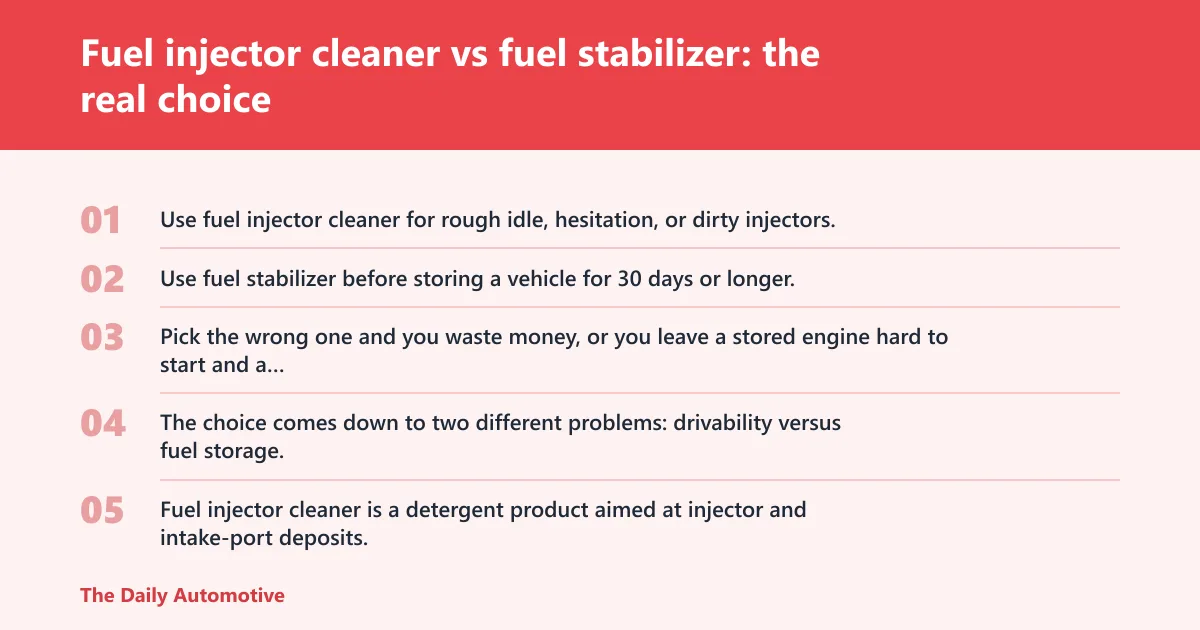
Use fuel injector cleaner for rough idle, hesitation, or dirty injectors. Use fuel stabilizer before storing a vehicle for 30 days or longer. Pick the wrong one and you waste money, or you leave a stored engine hard to start and a dirty fuel system still stumbling. The choice comes down to two different problems: drivability versus fuel storage.
This guide is part of our Car engine troubleshooting guide series.
Fuel injector cleaner vs fuel stabilizer: the real choice


| Decision factor | Fuel Injector Cleaner | Fuel Stabilizer | Winner |
|---|---|---|---|
| Main job | Targets injectors and intake ports with concentrated detergents | Slows fuel breakdown during storage | Tie |
| Best symptom or use pattern | Rough idle, hesitation, misfires, deposit-related drivability complaints | Seasonal storage, infrequent-use vehicles, months-long fuel storage | Tie |
| What it does not do | Does not preserve stale fuel for storage | Does not clean fouled injectors or fix rough running | Tie |
| Fuel type fit | Works with gasoline when deposit cleanup is the goal | Compatible with gasoline and ethanol-blended fuels | Fuel Stabilizer |
| Wrong-product risk | Good fuel can still go stale in storage | Deposit symptoms can stay untouched | Tie |
Main job and purpose
Fuel injector cleaner is a detergent product aimed at injector and intake-port deposits. Fuel stabilizer is a storage additive that slows oxidation and other fuel breakdown during long sit times. They sit in the same broad fuel additive category, but they solve different problems.
Best fit by symptom or use pattern
Rough idle, hesitation, and misfires point first toward cleaner, especially when the vehicle otherwise runs but feels dirty or lazy. Seasonal vehicles, lawn equipment, boats, classic cars, and anything parked for months point toward stabilizer. I use the use pattern first, then I read the label.
What each one will not fix
A stabilizer generally won’t clean a fouled injector or fix a stumble that’s being caused by deposits. A cleaner won’t necessarily keep old gasoline from breaking down in a tank that sits for a long period, including over winter. If the fault is a weak ignition coil, bad spark plug, clogged filter, or a mechanical injector failure, neither bottle is the real fix.
Fuel type fit
Fuel stabilizer has the broader compatibility advantage because it is made for gasoline, including ethanol-blended fuels, during storage. That matters because ethanol blends are common at the pump and can break down during long sits. Cleaner is about deposit control, not long-term freshness.
Wrong-product risk
The expensive mistake is buying by label alone. People often grab “fuel treatment” and assume it covers everything, but a storage additive and a cleaner are not interchangeable. If the tank is full and the engine still stumbles, storage chemistry is not the issue.
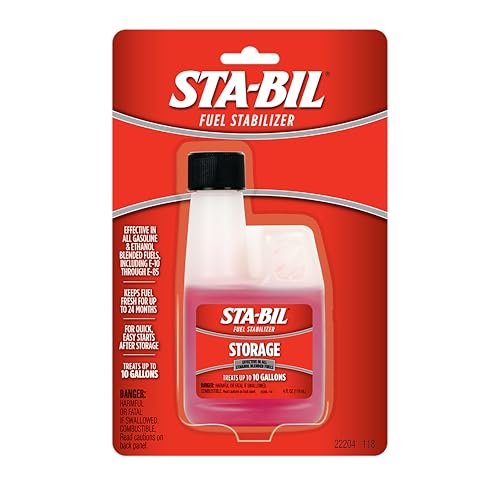
📊 A 32 oz STA-BIL Storage Fuel Stabilizer treats up to 80 gallons. Source: Fuel Stabilizers in Aditivos para Combustible.
What does fuel injector cleaner actually do?
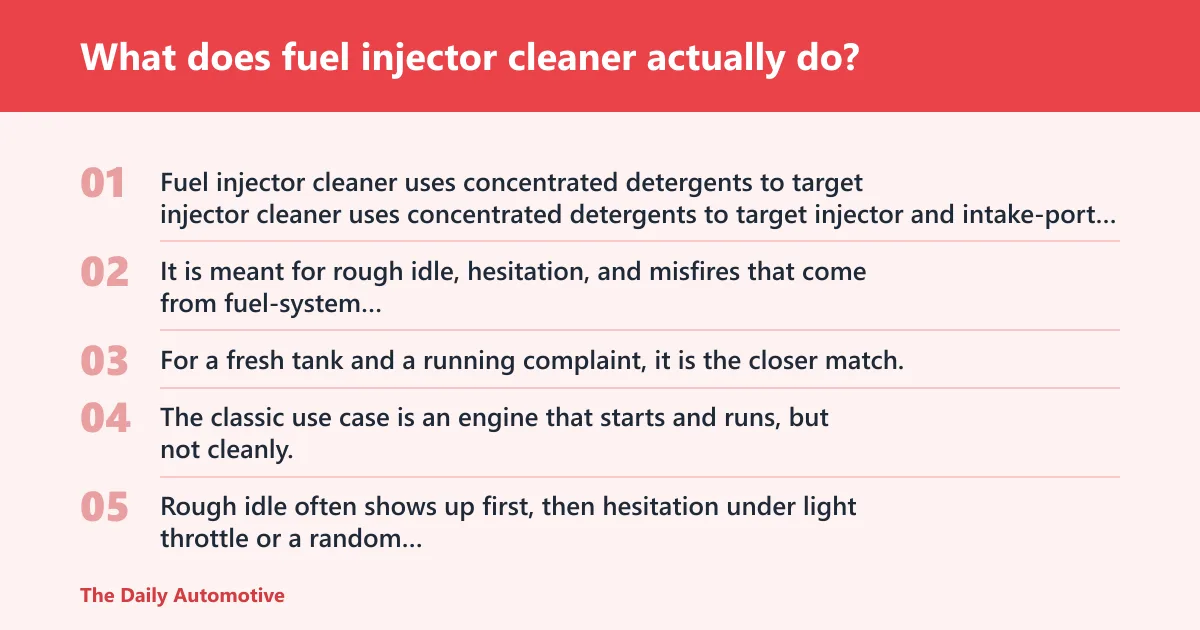
Fuel injector cleaner uses concentrated detergents to target injector and intake-port deposits. It is meant for rough idle, hesitation, and misfires that come from fuel-system contamination, not for preserving gasoline that will sit unused. For a fresh tank and a running complaint, it is the closer match.
Best fit for drivability complaints
The classic use case is an engine that starts and runs, but not cleanly. Rough idle often shows up first, then hesitation under light throttle or a random misfire feel. That pattern fits a cleaner better than a stabilizer because the problem is delivery and atomization, not fuel aging.
How often to use it
Injector cleaner is usually used occasionally rather than at every fill-up unless the label says otherwise. Repeated use without a real need can turn into unnecessary expense. For most owners, the better rhythm is symptom-driven use or a periodic treatment matched to the product label.
Before or after filling the tank
Follow the label directions on sequence and dose. Many products are added to a low tank and then topped off, but the product instructions matter more than general advice because concentration and mixing expectations vary. The safe rule is simple: measure the bottle correctly and match the fuel level guidance on the package.
Direct-injection engines
Direct-injection engines deserve separate attention because some cleaners are formulated for DI systems, and DI engines can still collect intake-valve deposits. That does not mean every cleaner is the same. It means the bottle should state DI compatibility if the vehicle uses direct injection.
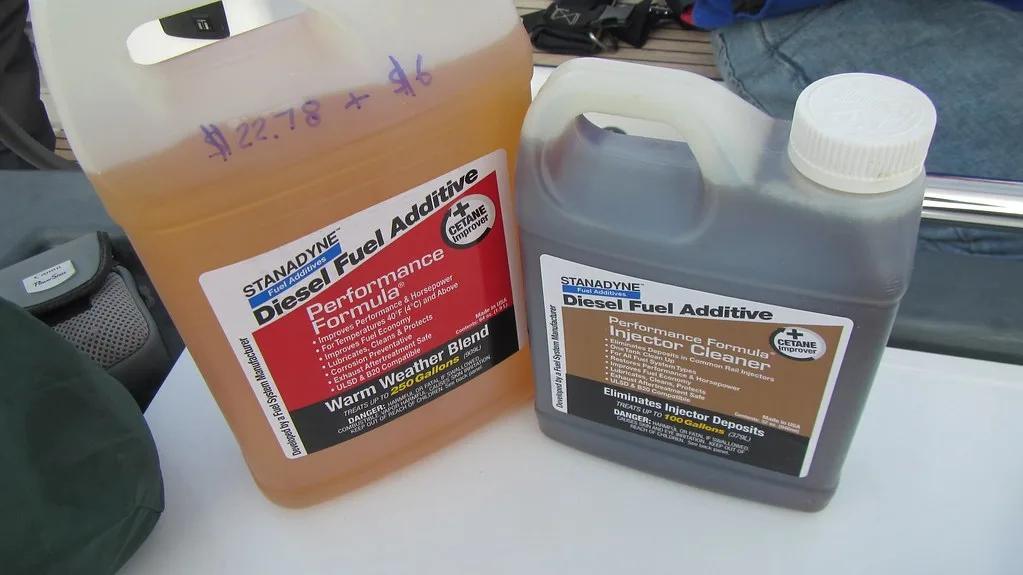
What does fuel stabilizer actually do?
Fuel stabilizer slows fuel breakdown during storage. It helps protect gasoline, including ethanol-blended fuels, from gum, varnish, rust, and corrosion while the vehicle sits. It is the right tool for months-long storage intervals, not for an engine that already runs rough from deposits.
Best fit for seasonal and infrequent-use vehicles
Seasonal equipment and rarely driven vehicles benefit most when they will sit for a long fuel storage interval. The point is to keep the fuel usable later, not to clean the engine now. That is why a stabilizer belongs in the tank before the storage period begins.
Why old fuel becomes a problem
Gasoline does not stay unchanged forever. Over time, oxidation and volatility loss can make starting harder and running less consistent. Ethanol-blended fuel adds another layer of storage risk, which is why a compatible stabilizer is worth using when the fuel is expected to sit.
Compatibility with gasoline and ethanol blends
Not every fuel treatment does the same job, so the bottle has to say it is made for storage and for ethanol-blended fuel if that is what the tank contains. For example, STA-BIL Storage Fuel Stabilizer is sold for protection against gum, varnish, rust, and corrosion, and is listed as effective in all gasoline including ethanol blended fuels.
How do fuel additives differ from cleaners and stabilizers?
Fuel additive is the umbrella category. Under that umbrella are detergents, stabilizers, octane boosters, and corrosion inhibitors, and they are not interchangeable. A mild maintenance additive may do less than a dedicated cleaner, while a stabilizer is aimed at freshness, not deposit removal.
Why the label matters more than the marketing name
“Fuel treatment,” “gas treatment,” and “fuel additive” are broad terms that can hide very different chemistries. Two bottles can sit next to each other on a shelf and do unrelated jobs. Read the function first: clean, stabilize, or protect against corrosion.
Do fuel additives improve gas mileage?
Do not buy a bottle expecting mileage miracles. Some additives are sold with performance claims, but fuel injector cleaner is chosen primarily for deposit-related drivability and fuel stabilizer is chosen for storage. If the engine is mechanically healthy and the fuel system is clean, mileage gains are not a dependable reason to buy either one.
Which one fits your symptom or vehicle use?
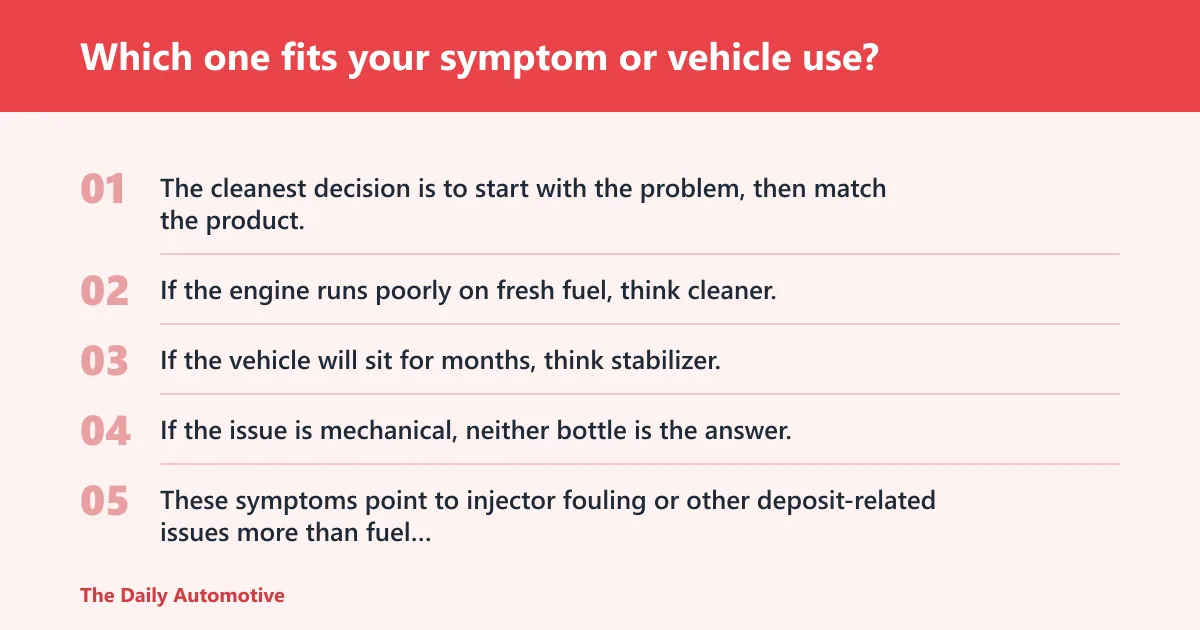
The cleanest decision is to start with the problem, then match the product. If the engine runs poorly on fresh fuel, think cleaner. If the vehicle will sit for months, think stabilizer. If the issue is mechanical, neither bottle is the answer.
| Symptom or use pattern | Vehicle use pattern | Best product |
|---|---|---|
| Rough idle, hesitation, or misfires | Daily driver with fresh gasoline | Fuel Injector Cleaner |
| Long-term storage, stale fuel risk | Seasonal vehicle or infrequent-use equipment | Fuel Stabilizer |
| Direct-injection engine with deposit concerns | Vehicle needs a cleaner formulated for DI systems | Fuel Injector Cleaner |
| Bad plugs, weak ignition, clogged filter, hard mechanical fault | Any use pattern | Neither |
| Fuel already stale after long storage | Tank sat for months without treatment | Neither as a cure; diagnose and service the fuel system |
Rough idle, hesitation, and misfires
These symptoms point to injector fouling or other deposit-related issues more than fuel aging. A cleaner is the better first match because it is built for that job. If the complaint is severe, the next step is diagnosis, not more additive.
Long-term storage and seasonal use
If fuel will sit for months, stabilizer is the proper choice. It is the storage tool that helps gasoline stay usable and helps limit gum, varnish, rust, and corrosion during the sit. That is a different job from cleaning a running engine.
Direct-injection engines and intake-valve deposit concerns
Direct-injection engines can still deal with intake-valve deposit issues, even though fuel does not wash over the valves the same way as some other designs. A cleaner made for DI systems may help where deposits are the problem. The storage answer does not change: a stabilizer is for fuel that will sit.
When neither product is the right fix
If the engine has a bad spark plug, weak coil, clogged fuel filter, low compression, or an injector that needs service, additives will not repair the fault. That is the point where diagnosis beats product shopping. A bottle is not a substitute for parts that have failed.
Choose Fuel Injector Cleaner if… / Choose Fuel Stabilizer if…
Choose fuel injector cleaner if the car has rough idle, hesitation, misfires, or other deposit-related drivability complaints and the fuel is fresh. Choose fuel stabilizer if the vehicle, boat, mower, or classic will sit for months and you want the gasoline to stay usable. If the fault is mechanical, neither one is the right answer.
Choose Fuel Injector Cleaner if…
Use it when the engine runs poorly but the storage timeline is normal. It fits a daily driver with a stumble, a DI engine with a deposit concern, or a fresh-tank cleanup attempt. It should be occasional, label-directed, and symptom-based.
Choose Fuel Stabilizer if…
Use it when fuel will age in the tank. That includes seasonal storage, infrequent-use vehicles, and any gasoline or ethanol-blended fuel that needs to stay fresh through a long sit. It is a prevention step, not a repair step.
Frequently asked questions
fuel injector cleaner vs fuel treatment
Fuel injector cleaner is a specific cleaner with concentrated detergents aimed at injector and intake-port deposits. Fuel treatment is a broader label that can mean detergents, stabilizers, corrosion inhibitors, or other additives. The safe move is to read the function on the bottle, not just the marketing name.
fuel injector cleaner vs fuel additive
Fuel additive is the umbrella term, and injector cleaner is one type under that umbrella. Some additives are milder maintenance products, while a dedicated cleaner is built for stronger deposit control. If the engine has rough idle or hesitation, the cleaner is usually the closer fit.
does fuel treatment stabilize fuel
Sometimes, but not always. “Fuel treatment” can mean many things, and only a product labeled as a stabilizer is intended to slow fuel breakdown during storage. If the vehicle will sit for months, use a stabilizer specifically made for that job.
how often should i put fuel injector cleaner in my gas tank
Use it as the label directs and only as often as the product calls for. It is not meant to be a blind every-fill habit unless the package says so. For most drivers, occasional use tied to symptoms or maintenance intervals is the better approach.
do you put fuel injector cleaner in before or after gas
Follow the bottle instructions, because dose and mixing expectations vary by product. Many cleaners are added to a low tank and then mixed with fresh gasoline, but the label should control the sequence. The wrong fill level can weaken the treatment or create guesswork.
what is the best type of fuel injector cleaner
The best type is the one matched to the engine and the complaint. For DI engines, look for a cleaner labeled for direct-injection systems. For rough idle, hesitation, or misfires tied to deposits, choose a concentrated cleaner rather than a mild general fuel additive.
which fuel injector cleaner works best
The one that matches the engine design, fuel type, and problem statement works best. A strong detergent cleaner is appropriate when the issue is deposit-related, but it will not repair mechanical faults. If the vehicle has severe drivability problems, diagnosis matters more than brand choice.
Products related to this article
Sponsored / affiliate links. As an Amazon Associate I earn from qualifying purchases. I may earn additional commission from eligible campaigns.