Mass Air Flow Cleaner vs Throttle Body Cleaner Guide
Use mass air flow cleaner on the MAF sensor only, and throttle body cleaner on the throttle bore and plate. Never mix them up. The wrong spray can leave idle problems untouched or damage sensitive sensors. This guide shows which part gets which cleaner, what not to spray, and when rough idle or lean codes point elsewhere.
This guide is part of our Car engine troubleshooting guide series.
Mass air flow cleaner vs throttle body cleaner: the core difference
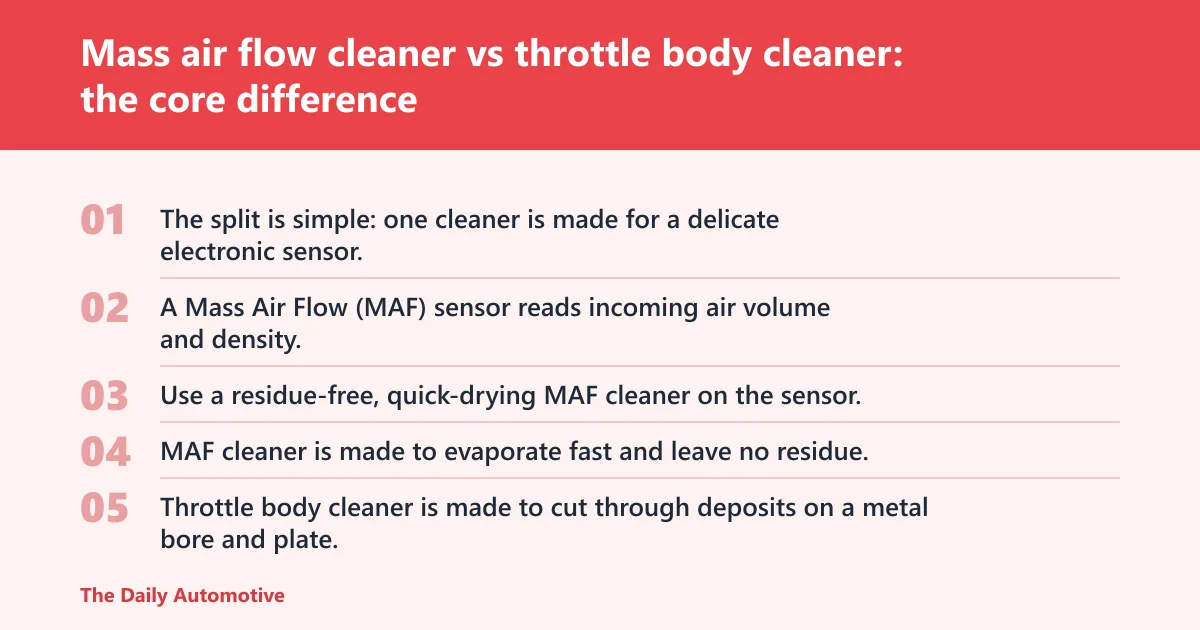

The split is simple: one cleaner is made for a delicate electronic sensor, the other is made for carbon on metal intake parts. A Mass Air Flow (MAF) sensor reads incoming air volume and density, while a throttle body controls airflow with a plate and bore that can collect varnish and gum.
The rule is one line long. Use a residue-free, quick-drying MAF cleaner on the sensor, and use the stronger throttle body cleaner on the throttle bore, plate, and intake tract when deposits are visible.
| Decision factor | Mass Air Flow Cleaner | Throttle Body Cleaner | Winner |
|---|---|---|---|
| Best target part | Mass Air Flow sensor, including delicate hot-wire or film elements | Throttle body bore, throttle plate, and intake passage | Tie |
| Residue risk | Designed to leave no residue and dry in seconds | Stronger solvent; not intended for sensitive sensor electronics | Mass Air Flow Cleaner |
| Deposit removal | Good for light contamination on sensors | Better for heavy carbon deposits, varnish, and gum | Throttle Body Cleaner |
| Electronic safety | Safer for delicate plastic housings and sensor bodies | Not sensor safe | Mass Air Flow Cleaner |
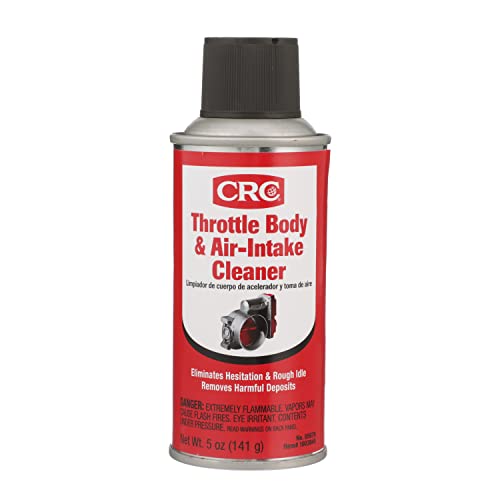
| Examples | CRC 05110 Mass Air Flow Sensor cleaner, 11 Wt Oz. | CRC 05078 Throttle Body and Air-Intake Cleaner, 12 Wt Oz. | Tie |
Why the formula choice matters
MAF cleaner is made to evaporate fast and leave no residue, because any film on a sensing element can skew airflow readings. Throttle body cleaner is made to cut through deposits on a metal bore and plate, so it fits grime that feels sticky or baked on.
Why the formulas are not interchangeable
A MAF sensor is an electrical measuring device, not a dirty metal passage. A throttle body cleaner can be too aggressive for that job, while a MAF cleaner may be too mild to break up carbon and varnish on the throttle plate.
What is a Mass Air Flow sensor?
A Mass Air Flow sensor measures incoming air with a delicate hot-wire or film sensing element. It feeds the engine computer data used to calculate the air/fuel ratio, so contamination can skew the reading and may lead to rough idle, hesitation, or a lean condition.
That is why a residue-free, quick-drying cleaner matters. If a solvent leaves film, or if liquid reaches the connector or sensing element and does not evaporate fast, the sensor can read inaccurately or fail altogether.
What can damage it
Harsh solvents can attack the sensitive sensing element or leave contaminants on it. Dirt from an oiled air filter, dust from a dirty intake tract, or over-sprayed chemical can contaminate the hot-wire or film and make the sensor read the wrong amount of air.
What is a throttle body?
A throttle body is the air-intake passage that houses the throttle plate. It is a mechanical airflow restriction, and it often collects carbon, varnish, and gum around the bore and plate edges.
That buildup can keep the plate from moving or sealing cleanly. For that reason, the throttle body usually needs a stronger solvent than a MAF sensor cleaner, plus a wipe to remove loosened debris.
Where plastic-safe handling still matters
Even though the throttle body is a tougher part, surrounding intake housings, sensors, and connectors may still be plastic. A plastic-safe formula reduces the risk of softening or damaging nearby parts, and it still pays to spray carefully instead of flooding the area.
Side-by-side comparison: MAF cleaner vs throttle body cleaner
The trade-off is direct: MAF cleaner is the safer choice for electronics, while throttle body cleaner is the better choice for stubborn mechanical deposits. If you pick by part type first, you avoid both common mistakes: under-cleaning a dirty throttle bore and over-treating a fragile sensor.
| Factor | Mass Air Flow Cleaner | Throttle Body Cleaner | Winner |
|---|---|---|---|
| Primary use | Mass air flow sensors and delicate electronics | Throttle bodies, air-intakes, and fuel-injected gasoline engine valves | Tie |
| Residue behavior | No residue after drying; dries in seconds | Designed for deposit removal, not residue-free sensor cleaning | Mass Air Flow Cleaner |
| Deposit strength | Light contamination | Heavy carbon, varnish, and throttle plate gum | Throttle Body Cleaner |
| Sensor safety | Safer for delicate plastic housings and sensor bodies | Not safe for delicate MAF electronics | Mass Air Flow Cleaner |
| Can size example | CRC 05110, 11 Wt Oz. | CRC 05078, 12 Wt Oz. | Tie |
Residue and drying behavior
Residue-free cleaning is not a marketing extra on a MAF sensor. A tiny coating on a hot-wire or film can distort airflow data, so the fast-drying, no-residue formula matters more than brute cleaning power.
Deposit removal
Throttle bodies need a cleaner that can break down carbon, varnish, and gum. A MAF cleaner can help if the throttle body is only lightly dirty, but it may not remove the heavy layer that keeps the plate from moving freely.
Electrical and plastic safety
When cleaning around sensors, the main risk is the sensor body and any nearby plastic housing. CRC Mass Air Flow Sensor Cleaner is positioned as the dedicated sensor-safe option, while CRC Throttle Body and Air-Intake Cleaner is the heavy-duty option that is not for electronics.
Can you use throttle body cleaner on a MAF sensor?
No. Throttle body cleaner is not sensor safe, and a MAF sensor uses delicate hot-wire or film elements that should only see residue-free, quick-drying cleaner made for that task. The wrong solvent can leave contamination behind or damage the sensor outright.
Use a dedicated MAF cleaner instead, and choose a product meant for MAF sensors rather than a general-purpose cleaner. It is sold as an 11 Wt Oz. product and is described as leaving no residue and drying in seconds.
What can go wrong
A harsh spray can attack the sensing element, leave a film on it, or carry grime into the connector area. That risk is higher when the intake has an oiled air filter or when the sensor already has dust and oil contamination on it.
Can you use MAF cleaner on a throttle body?
Yes, sometimes, but only for a light cleaning on a lightly dirty throttle body. It can remove surface film or dust, yet it may not break down heavy carbon deposits, varnish, or gum that need the stronger throttle body cleaner.
After spraying, a wipe is often still needed. The goal is to remove loosened grime from the bore and plate, not to soak the intake or flood the surrounding electronics.
When the lighter spray is enough
If the throttle plate only has a thin film and the engine shows mild sticking at idle, a MAF cleaner can help as a cautious cleanup. If the bore has baked-on deposits, reach for the throttle body cleaner instead.
Choose Mass Air Flow Cleaner if… / Choose Throttle Body Cleaner if…
Choose based on the part, not the symptom alone. Rough idle and hesitation can come from either the MAF sensor or the throttle body, but the cleaner should match the surface you are actually cleaning.
Choose Mass Air Flow Cleaner if…
- The dirty part is the MAF sensor, especially a hot-wire or film type.
- You need a residue-free, quick-drying spray for delicate electronics.
- The issue started after an oiled air filter or dirty intake tract left contamination on the sensor.
- You want the safest routine option for sensor cleaning.
Choose Throttle Body Cleaner if…
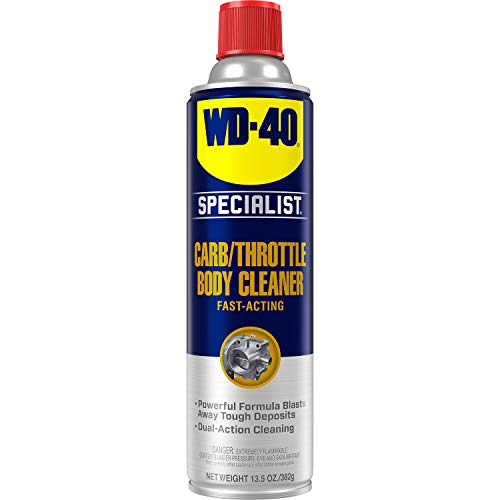
- You can see carbon, varnish, or gum on the throttle plate or bore.
- The throttle plate feels sticky or the idle air passage is visibly dirty.
- You need stronger solvent action on metal intake parts.
- You are cleaning the throttle body, not an electronic sensor.
When the problem is probably elsewhere
If the MAF and throttle body both look clean, cleaning may not fix the complaint. Vacuum leaks, failing ignition parts, fuel delivery issues, or a damaged sensor can all mimic a dirty intake part and keep rough idle or lean-code symptoms alive after cleaning.
Decision matrix: what to spray where
This one-page matrix is the field-safe shortcut. If the part is electronic, default to MAF cleaner; if it is a metal intake passage with carbon, default to throttle body cleaner.
| Part | Safe cleaner | Red-flag do-not-use notes |
|---|---|---|
| Mass Air Flow sensor | Mass Air Flow cleaner | Do not use throttle body cleaner on the hot-wire or film element |
| Throttle plate and throttle bore | Throttle body cleaner | Do not soak nearby connectors, sensors, or plastic housings |
| Air-intake passage with light film | Either, with the right target part in mind | Do not assume a cleaner for one part is safe for all nearby parts |
| Heavy carbon or gum buildup | Throttle body cleaner | MAF cleaner may be too mild to remove the deposit |
| Delicate electronics or sensor body | Mass Air Flow cleaner | Keep stronger solvent away from sensor circuitry |
Field-safe checklist
- Identify the part first: MAF sensor, throttle body, or both.
- Disconnect power only when the repair procedure calls for it.
- Protect connectors and exposed electronics from overspray.
- Use short bursts instead of flooding the part.
- Let MAF cleaner dry fully; it is meant to dry in seconds.
- Wipe loosened throttle deposits after spraying.
- Stop if the symptom points to a different fault, such as a vacuum leak or bad sensor.
Frequently asked questions
Is mass air flow cleaner and throttle body cleaner the same
No. Mass air flow cleaner is formulated for delicate MAF sensor electronics and is meant to leave no residue and dry quickly. Throttle body cleaner is stronger and aimed at carbon, varnish, and gum on the throttle bore and plate, so the two are not interchangeable.
Can I use throttle body cleaner on mass air flow sensor
No. A MAF sensor uses delicate hot-wire or film elements, and throttle body cleaner is not sensor safe. It can leave behind contamination or damage the sensing element, which is why a dedicated MAF cleaner is the correct choice.
Can I use throttle body cleaner on maf
Do not do that. The MAF sensor needs a residue-free, quick-drying spray designed for sensitive electronics, while throttle body cleaner is made for metal intake deposits. If the MAF is dirty, use a dedicated MAF cleaner such as CRC 05110.
What cleaner should I use for a dirty maf sensor
Use a dedicated mass air flow sensor cleaner. The right product is designed to leave no residue, dry in seconds, and reduce the risk of contaminating the hot-wire or film element. CRC Mass Air Flow Sensor Cleaner is the dedicated sensor-safe option named here.
Can maf cleaner be used on a throttle body
Sometimes, but only for light cleaning. It can remove thin film or dust from the throttle plate and bore, yet it may not cut through heavy carbon deposits, varnish, or gum. For that, the stronger throttle body cleaner is the better match.
Crc mass air flow sensor cleaner vs throttle body cleaner
CRC Mass Air Flow Sensor Cleaner is the 11 Wt Oz. sensor-safe choice that dries in seconds and leaves no residue. CRC Throttle Body and Air-Intake Cleaner is the 12 Wt Oz. heavy-duty option for carbon, varnish, and throttle plate gum, but it is not safe for delicate MAF electronics.
Products related to this article
Sponsored / affiliate links. As an Amazon Associate I earn from qualifying purchases. I may earn additional commission from eligible campaigns.