Remote Start vs Engine Block Heater
Choose an engine block heater if you want easier starts and less cold-start wear. Choose remote start if your main goal is a warmer cabin. In extreme cold, use both. Using the wrong tool can mean harder starts, thicker oil drag, more battery strain, and more idling fuel use.
Remote start vs block heater
| Factor | Remote Start | Engine Block Heater | Winner |
|---|---|---|---|
| Cold-start wear | Runs the engine after the first crank; does not pre-warm oil or coolant. | Pre-warms oil, coolant, or the block before startup. | Engine Block Heater |
| Cabin heat and defrost | Heats the cabin indirectly while the engine idles. | Helps the heater core and defroster warm up sooner by warming fluids first. | Remote Start |
| Fuel use and idle limits | Uses fuel while idling and may run into anti-idling rules. | Uses electricity from a 120-volt outlet before startup. | Engine Block Heater |
| Parking access | Works where you can start the vehicle remotely. | Needs access to an outlet and a reachable cord. | Remote Start |
| Battery strain in severe cold | Can still leave a weak battery to handle the first crank. | Warmer oil and coolant reduce starter load; a battery warmer can help too. | Engine Block Heater |
| Best-fit use case | Drivers who want comfort and convenience after startup. | Drivers who want easier cold starts and less wear before startup. | Depends on the goal |
Cold-start wear comes first
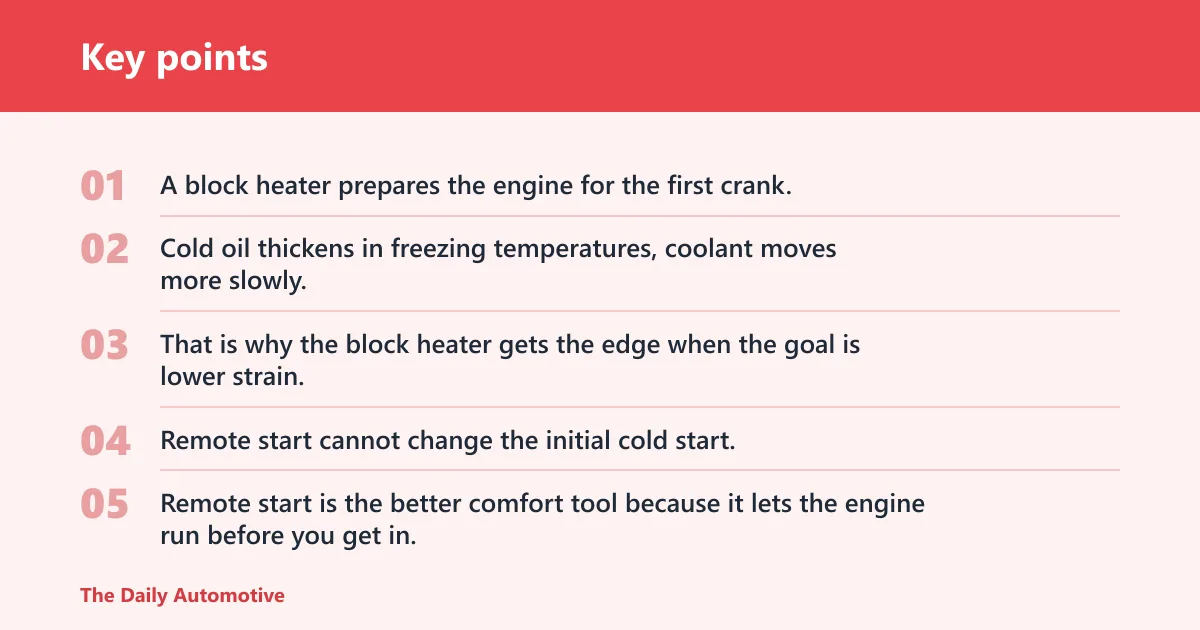
The split is straightforward. A block heater prepares the engine for the first crank, while remote start only helps after the engine is already running. Cold oil thickens in freezing temperatures, coolant moves more slowly, and the starter and battery work harder until the engine warms up.
That is why the block heater gets the edge when the goal is lower strain. Remote start cannot change the initial cold start.
Cabin comfort comes second
Remote start is the better comfort tool because it lets the engine run before you get in. That means warmer air sooner and less time scraping a cold windshield.
A block heater can help the cabin warm up faster too, but only indirectly. It warms the engine’s fluids first, then the heater core and defroster respond sooner after startup.
Fuel use and access change the answer
Remote start can burn fuel while the vehicle idles, and some places restrict unnecessary idling. A block heater avoids that idling step, but it only works if you can plug into a 120-volt outlet and route the cord safely. (Wikipedia)
That makes parking access a real deciding factor. Apartment lots, street parking, and workplace lots can push the choice one way or the other.
📊 Block heaters plug into an ordinary 120-volt outlet. Source: Familyhandyman.
How each one works
An engine block heater warms oil, coolant, or the block before startup, so the engine does not have to fight cold-thickened fluids on the first crank. Remote start does the opposite sequence: it starts the engine first, then uses idle time to warm the cabin and engine afterward.
The difference matters because the first few seconds after startup are where cold wear happens.
Engine block heater basics
A block heater plugs into an ordinary 120-volt outlet. The visible clue is often an extension cord hanging from the hood or grille area.
Freeze plug block heaters are the most effective type in the source material, and they install in place of a freeze plug. Oil pan heaters are commonly attached with magnets or self-stick adhesive pads, in-line coolant heaters usually go into a heater hose, and dipstick heaters replace the oil dipstick.
Remote start basics
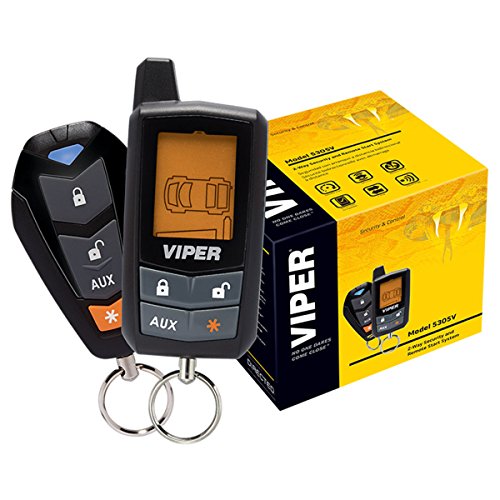
Remote start starts the engine without the driver inside the vehicle. It is a convenience feature, not a pre-heater for the oil or coolant before the first crank.
That makes it useful for cabin comfort, but not a substitute for pre-warming the engine. It may also be limited by anti-idling rules, fuel use, and vehicle compatibility.
What changes first: oil, coolant, or cabin air
With a block heater, warmed oil and coolant change the engine’s condition first. That lowers starter strain and helps the engine reach operating temperature faster.
With remote start, the cabin changes first. The engine has to run before warm air reaches the heater core and defroster.
Which winter problem are you solving?
Start with the problem, not the product. If you want easier starting and less wear, a block heater fits that job best. If you want a warmer cabin on arrival, remote start fits better. If you park outside in severe cold and want both benefits, the combined setup makes sense.
| Climate severity | Engine type | Parking access | Battery health | Main goal | Installation effort | Best choice |
|---|---|---|---|---|---|---|
| Mild winter, occasional frost | Gasoline | No outlet, street parking | Good | Cabin comfort | Low to moderate | Remote Start |
| Sub-freezing, long overnight park | Gasoline | Outlet available | Good | Easier starting | Moderate | Engine Block Heater |
| Very cold, repeated overnight exposure | Diesel | Outlet available | Fair or weak | Lower starter strain and better cabin heat | Moderate to high | Both |
| Severe cold, outdoor parking, no outlet | Gasoline or diesel | No outlet | Weak | Convenience more than wear reduction | Low for remote start, no plug-in heater possible | Remote Start |
| Very cold, short trips only | Diesel | Outlet available | Weak | Cold-start protection | Moderate | Engine Block Heater |
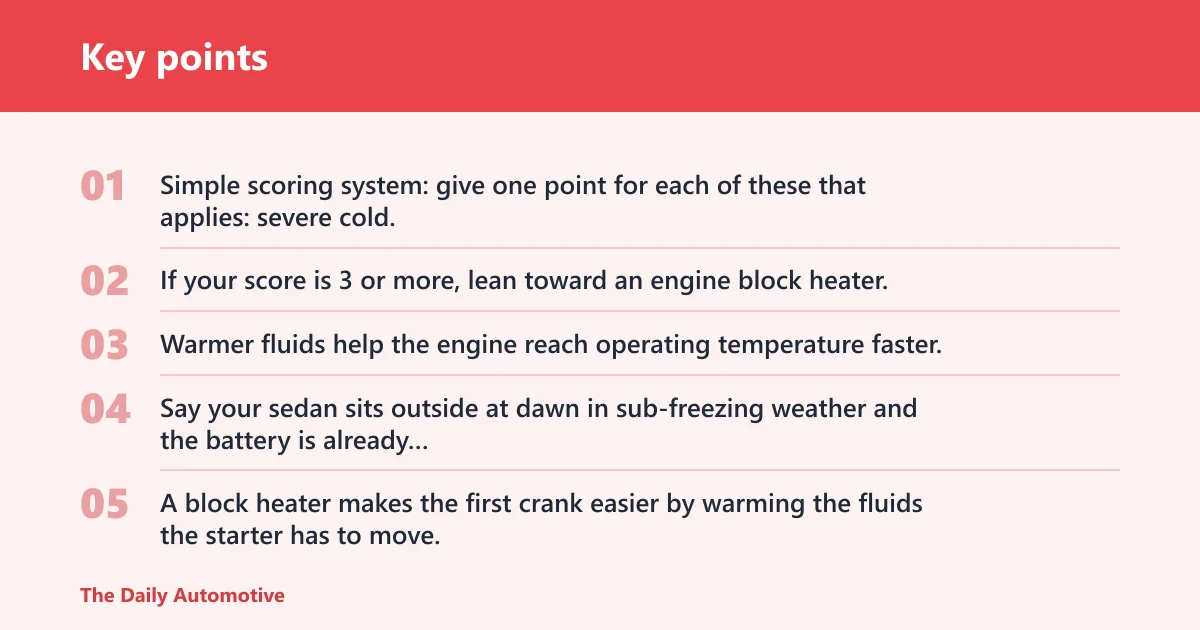
Simple scoring system: give one point for each of these that applies: severe cold, outlet access, short trips, diesel engine, weak battery, and a goal of lower wear. If your score is 3 or more, lean toward an engine block heater; if cabin comfort is the main goal and anti-idling is not a problem, lean toward remote start; if both sets of boxes are checked, use both.
Easier starting and less wear
This is where the block heater stands out. Warmer fluids help the engine reach operating temperature faster, improve cold-start performance, and reduce wear and tear.
Say your sedan sits outside at dawn in sub-freezing weather and the battery is already tired. A block heater makes the first crank easier by warming the fluids the starter has to move.
Faster cabin heat and defrost
Remote start has the edge if the main complaint is a cold steering wheel and a frosted windshield. The engine runs while you are still inside, so the cabin can start warming before you open the door.
Suppose your commute is short and the car is parked where you can legally remote-start it. The comfort gain arrives faster than with a block heater alone.
Convenience when you park outside
Remote start avoids the need for an outlet, which matters for curbside parking and lots without plug-ins. A block heater needs a reachable cord and a powered outlet.
That means the better tool often depends on where the vehicle sleeps, not just how cold it gets.
Which is better for cold starts?
For cold starts, the engine block heater is often the more effective tool because it lowers the work the starter and battery have to do before the engine fires. Remote start cannot help the first crank, because it only begins after the engine is already running.
That matters most in sub-freezing weather, where thick oil and cold coolant raise drag and slow circulation.
Why warmed oil and coolant matter
Cold-weather engine oil thickens in freezing temperatures, and thicker oil flows less freely through the engine. Warmer fluid flows better, lubricates sooner, and reduces drag at startup.
Coolant warming also helps the heater core come up sooner after the engine starts, which is why the cabin benefit is indirect rather than primary.
How a block heater lowers starter strain
The source material says block heaters are primarily designed for climates below 0 degrees F. That is the temperature range where easier starts and lower wear matter most.
Because the fluids are warmer before the key is turned, the starter does less work and the battery is less likely to be dragged down by the first crank.
Where remote start falls short on the first crank
Remote start does not pre-warm oil or coolant before startup. It also does nothing for a battery that is already weak enough to struggle with the first turn of the engine.
It is a comfort feature first. It is not a cold-start protection system.

Can you add either to your car?
Yes, but the installation path depends on the heater type and the vehicle. Oil pan heaters and dipstick heaters are usually simpler add-ons, while freeze plug work is often better left to a professional if you are not familiar with it.
Some vehicles also have no factory provision for a block heater, which means the right fit depends on the engine and the space available around it.
Freeze plug, oil pan, in-line coolant, and dipstick heaters
Freeze plug heaters install in place of a freeze plug and are the most effective type cited in the source. Oil pan heaters attach with magnets or self-stick adhesive pads, and they can be used on composite or plastic pans with the adhesive style when the design allows it.
An in-line coolant heater is usually inserted into a heater hose and may use a small pump to circulate coolant. A dipstick heater is the least effective type in the source, but it is also the easiest to install.
When a battery warmer makes sense
A battery warmer is not exactly a block heater, but it can be used with one. It helps maintain cranking power in severe cold and can protect a battery weakened by low temperatures.
That matters when the battery itself is the weak point, even if the engine has a heater.
Why some installs belong to a professional
Freeze plug installations often require more disassembly and more care than a simple plug-in heater. If the vehicle does not already have a heater provision, or if you are unsure of the fit, professional installation is the safer route.
Follow the vehicle manual, especially for electrical work and coolant handling. Keep the engine bay safe, and do not work on a hot system.
How to use an engine block heater
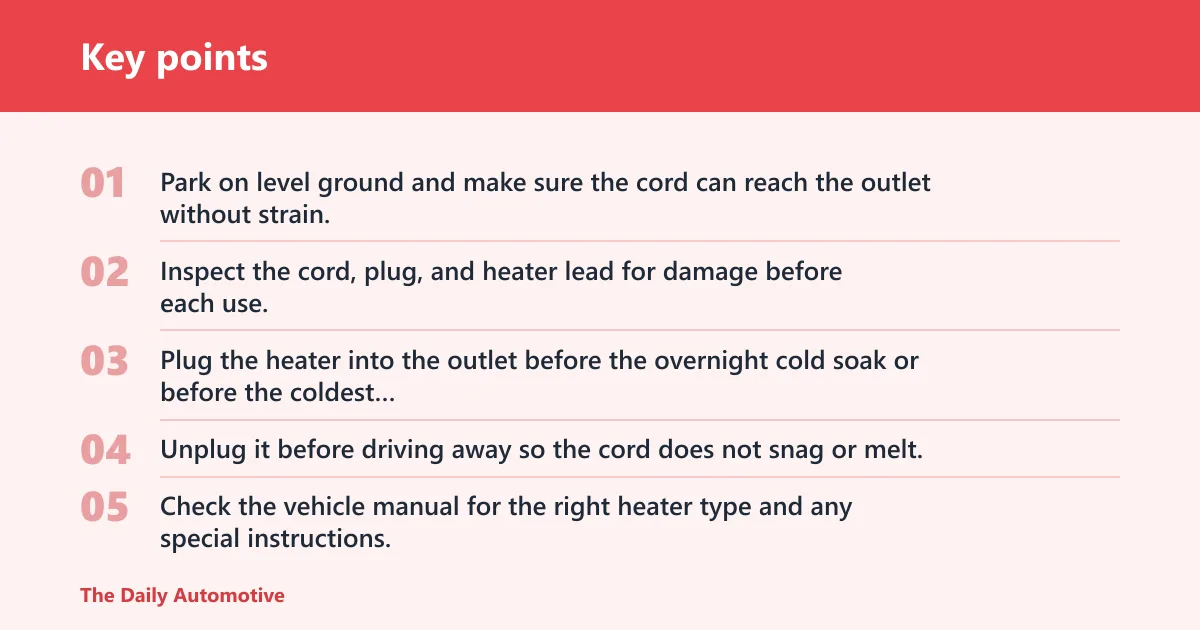
- Park on level ground and make sure the cord can reach the outlet without strain.
- Inspect the cord, plug, and heater lead for damage before each use.
- Plug the heater into the outlet before the overnight cold soak or before the coldest part of the day.
- Unplug it before driving away so the cord does not snag or melt.
- Check the vehicle manual for the right heater type and any special instructions.
How long to plug it in depends on temperature and heater type. In mild cold, a shorter plug-in may be enough; in deeper cold, longer preheating is more useful. If the vehicle manual gives a specific time, follow that first.
Choose Remote Start if… / Choose Engine Block Heater if…
Choose Remote Start if you want warmer cabin air before you get in, you park where an outlet is not available, or your main winter complaint is comfort rather than hard starting. Choose Engine Block Heater if you want easier starting, less starter and battery strain, or you regularly face sub-freezing mornings with outlet access.
Choose Remote Start if your trips are short and you want the windshield defogged sooner after you step out to the car. Choose Engine Block Heater if your vehicle is diesel, your battery is only fair, or you want the engine to begin life each morning with warmer oil and coolant.
Choose both if you park outside in severe cold and can support a heater cord plus a remote-start system that your vehicle and local rules allow. That setup covers the two separate jobs: easier starting and faster cabin comfort.
Frequently asked questions
Remote start vs engine block heater: which is better?
Neither is better for every driver. Remote start is better for cabin comfort and convenience after startup, while an engine block heater is better for easier cold starts, less wear, and lower strain on the starter and battery. In severe cold, both can make sense together.
How does an engine block heater work?
An engine block heater warms an engine’s oil, coolant, or block before startup. It plugs into an ordinary 120-volt outlet and brings the engine closer to a workable temperature before the first crank, which helps the engine start more easily in freezing weather.
What’s an engine block heater?
It is a heater designed for cold-climate starting. The common clue is an extension cord hanging from the hood, which connects the vehicle to household power so the engine can be pre-warmed before you start it.
Is an engine block heater worth it?
It is worth it if you regularly park in sub-freezing weather and care about easier starts, less wear, or better battery life in the cold. It is less useful in mild climates or where you cannot access an outlet.
Can you add an engine block heater to a car?
Often yes, but the ease depends on the vehicle. Freeze plug heaters, oil pan heaters, in-line coolant heaters, and dipstick heaters all exist, and some are easier to fit than others. If the vehicle has no heater provision or the installation is complex, a professional may be the better choice.
How long should you plug in an engine block heater?
There is no single time that fits every vehicle and temperature. A shorter plug-in can help in mild cold, while longer preheating is more useful in deeper cold. Follow the vehicle manual if it gives a specific recommendation, and unplug before driving away.
Products related to this article
Sponsored / affiliate links. As an Amazon Associate I earn from qualifying purchases. I may earn additional commission from eligible campaigns.