How Can a Used Car Have 0 Miles? Proven Guide
A used car having 0 miles is possible and usually indicates it hasn’t been on the road. This can happen with brand-new vehicles that are moved without activation, demo cars with minimal test drives, or, in rare cases, due to odometer tampering. Understanding the reasons helps you spot a truly new vehicle or identify potential issues.
Ever seen a car listed as “used” but with an odometer reading of 0 miles? It might sound like a contradiction, but it’s a real situation you can encounter when car shopping. This often sparks questions and a bit of confusion: How can a car with zero miles be considered ‘used’? Is it a mistake? Or something else entirely? Don’t worry, it’s not as complicated as it seems, and understanding the ‘why’ behind it can save you a lot of worry and help you make smarter choices. In this guide, we’ll break down exactly how this happens, what to look for, and how to be sure you’re getting a great deal.
Understanding the “0 Miles” Paradox on Used Cars
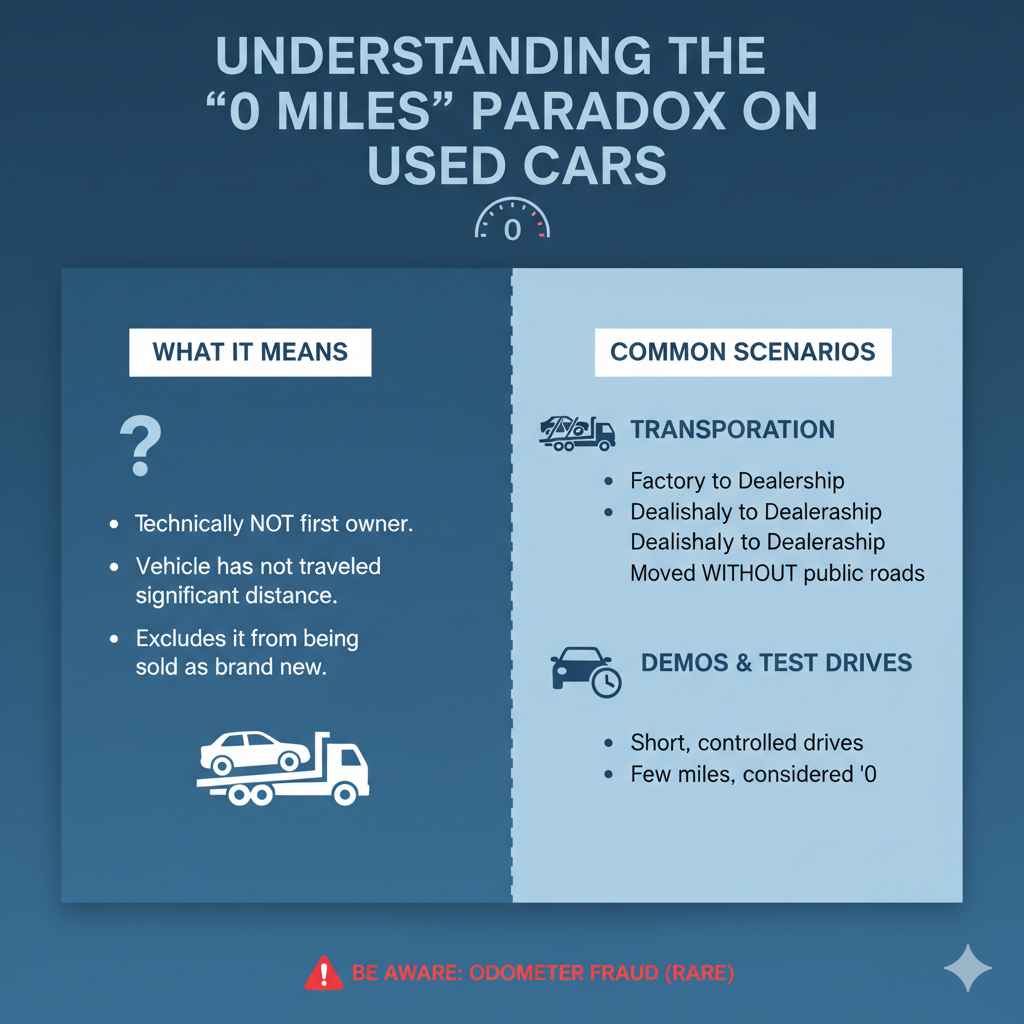
The idea of a used car with zero miles on the odometer often catches people off guard. When we think of “used,” we usually picture a car that has been driven, experienced the road, and perhaps shows some signs of wear. An odometer reading of 0 miles strongly suggests the opposite – a vehicle that hasn’t traveled any significant distance. So, when a car with “0 miles” appears in a “used” category, it means the vehicle, while technically not the very first owner (which would categorize it as “new”), has a history that excludes it from being sold as brand new from the manufacturer.
This scenario typically arises in a few specific situations. The most common reasons involve vehicles that have been moved from one location to another without being driven on public roads. Think about cars being transported from the factory to a dealership, or from one dealership to another. These movements, often done via car carriers or tow trucks, don’t add miles to the odometer. Sometimes, dealership demonstrations or very short, controlled test drives might result in a reading of just a few miles, which can effectively be considered “0” for practical purposes when distinguishing from a pre-owned vehicle with substantial mileage.
It’s also crucial to distinguish between a genuine “0 miles” situation and the possibility of odometer fraud. While rare, especially with modern technology, it’s a concern to be aware of. This guide will help you navigate these distinctions with confidence, ensuring you understand exactly what you’re looking at when you find a “used” car with no miles.
Why Would a Car Have “0 Miles” But Not Be “New”?
The distinction between a “new” car and a “used” car, even when the odometer reads zero, comes down to a few key factors. A car is officially considered “new” when it is sold for the very first time directly from the manufacturer through an authorized dealer. Once that first sale occurs, even if the car has only been driven a handful of miles, it technically transitions to being considered pre-owned or “used” by the subsequent seller or buyer.
Here are the primary reasons why a car might have 0 miles but be listed as used:
- Demonstrator Vehicles: Dealerships often use new cars as demonstrators. These are vehicles that customers can test drive. Although they are driven, the miles are usually kept very low. Once a dealer decides to sell a demonstrator, it can’t be sold as “new” because it has been used by the public, even if the odometer shows minimal mileage, often close to zero.
- Manufacturer/Dealer Transfers: Cars are transported from factories to dealerships, and sometimes between dealerships. This transportation is typically done by car carriers or tow trucks, which do not register miles on the odometer. If a car is moved this way and then, for some reason, is sold by someone other than the original selling dealer (perhaps an auction or a different dealership takes possession), it might end up being categorized as used with zero miles.
- Service Loaners: Similar to demonstrators, loaner cars provided by dealerships to customers while their own vehicles are being serviced. These cars are driven, but they remain the property of the dealership. When they are retired from loaner service and sold, they are considered used, regardless of how few miles they’ve accumulated.
- Showroom Display Models: Cars displayed in showrooms are not driven on public roads. They might be moved around within the dealership for display purposes, but the odometer should reflect zero miles unless they are driven to or from the showroom. If such a car is sold by someone other than the original dealer, it could be considered used.
- Pre-Delivery Inspection (PDI) Drives: Before a new car is handed over to a customer, dealerships perform a Pre-Delivery Inspection. This involves a short drive to check various functions. These drives are usually very brief, sometimes resulting in only a mile or two on the odometer. Technically, once it’s been driven, it’s no longer “new” in the strictest sense, though it’s functionally very close.
- Vehicles Returning from Detailing or Storage: If a car was moved to a detailing bay or a storage lot using a tow truck, its odometer would remain unchanged. If it’s later put up for sale by a third party, this could present a zero-mile “used” car.
In essence, any situation where the car has had a previous “owner” of sorts – even just the dealership using it for their purposes – means it bypasses the “new car” status. This is why understanding the vehicle’s history is as important as checking the odometer.
The Importance of the Vehicle History Report
When you encounter a used car with 0 miles, the vehicle history report becomes your best friend. These reports are invaluable for uncovering a car’s past, even if the odometer suggests a pristine, untouched vehicle. They can reveal if the car was ever titled, registered, or involved in any incidents, which is crucial for understanding why it’s being sold as “used.”
A comprehensive vehicle history report, like those from CARFAX or AutoCheck, can provide details on:
- Ownership History: Who has owned the car before.
- Accident Records: If the car has been in any reported collisions.
- Title Information: Any issues with the title, such as salvage, flood, or lemon status.
- Mileage Discrepancies: While we’re looking at 0 miles, these reports can also flag inconsistencies if mileage was ever reported differently.
- Service Records: Maintenance performed on the vehicle.
- Usage History: Whether it was used as a rental, fleet, or personal vehicle.
Even a car with 0 miles that has been a demonstrator or loaner should have this activity reflected somewhere in its history or documentation. If a report shows a previous title or registration, it confirms the car is indeed used, regardless of the odometer reading.
To get a vehicle history report, you’ll typically need the car’s Vehicle Identification Number (VIN). Most dealerships will provide this upon request, and you can also purchase reports directly from the reporting agencies. This step is non-negotiable when assessing any used car, and doubly so for one with zero miles.
How to Inspect a “0 Mile” Used Car: A Step-by-Step Approach
Inspecting a used car that reads 0 miles requires a thorough approach, focusing on what the car should look like versus what its odometer claims. Think of it as verifying the “newness” while acknowledging its “used” status.
Step 1: Visual Inspection – The Exterior
Start with a detailed walk-around. A car with 0 miles should exhibit the pristine condition of a brand-new vehicle.
- Paint and Body Panels: Look for any scratches, dents, dings, or signs of repainting. The paint should be uniform in color and texture across all panels.
- Tires and Rims: Tires should be brand new with full tread depth. Rims should be free of curb rash or scuffs.
- Glass and Lights: Check all windows and mirrors for chips or cracks. Ensure all lights (headlights, taillights, turn signals) are clear and free from moisture inside.
- Underbody: If possible, glance underneath the car. It should be clean, without rust or significant damage to the exhaust system or frame components.
Step 2: Visual Inspection – The Interior
The inside of a 0-mile car should feel and look untouched.
- Upholstery and Trim: Seats, carpets, and headliner should be spotless and show no wear. Look for any plastic trims that might be scratched or scuffed.
- Floor Mats: If the car comes with floor mats, they should be clean or still wrapped in plastic.
- Pedals: Brake and accelerator pedals should show no signs of wear.
- Dashboard and Controls: Ensure all buttons and knobs are free from smudges or wear. Check that protective plastic films are still on some surfaces (like infotainment screen bezels or door sill plates) if expected for the model.
- Smell: A new car has a distinct smell. A used 0-mile car should ideally smell similar. Any unusual odors (like smoke, mold, or strong air fresheners trying to mask something) are red flags.
Step 3: Under the Hood and Trunk
Open the hood and trunk. This area should be clean and organized.
- Engine Bay: It should be clean, dry, and free from any signs of leaks or corrosion. Coolant, oil, and brake fluid reservoirs should be at the correct levels and appear clear.
- Belts and Hoses: Check for any cracks or signs of wear.
- Trunk: Ensure the spare tire, jack, and lug wrench are present and in good condition. The trunk lining should be clean and undamaged.
Step 4: Start the Engine and Check Electronics
Turn the ignition key.
- Starting: The engine should start smoothly with no hesitating sounds.
- Warning Lights: All dashboard warning lights should illuminate briefly when the ignition is turned on and then extinguish once the engine is running (except for the parking brake light if engaged). If any lights stay on, it indicates a potential issue.
- Infotainment and Features: Test all electronic features: radio, navigation, Bluetooth, A/C, power windows, locks, mirrors, wipers, and any driver-assistance systems. Ensure everything functions as expected.
- Gauge Readings: While the odometer should read 0, check other gauges (fuel, temperature) for any anomalies.
Step 5: Test Drive (Even with 0 Miles)
Although it has 0 miles, a test drive is essential. If the car is on the dealer lot, ask for a short, controlled drive on quiet roads.
- Engine Performance: Listen for strange noises during acceleration and deceleration. The engine should run smoothly.
- Transmission: Shifting should be smooth, whether it’s an automatic or manual transmission. No clunking or hesitation.
- Brakes: Brakes should feel firm and responsive, with no squealing or grinding sounds. The car should stop in a straight line.
- Steering: Steering should feel precise, with no pulling to one side or excessive play. Listen for any unusual sounds from the steering column.
- Suspension: Drive over small bumps or uneven surfaces to check for anything loose or that makes clunking noises.
Remember, even a demonstrator car needs to feel right. If anything feels off, it’s a reason to investigate further or walk away.
Are There Any Risks with a 0-Mile Used Car?
While a 0-mile used car can present a great opportunity, especially if it’s priced attractively due to its “used” classification, there are potential risks to be aware of. These are generally related to the vehicle’s history and how it was handled before being put up for sale.
Potential Risks:
- Hidden Damage: Although unlikely for a genuine 0-mile car that has only moved via transport, there’s a slim chance of damage occurring during transit or while on the dealership lot that might go unnoticed.
- Previous Use Mismatched with Odometer: While rare, there’s always the theoretical possibility of odometer tampering, especially on older vehicles or in less reputable markets. However, modern cars have sophisticated digital odometers that are harder to manipulate without leaving a trace. The primary concern is usually misrepresented usage (e.g., a car used heavily as a loaner and then had its odometer reset or not properly documented).
- Dealership Practices: Sometimes, a car might be in “new” condition but has been on the lot for an extended period. While not technically “used” in the sense of having an owner, it can be subject to environmental wear (sun fading, tire flat spotting) and might not be sold at the absolute best “new car” price. A 0-mile “used” car might sometimes fall into a similar gray area.
- Warranty Start Date: A crucial point is when the manufacturer’s warranty clock started ticking. For true new cars, the warranty begins on the day of the first retail sale. For a used car, even with 0 miles, the warranty might have started earlier, potentially reducing the remaining coverage period for the new buyer. This is why checking the Vehicle Identification Number (VIN) with the manufacturer is important for warranty verification.
The biggest perceived risk is often the psychological aspect: is it truly new, or has it been driven? For a legitimate 0-mile used car, the risk is usually minimal if properly inspected and documented. The key is transparency from the seller and thorough due diligence from the buyer.
When is a 0-Mile Car a Good Deal?
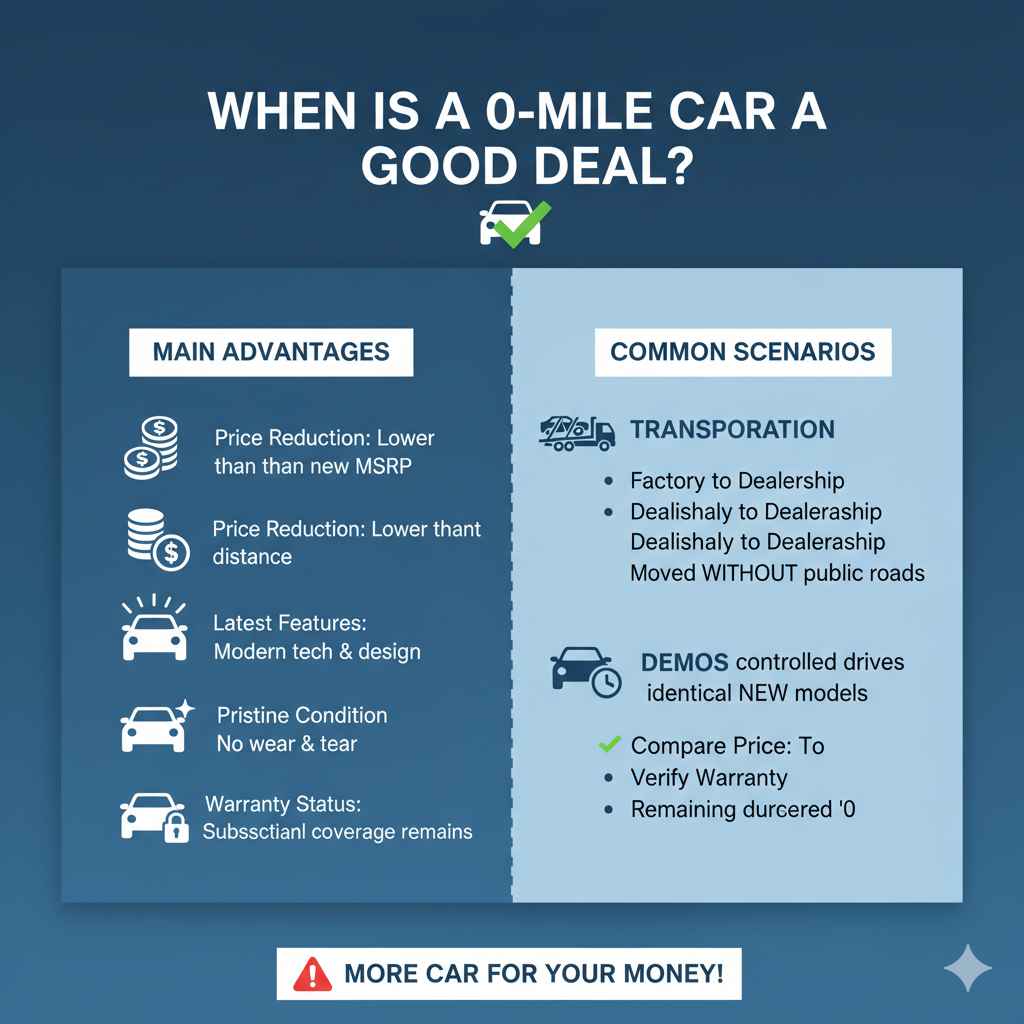
A 0-mile used car can absolutely be a fantastic deal under the right circumstances. The main draw is the potential to acquire a vehicle in showroom condition for a price that’s typically lower than its brand-new counterpart. The classification as “used” often triggers a price reduction, even though the vehicle has essentially seen no road use.
Factors Making it a Good Deal:
- Price Reduction: The most significant advantage is savings. Because it’s no longer considered the absolute “first” sale, dealers may list it for less than a comparable brand-new model.
- Latest Features: You get all the features and technology of the latest model year without paying the premium new car price.
- Pristine Condition: If the car has been well-preserved (e.g., a demonstrator that was carefully managed), it will be free from wear and tear.
- Warranty Status: While the warranty start date is important to verify, the car will still likely have a substantial portion of its manufacturer’s warranty remaining, offering peace of mind.
- Reduced Depreciation: New cars experience the steepest depreciation in their first year or two. By buying a 0-mile “used” car, you avoid the initial, sharp drop in value, meaning you’ll likely lose less money over your ownership period.
To ensure it’s a good deal, always compare the selling price to identical new models. Also, factor in the remaining warranty duration. If the price difference is significant enough, and the warranty is still mostly intact, it can be an excellent way to get more car for your money.
Where to Find 0-Mile Used Cars
You won’t typically find a “0 mile” used car listed on every corner, but they do pop up. Understanding where to look increases your chances.
Common Sources:
- New Car Dealerships: This is the most common place. They will often have demonstrator vehicles, service loaners, or company cars that they decide to sell. These are usually well-maintained and come with clear documentation.
- Car Auctions: Dealerships and rental companies often sell off their retired demonstrator or loaner fleets through auctions. These can be excellent sources, but require more diligence on your part to inspect the vehicles thoroughly.
- Online Car Marketplaces: Websites like AutoTrader, Cars.com, and dedicated dealership websites will list these vehicles. You’ll need to use filters and read descriptions carefully to identify them. Searching for terms like “demonstrator,” “loaner,” or even “new model year, low miles” might help.
- Fleet Sales: If a company uses a specific model for its executives or executive assistants, and then decides to sell it after a short period, it might appear as a 0-mile or very low-mile used car.
When searching online, pay close attention to the listing details. Reputable sellers will be upfront about the car’s previous use, even if the mileage is 0.
Frequently Asked Questions (FAQ)
Q1: Can a car be technically “used” if it has never been driven on a public road?
A: Yes. A car is considered “used” once it has been sold from the manufacturer to its first retail buyer. If a car was a dealership demonstrator, loaner, or even just moved on a car carrier, it might subsequently be sold by the dealership or a third party, making it “used” even if the odometer still reads 0 miles.