How Long Do AC Compressors Last: Essential Facts
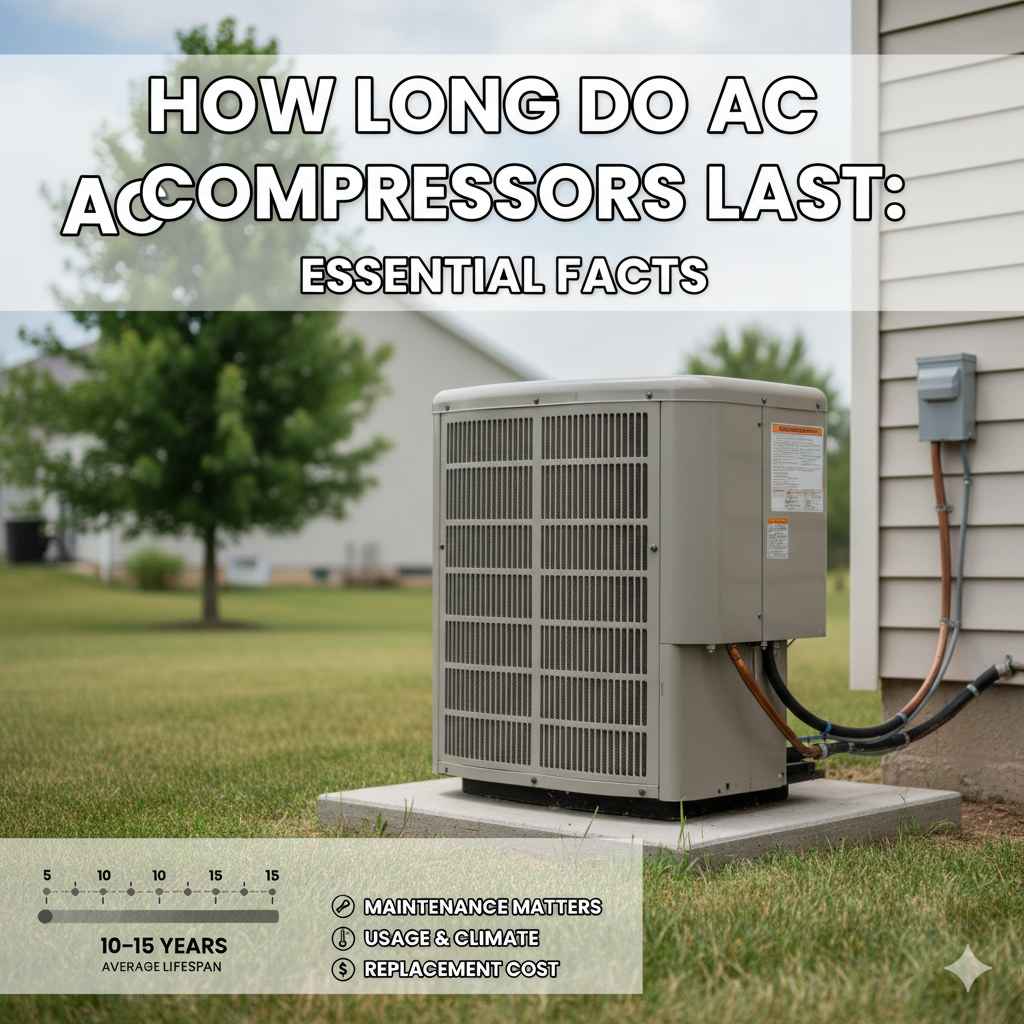
A car’s AC compressor typically lasts between 100,000 to 200,000 miles or about 8 to 15 years with proper care. Regular maintenance and avoiding overuse can significantly extend its lifespan.
Is your car’s air conditioning not blowing as cold as it used to? Or perhaps you’ve noticed some strange noises when you turn on the AC? These can be signs that your AC compressor might be struggling. A broken AC compressor can turn a comfortable drive into a sweaty nightmare, especially during hot summer months.
It’s a common worry for many car owners, and figuring out why it happens and how long it should last can seem confusing. Don’t worry, I’m here to break down exactly what you need to know about AC compressor lifespan in a way that’s easy to understand. We’ll cover what affects its life and how you can help keep yours running smoothly for as long as possible.
Understanding Your Car’s AC Compressor
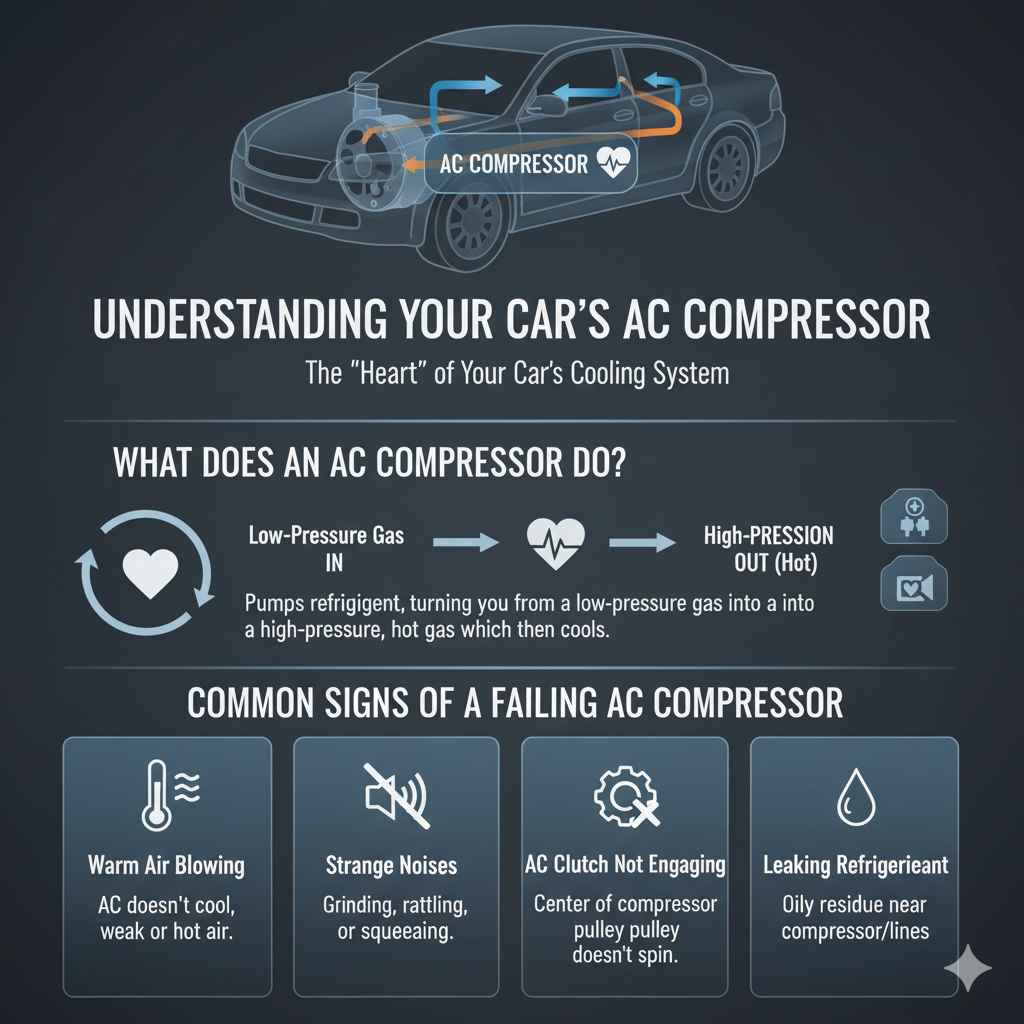
Think of your car’s AC compressor as the heart of the air conditioning system. It’s a vital pump that circulates refrigerant, the special fluid responsible for cooling your car’s cabin. Without a working compressor, that cool air simply cannot be produced. It’s a robust component, but like any mechanical part, it has a lifespan.
What Does an AC Compressor Do?
The AC compressor’s main job is to take low-pressure refrigerant gas and compress it into a high-pressure gas. This process increases its temperature. This hot, high-pressure gas then flows to the condenser, where it cools down and turns into a liquid. The refrigerant then continues its journey through the system, absorbing heat from your car’s interior and releasing it outside, effectively cooling your car.
Common Signs of a Failing AC Compressor
Spotting the early signs of trouble can save you a lot of hassle and expense down the road. Here are a few things to listen and look out for:
- Warm Air Blowing: This is the most obvious sign. If your AC isn’t cooling your car, the compressor might not be engaging or circulating refrigerant correctly.
- Strange Noises: A healthy compressor should run relatively quietly. If you hear grinding, rattling, or squealing sounds when the AC is on, it’s a strong indicator of a worn-out or damaged compressor or its clutch.
- AC Clutch Not Engaging: The clutch is what engages or disengages the compressor from the engine belt. If you see the center part of the compressor pulley not spinning when the AC is on, the clutch might have failed. Sometimes, you can visually inspect this.
- Leaking Refrigerant: While not directly caused by the compressor itself, leaks in the system can lead to the compressor running dry, causing it to overheat and fail prematurely. You might notice oily residue around the compressor or AC lines.
- Increased Engine Load/Drag: A struggling compressor can put a significant strain on your engine, potentially affecting performance or fuel economy.
How Long Do AC Compressors Last? (The Essential Facts)
The lifespan of an AC compressor can vary quite a bit. Several factors come into play, but generally, you can expect a well-maintained compressor to last for a significant amount of time. Understanding these factors will help you appreciate why some last longer than others.
Typical Lifespan Ranges
For most vehicles, an AC compressor is designed to last between 100,000 to 200,000 miles. In terms of years, this often translates to around 8 to 15 years.
However, this is a broad range. Some compressors might give out sooner, while others can go even longer. The key is understanding what influences this number.
Factors Affecting AC Compressor Lifespan
Many things can contribute to how long your AC compressor will serve you faithfully. Let’s break them down:
1. Maintenance is Key
This is by far the most crucial factor. Just like changing your car’s oil keeps the engine healthy, regular AC system maintenance is vital for the compressor.
- Regular AC Checks: Having your AC system serviced annually, especially before the hot season, can catch small issues before they become big problems. This includes checking refrigerant levels and system pressure.
- Cleanliness: Keeping the condenser coil clean allows it to dissipate heat effectively. A dirty condenser makes the entire AC system, including the compressor, work harder. You can often gently clean this yourself by rinsing it with a garden hose.
- Lubrication: The refrigerant in your AC system contains oil that keeps the compressor lubricated. Low refrigerant levels mean less lubrication, leading to increased wear and tear.
2. Driving Habits and Usage
How you use your AC can also impact its life.
- Frequent Use: Constantly running your AC on high settings in extreme heat will naturally put more hours on the compressor compared to occasional use.
- Short Trips: While not as direct an impact as continuous use, frequent short trips where the AC might be turned on and off repeatedly can add wear.
- Extreme Climates: Living in a region with very hot summers or very cold winters (where you might run the defroster, which also uses the AC system) puts more stress on the system.
3. System Quality and Installation
Not all AC systems and their components are created equal.
- OEM vs. Aftermarket Parts: Original Equipment Manufacturer (OEM) parts are generally designed to meet the exact specifications of your vehicle, often leading to better longevity than some aftermarket alternatives.
- Proper Installation: If your AC system has been serviced or components replaced, the quality of the installation is critical. Incorrectly installed parts or improper charging of refrigerant can significantly shorten the compressor’s life.
4. Refrigerant Leaks
A small leak can lead to bigger problems.
- Low Refrigerant: If the system loses refrigerant, the compressor might not have enough oil to lubricate itself properly, leading to overheating and internal damage.
- Contamination: If the wrong type of refrigerant or oil is used, or if contaminants enter the system, it can cause corrosion and damage to the compressor and other AC components. Experts recommend using only the specific type of refrigerant and oil recommended by your car manufacturer, which can be found in your owner’s manual or a sticker under the hood. The U.S. Department of Energy provides excellent resources on vehicle maintenance.
5. Age and Environmental Factors
Time itself takes a toll.
- Corrosion: Especially in areas with road salt, external components of the compressor can corrode over time, potentially leading to failure.
- Material Degradation: Seals and internal components can degrade with age, even if the AC isn’t used heavily.
When to Consider Replacing an AC Compressor
When your AC compressor shows signs of failure, it’s usually not a matter of if it needs replacement, but when. Ignoring the problem can lead to more extensive damage to the entire AC system.
Signs It’s Time for a Replacement
If you experience any of the following, it’s a strong indication you need to have your AC compressor inspected and likely replaced:
- Continuous loud grinding or banging noises from the compressor area.
- No cold air at all, and the compressor clutch isn’t engaging.
- The AC system is making persistent clicking sounds and not cooling.
- Visible damage or leaks around the compressor.
The Replacement Process: What to Expect
Replacing an AC compressor is a job that typically requires a professional mechanic. It’s not a simple DIY task for most beginners due to the specialized tools and knowledge required, particularly concerning refrigerant handling.
- Evacuation: The refrigerant must be safely recovered from the system using specialized equipment to prevent environmental release.
- Removal: The old compressor is disconnected from hoses and the engine belt, then removed.
- Inspection & Replacement: The system—including the receiver/drier and expansion valve/orifice tube—should be thoroughly flushed for any debris or contaminants. Often, these other components are replaced along with the compressor as a preventative measure, as they can harbor debris that could damage the new compressor.
- Installation: The new compressor is installed.
- Vacuum & Recharge: The system is put under a vacuum to remove moisture and air, then recharged with the correct type and amount of refrigerant and oil.
- Leak Testing: The system is checked for leaks.
The cost of replacement can range significantly, from $600 to $1,500 or more, depending on the vehicle, the compressor’s price, and labor rates. Parts like the receiver/drier and expansion valve add to this cost.
Preventative Measures to Extend Compressor Life
Want to help your AC compressor last as long as possible? A few proactive steps can make a big difference. Think of these as smart investments in your car’s comfort and your wallet.
Regular AC System Maintenance
This is the golden rule. Schedule an annual check-up with your mechanic, ideally before the summer heat kicks in.
- Refrigerant Level Check: Ensure the refrigerant is at the correct level. Low levels mean less lubrication for the compressor.
- System Pressure Check: Proper system pressure ensures everything is working efficiently.
- Lubrication: Technicians can ensure the right amount of lubricating oil is present.
Keep the Condenser Clean
The condenser sits in front of your car’s radiator and is crucial for dissipating heat. Debris like leaves, bugs, and dirt can block airflow, forcing the compressor to work harder.
- Visual Inspection: Periodically look at the condenser fins.
- Gentle Cleaning: You can often gently spray it down with a garden hose from the back to dislodge debris. Avoid high-pressure washers, which can bend the delicate fins.
Run Your AC Periodically, Even in Winter
This might sound counterintuitive if you live in a cold climate, but running your AC for 10–15 minutes every month or so is beneficial.
- Lubrication Circulation: It helps circulate the refrigerant and oil throughout the system, keeping seals from drying out and parts lubricated.
- Moisture Control: The AC system also acts as a dehumidifier, which is why it’s used for defrosting your windshield. Regular use helps prevent moisture buildup.
Address Leaks Promptly
If you suspect an AC leak (e.g., system not cooling as well, a slight musty smell), get it checked immediately. Small leaks can lead to compressor damage due to lubricant loss.
Use the Right Refrigerant and Oil
When your AC needs servicing or recharging, ensure the technician uses the exact type of refrigerant and oil specified for your make and model. Using the wrong type can cause severe damage. You can usually find this information on a sticker under the hood or in your owner’s manual.
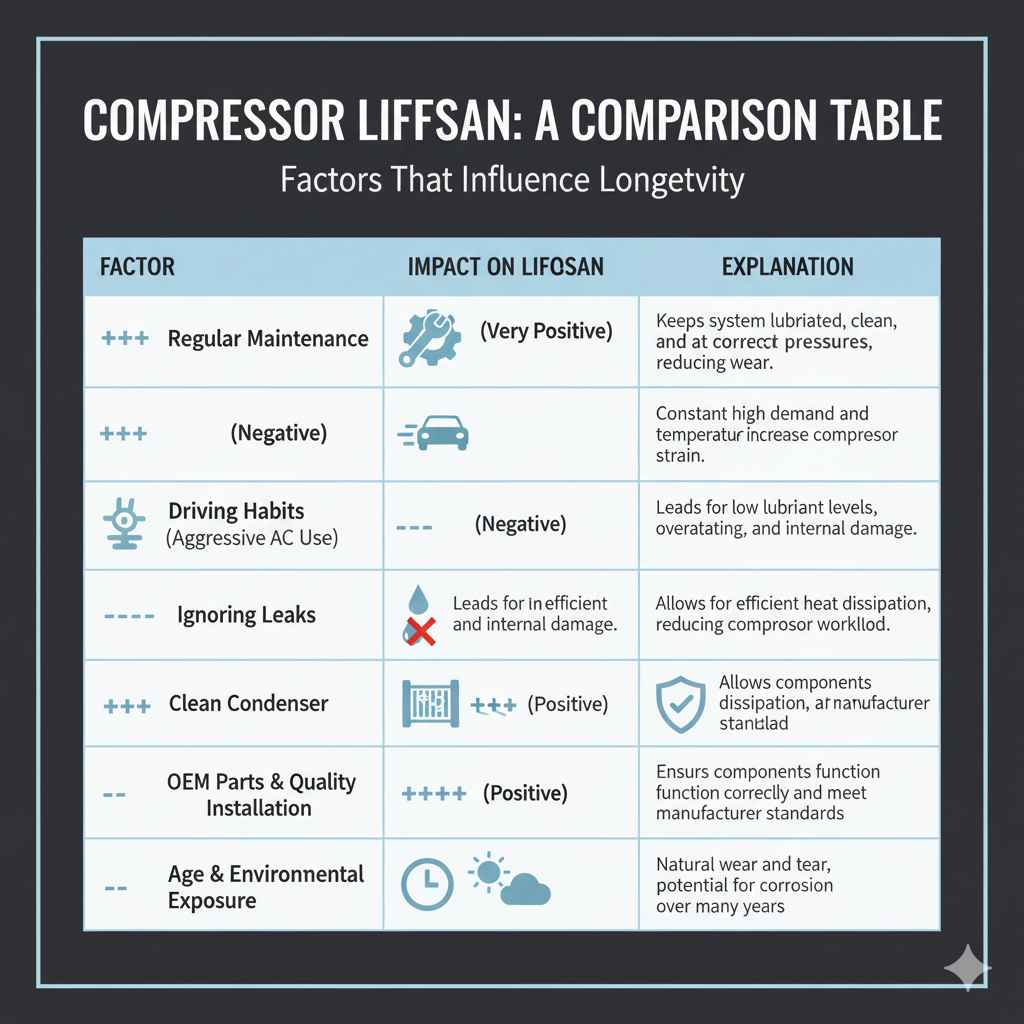
Compressor Lifespan: A Comparison Table
To help visualize how different factors can influence your AC compressor’s life, check out this table:
| Factor | Impact on Lifespan | Explanation |
|---|---|---|
| Regular Maintenance | +++++ (Very Positive) | Keeps system lubricated, clean, and at correct pressures, reducing wear. |
| Driving Habits (Aggressive AC Use) | —- (Negative) | Constant high demand and temperature extremes increase compressor strain. |
| Ignoring Leaks | —– (Very Negative) | Leads to low lubricant levels, overheating, and internal damage. |
| Clean Condenser | +++ (Positive) | Allows for efficient heat dissipation, reducing compressor workload. |
| OEM Parts & Quality Installation | ++++ (Positive) | Ensures components function correctly and meet manufacturer standards. |
| Age & Environmental Exposure | — (Slightly Negative) | Natural wear and tear, potential for corrosion over many years. |
Frequently Asked Questions (FAQs)
Q1: Can I drive my car if the AC compressor is making noise but still working?
While you might still get cold air, a noisy compressor usually indicates internal wear or a problem with the clutch. It’s best to have it inspected soon. Continuing to drive with a failing compressor can cause more extensive damage to the system or even seize up, leaving you stranded and leading to more costly repairs.
Q2: How much does it typically cost to replace an AC compressor?
The cost can range from $600 to $1,500 or more. This includes the price of the compressor itself, other related parts (like the receiver/drier and expansion valve), specialized refrigerant, and labor. Prices vary by vehicle make, model, and your location.
Q3: Is it worth repairing or replacing an AC compressor?
Generally, yes. A functioning AC system significantly adds to your driving comfort and can even help with resale value. If the compressor has failed, replacement is often the only viable option to restore cooling. Weigh the cost of repair against the vehicle’s overall value and your needs.
Q4: Can a bad AC compressor damage other car parts?
Yes. If a compressor fails catastrophically (seizes up), it can send metal fragments throughout the AC system, contaminating and damaging other expensive components like the condenser, evaporator, and refrigerant lines. This is why flushing the system during replacement is crucial.
Q5: If my AC is blowing warm, is it always the compressor?
Not necessarily. While a failed compressor is a common cause, other issues can lead to warm air. These include low refrigerant levels due to leaks, a faulty blend door actuator, a clogged expansion valve, or a malfunctioning condenser fan. A thorough diagnosis is needed.
Q6: How can I tell if the AC compressor clutch is bad?
When you turn on your AC, you should hear a faint “click” and see the center part of the compressor pulley spin. If you don’t hear the click or see the center spinning while the engine is running and the AC is on, the clutch might be faulty, or there might be an electrical issue preventing it from engaging.
Conclusion
Understanding how long your car’s AC compressor is supposed to last is about more than just numbers; it’s about appreciating the role of maintenance and smart driving habits. While most AC compressors are built to endure for 100,000 to 200,000 miles or roughly 8 to 15 years, their actual lifespan depends heavily on how well the entire AC system is cared for.
By keeping up with regular servicing, ensuring your condenser is clean, addressing leaks promptly, and running your AC periodically, you can significantly contribute to its longevity and avoid those uncomfortable, hot-weather breakdowns. Don’t wait until you’re sweating in traffic to think about your AC – proactive care is your best friend for keeping cool for years to come!