How Long Should You Let a Car Cool Before Adding Coolant
Many car owners wonder about a simple yet important car maintenance question: How Long Should You Let a Car Cool Before Adding Coolant? It can feel a bit tricky, especially if you’re new to working on your car. You don’t want to cause any damage.
This guide will make it super clear with easy steps. We’ll walk you through exactly what to do to keep your car running smoothly and safely. Get ready to learn how to handle this common task like a pro.
Understanding Your Car’s Cooling System
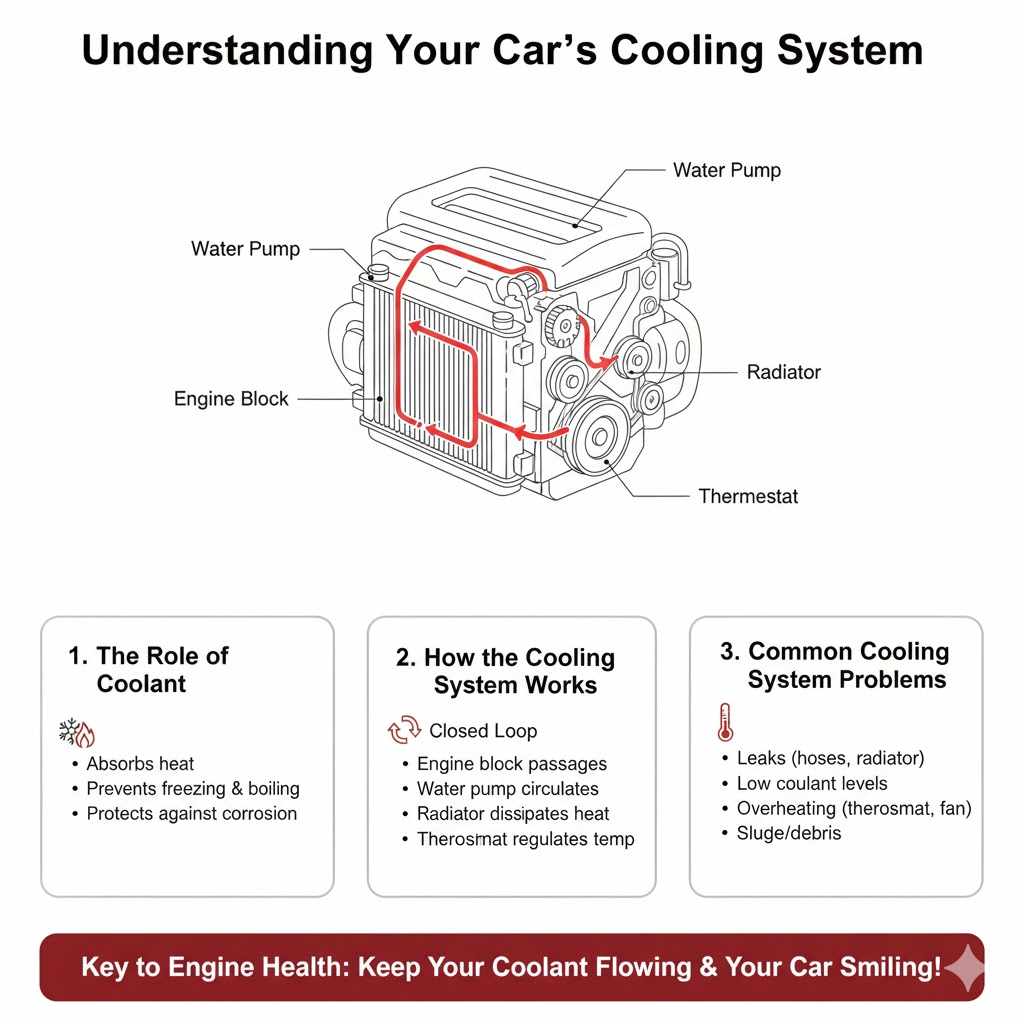
Your car’s cooling system is a vital part of its engine. It prevents the engine from overheating, which can cause serious damage. The system uses a special fluid called coolant, or antifreeze, to absorb heat from the engine and dissipate it through the radiator.
This fluid circulates constantly while the engine is running. A properly functioning cooling system ensures your engine stays at its ideal operating temperature. This helps your car run efficiently and last longer.
Issues with the cooling system can lead to expensive repairs if not addressed.
The Role of Coolant
Coolant, often a mix of antifreeze and water, is the lifeblood of your car’s cooling system. Its primary job is to keep the engine from getting too hot. It does this by absorbing heat generated during the combustion process.
Coolant also has other important roles. It prevents the water in the system from freezing in cold weather and stops it from boiling over in hot weather. This wide temperature protection is crucial for engine health.
Coolant also contains additives that protect the metal parts of the cooling system from corrosion and rust. Over time, coolant can degrade, losing its protective properties.
How the Cooling System Works
The cooling system is a closed loop. It starts with the engine block, which has passages for coolant to flow through. The water pump is the heart of the system.
It pushes the coolant through these passages, picking up heat from the engine. The hot coolant then travels to the radiator, usually located at the front of the car. Here, air flows through the radiator’s fins, cooling the coolant down.
The cooled coolant then returns to the engine to repeat the cycle. A thermostat controls the flow of coolant, ensuring the engine reaches and maintains its optimal temperature. When the engine is cold, the thermostat stays closed, allowing the engine to warm up faster.
Common Cooling System Problems
Several issues can arise with your car’s cooling system. Leaks are a common problem. These can occur in hoses, the radiator, the water pump, or the head gasket.
Low coolant levels are often a symptom of a leak. Overheating is another sign of trouble, often caused by a malfunctioning thermostat, a clogged radiator, or a faulty fan. Sludge or debris in the coolant can also impede its flow.
A worn-out water pump might not circulate coolant effectively. These problems can escalate quickly if not dealt with promptly.
Why Cooling Down is Essential
When your car’s engine is running, the coolant inside is very hot, often exceeding 200 degrees Fahrenheit. Adding cold liquid to a very hot engine can cause thermal shock. This is like pouring ice water on a hot glass; it can crack.
This can lead to serious and expensive engine damage, such as a cracked cylinder head or block. Allowing the engine to cool down ensures the metal parts have contracted and are no longer under extreme thermal stress. This makes the process of adding coolant much safer for your engine.
The Danger of Thermal Shock
Thermal shock occurs when there’s a sudden and significant temperature change in a material. In your car’s engine, the metal components are subjected to intense heat. If you rapidly introduce a much colder substance, like cold coolant, to these hot parts, they can contract unevenly and quickly.
This rapid expansion and contraction can create immense stress on the metal. For engine blocks and cylinder heads, which are often made of cast iron or aluminum, this stress can lead to cracks. These cracks can compromise the engine’s structural integrity and lead to severe performance issues or complete engine failure.
It’s a risk best avoided by patience.
Protecting Engine Components
By letting your car cool down, you are giving the engine’s metal components time to return to a more stable temperature. When the engine is hot, the metal is expanded. As it cools, it contracts.
Adding coolant to a hot engine means you are introducing a cold liquid to expanded metal. This is when the risk of cracking is highest. Waiting for the engine to cool allows the metal to contract back to its normal size.
This makes it much more resilient to the introduction of new coolant. It’s a simple precaution that saves a lot of potential trouble and expense down the road. Your engine’s lifespan depends on such care.
Avoiding Costly Repairs
The cost of repairing a cracked engine block or cylinder head can easily run into thousands of dollars. Sometimes, it’s more economical to replace the entire engine. This is a significant financial burden for any car owner.
By taking the simple step of allowing your car to cool down before adding coolant, you are actively preventing these catastrophic failures. This proactive approach is far more cost-effective than reactive repairs. Regular maintenance, including checking coolant levels and topping them up when needed after proper cooling, is an investment in your car’s longevity and your wallet’s health.
How Long Should You Let a Car Cool
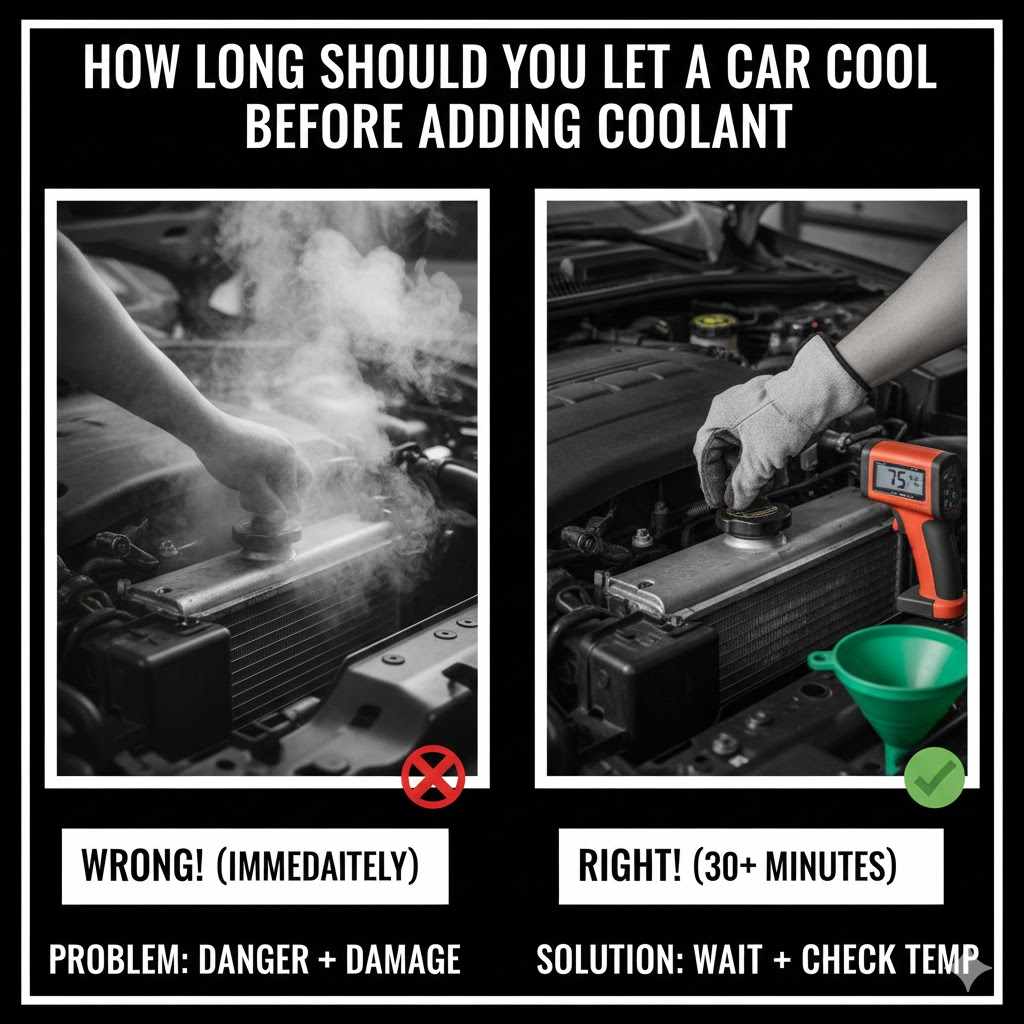
So, how long do you actually need to wait? For most cars, waiting until the engine is cool to the touch is sufficient. This typically takes at least 30 minutes to an hour after the engine has been turned off.
However, this can vary depending on the ambient temperature and how long the car was running. If you just finished a long drive in very hot weather, it might take even longer. The key is to wait until the engine’s metal parts have cooled down considerably, so the risk of thermal shock is minimal.
The “Touch Test” for Safety
A reliable way to gauge if your car is cool enough is the “touch test.” While you should always exercise caution and avoid touching any components that look obviously hot, gently touching a non-critical metal part of the engine, like the upper part of the engine block or a metal hose, can give you an indication. If it feels noticeably warm but not hot enough to burn you, it’s likely safe to proceed. If it’s still very hot to the touch, you need to wait longer.
This simple test bypasses the need for complex tools and relies on common sense.
Factors Influencing Cooling Time
Several things can affect how quickly your car cools down. The size of your engine plays a role; larger engines tend to retain heat longer. The outside temperature is also a big factor.
On a cold winter day, your car will cool down much faster than on a scorching summer afternoon. How long the car was running before you shut it off matters too. A short city drive will generate less heat than hours of highway cruising.
Consider these variables to estimate the waiting time. Always err on the side of caution if you are unsure.
Recommended Waiting Periods
As a general rule, aim for at least 30 minutes of cooling time after turning off the engine. If the engine was running for an extended period or it’s a very hot day, extend this to 60 minutes or even longer. You can often hear the radiator fan stop running a few minutes after the engine is off; this is a good indicator that some cooling has begun.
However, the engine block and other internal components will remain hot for a longer duration. A good practice is to check the temperature gauge on your dashboard before turning off the engine; if it was in the red, wait significantly longer.
The Process of Adding Coolant Safely
Once your car has cooled down sufficiently, you can safely add coolant. Always use the correct type of coolant specified in your car’s owner’s manual. Different types of coolant have different chemical compositions and are not always compatible.
Using the wrong coolant can cause damage to your cooling system. Always wear safety glasses and gloves when handling coolant, as it is toxic. Never open the radiator cap when the engine is hot, as pressurized steam can escape and cause severe burns.
Identifying the Coolant Reservoir
Most modern cars have a translucent plastic coolant reservoir, often located near the radiator or on the side of the engine. This reservoir has markings for “MIN” and “MAX” levels. This is usually the easiest and safest place to add coolant.
Some older vehicles might have a radiator cap that you open directly, but this should only be done when the engine is completely cool. Always consult your owner’s manual to identify the correct fill point for your specific vehicle.
Using the Correct Coolant Type
Your car’s manufacturer specifies the exact type of coolant needed. This information is critical and can be found in your owner’s manual. Coolants come in different colors (green, orange, pink, blue, etc.) and formulations (e.g., HOAT, OAT).
Mixing incompatible coolants can create a sludge that clogs the cooling system and reduces its efficiency, leading to overheating. If you are unsure about the correct type, it’s best to consult a mechanic or your car dealership. Using a 50/50 pre-mixed coolant is generally recommended for ease of use and proper dilution.
Step-by-Step Coolant Addition
Once the engine is cool and you’ve identified the correct fill point, you can add coolant. If using the reservoir, slowly pour the coolant into the reservoir until it reaches the “MAX” line. If you are topping off, you might only need to add a small amount.
If the reservoir is empty, fill it to the “MAX” line. If your car has a radiator cap, ensure the engine is completely cool, then slowly unscrew the cap and pour coolant directly into the radiator until it reaches the top. Replace the cap securely.
After adding coolant, start the engine and let it run for a few minutes. Check the coolant level again after the engine has cooled down, as it may have dropped as the coolant circulates and fills the system. Top off if necessary.
When to Seek Professional Help
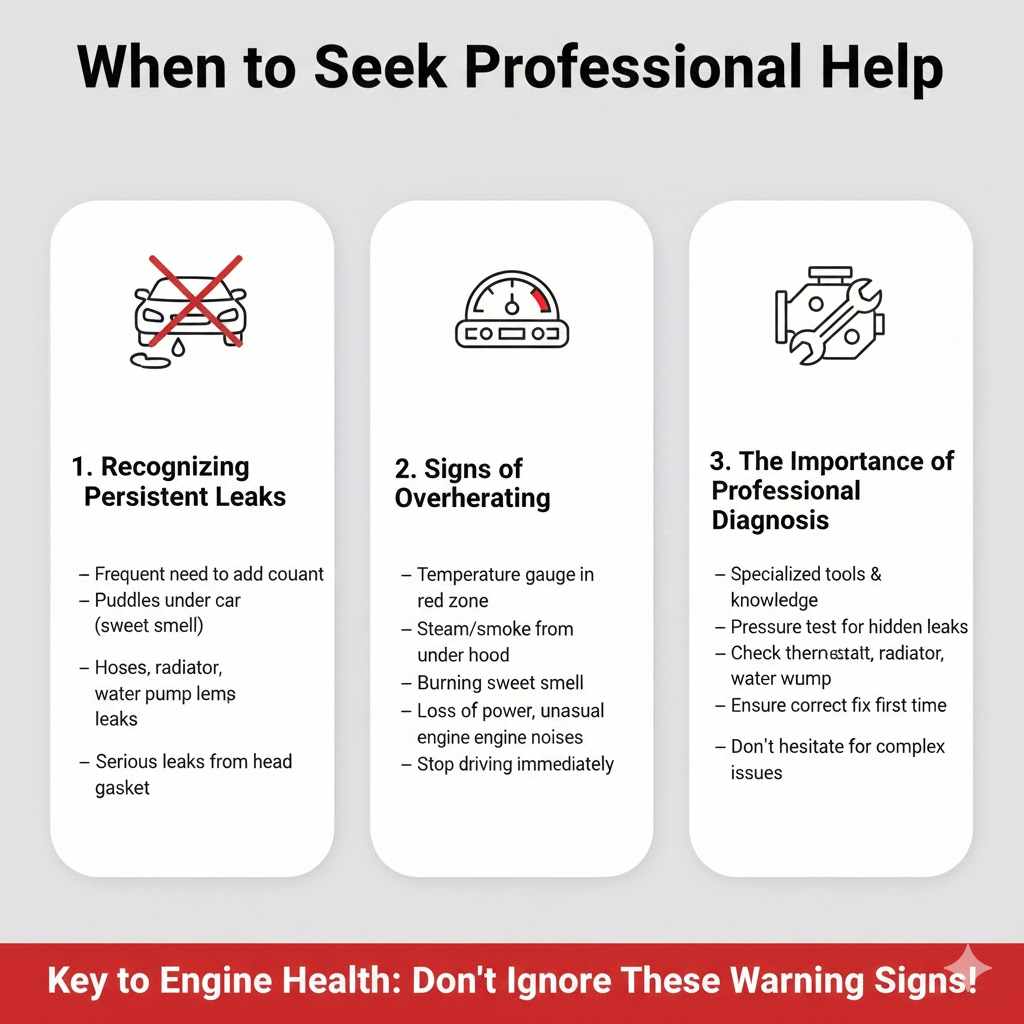
While adding coolant can be a straightforward task, there are times when you should leave it to the professionals. If you frequently need to add coolant, it indicates a leak somewhere in the system that needs to be found and fixed. Signs of a leak include puddles of fluid under your car, a sweet smell when the engine is running, or a persistent drop in the coolant level.
Also, if your car is consistently overheating, or if you see steam coming from under the hood, it’s best to stop driving and have your cooling system inspected by a qualified mechanic.
Recognizing Persistent Leaks
A healthy cooling system should not lose coolant. If you find yourself having to top up the coolant level regularly, even after waiting for the engine to cool and adding coolant correctly, then there is likely a leak. Leaks can occur in various places.
Hoses can develop cracks or loose connections. The radiator can corrode and spring a leak. The water pump seal might fail.
The most serious leaks are often from the head gasket, which can cause coolant to leak into the combustion chamber or oil passages. These leaks require professional diagnosis and repair.
Signs of Overheating
Overheating is a serious symptom that indicates a problem with your cooling system. The most obvious sign is the temperature gauge on your dashboard rising into the red zone. You might also see steam or white smoke coming from under the hood, especially from the front of the car near the radiator.
A burning smell, often described as sweet, can also indicate a coolant leak. If your car starts to lose power or the engine makes unusual noises, these could also be related to overheating. If any of these signs appear, pull over safely and turn off the engine immediately.
The Importance of Professional Diagnosis
Mechanics have specialized tools and knowledge to accurately diagnose cooling system problems. They can pressure test the system to find hidden leaks, check the thermostat’s function, inspect the radiator for blockages, and assess the condition of the water pump and fan. Trying to fix a complex cooling system issue without proper expertise can sometimes worsen the problem.
If you are not comfortable performing these checks or suspect a significant issue, it is always best to seek professional assistance. They can ensure the problem is fixed correctly the first time.
Frequently Asked Questions
Question: Can I just add water to my car’s radiator if I’m in a pinch?
Answer: In a true emergency, you can add plain water to your cooling system to get you to a repair shop. However, water alone does not provide freeze or boil-over protection and lacks the anti-corrosion properties of proper coolant. It should only be used as a temporary fix and
Question: How often should I check my car’s coolant level?
Answer: It’s a good practice to check your coolant level at least once a month, or before long road trips. You can easily do this by looking at the coolant reservoir when the engine is cold. This simple check can help you catch potential issues early.
Question: What happens if I overfill the coolant reservoir?
Answer: Overfilling the coolant reservoir can cause coolant to be pushed out of the system when the engine heats up and expands. While it’s generally not as damaging as severely low coolant, it can create a mess and potentially lead to coolant loss. It’s best to fill it to the “MAX” line.
Question: My car’s heater isn’t working, could it be a coolant issue?
Answer: Yes, a lack of heat from your car’s heater can often be a sign of low coolant levels or a problem with coolant circulation. The heater core relies on hot coolant flowing through it to generate heat inside the cabin. Check your coolant level and look for signs of leaks.
Question: Is it okay to add a different color coolant to my car if it’s low?
Answer: It’s generally not recommended to mix different colors or types of coolant. While some modern coolants are designed to be compatible, it’s always safest to use the exact type specified in your owner’s manual to avoid potential chemical reactions that can damage your cooling system.
Conclusion
Waiting for your car to cool before adding coolant is a simple, crucial step. Aim for at least 30 minutes to an hour, or until the engine is cool to the touch. Always use the correct coolant type and fill it at the designated reservoir.
This small effort protects your engine from costly damage and ensures your car runs reliably.