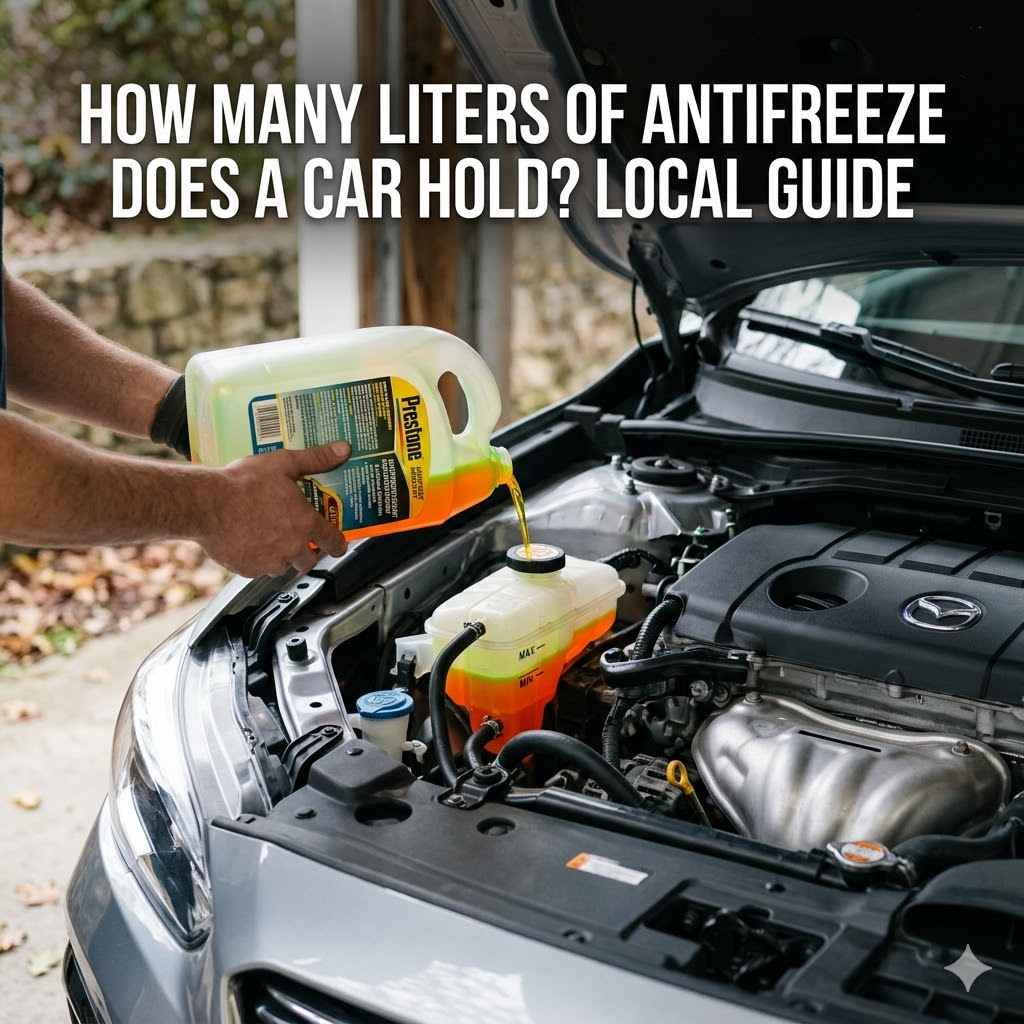
How Many Liters of Antifreeze Does a Car Hold? Local Guide
Knowing how much antifreeze your car needs can be a bit tricky for new car owners. You might wonder, “How Many Liters of Antifreeze Does a Car Hold? Local Guide” this question pops up because car sizes and cooling systems vary a lot.
It’s not a one-size-fits-all answer. But don’t worry, finding out is simpler than you think. We’ll walk you through it step-by-step so you can get the right amount and keep your engine happy.
Let’s figure out exactly what your car needs.
Understanding Your Car’s Cooling System
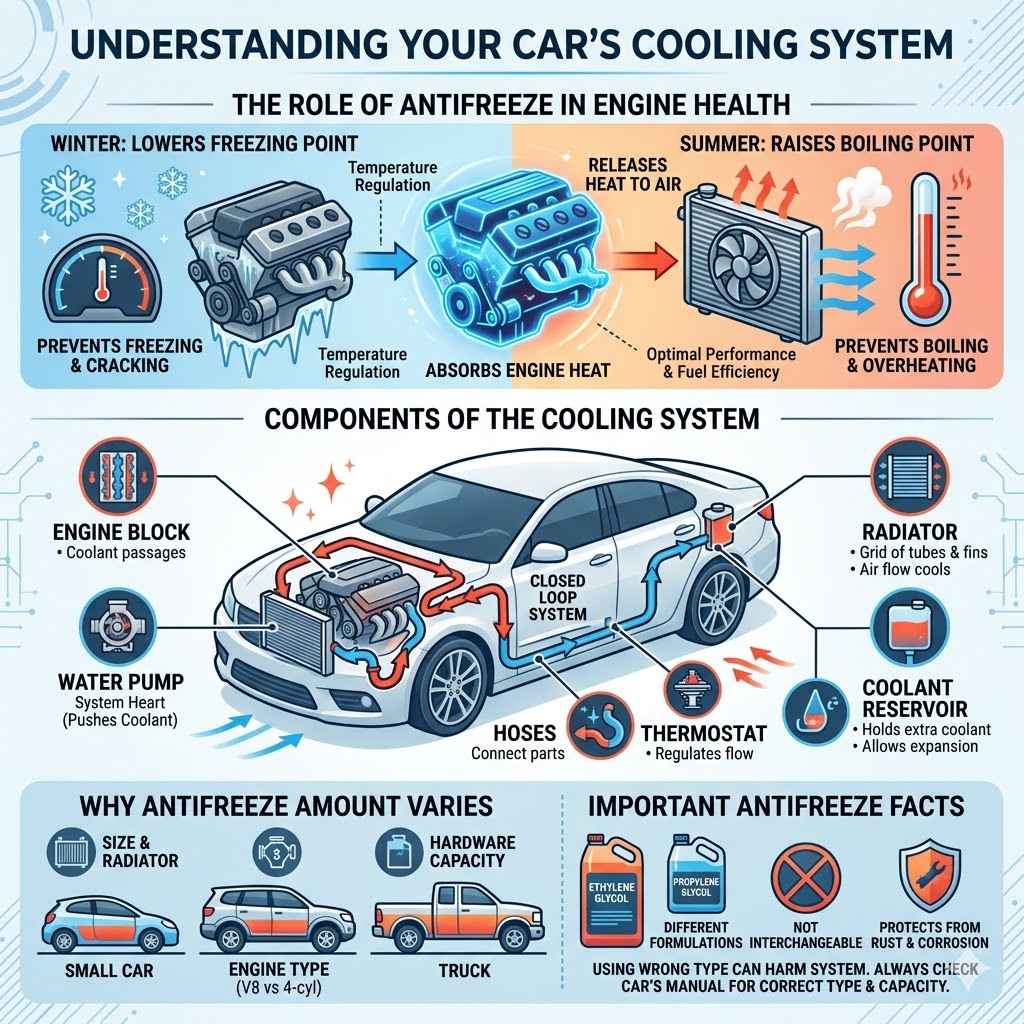
Your car’s cooling system is super important for keeping your engine from overheating. It uses a special liquid, antifreeze, to do its job. This liquid circulates through the engine, picking up heat, and then goes to the radiator.
In the radiator, the heat is released into the air. Without enough antifreeze, your engine can get too hot, causing serious damage.
The system includes several parts working together. There’s the engine block with passages for the coolant, a water pump to move the coolant, hoses to carry it around, the radiator to cool it down, and a thermostat that controls the flow. The coolant itself is a mix of antifreeze and water.
The antifreeze part is what prevents freezing in cold weather and boiling in hot weather.
It’s also important to know that antifreeze isn’t just one type. There are different colors and formulations, like ethylene glycol and propylene glycol. These have different properties and are not always interchangeable.
Using the wrong type can harm your cooling system. So, understanding your car’s specific needs is key.
The Role of Antifreeze in Engine Health
Antifreeze, also called coolant, does more than just stop your engine from freezing. It has additives that protect the metal parts of your cooling system from rust and corrosion. Think of it as a shield for your engine’s vital components.
Over time, these additives can break down, which is why regular flushing and refilling are necessary. This protects against leaks and damage.
The primary job is temperature regulation. In winter, it lowers the freezing point of the coolant, preventing the water from turning into ice. Ice expands and can crack your engine block or radiator.
In summer, it raises the boiling point, preventing the coolant from boiling over. This keeps the engine running at its optimal temperature, which is crucial for performance and fuel efficiency.
Regular maintenance of the cooling system ensures its longevity. Checking the coolant level is a simple task that can prevent major problems. Low coolant levels can lead to overheating, which can cause costly repairs like warped cylinder heads or blown gaskets.
Keeping the system full and using the correct type of antifreeze is a basic but essential part of car care.
Components of the Cooling System
The cooling system is a closed loop. The main parts are the engine block, the radiator, the water pump, and the hoses. The engine block has channels where the coolant flows to absorb heat.
The water pump is like the heart of the system, pushing the coolant through these channels and into the rest of the system.
The radiator is where the heat is released. It’s a grid of thin tubes and fins that allow air to pass through, cooling the hot coolant flowing inside. Hoses connect the engine to the radiator, allowing the coolant to travel back and forth.
A thermostat acts as a valve, regulating the coolant flow to maintain the engine’s ideal operating temperature.
There’s also a coolant reservoir, sometimes called an expansion tank. This tank holds extra coolant and allows it to expand when it gets hot. When the engine cools down, the coolant contracts, and the system draws coolant back from the reservoir.
This keeps the system full and prevents air from entering.
Why Antifreeze Amount Varies
The amount of antifreeze a car holds isn’t set in stone for all vehicles. It changes based on the car’s size, the design of its cooling system, and the engine’s specific requirements. Smaller cars typically need less coolant than larger trucks or SUVs.
The size of the radiator and the volume of the engine block play a big role.
Different engine types also influence the capacity. For example, a V8 engine might have a larger cooling system than a 4-cylinder engine. The overall design of the cooling passages within the engine block itself also contributes to how much liquid it can hold.
Carmakers engineer these systems precisely for each model.
Furthermore, the type of antifreeze can sometimes affect the exact amount needed, though this is less common than vehicle size. The concentrate-to-water ratio is standardized, but the total capacity is dictated by the hardware. Always check your car’s manual for the most accurate information regarding your specific model.
Finding Your Car’s Antifreeze Capacity
Figuring out exactly how much antifreeze your car needs is like finding a treasure map. The most reliable spot to find this information is your car’s owner’s manual. This booklet contains all sorts of details about your car, including its fluid capacities.
It’s written by the people who built your car, so it’s the best source.
If you don’t have the manual handy, the internet is your friend. Many car manufacturers have their manuals available online as PDFs. You can usually find them by searching for ” owner’s manual PDF.” Look for a section on fluid capacities or maintenance specifications.
Another great resource is your local auto parts store. The staff there are often very knowledgeable and can look up your car’s specifications in their system. They can tell you exactly how many liters or gallons your car’s cooling system holds.
They can also help you find the correct type of antifreeze.
Consulting Your Owner’s Manual
Your owner’s manual is the ultimate guide for your vehicle. It’s usually found in the glove compartment. Inside, there’s a section dedicated to maintenance.
Look for “fluid capacities,” “cooling system capacity,” or similar phrasing. This section will clearly state the total volume of coolant your car’s system requires.
The manual often specifies the exact type of antifreeze recommended by the manufacturer. This is important because different cars use different coolant formulas. Using the wrong type can cause damage to your cooling system components, leading to costly repairs.
It will also tell you the correct mixture ratio of antifreeze to distilled water.
For example, a typical sedan might have a cooling system capacity of around 6 to 8 liters. A larger truck could hold 10 to 15 liters or even more. Knowing this number helps you buy the right amount of coolant and prevents you from buying too much or too little.
This prevents waste and ensures you have enough for a complete flush and refill.
Online Resources and Databases
The internet offers a wealth of information for car owners. Many automotive websites and forums are dedicated to specific car makes and models. Searching for ” coolant capacity” will likely bring up several relevant results.
You can often find forums where other owners have discussed this exact question.
Some manufacturers also provide online portals where you can access digital versions of your owner’s manual. These are often searchable, making it easier to find specific information like fluid capacities. Look for a “Support” or “Owners” section on the official car manufacturer’s website.
Databases like ALLDATA or Mitchell 1, though often subscription-based, are professional resources used by mechanics. Some public libraries might offer access to these. These databases contain detailed specifications for virtually every vehicle model, including precise coolant capacities.
Local Auto Parts Store Assistance
Don’t underestimate the expertise at your local auto parts store. When you walk in, tell the associate the year, make, and model of your car. They have computer systems that can instantly pull up specifications for your vehicle.
They can tell you the exact coolant capacity and recommend the correct type of antifreeze and distilled water needed. This is especially helpful if you’re unsure about the coolant color or type your car requires. They can also suggest the right tools for the job, like a funnel or drain pan.
This local resource is convenient and can save you time and potential mistakes. Many parts store employees are experienced car enthusiasts or former mechanics, making them a reliable source of information for your specific needs.
How Many Liters of Antifreeze Does a Car Hold?
The question of How Many Liters of Antifreeze Does a Car Hold? Local Guide is a common one, and the answer truly depends on your vehicle. There isn’t a single number that fits all cars.
For a small compact car, you might need around 5 to 7 liters of coolant mixture. A mid-size sedan often holds between 6 to 8 liters.
Larger vehicles, like SUVs and pickup trucks, usually have bigger cooling systems and can hold more. Expect capacities in the range of 8 to 12 liters for these vehicles. Heavy-duty trucks and specialized vehicles could hold significantly more, sometimes upwards of 20 liters or more.
Always confirm your specific car’s capacity.
Remember, this capacity is for the total coolant system, which is a mix of antifreeze and distilled water. Most recommend a 50/50 mix. So, if your car holds 10 liters, you’ll need 5 liters of concentrated antifreeze and 5 liters of distilled water.
Typical Capacities by Vehicle Type
Vehicle type is a major factor in cooling system capacity. Let’s break down some general ranges:
Small Cars (e.g., Honda Civic, Toyota Corolla): These typically have smaller engines and radiators, leading to lower coolant capacities. Expect around 5-7 liters for the total system. This means about 2.5 to 3.5 liters of concentrated antifreeze would be needed for a 50/50 mix.
Mid-Size Sedans (e.g., Honda Accord, Toyota Camry): These vehicles have slightly larger engines and cooling systems. Their capacities often fall between 6 and 8 liters. For a 50/50 mix, this would require 3 to 4 liters of concentrated antifreeze.
Large Sedans and Minivans (e.g., Chrysler Pacifica, Honda Odyssey): These larger passenger vehicles can have cooling systems that hold 7 to 9 liters of coolant. This translates to needing 3.5 to 4.5 liters of concentrated antifreeze for a 50/50 mixture.
SUVs and Trucks (e.g., Ford F-150, Chevrolet Tahoe): Larger engines and more robust cooling needs mean these vehicles typically hold more coolant. Capacities can range from 8 to 12 liters or even higher for heavy-duty models. This means 4 to 6 liters of concentrated antifreeze might be required.
Performance Cars and Specialty Vehicles: Some high-performance vehicles or those with specific design requirements may have unique coolant capacities. It’s crucial to check the manual for these, as they can sometimes be higher due to the need for more efficient cooling under demanding conditions.
These are approximate figures. Your car’s specific year and model can cause variations even within these categories. Always refer to your owner’s manual for the most accurate information.
Calculating the Required Amount
Once you know your car’s total cooling system capacity, calculating the amount of antifreeze needed is straightforward, especially if you plan to use a 50/50 mix. This is the most common and recommended ratio for most vehicles. It balances freeze protection and boiling protection effectively.
To get the 50/50 mix, you need equal parts of concentrated antifreeze and distilled water. So, if your car’s cooling system holds 10 liters, you will need 5 liters of concentrated antifreeze and 5 liters of distilled water. You’ll often buy concentrated antifreeze in 1-gallon (about 3.78 liters) or 5-liter containers.
If your car requires less than a full container of concentrated antifreeze, you might have leftover for top-offs. Some pre-mixed coolants are available, which are already at a 50/50 ratio. If you buy pre-mixed, you simply need to buy enough to meet the total capacity.
For a 10-liter system, you’d buy two 5-liter jugs of pre-mixed coolant.
Pre-mixed vs. Concentrated Antifreeze
When you go to buy antifreeze, you’ll find two main types: concentrated and pre-mixed. Understanding the difference helps you buy the right product and quantity.
Concentrated Antifreeze: This is pure antifreeze, usually ethylene glycol or propylene glycol. It needs to be mixed with distilled water before being added to your car. The most common mixture ratio is 50/50, but some situations might call for a 70/30 mix (more antifreeze for extreme cold). You’ll need to buy distilled water separately.
Pre-mixed Antifreeze: This coolant is already mixed with distilled water, typically at a 50/50 ratio. It’s convenient because you can pour it directly into your cooling system without needing to mix it yourself. This saves a step and reduces the chance of making an incorrect mixture.
The choice between the two often comes down to convenience and cost. Concentrated antifreeze is usually cheaper per volume, but you have to factor in the cost of distilled water. Pre-mixed is more expensive upfront but offers simplicity.
For a 50/50 mix, if your car holds 10 liters, you’ll need 10 liters of pre-mixed coolant or 5 liters of concentrate plus 5 liters of distilled water.
When and How to Top Off or Replace Antifreeze
Your car’s cooling system needs attention periodically. Topping off the antifreeze is something you might need to do between full flushes if the level gets low. Replacing the antifreeze, or flushing the system, is a maintenance task done at specific intervals.
Checking the coolant level is easy. On the side of the coolant reservoir tank, you’ll see “MIN” and “MAX” lines. The coolant level should be between these marks when the engine is cool.
If it’s below “MIN,” you need to add some. Always use the correct type of antifreeze recommended for your car and mix it with distilled water if using concentrated.
Full system flushes are typically recommended every 30,000 to 60,000 miles, or every 2 to 5 years, depending on the antifreeze type and your car’s manufacturer recommendations. Using old or contaminated antifreeze can reduce its protective properties and lead to corrosion and overheating.
Checking the Coolant Level Safely
Checking your coolant level is a simple maintenance task, but safety is key. Never open the radiator cap or the coolant reservoir cap when the engine is hot. The cooling system is under pressure, and hot coolant can spray out, causing severe burns.
Wait for the engine to cool down completely. This usually takes at least an hour or two after the car has been driven. Locate the coolant reservoir, which is a translucent plastic tank connected to the radiator.
You’ll see markings on the side indicating the “COLD” or “LOW” and “HOT” or “FULL” levels.
If the coolant level is below the “COLD” line, it’s time to add more. Use the correct type of antifreeze mixed with distilled water. If you’re unsure about the type, consult your owner’s manual.
Adding the wrong type can create problems.
Topping Off Your Antifreeze
If your coolant level is low, you’ll need to top it off. First, ensure the engine is completely cool. Locate the coolant reservoir and open the cap.
If the level is below the minimum mark, slowly add a 50/50 mixture of the correct antifreeze and distilled water. Do not overfill.
Add coolant gradually, checking the level frequently. You want to bring it up to the “COLD” or “LOW” line on the reservoir. Once filled, securely replace the cap.
It’s a good idea to check the level again after your next drive, once the engine has cooled, to make sure it’s stable.
If you find yourself topping off the coolant frequently, it could indicate a leak in the system. You should have your cooling system inspected by a mechanic to find and fix the leak.
When to Flush and Replace Coolant
Antifreeze doesn’t last forever. Over time, its protective additives degrade, and it can become less effective. This is why manufacturers recommend flushing and replacing the coolant at specific intervals.
These intervals are usually found in your owner’s manual.
Common recommendations are every 30,000 to 60,000 miles, or every 2 to 5 years. However, modern coolants, like long-life or extended-life formulas, can last much longer, sometimes up to 100,000 miles or even 10 years. Always check your manual for the recommended service schedule for your specific vehicle and coolant type.
Signs that your coolant needs to be replaced sooner than scheduled include a rusty or muddy appearance in the reservoir, or if you notice a sweet smell coming from the engine bay, which can indicate a leak. Ignoring these signs can lead to corrosion and damage to your cooling system.
DIY vs. Professional Service
You can perform a coolant flush and replacement yourself, but it requires some effort and specific tools. You’ll need a drain pan, possibly a hose, and the correct type and amount of antifreeze and distilled water. Proper disposal of the old coolant is also essential, as it is toxic.
The process involves draining the old coolant from the radiator and engine block, flushing the system with water, and then refilling it with the new coolant mixture. It’s important to follow the correct procedure to ensure all the old coolant is removed and the new coolant is properly circulated without air pockets.
If you’re not comfortable with this process or don’t have the necessary tools, a professional mechanic can perform the service for you. They have the expertise and equipment to do it efficiently and correctly, ensuring proper disposal of the old fluid. The cost of professional service can vary, but it offers peace of mind.
Common Mistakes to Avoid
When dealing with your car’s antifreeze, it’s easy to make a mistake, especially if you’re new to car maintenance. Knowing these common errors can save you from costly repairs and keep your car running smoothly. Always prioritize safety and accuracy.
One of the biggest mistakes is using the wrong type of antifreeze. As we’ve mentioned, there are different colors and chemical formulations. Mixing incompatible types can cause gelling, reduce cooling efficiency, and damage your engine components.
Always stick to what your owner’s manual recommends.
Another mistake is not using distilled water. Tap water contains minerals that can cause scale buildup and corrosion within the cooling system. Always use distilled water for mixing with concentrated antifreeze to maintain the integrity of your cooling system and the antifreeze’s performance.
Using the Wrong Type of Antifreeze
Antifreeze comes in various formulations, often indicated by color, but color alone isn’t always a reliable guide. The primary types are traditional (green) inorganic additive technology (IAT), and modern organic acid technology (OAT) and hybrid organic acid technology (HOAT) coolants, which are often orange, yellow, or pink. Each has different chemical compositions designed for specific materials and service intervals.
For instance, IAT coolants are older and typically require more frequent replacement. OAT and HOAT coolants offer longer service life and better corrosion protection for newer engine materials. Mixing these types can lead to a chemical reaction that causes the coolant to break down, form sludge, and clog the cooling system.
This can cause overheating and severe engine damage.
Always consult your owner’s manual to identify the exact type of antifreeze your car needs. If you can’t find the information, it’s best to consult a dealership or a trusted mechanic. Never guess, as the cost of repairing a damaged cooling system far outweighs the cost of buying the correct antifreeze.
Mixing Antifreeze with Tap Water
Using tap water to mix with concentrated antifreeze is a common but detrimental mistake. Tap water contains minerals like calcium and magnesium. When heated, these minerals can precipitate out of the solution and form deposits inside the cooling system.
These deposits can clog radiator passages, heater cores, and even the water pump’s impeller.
This buildup reduces the cooling system’s efficiency, leading to overheating. It also promotes corrosion of metal components. Antifreeze itself contains corrosion inhibitors, but these are optimized to work with pure water.
Minerals in tap water can interfere with these inhibitors, reducing their effectiveness and potentially accelerating corrosion.
Distilled water, on the other hand, has had all minerals and impurities removed. This makes it the ideal choice for mixing with antifreeze. It ensures the cooling system remains clean and that the antifreeze can perform its protective functions optimally.
Always buy distilled water from a grocery store or auto parts store for this purpose.
Not Replacing the Thermostat and Hoses
When performing a full coolant flush, it’s often recommended to consider replacing the thermostat and coolant hoses as well, especially if they are old. These components are vital to the cooling system’s operation. A thermostat stuck open will prevent the engine from reaching its optimal operating temperature, affecting performance and fuel economy.
A thermostat stuck closed can cause rapid overheating. Coolant hoses, made of rubber, degrade over time. They can become brittle, soft, or develop cracks, leading to leaks or a hose bursting under pressure.
A burst hose can quickly drain the cooling system, leading to severe engine damage.
While not always mandatory with every coolant change, inspecting these parts and replacing them preventatively can save you from a breakdown. If your hoses feel spongy, are cracked, or show signs of bulging, it’s time for replacement. Similarly, if your engine is slow to warm up or runs too cool, the thermostat might be the culprit.
Ignoring Air Pockets in the System
After a coolant flush and refill, it’s critical to properly “bleed” the air out of the cooling system. Air pockets trapped in the system can prevent proper coolant circulation, leading to localized hot spots and potential engine damage. The water pump can also suck in air, leading to cavitation and wear.
Different vehicles have different methods for bleeding the system. Some have dedicated bleed screws on the engine or radiator. Others require running the engine with the heater turned on high and the radiator cap off until the thermostat opens and the air escapes.
Your owner’s manual will detail the specific bleeding procedure for your car.
Failing to remove air pockets can result in intermittent overheating or poor heater performance. It’s essential to follow the manufacturer’s instructions for bleeding the cooling system to ensure optimal performance and longevity. If you’re unsure, a mechanic can handle this step.
When To Seek Professional Help
While many basic maintenance tasks can be done at home, some situations call for a professional mechanic’s expertise. If you’re unsure about any part of the coolant system, it’s always best to err on the side of caution and seek professional help. This ensures the job is done correctly and safely.
For instance, if you notice significant leaks, persistent overheating, or if your car’s check engine light comes on with coolant-related codes, it’s time to visit a mechanic. These issues can be complex and require specialized diagnostic tools and knowledge.
Also, if you’re not comfortable performing a coolant flush, or if you lack the necessary tools or disposal methods for old coolant, a professional service is a good option. They have the experience to handle these tasks efficiently and safely, giving you peace of mind.
Signs of a Coolant Leak
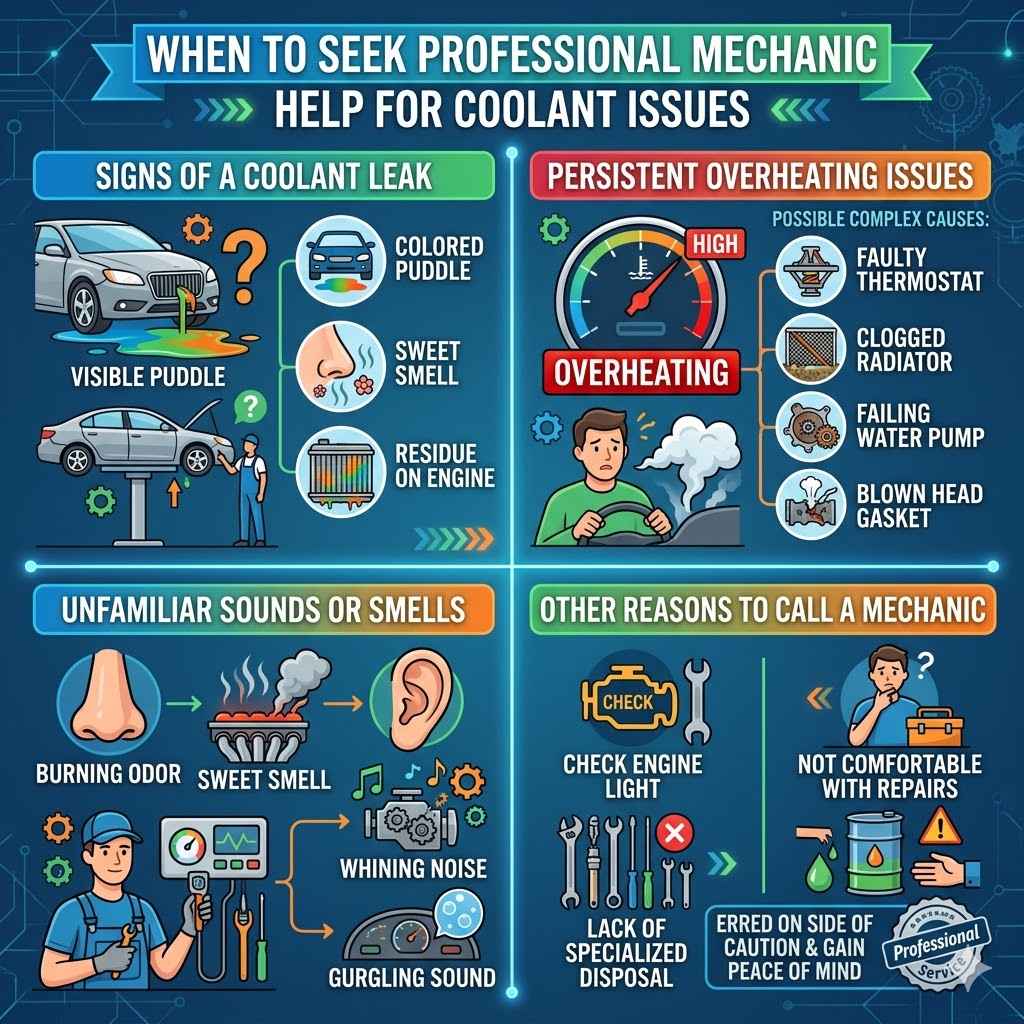
Coolant leaks are a common problem that can lead to low coolant levels and overheating. Recognizing the signs of a leak is crucial for preventing serious engine damage. The most obvious sign is a puddle of coolant under your car when it’s parked.
The color of the puddle will typically match the color of your antifreeze (often green, orange, pink, or yellow).
Another sign is a sweet, syrupy smell, especially when the engine is running. This smell comes from the ethylene glycol or propylene glycol in the coolant burning off. You might also notice white or colored residue around hose clamps, on the radiator, or on the engine block itself.
If your coolant level consistently drops and you have to add coolant frequently, even without a visible puddle, it strongly suggests a leak somewhere in the system. This could be from a cracked hose, a faulty water pump seal, a leaking radiator, or even a head gasket issue. Any persistent loss of coolant should be investigated.
Persistent Overheating Issues
If your car’s temperature gauge consistently reads high, or if the engine overheats even after you’ve checked and topped off the coolant, there’s likely a more significant problem. Persistent overheating can be caused by several issues, including a faulty thermostat, a clogged radiator, a failing water pump, or a blown head gasket.
A thermostat that doesn’t open properly will restrict coolant flow, causing the engine to overheat quickly. A radiator clogged with debris or sediment won’t be able to dissipate heat effectively. A worn water pump may not circulate coolant efficiently.
A blown head gasket can allow combustion gases to enter the cooling system, causing it to over-pressurize and overheat.
These issues require professional diagnosis and repair. Driving an overheating vehicle can lead to catastrophic engine damage, such as warped cylinder heads, seized pistons, or a completely destroyed engine block. It’s essential to address overheating promptly.
Unfamiliar Sounds or Smells
Your car often gives you clues when something is wrong, and unusual sounds or smells related to the cooling system are important warnings. A whining or grinding noise coming from the front of the engine could indicate a failing water pump bearing. The pump’s impeller might also be damaged, affecting circulation.
As mentioned, a sweet smell is a strong indicator of a coolant leak. If you notice this smell, particularly when the engine is hot, check for leaks immediately. Another concerning smell is a burning odor, which could mean coolant is leaking onto hot engine components or the exhaust manifold.
If you hear gurgling noises from the dashboard area, it could mean there’s air trapped in the heater core or cooling system. These sounds and smells are not to be ignored. They are your car’s way of telling you something needs attention before it becomes a major problem.
Frequently Asked Questions
Question: How many liters of antifreeze does a typical small car hold?
Answer: A typical small car usually holds between 5 to 7 liters of coolant in its entire cooling system. This is for the mixture of antifreeze and distilled water.
Question: Can I mix different colors of antifreeze?
Answer: It is generally not recommended to mix different colors or types of antifreeze, as they may have different chemical compositions and can react negatively, causing damage.
Question: What happens if I don’t use distilled water with concentrated antifreeze?
Answer: Using tap water can introduce minerals that lead to scale buildup, corrosion, and reduced cooling efficiency in your car’s cooling system.
Question: How often should I check my car’s coolant level?
Answer: You should check your car’s coolant level regularly, at least once a month, and always before a long trip. Ensure the engine is cool when checking.
Question: Is it okay to pour water into the coolant system if I don’t have antifreeze?
Answer: In an emergency, you can add plain water to reach a mechanic. However, this is only a temporary fix and can lead to freezing in cold weather or overheating in hot weather.
Conclusion
Knowing how many liters of antifreeze your car needs is vital. It depends on your car’s make, model, and size, with capacities typically ranging from 5 to 12 liters. Always consult your owner’s manual for the exact specification.
Using the correct type of antifreeze mixed with distilled water ensures your engine stays cool and protected. Regular checks and timely replacement prevent costly damage. You’ve got this!