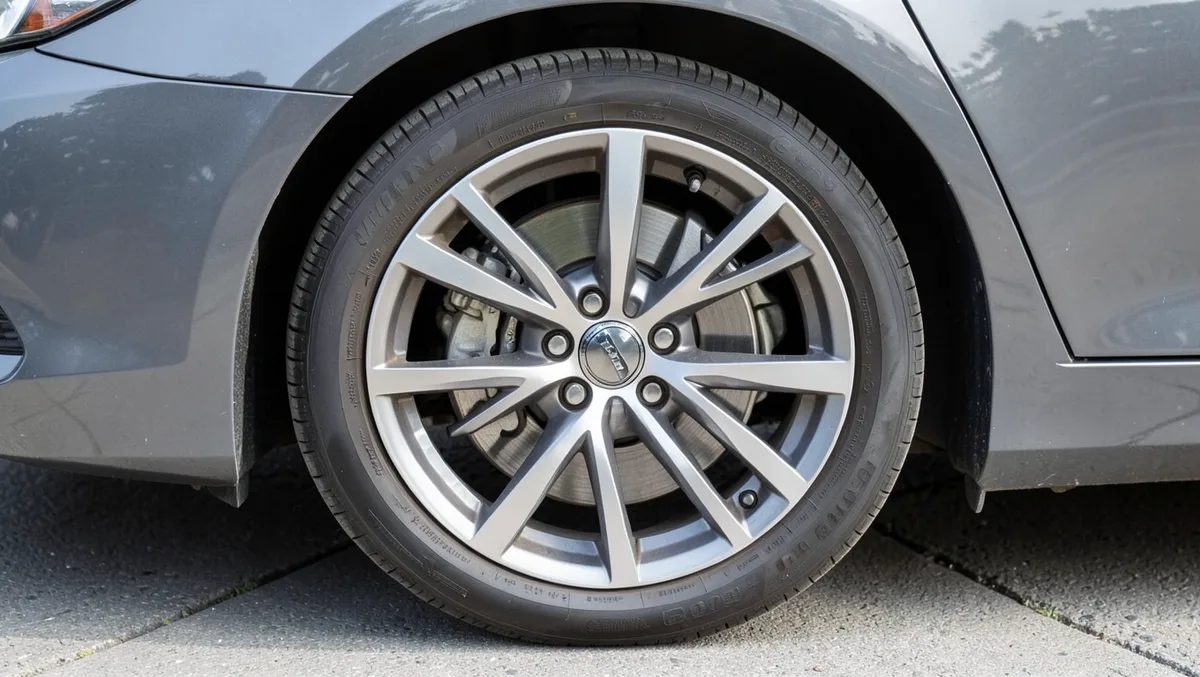
How Many Wheels Does a Car Have? 4, Plus the Spare Tire
A standard car has 4 wheels — two in front, two in back. That’s the layout on nearly every sedan, SUV, and pickup truck built today. But the count changes fast once you look past a basic passenger car: the spare tire in the trunk is technically a 5th wheel, dual-rear-wheel “dually” trucks run 6, and a fully loaded semi-truck can carry 18.
Here’s a full breakdown of why 4 is the standard, which vehicles break that rule, and how to tell whether your own car’s wheels are matched, safe, and correctly counted.
Why 4 Wheels Is the Standard
Four contact points with the road give a vehicle the minimum stable base it needs to turn, brake, and absorb bumps without tipping. Three points can still balance a load, but they leave a vehicle far more prone to rolling in a hard turn; a fourth wheel spreads that same weight over a wider, more stable footprint at both axles. That’s why compact cars, full-size sedans, SUVs, and light pickups all default to the same 2-front, 2-rear arrangement regardless of size or price.
The layout also keeps engineering simple. A four-wheel chassis only needs one front axle and one rear axle, which is easier and cheaper to design, align, and repair than adding a third axle for a fifth or sixth wheel. Adding wheels only becomes worthwhile when a vehicle needs to carry a heavier load or a much longer body than a standard axle pair can support — which is exactly where the exceptions below come from.
Vehicles That Break the Four-Wheel Rule
Three-Wheel Cars
A handful of production vehicles run on just three wheels — one at the front or rear, and a pair at the other end. The Reliant Robin, a British three-wheeler from the 1970s, put a single wheel up front with two steering-free wheels in back, giving it a narrower, motorcycle-like footprint. The modern Morgan 3 Wheeler uses the same basic layout for a lighter, sportier ride, and the solar-powered Aptera is an all-electric three-wheeler built specifically to cut weight and drag for maximum range.
Three-wheelers exist because a lighter footprint improves fuel economy or, in the case of an EV, extends range — but that same narrow stance makes them less stable in sharp turns than a four-wheel car. In most US states they’re classified and titled as motorcycles rather than cars, which changes their licensing and helmet requirements.
Six Wheels and Beyond
On the other end of the scale, some vehicles add a third axle to support a longer body or a heavier load. Stretch limousines commonly add a rear axle purely to carry the extra body length without sagging. Heavy-duty “dually” pickup trucks add two extra rear wheels — one on each side of the same axle — to support higher towing and payload capacities than a standard single-rear-wheel truck. A few off-road and military vehicles go further still, running six driven wheels for extra traction on loose terrain.
Past six, wheel counts are mostly reserved for specialty and commercial equipment rather than anything resembling a car — which is where the next question usually comes from.
How Many Wheels Does a Semi-Truck Have?

A standard tractor-trailer — the classic “18-wheeler” — gets its name from its wheel count: 10 wheels on the tractor (2 on the steering axle, 8 dual-mounted wheels across its two drive axles) plus 8 more dual-mounted wheels across the trailer’s two axles, for 18 total. That’s the most common configuration on US highways, but it’s not a fixed number. A single-axle trailer or a smaller box truck can run as few as 6, while a tractor pulling doubles or triples (two or three linked trailers) can easily push past 18, sometimes to 30 or more wheels for the full combination.
Each extra axle spreads the vehicle’s total weight across more contact points, which is what lets a fully loaded semi legally carry up to 80,000 lbs in the US without exceeding per-axle road-damage and bridge-weight limits.
Does the Spare Tire Count as a 5th Wheel?
Technically, yes. Most cars carry a spare in the trunk or underbody — either a full-size match for the other four or a smaller, space-saving “donut” — and that spare is a real fifth wheel even while it sits unused. It only becomes wheel number one the moment you swap it on after a flat.
A growing number of newer models skip the spare entirely to save weight and trunk space, replacing it with a tire repair kit (sealant plus a small air compressor) or run-flat tires rated to drive a limited distance on zero air pressure. It’s worth checking your own owner’s manual or trunk floor to see which setup your car actually has — a donut spare is only rated for about 50-70 miles at reduced speed, so knowing what you’re working with before a flat happens saves real trouble on the road.
Are All Four Wheels on a Car the Same Size?
On most passenger cars, yes — all four wheels and tires are the same size and rated speed, which keeps handling predictable and lets you rotate tires front-to-back to even out wear. That’s the setup on the overwhelming majority of sedans, SUVs, and trucks.
Some performance and sports cars use a “staggered” fitment instead, with wider tires on the rear axle than the front. This puts more rubber on the ground where the engine sends most of its power, improving rear grip under acceleration, but it also means those wheels can’t be rotated the usual way and each corner needs its own matching replacement when it wears out. Checking your tire’s sidewall size code (or your owner’s manual) is the fastest way to confirm which setup your car uses.
Dual Rear Wheels: Why “Dually” Trucks Run 6
A dually pickup mounts two wheels on each side of its rear axle instead of one, for six wheels total. That extra pair widens the truck’s rear stance and roughly doubles the tire contact patch supporting the bed, which is what lets these trucks carry higher payloads and tow heavier trailers than a comparable single-rear-wheel truck without the rear end squatting or the tires overloading. The tradeoff is a wider rear track that makes tight parking and lane changes noticeably trickier, plus the cost of maintaining six tires instead of four.
Wheels in Electric and Hybrid Cars
Most electric cars stick to the same four-wheel layout as gas-powered ones, for the same stability reasons. The difference shows up in how the wheels are powered: dual-motor and tri-motor EVs like the Tesla Model S Plaid send power to each wheel independently through separate motors rather than one engine and a shared drivetrain, which is what gives them their near-instant torque and precise traction control. A few experimental EVs, like the Aptera mentioned above, drop to three wheels specifically to cut weight and aerodynamic drag for maximum range per charge.
Specialty Vehicles: Golf Carts, Dune Buggies, and Side-by-Sides
Plenty of vehicles that get called “cars” in everyday conversation aren’t standard passenger cars at all. Most golf carts run four wheels, but six-wheel versions exist for extra stability carrying passengers or gear on steep courses. Dune buggies and side-by-sides are almost always four-wheeled for off-road traction, though a small number of custom three-wheel buggies are built purely for tighter turning in soft sand.
Maintenance Tips for Your Car’s Wheels
- Check tire pressure monthly: Underinflated tires wear unevenly and hurt fuel economy; a $10 digital gauge takes the guesswork out of it.
- Rotate tires every 5,000-8,000 miles: Rotation evens out wear across all four positions so a full set lasts longer — unless your car uses a staggered, non-rotatable fitment.
- Inspect wheels for damage after potholes: A bent rim or hairline crack often shows up first as a steering vibration at highway speed.
- Keep your spare or repair kit ready: Confirm the spare is properly inflated (or the sealant kit isn’t expired) before you need it, not after.
The Bottom Line
For nearly every car on the road, the honest answer is 4. The count only changes once you bring in the spare tire (a 5th, unused wheel), dual-rear-wheel trucks (6), stretch limos (also often 6), or commercial rigs like semi-trucks, which can legitimately run 18 or more. Knowing which category your own vehicle falls into is what actually matters — it tells you whether your tires should be rotated, whether they’re the same size on every corner, and what to check before a flat catches you off guard.
FAQs
Do all cars have four wheels?
No, but nearly all of them do. A small number of production vehicles, like the Reliant Robin and Morgan 3 Wheeler, use three wheels instead, and heavy-duty dually trucks and stretch limousines commonly run six.
Does a spare tire count as a wheel?
Yes. A spare in the trunk or underbody is a genuine fifth wheel even while it’s not mounted — it just isn’t one of the four actively supporting the car’s weight until you install it.
How many wheels does a semi-truck have?
A standard tractor-trailer runs 18 wheels: 10 on the tractor and 8 on the trailer. Smaller box trucks can have as few as 6, while a tractor pulling multiple linked trailers can exceed 18.
Are all four wheels on a car the same size?
On most cars, yes, which is what allows front-to-back tire rotation. Some performance cars use a staggered fitment with wider rear tires than front, and those can’t be rotated the same way.
Why do dually trucks have six wheels?
The extra pair of rear wheels widens the tire contact patch supporting the truck bed, which raises the truck’s safe payload and towing capacity beyond what a single-rear-wheel setup can handle.
What’s the fewest number of wheels a car can legally have?
Three. Vehicles like the Reliant Robin and Morgan 3 Wheeler are street-legal three-wheelers, though in most US states they’re titled and licensed as motorcycles rather than cars.
Products related to this article
Sponsored / affiliate links. As an Amazon Associate I earn from qualifying purchases. I may earn additional commission from eligible campaigns.