Are All 4 Wheels On A Car The Same Size? Not Always
This guide will help you understand if car wheels are all the same. We’ll look at the reasons behind different wheel sizes. You’ll learn about common setups and what to watch out for.
Let’s dive in!
No, not all four wheels on a car are always the same size. While many standard passenger cars have all four wheels identical, certain types of vehicles or specific configurations use different wheel sizes, especially between the front and rear axles. This is often done for performance, handling, or styling reasons.
What Makes Car Wheels Different Sizes?
The short answer is that engineers and designers choose wheel sizes for many reasons. These reasons often come down to how the car works and how it looks. It’s not just about making them spin.
It’s about making them spin the right way for the car’s job.
Think about different kinds of jobs cars do. A tiny smart car needs different wheels than a huge truck. Even within the same car type, choices are made.
These choices affect speed, grip, and how the car feels to drive. They also play a big role in how the car looks to you and me.
We’ll explore the main reasons why this happens. This includes looking at specific car types and how their wheels are designed. Understanding these differences helps you appreciate car engineering.
It also helps if you ever need to replace a tire or wheel.
My Own Wheel Size Surprise
I remember a time I was helping a friend with his car. It was a cool sports car, a bit older but still a head-turner. He’d bought it used, and he wasn’t super familiar with its quirks.
One day, he noticed one of the rear tires looked a bit bigger than the front ones. He started to panic a little, thinking something was wrong.
He’d never owned a car like this before. All his other cars had matched wheels. He thought maybe the previous owner had put on the wrong size tire by accident.
It felt like a big problem, and he worried about safety. I told him to calm down and let’s take a look. We checked the car’s manual and then the tires themselves.
What we found was that this car was designed to have different sized wheels. The rear wheels were wider and slightly larger in diameter than the front ones. This was done on purpose for better traction and handling.
It was a bit of a revelation for him. That moment taught me that assumptions about car parts can be wrong. It’s always best to know the specifics.
Why Different Wheel Sizes? Quick Guide
Performance Boost: Wider rear wheels can offer more grip. This helps cars speed up faster and corner better. It’s common in sports cars.
Handling Balance: Different sizes can change how the car steers. This can make it feel more stable or agile.
Braking Power: Larger rear wheels might be needed to fit bigger brake systems. This means the car can stop more quickly.
Looks Matter: A staggered setup (wider rear wheels) can make a car look sportier. It’s a style choice for many drivers.
Common Scenarios for Different Wheel Sizes
So, when do you actually see wheels that aren’t all the same size? It’s not as rare as you might think. Let’s break down the most common situations.
Sports Cars and Performance Vehicles
This is where you’ll see it most often. Think of cars built for speed and sharp turns. Carmakers use different wheel sizes to help these cars perform their best.
The goal is to put power down to the road and maintain control at high speeds.
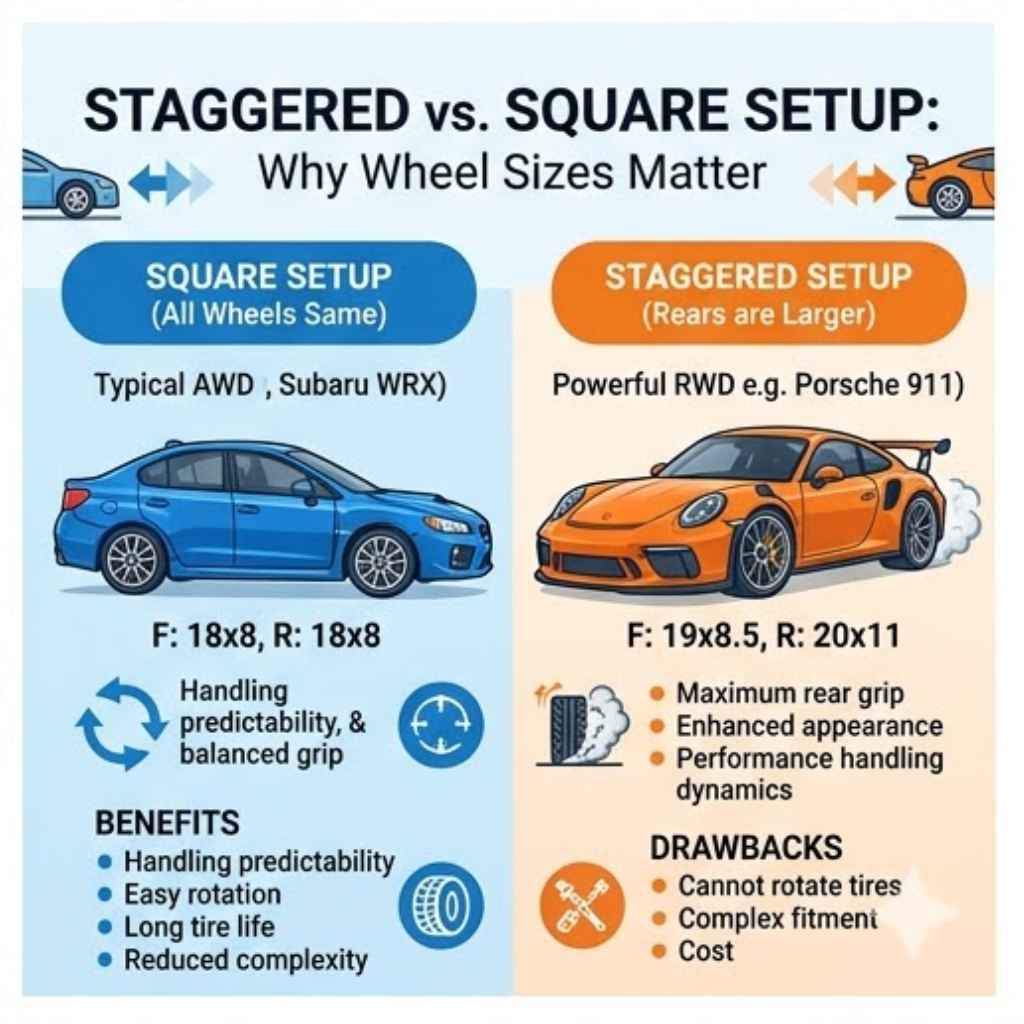
Staggered Fitment is the term for this. It means the front and rear wheels are different. Usually, the rear wheels are wider than the front.
This setup helps with a few things. First, more rubber on the road in the back means better grip. This is important for acceleration, especially for rear-wheel-drive cars.
It also helps with how the car handles in corners. The wider rear tires can provide more lateral grip. This means the car can lean into turns without sliding as much.
Some drivers even feel it makes the car more predictable when pushed hard. It’s a fine-tuning of how the car behaves.
Sometimes, the wheels might be different in diameter too, though this is less common for basic staggered setups. It’s usually about width. A wider tire can be mounted on a wider wheel rim.
All-Wheel Drive (AWD) Systems
This is an interesting case. Many AWD cars have the same size wheels. This is because the system needs to send power evenly to all four wheels.
If the wheels are different sizes, it can confuse the AWD system.
However, some high-performance AWD cars might use different sizes. This often comes with a very sophisticated AWD system. These systems are designed to handle the difference.
The goal is still performance. The extra grip from wider rear tires can be beneficial.
But for most regular AWD cars, keeping all wheels the same size is key. It ensures the traction control and four-wheel-drive systems work as intended. If you swap out wheels on an AWD car, you must be very careful to keep the diameters the same.
Even a small difference can cause issues.
Towing and Hauling Vehicles
While not always about different front vs. rear sizes, some trucks and heavy-duty vehicles might have different wheel setups. Sometimes, the rear axle might have dual wheels.
These are called “duallies.”
This is for pure load-carrying capacity. Two wheels on each side in the back spread the weight. This setup is essential for heavy trailers and large payloads.
These dual wheels are usually the same size as the front wheels, but their presence changes the overall wheel configuration.
The main idea here is strength and load distribution. The wheels and tires have to handle a lot of stress. So, while not a “different size” in the performance sense, it’s a different number of wheels per side.
Electric Vehicles (EVs)
EVs are a newer category. Carmakers are always experimenting with them. Some high-performance EVs might adopt staggered wheel setups for better handling and grip, similar to sports cars.
The instant torque of electric motors can benefit from maximum traction.
On the other hand, many EVs are designed for efficiency. They might use narrower tires and specific wheel sizes to reduce rolling resistance. This helps extend the battery range.
So, you might see EVs with very standard wheel setups, or sometimes unique ones focused on aerodynamics and efficiency.
The choice for EVs often balances performance, range, and sometimes, a sleek, modern look. It’s an evolving area, and we’ll likely see more variety in wheel designs as EV technology progresses.
Aftermarket Modifications
This is where things can get really wild. People love to customize their cars. One of the most popular ways is changing the wheels and tires.
Some owners will deliberately choose different sized wheels for their car. They might do this for looks, wanting a more aggressive stance. Or they might be chasing better performance, trying to replicate a staggered setup on a car that didn’t come with one.
However, this is also where you can run into problems. Putting on the wrong size wheels can affect your car’s:
Speedometer readings: If the tire circumference changes, your speed will be off. Odometer readings: This also gets inaccurate.
Safety systems: ABS and traction control rely on wheel speed sensors. Different sizes can trick them. Suspension and drivetrain: Unmatched wheels can put extra stress on parts.
Fuel economy: Incorrect sizes can hurt efficiency. Handling: The car might not drive as expected or safely.
It’s crucial for anyone modifying their car to understand the engineering behind wheel sizes. Always stick close to the manufacturer’s recommendations or consult with a professional.
Quick Scan: When Wheels Might Differ
1. Sporty Cars
- Often have wider rear wheels.
- Helps with grip and cornering.
2. Heavy Trucks
- Can have dual wheels in the back.
- For carrying heavy loads.
3. Modified Cars
- Owners choose different sizes.
- Can be for looks or performance.
- Must be done carefully.
Understanding Wheel and Tire Size Numbers
Car wheels and tires have codes on them. These codes tell you their size. It’s helpful to know what these numbers mean.
This way, you can tell if your wheels are supposed to be different.
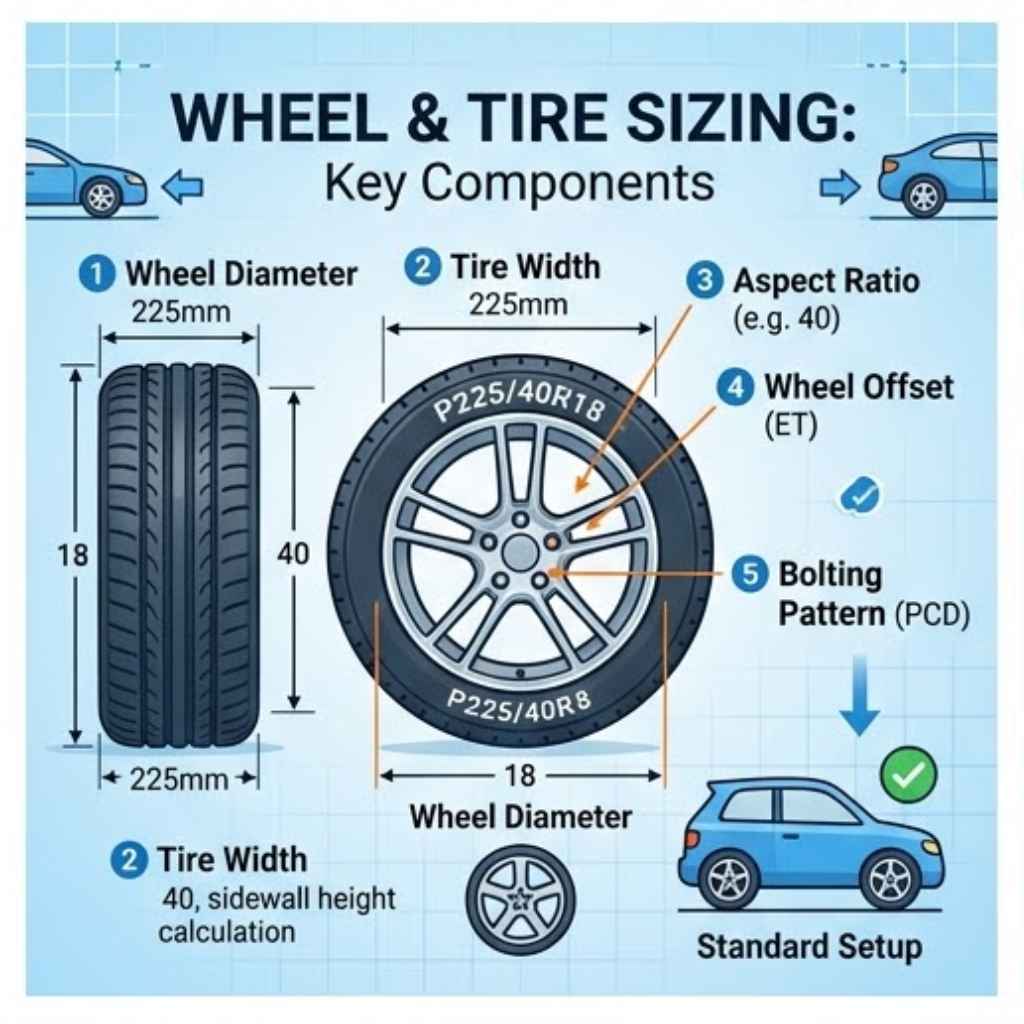
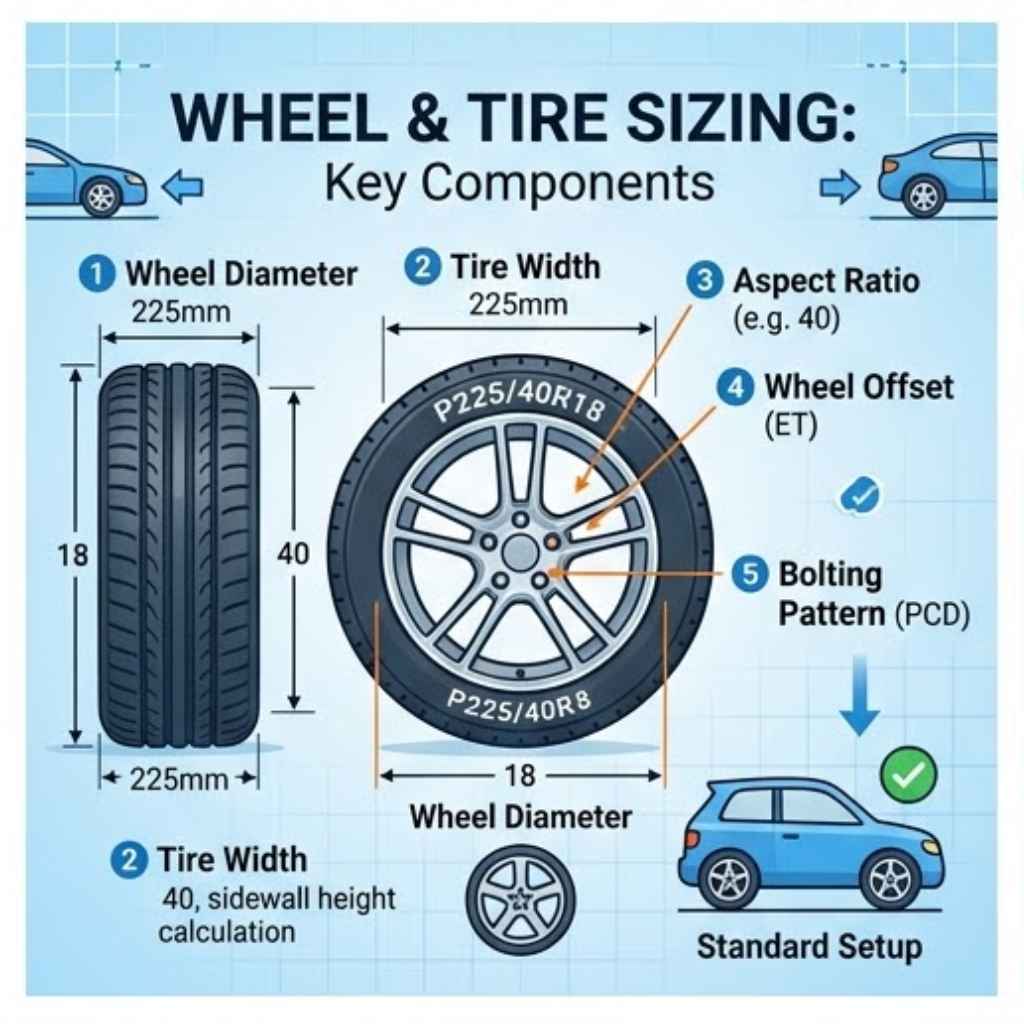
A typical tire size looks like this: P225/55R17. Let’s break it down:
- P: Stands for Passenger tire.
- 225: This is the tire’s width in millimeters. It’s measured from sidewall to sidewall. A bigger number means a wider tire.
- 55: This is the aspect ratio. It’s the tire’s sidewall height as a percentage of its width. So, 55 means the sidewall height is 55% of 225mm. A lower number means a shorter sidewall.
- R: Means Radial construction.
- 17: This is the wheel (rim) diameter in inches. This number must match the wheel you are putting the tire on.
When carmakers decide on wheel sizes, they consider the overall diameter of the tire. The tire sits on the rim and has a sidewall height. The sum of the rim diameter and two times the sidewall height gives the total tire diameter.
Total Tire Diameter = Rim Diameter + (2 * Sidewall Height)
For cars with staggered setups, the rim diameter might be the same, but the width (225) and aspect ratio (55) will differ between front and rear. This leads to tires that look different and have different footprints on the road.
For example, a sports car might have:
- Front: P245/40R18
- Rear: P275/35R18
Here, the rim diameter (18) is the same. But the rear tire is wider (275mm vs 245mm) and has a slightly shorter sidewall (35% aspect ratio vs 40%). This creates the staggered look and feel.
It’s vital that the overall diameter of the tires is as close as possible, especially on AWD vehicles. A significant difference can cause the issues mentioned before. Even on front-wheel-drive or rear-wheel-drive cars, keeping diameters similar is usually best for balanced handling.
What This Means for Your Car
So, what does all this mean for you and your car? It’s good to be aware of what your car came with.
When is it Normal for Wheels to Be Different Sizes?
It’s normal and intended for certain types of cars. If you have a sports car, a performance sedan, or a certain type of truck, different wheel sizes might be part of its design. The car’s manual will list the correct sizes for front and rear.
Check your owner’s manual. This is the best place to find out what your car is supposed to have. It will list the specific tire sizes for the front and rear axles.
Also, look at the car itself. If it looks like it has a wider stance in the back, it’s probably designed that way. You can often see that the rear wheels stick out a bit more or have much larger tires.
When Should You Worry?
You should worry if you notice differences in wheel size on a car that is NOT designed for it. This includes:
- Most standard sedans, hatchbacks, and SUVs: These typically have all four wheels the same size for optimal balance and safety.
- Any car where the difference seems accidental: If one tire looks worn out and
- If you are getting error lights on your dashboard: Especially ABS or traction control lights, this can be a sign that wheel speed sensors are getting confused by different wheel sizes.
- If the car handles strangely: Pulling to one side, vibrating, or feeling unstable can be related to mismatched wheels.
If you’re unsure, always err on the side of caution. Consult a qualified mechanic or tire specialist.
Simple Checks You Can Do
Here are easy steps to check your wheels:
- Read the Tire Sidewall: Look at the numbers (e.g., 225/55R17) on all four tires. Compare them. If they are identical, all your tires are the same size. If they differ in width (first number) or aspect ratio (second number), note the difference.
- Check the Owner’s Manual: As mentioned, this is your definitive guide. It will list the factory-specified sizes.
- Look at the Car’s Door Jamb Sticker: Many cars have a sticker on the driver’s side door jamb. This often lists the recommended tire sizes.
- Walk Around the Car: Look at the front and rear wheels from a distance. Do they look noticeably different in size or width?
Remember, even a small difference in overall tire diameter can cause issues. It’s not just about the wheel rim size (like 17-inch vs 18-inch), but the entire tire and wheel combination.
Myth vs. Reality: Wheel Sizes
Myth: All cars must have all four wheels the same size.
Reality: Many performance cars are designed with different front and rear wheel sizes (staggered fitment) for better grip and handling.
Myth: If my car has different sized wheels, it’s always a problem.
Reality: It’s only a problem if the car wasn’t designed for it, or if the wrong sizes were installed. Many sports cars use different sizes intentionally.
Myth: The wheel rim size (like 18-inch) is the only thing that matters.
Reality: The tire’s width and sidewall height are also critical. The overall diameter of the tire and wheel combo is what impacts the car’s systems and handling.
Quick Tips for Wheel and Tire Choices
If you’re thinking about changing your wheels or tires, here are some simple guidelines. These aren’t hard rules, but good points to keep in mind.
- Stick to Manufacturer Specs When Possible: Your car’s engineers spent a lot of time figuring out the best setup. Unless you have a specific reason and know what you’re doing, stick close to the original sizes.
- Use a Tire Size Calculator: If you want to change sizes, use online tools. These can help you compare different tire sizes and see how their overall diameters match up.
- Consult a Professional Tire Shop: These folks know their stuff. They can advise you on what sizes will fit your car and work correctly with its systems.
- Consider the Whole Package: Don’t just think about the wheel. The tire choice is equally important. The type of tire (all-season, performance, winter) and its size affect everything.
- Be Careful with AWD Cars: If your car has all-wheel drive, be extra cautious. Keeping all four tires the same diameter is usually the safest bet.
- Understand the Trade-offs: Bigger wheels and wider tires might look cool, but they can affect ride comfort, fuel economy, and wear and tear on your car.
Frequently Asked Questions About Car Wheel Sizes
Are all tires on a car supposed to be the same size?
For most standard cars, yes. However, many sports cars and performance vehicles are designed with different sized front and rear tires. This is called a staggered fitment and is done for better performance and handling.
Always check your car’s owner’s manual for the correct specifications.
What happens if I put different sized tires on my car?
If your car wasn’t designed for different sized tires, it can cause problems. Your speedometer and odometer might become inaccurate. Safety systems like ABS and traction control could malfunction.
It can also put extra stress on your car’s drivetrain and suspension, leading to faster wear and tear. Handling can also become unpredictable.
Can I put larger wheels on my car?
You often can, but it’s not always recommended. Larger wheels usually mean lower-profile tires. This can change how your car rides and handles.
It’s important that the overall diameter of the new tire and wheel combination is similar to the original. Always consult a professional or your owner’s manual before making significant changes.
Is it okay to have different sized tires on the front and rear of an all-wheel-drive car?
Generally, it’s best to avoid this on most AWD vehicles. AWD systems often rely on all four wheels rotating at similar speeds. Different tire sizes can confuse the system, potentially causing damage or affecting performance.
Some high-performance AWD cars are engineered to handle staggered sizes, but this is not the norm.
How do I know if my car has a staggered wheel setup?
Check your owner’s manual, as it will specify the front and rear tire sizes. Visually, cars with staggered setups often have a wider track or noticeably larger tires in the rear compared to the front. This is common on sports cars and performance coupes or sedans.
What is a “staggered fitment” for wheels?
A staggered fitment means the front wheels and tires are different sizes than the rear wheels and tires. Typically, the rear wheels are wider than the front. This setup is common on performance vehicles to enhance traction, acceleration, and cornering ability.
Final Thoughts on Wheel Sizes
So, to wrap things up, the answer to “are all four wheels on a car the same size?” is: not necessarily. While many cars come with identical wheels all around, there are specific reasons why different sizes are used. Performance, handling, and even looks can lead to different front and rear wheel setups.
Knowing your car’s intended setup is key. Always check your manual and consult experts if you plan to change anything. It’s all about keeping your car safe and performing its best.
Products related to this article
Sponsored / affiliate links. As an Amazon Associate I earn from qualifying purchases. I may earn additional commission from eligible campaigns.