How Much Does a Car Payment Cost on 30,000 Pounds?
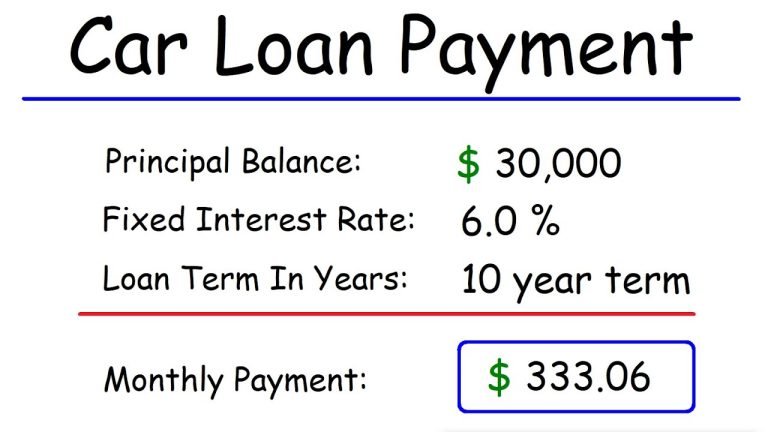
On a £30,000 car, monthly finance can land around £430 to £750, with the figure driven mainly by deposit, APR and term. with the figure driven mainly by deposit, APR and term. Put in a larger deposit or stretch the term, and the payment drops, but the interest total usually rises. Miss that trade-off and you can pick a deal that looks cheap each month yet costs much more overall. This guide breaks down HP and PCP examples across deposits, APRs and terms so you can pick an affordable structure.
How APR, deposit, and loan length affect payments
The payment comes from four parts: the amount you borrow, the APR, the term length, and any deposit you pay upfront. Representative APR is the sample rate lenders use in ads, but your actual offer depends on your credit profile and may sit above or below it.
APR and credit profile
The monthly figure shifts most when APR changes. On the same £30,000 car, a lower-rate offer can save hundreds across the agreement, while a higher-rate offer raises both the monthly payment and the total interest. Your credit score affects the rate offered, but it does not lock in any one APR.
Deposit size and amount financed
A deposit cuts the amount financed. Put £3,000 down on a £30,000 car, and about £27,000 is financed before interest and fees. No deposit means you finance the full £30,000, which lifts the monthly instalment and usually the total interest too.
Term length and total interest
A longer car loan term lowers the monthly payment but raises the total interest paid. A shorter term does the opposite: more per month, less interest overall. On the same loan amount and APR, the monthly figure can look far easier on 60 months than on 36 months, yet the longer deal usually costs more end to end.
Car payment repayment table
The table below shows a £30,000 car with two deposit levels, three APR bands, and three terms. The figures use standard amortising loan math, so the monthly payment, total repaid, and total interest all tie back to the same loan amount and term. Fees are excluded.
| Deposit | APR | Term | Monthly payment | Total repaid | Total interest |
|---|---|---|---|---|---|
| £0 | 6.9% | 36 months | £920 | £33,120 | £3,120 |
| £0 | 6.9% | 48 months | £723 | £34,704 | £4,704 |
| £0 | 6.9% | 60 months | £591 | £35,460 | £5,460 |
| £0 | 9.9% | 36 months | £949 | £34,164 | £4,164 |
| £0 | 9.9% | 48 months | £756 | £36,288 | £6,288 |
| £0 | 9.9% | 60 months | £643 | £38,580 | £8,580 |
| £0 | 12.9% | 36 months | £1,020 | £36,720 | £6,720 |
| £0 | 12.9% | 48 months | £819 | £39,312 | £9,312 |
| £0 | 12.9% | 60 months | £698 | £41,880 | £11,880 |
| £3,000 | 6.9% | 36 months | £828 | £29,808 | £2,808 |
| £3,000 | 6.9% | 48 months | £651 | £31,248 | £4,248 |
| £3,000 | 6.9% | 60 months | £532 | £31,920 | £4,920 |
| £3,000 | 9.9% | 36 months | £854 | £30,744 | £3,744 |
| £3,000 | 9.9% | 48 months | £680 | £32,640 | £5,640 |
| £3,000 | 9.9% | 60 months | £579 | £34,740 | £7,740 |
| £3,000 | 12.9% | 36 months | £918 | £33,048 | £6,048 |
| £3,000 | 12.9% | 48 months | £737 | £35,376 | £8,376 |
| £3,000 | 12.9% | 60 months | £628 | £37,680 | £10,680 |
Say your lender quotes 9.9% APR and you want the monthly bill under £700. A £3,000 deposit with a 48-month term brings the payment to about £680 a month. Keep the same APR and term with no deposit, and the payment rises to about £756.
How much deposit do you need?

There is no fixed minimum deposit for a £30,000 car, but £3,000 changes the finance picture materially. It trims the borrowed amount, lowers the monthly payment, and reduces the total interest charged over the term. A trade-in can do the same job if the dealer accepts it as part of the down payment.
Example deposit amounts on £30,000
At 9.9% APR over 48 months, moving from a £0 deposit to a £3,000 deposit can cut the monthly payment from about £756 to about £680. At 6.9% APR over 60 months, the same deposit cuts the payment from £591 to £532. The bigger the deposit, the more room you create in the monthly budget.
Using part-exchange as deposit
A part-exchange can work like cash down. If your current car is worth £3,000 and you put that value toward the next purchase, the lender only finances £27,000 before interest. That matters because the finance charge applies to a smaller balance, not because the dealer treats the trade-in as a separate discount.
What a bigger deposit changes most
A larger deposit changes two things at once: it lowers the monthly payment and it cuts the total interest. It does not remove the effect of APR or term length. A long term at a high APR can still be expensive even if the deposit is sizeable.
-
Set your maximum monthly target. Start with the figure you can pay without strain, then work backward to the deposit, APR and term that fit it. That keeps you from fixating on the sticker payment alone.
-
Check your trade-in value. If you already own a car, use its part-exchange value as part of the deposit. Even a few thousand pounds can move the payment meaningfully on a £30,000 purchase.
-
Compare the total repaid. A lower monthly bill is not automatically the better deal. Compare the total repaid, not only the instalment, so you can see the cost of stretching the term.
What APR gives a manageable payment?
A manageable APR is the one that fits both the monthly budget and the total cost you are willing to pay. On a £30,000 car, 6.9% APR, 9.9% APR and 12.9% APR produce very different monthly figures, especially once you stretch the term. The right rate is the lowest one you can qualify for on acceptable terms.
Representative APR and real offers
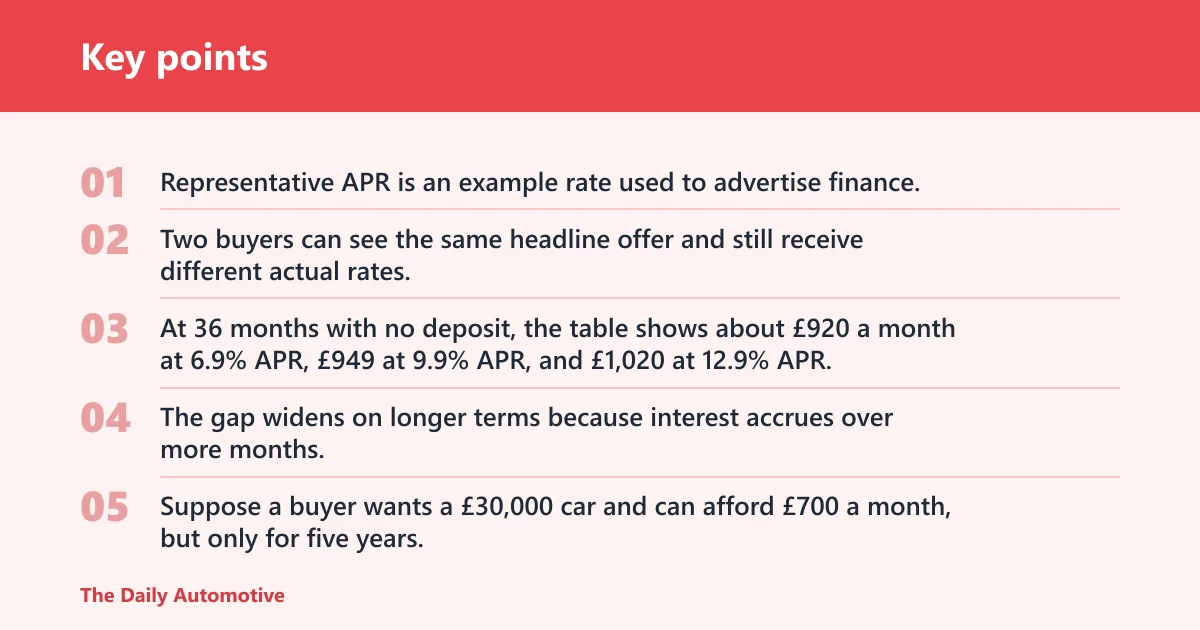
Representative APR is an example rate used to advertise finance. It is not a promise that every borrower will get the same figure, and it can vary by credit profile. Two buyers can see the same headline offer and still receive different actual rates.
Low-, mid-, and higher-rate examples
At 36 months with no deposit, the table shows about £920 a month at 6.9% APR, £949 at 9.9% APR, and £1,020 at 12.9% APR. The gap widens on longer terms because interest accrues over more months. That is why the monthly headline can mislead if you ignore the rate behind it.
Suppose a buyer wants a £30,000 car and can afford £700 a month, but only for five years. At 9.9% APR with no deposit, the payment is about £643. At 12.9% APR, it rises to about £698. That leaves little room for fees, so the quoted APR becomes the difference between fitting the budget and missing it.
Why the monthly figure can mislead
A low payment can hide a high total cost. Stretch the term to hit the number you want, and you often pay more interest overall. Accept a higher APR because the monthly figure looks manageable, and the total repayable can jump sharply even when the payment barely changes.
PCP vs HP on £30,000
PCP usually gives a lower monthly payment because part of the value is held back as a final balloon payment. HP uses fixed monthly repayments that clear the full balance over the term, so the payments are higher but ownership arrives automatically after the final instalment. PCP also brings mileage limits and equity risk if the car is worth less than the balloon at the end.
How PCP lowers the monthly payment
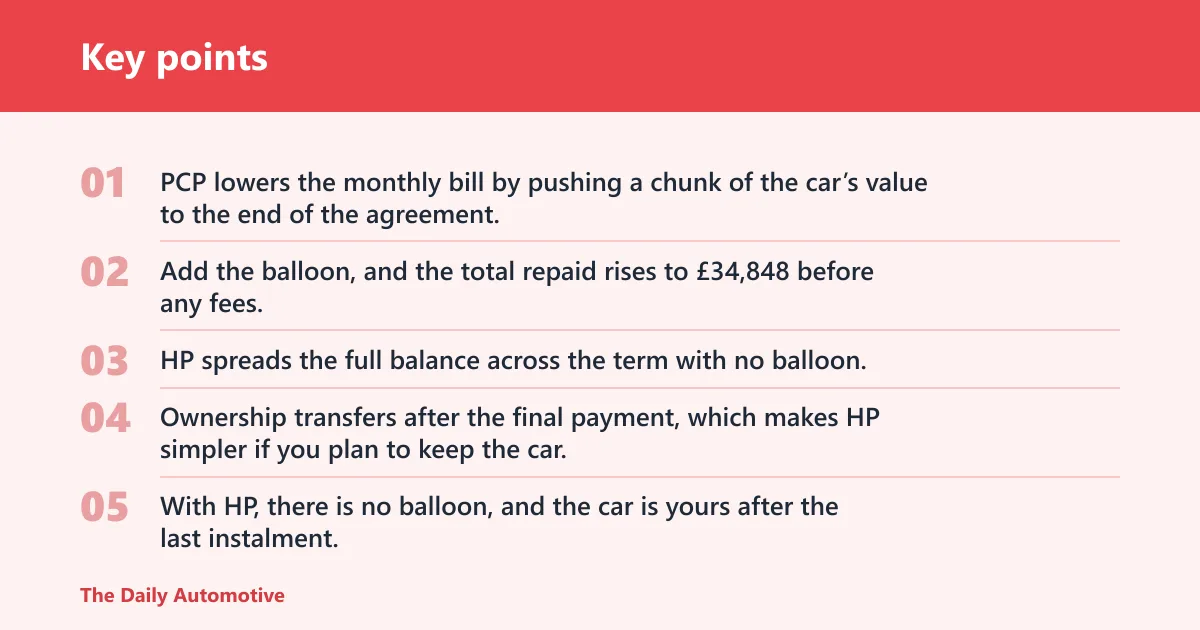
PCP lowers the monthly bill by pushing a chunk of the car’s value to the end of the agreement. In a simple illustration on a £30,000 car with a £3,000 deposit, 48 months, 9.9% APR, and a £12,000 balloon, the monthly payment is about £476. Add the balloon, and the total repaid rises to £34,848 before any fees.
How HP builds ownership over time
HP spreads the full balance across the term with no balloon. Using the same £30,000 car, a £3,000 deposit, 48 months, and 9.9% APR, the monthly payment is about £680 and the total repaid is about £32,640 before fees. Ownership transfers after the final payment, which makes HP simpler if you plan to keep the car.
Balloon payment versus final ownership
With PCP, you usually have three choices at the end: pay the balloon, refinance it, or hand the car back if the agreement allows. That flexibility is useful, but it also means you may not own the car unless you settle the final lump sum. With HP, there is no balloon, and the car is yours after the last instalment.
A common first-timer mistake is judging a £30,000 car deal by the advertised payment alone without checking the loan term or interest rate. If you want outright ownership, the real comparison is the full repayment path, not just the monthly line.
What changes the payment most?
APR changes the payment most, then term length, then deposit size. Fees and optional extras matter too, but they usually sit behind those three drivers. If you change more than one of them at once, the payment can move sharply in either direction.
-
Compare APR first. A better rate usually beats small changes in deposit or term. On a £30,000 car, the difference between 6.9% and 12.9% APR is large enough to alter the monthly bill by well over £100 on some terms.
-
Then test the term. Moving from 36 to 60 months reduces the payment, but the total interest rises. Use the shorter term if you can afford it without stretching the rest of your budget.
-
Then adjust the deposit. A bigger down payment lowers the financed balance and can trim both the instalment and the interest. That helps most when the rate is already competitive.
-
Add fees last. Arrangement fees, optional warranty products and other extras increase the total repayable. Keep them separate from the finance maths so you can see the real borrowing cost.
How long should you finance a £30,000 car for?
For most buyers, 36 to 48 months is the cleaner balance between payment size and total interest. A 24-month deal can be expensive monthly, while 60 or 72 months can make the instalment easier but leaves you paying interest for longer. The right term depends on how much room you have in the monthly budget.
24, 36, 48, 60, and 72 months
Among the terms shown here, 36 months gives the lowest interest cost for the same APR and deposit, while 60 months gives the lowest monthly payment. Longer still can help cash flow, but it increases the chance that you pay more than the car is worth for longer, especially if depreciation is steep.
Monthly cost versus total interest
A longer term spreads the balance across more payments, so the instalment falls. The trade-off is more months of interest. On a £30,000 car at 9.9% APR with no deposit, the 36-month payment is about £949 and the total interest is £4,164, while the 60-month payment is about £643 and the total interest is £8,580.
When a longer term starts to hurt
Longer terms start to hurt when the lower payment tempts you into paying much more total interest, or when the car’s value falls faster than the loan balance. That is where negative equity can appear, especially on PCP or on any long finance deal with a small deposit.
Frequently asked questions
How much is a car payment on £30,000?
On a £30,000 car, the monthly payment changes most with APR, term, and deposit. In the examples above, the payment ranges from about £532 to £1,020 depending on those choices. A bigger deposit and a longer term cut the monthly bill, but the longer term usually raises total interest.
What is the monthly payment on a £30,000 car loan?
There is no single monthly payment for a £30,000 car loan because the payment depends on the amount financed, the APR, and the term length.
How much deposit do I need for a £30,000 car?
You do not need a fixed deposit, but any deposit helps because it reduces the amount borrowed. A £3,000 deposit is a clear example: on the same loan structure, it cuts the monthly payment and lowers total interest compared with no deposit. A trade-in can do the same job if accepted as part of the deal.
What APR gives a manageable payment on £30,000?
The most manageable APR is the lowest one you can qualify for on terms you can live with. On the examples here, 6.9% APR keeps payments lower than 9.9% or 12.9%, but the final offer depends on credit profile. Compare the full repayment, not only the headline monthly figure.
What is the total cost of financing a £30,000 car?
The total cost includes the deposit, every monthly instalment, any balloon payment on PCP, and any fees or optional extras. On the HP example above, a £3,000 deposit plus £32,640 in repayments equals £35,640 before fees. On the PCP example, the same deposit plus payments and balloon comes to £37,848 before fees.
Products related to this article
Sponsored / affiliate links. As an Amazon Associate I earn from qualifying purchases. I may earn additional commission from eligible campaigns.