How Much Does a Convertible Car Seat Cost?
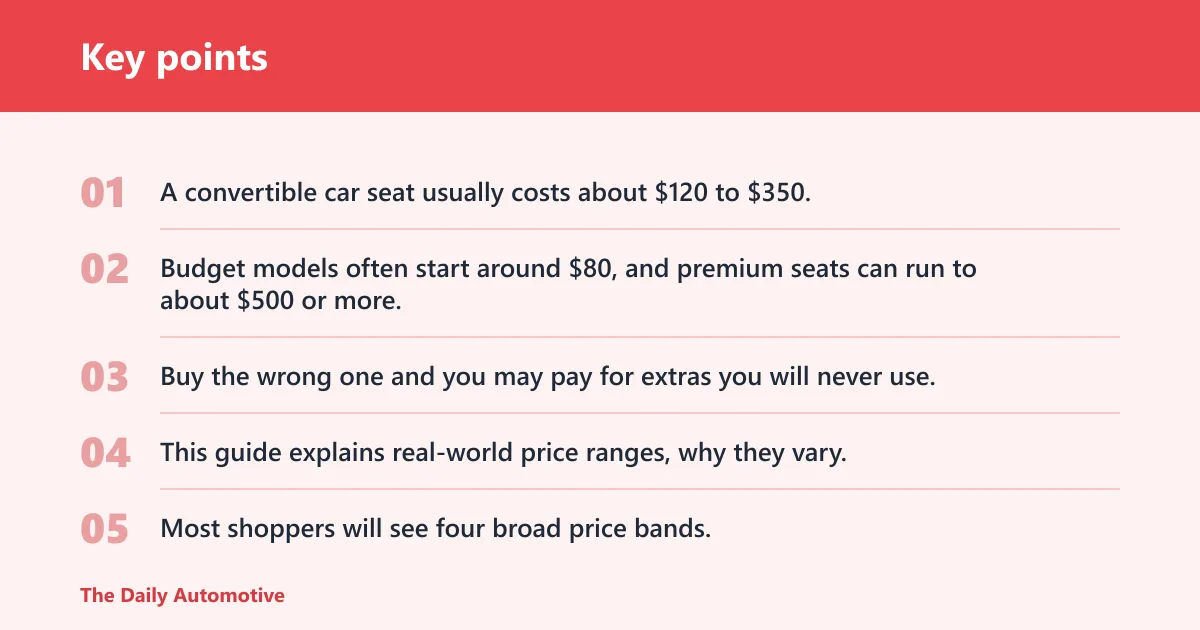
A convertible car seat usually costs about $120 to $350. Budget models often start around $80, and premium seats can run to about $500 or more, depending on size, features, and reported crash-performance results. Buy the wrong one and you may pay for extras you will never use, or spend too little on a seat that is harder to install or outgrown sooner. This guide explains real-world price ranges, why they vary, and when higher prices do or do not buy better value.
Convertible car seat prices at a glance


Price bands from budget to premium
Most shoppers will see four broad price bands. Budget seats keep the sticker price low and usually cut comfort, width adjustments, or convenience features. Midrange seats balance price with easier installation and longer rear-facing limits. Premium seats cost more because they add heavier frames, rotating hardware, or more advanced fit and install aids.
What usually changes as the price rises
Price usually rises when a seat offers longer rear-facing limits, easier installation hardware, more adjustability, or a rotating base. Some seats also cost more because they are wider, heavier, or built with higher-end materials. The sticker price is only part of ownership cost. You also need to think about how long the seat lasts before expiration, and whether you will need a second seat later.
Where newborn-ready pricing starts
Convertible seats that can begin with a newborn usually start near the low end of the category, but the exact starting point changes with harness inserts, minimum weight limits, and recline settings. CompareBabyStuff notes convertibles begin at 4–5 pounds for newborn use. That does not mean every low-cost seat fits every newborn or every vehicle well.
What a convertible car seat includes
A convertible car seat is a rear-facing-to-forward-facing seat with straps. You usually buy one to replace an infant seat once the child outgrows the infant bucket, or to start with one seat that can last through more than one stage. Price matters, but weight limits, height limits, expiration date, and FMVSS 213 compliance matter more.
Rear-facing to forward-facing use
Convertible seats rear-face first, then switch to forward-facing strap mode later. Rear-facing is recommended as long as possible, within the seat’s stated limits and the child’s size. That is the basic value of the category: one shell for two stages.
Typical weight and height limits
Limits vary by model. A higher price does not always mean higher limits, but it often buys more rear-facing space or easier use within those limits. A practical example is the Graco Extend2Fit, which Wirecutter says rear-faces to 50 pounds and allows LATCH use up to 45 pounds. Wirecutter also says it adds 5 inches of rear-facing legroom.
Expiration dates and FMVSS 213
Every seat sold legally in the U.S. must meet FMVSS 213, the federal car seat safety standard. That is a compliance requirement, not a ranking system. It does not tell you which seat is best. It only means the seat meets the minimum legal standard for sale. Most manufacturers also list an expiration date, and that date matters because materials age and rules change over time.
What does a convertible car seat cost?
For most families, the practical range is about $120 to $350. Budget seats can land under $100, while premium convertibles can push well above that. Rotating seats and all-in-one models can cost more still. The right budget depends on how long you plan to use the seat, how tight your back seat is, and whether convenience features will actually matter to your daily routine.
Average price range for most families
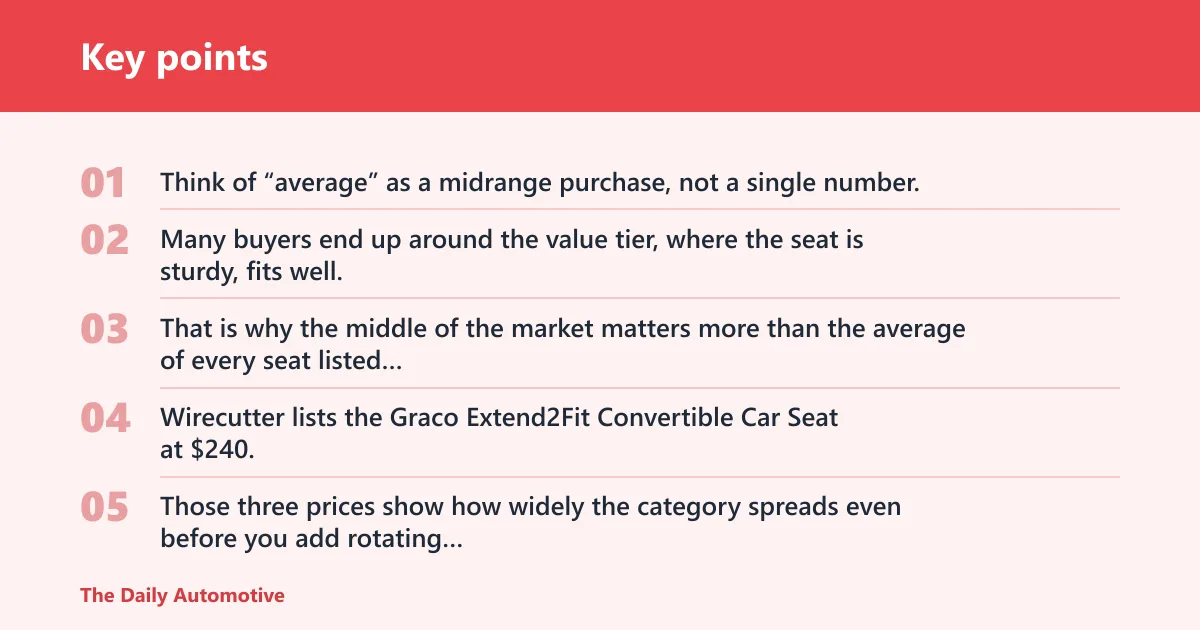
Think of “average” as a midrange purchase, not a single number. Many buyers end up around the value tier, where the seat is sturdy, fits well, and is easier to use than the cheapest options. That is why the middle of the market matters more than the average of every seat listed online.
Budget, value, and premium examples
Wirecutter lists the Graco Extend2Fit Convertible Car Seat at $240, the Britax Poplar Convertible Car Seat at $330, and the Clek Foonf Convertible Car Seat at $650. Those three prices show how widely the category spreads even before you add rotating models or all-in-one designs. The jump from one tier to the next is often about convenience and build, not a simple leap in legal safety.
Rotating seats and all-in-one pricing
Rotating convertibles usually sit in the premium band because the swivel mechanism adds hardware and complexity. All-in-one seats often cost more than pure convertibles because they add booster mode and a longer usable life. That longer life can help value, but it does not guarantee the cheapest ownership cost.
Convertible car seat price map
This price map shows the kind of seat most families find in each tier, the features that usually come with it, and the buyer profile that tends to fit best. The exact price can move by retailer, trim, and sale timing, but the bands below are a practical buying guide.
| Tier | Typical price band | Common features | Best fit for |
|---|---|---|---|
| Budget | About $59 to under $100 | Basic convertible shell, fewer convenience features, simpler materials, shorter on-paper feature list | Secondary seat, travel, tight budget, short-term use |
| Value | About $200 to $350 | Better fit helpers, longer rear-facing limits, easier adjustments, stronger everyday usability | Primary family seat, long-term use, parents who want fewer compromises |
| Premium | About $350 to $650 | Rotating hardware or heavy-duty construction, more premium materials, higher complexity | Parents willing to pay for convenience or a heavier, sturdier build |
| Rotating and all-in-one | About $99 to $400-plus, with some premium exceptions higher | Swivel design or booster mode, longer usable range, more parts, more modes | Families wanting fewer seat changes over time or easier buckling access |
Budget tier: Cosco Kids Scenera Extend and similar
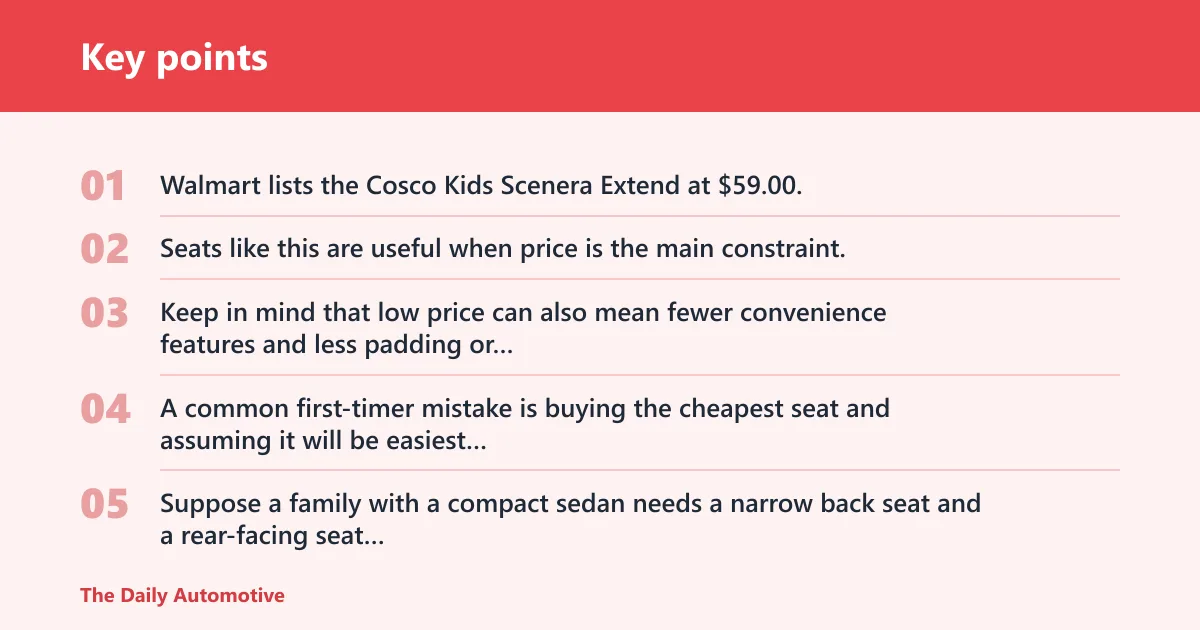
Walmart lists the Cosco Kids Scenera Extend at $59.00, which makes it a clear low-cost entry point in the convertible category. Seats like this are useful when price is the main constraint, or when you need a spare seat for a second car. Keep in mind that low price can also mean fewer convenience features and less padding or adjustability.
A common first-timer mistake is buying the cheapest seat and assuming it will be easiest to use. Suppose a family with a compact sedan needs a narrow back seat and a rear-facing seat for a 20-pound toddler. A budget model may fit the budget, but if installation is awkward in that car, the lower sticker price may not feel like a bargain.
Value tier: Graco Extend2Fit and britax Poplar
The Extend2Fit is a strong value reference because it adds rear-facing space and a long rear-facing limit. The Poplar is often positioned as a runner-up value pick for parents who want easier installation and are willing to pay a bit more.
These are the seats many shoppers compare when they want a primary seat that lasts and is not in the budget-only category. The extra money usually buys practical day-to-day gains, not magic. That is why they often sit in the middle of the market.
Premium tier: Chicco Fit360 clearTex and Clek Foonf
The same source lists the Chicco Fit360 ClearTex rotating convertible seat at $351.99. Its rotating design places it in the premium bucket, especially for families who value easier access for loading and unloading. The price includes the complexity of the swivel mechanism, not only the seat shell.
The same source lists the Clek Foonf Convertible Car Seat at $650. That puts it well into premium territory. It is also a heavy seat with an ultra-sturdy position in the market, so you are paying for a more substantial build and a different ownership profile than the average convertible.
Rotating and all-in-one seats
Rotating models usually cost more because the turn mechanism adds parts and weight. All-in-one seats add booster mode, which can stretch usefulness across more years. Graco’s 4Ever All-in-One is commonly discussed as a value-tier all-in-one, and Best Car Seat Hub says it is a top rated car seat. The same source lists the Graco Extend2Fit 3-in-1 Car Seat at $270, which shows how a longer-use model can still land near the middle of the market.
The same source lists the Safety 1st Grow and Go Sprint All-in-One at $99.00, which is a budget-friendly entry into the all-in-one category. That lower price can be attractive for a travel seat or a secondary car, but the lower starting price does not mean it will be cheaper than a separate infant seat plus booster in every family’s timeline.
Why some car seats cost more
Higher prices often come from features that are easier to feel every day than to see on a spec sheet. Longer rear-facing limits, better installation hardware, rotating mechanisms, and extra modes all add cost. Some of those features are worth paying for. Others only matter if they solve a real problem in your vehicle or routine.
Longer rear-facing limits
Seats that keep children rear-facing longer often cost more because they need more shell height, more legroom, or a stronger frame. That can be useful if you want to keep a child rear-facing as long as possible within the seat’s stated limits. The Graco Extend2Fit’s 50-pound rear-facing limit is a good example of this price driver.
Installation hardware and fit helpers
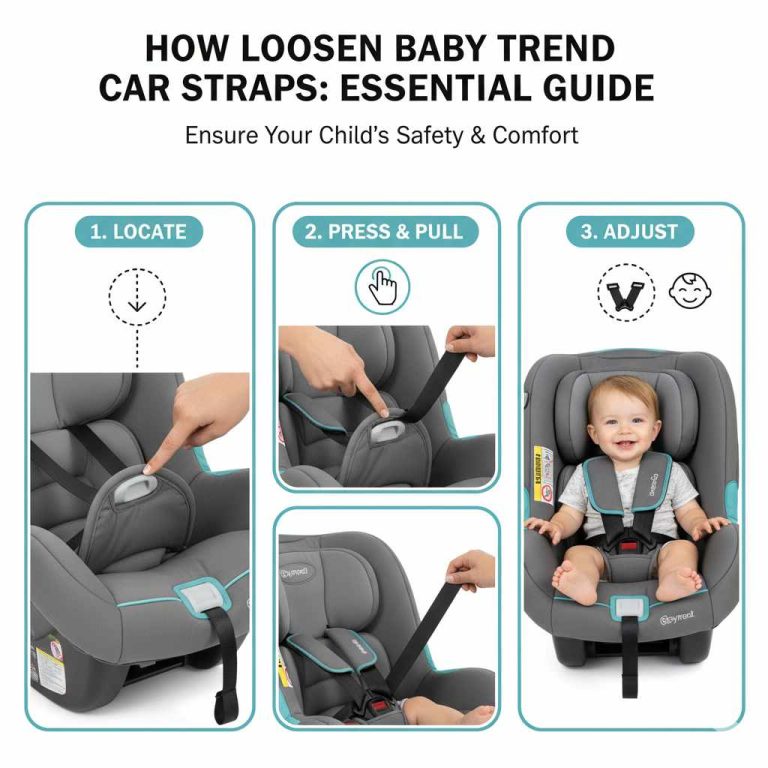
Features like LATCH, no-rethread straps, and better belt paths can raise the price because they reduce setup friction. That does not make installation automatic. You still need to follow both the car seat manual and the vehicle manual. Child restraints and aftermarket seat accessories must be allowed by both manuals, or they should not be used.
Rotating mechanisms and extra materials
Rotating seats cost more because the swivel base adds moving parts and material. Heavier shells and more complex assemblies also add cost. This is why a rotating convertible can land above a standard value seat even when both meet the same federal standard.
All-in-one mode changes
All-in-one seats add booster use, so the seat has to work across more stages. That broader design can justify a higher price, but it can also make the seat bulkier or more complex. The value depends on whether you will actually use the booster mode long enough to offset the higher purchase price.
Is a convertible car seat cheaper than buying separate seats?
Sometimes yes, sometimes no. A convertible can save money if it replaces an infant seat and gives you rear-facing and forward-facing use in one shell. But if you buy an all-in-one that costs more up front, or a premium convertible with features you do not need, the savings can shrink. The real answer depends on how long your family uses each stage.
When a convertible seat saves money
A convertible can be the cheaper path when you want one seat from newborn stage through preschool years and do not need a separate infant bucket. It can also save money if your child outgrows an infant seat early and you would otherwise buy a second major seat soon after.
When an all-in-one can be the better buy
An all-in-one may make sense when you want one purchase to cover strap use and booster use. That can reduce the number of full-size seat purchases later. Still, the starting price is higher than many convertibles, and that higher sticker price only pays off if you use the later modes long enough.
When separate infant and booster seats still make sense
Separate seats can still be the smarter budget path if you plan to reuse an infant seat briefly and then buy a low-cost booster later. This can be cheaper than a premium all-in-one, especially if you already own or are handed down a booster. The best answer is the one that matches your child’s timeline and your vehicle.
How much should you spend on a safe seat?
Safe is not a price tier. Every legal seat sold in the U.S. must meet FMVSS 213, and a lower price does not mean a seat is unsafe by default. Spend enough to get the right fit, the right limits, and an installation you can do correctly. After that, extra cost should buy something you will actually use.
Budget buyer profile
If you need a second seat, a travel seat, or a very low upfront cost, a budget model can make sense. The Cosco Kids Scenera Extend at $59.00 is the kind of seat that fits this profile. Just check that its limits and width fit your child and vehicle.
Midrange buyer profile
For a primary family seat, the midrange is often the sweet spot. This tier is often where shoppers find the best balance of price and daily use.
Premium buyer profile
Premium seats suit buyers who want rotating access, heavier construction, or a specific feature set and are willing to pay for it. That extra cost can be worthwhile if the feature truly solves a daily problem.
Used seat and expiration cautions
Used seats are risky unless you know the full history, have the manual, can verify the expiration date, and can check for recalls. Avoid any seat involved in a crash unless the manufacturer’s guidance says it may still be used. Also confirm that every accessory is approved by both the car-seat and vehicle manuals.
Free seats are possible, but availability depends on local programs, eligibility rules, and current supply. Families may find help through insurance or Medicaid-related programs, hospitals, local health departments, WIC offices, fire departments, or charitable distribution events. Do not assume a seat will be free everywhere or available on demand.
Insurance, Medicaid, and hospital programs
Some hospitals and public health programs help families who need a car seat before leaving with a newborn. Coverage rules vary by state and program, so ask the hospital social worker, maternity unit, or local Medicaid office what is available. The key question is whether the seat is provided directly, reimbursed, or supplied only through a class or voucher.
Local health departments and charities
Local health departments, community action agencies, churches, and nonprofits sometimes distribute seats during safety events or through referrals. These programs often have income rules or enrollment requirements. If you are counting on one, ask what documents are needed and whether the seat is new, refurbished, or tied to a class.
What to ask before you accept a free seat
- Is the seat new, and does it come with the manual?
- What is the expiration date?
- Has the seat ever been in a crash?
- Does your vehicle and your child’s size match the seat’s limits?
- Are any added accessories approved by both manuals?
Say your hospital offers a free seat through a discharge program, but your sedan has a shallow back seat and a sloped cushion. A seat that is free on paper can still be a poor fit if the recline angle, width, or install method does not work in your car. Fit comes before the deal.
Frequently asked questions
How much is a convertible car seat?
A convertible car seat usually costs about $120 to $350 for the middle of the market, with budget seats starting around $59 to under $100 and premium models reaching $500 or more. The right price depends on rear-facing limits, fit in your vehicle, and whether convenience features are worth the extra cost.
What is the average price of a convertible car seat?
The practical average is a midrange purchase, usually around the $200 to $350 band rather than one fixed number. That is where many families land because the seats often combine better installation aids, decent rear-facing limits, and everyday usability without the premium-price jump.
How much do newborn convertible car seats cost?
Newborn-ready convertible seats often start near the low end of the category, and CompareBabyStuff notes convertibles begin at 4–5 pounds for newborn use. Price still varies widely because newborn-capable seats may need extra inserts, more recline positions, or higher-end adjustability to fit a small baby well.
How much do rotating convertible car seats cost?
Rotating convertible seats usually cost more than standard convertibles because of the swivel mechanism and added hardware. A real-world example is the Chicco Fit360 ClearTex at $351.99. Many rotating models sit in the premium band, especially when the design is aimed at easier loading and unloading.
Is a convertible car seat cheaper than buying an infant seat and booster separately?
Often yes, but not always. A convertible can replace the infant seat stage and later the forward-facing harness stage, which may reduce the number of purchases. A premium convertible or all-in-one can still cost more up front, so the total depends on how long each seat stage will be used.
How should I spend on a safe convertible car seat?
Spend enough to get the right fit, the right weight and height limits, and an installation you can do correctly. Budget seats can be safe if they fit well and meet FMVSS 213, but midrange models often give the best mix of price and daily use. Pay more only when the extra feature solves a real need.
Products related to this article
Sponsored / affiliate links. As an Amazon Associate I earn from qualifying purchases. I may earn additional commission from eligible campaigns.
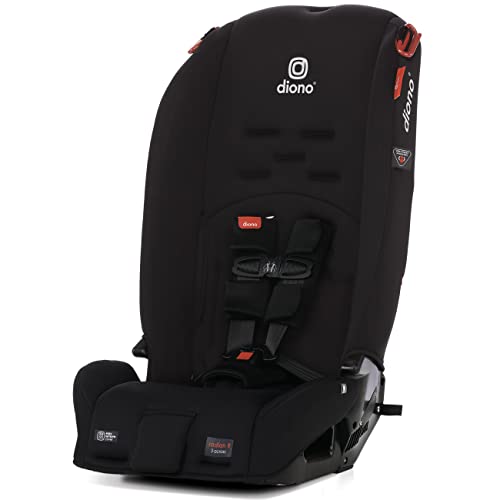 Diono Radian 3R, 3-in-1 Convertible Car Seat, Rear Facing & Forward Facing, 10 Years 1 Car Seat, Slim Fit 3 Across, Jet Black
 Seat Belt Covers for Kids, 2 in 1 Car Seat Strap Covers & Auto Seatbelt Pillow for Kids nap, Car Travel Pillow & Strap Pads Cushion for headrest, Neck/Shoulder Support, fit Child, Adult, Grey;