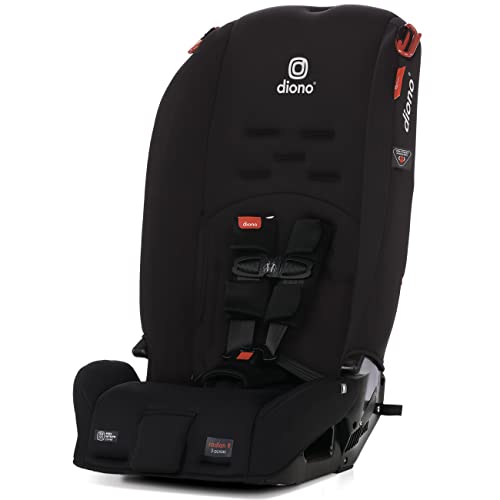
Infant Car Seat vs Convertible Car Seat: Which to Buy
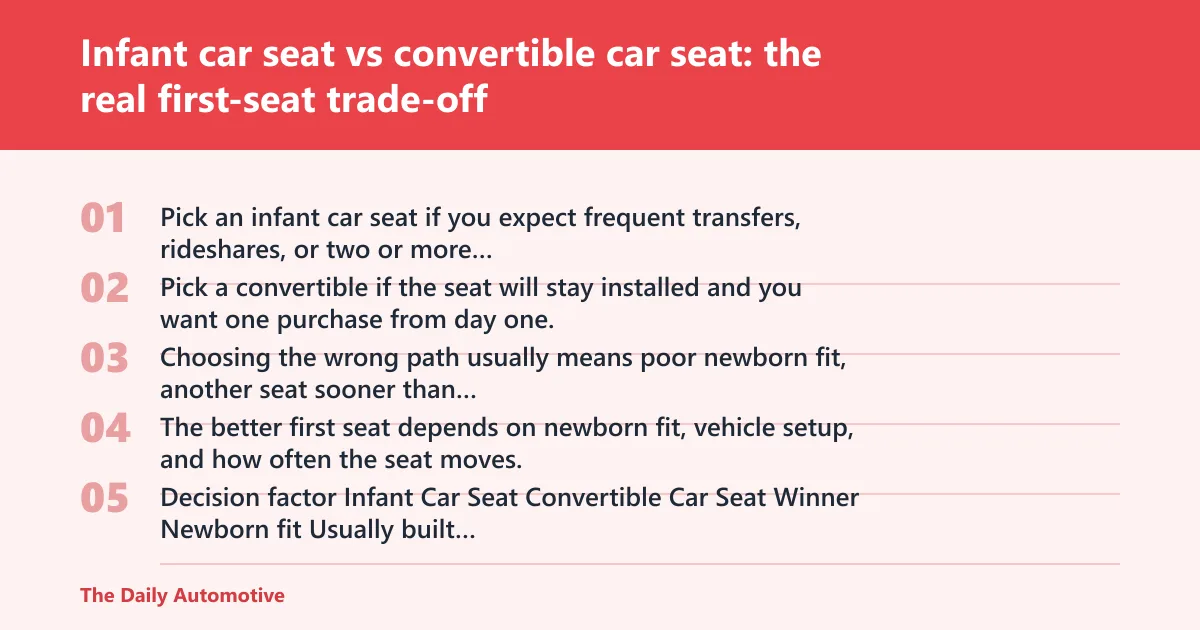
Pick an infant car seat if you expect frequent transfers, rideshares, or two or more cars in regular use, or if the easiest newborn fit matters most. Pick a convertible if the seat will stay installed and you want one purchase from day one. Choosing the wrong path usually means poor newborn fit, another seat sooner than planned, or skipping rides because installation is a chore. The better first seat depends on newborn fit, vehicle setup, and how often the seat moves.
Infant car seat vs convertible car seat: the real first-seat trade-off
| Decision factor | Infant Car Seat | Convertible Car Seat | Winner |
|---|---|---|---|
| Newborn fit | Usually built for newborns and smaller infants | Many models fit newborns poorly without careful checking | Infant Car Seat |
| Transfers between vehicles | Removable carrier with base; easier to move between vehicles | Stays installed; not meant to be carried out | Infant Car Seat |
| Service life | Usually outgrown earlier, often around 6-18 months or 1-2 years depending on model | Some models last between 3 and 10 years | Convertible Car Seat |
| Stroller use | Can attach to a stroller when compatible | No carrier function and no travel-system use | Infant Car Seat |
| Backseat fit | Usually easier in small cars because the carrier comes out | Can be bulkier and harder in tight back seats | Infant Car Seat |
Newborn fit is the first filter
An infant car seat is rear-facing only, and that matters because rear-facing is the preferred position for infants and toddlers for as long as the seat allows. The seat still has to fit the baby’s size, so I check minimum weight and height limits, strap position, and recline angle before anything else.
A convertible car seat can also start rear-facing, but many models do not fit newborns well. If the shell sits too upright, the straps land too high or too low, or the baby’s head drops forward, the seat may be allowed on paper and wrong in the car.
According to Infant Car Seat Vs. Convertible Car Seat – Safe in the Seat — Some convertible car seats last between 3 and 10 years.
What is the difference between an infant car seat and a convertible car seat?
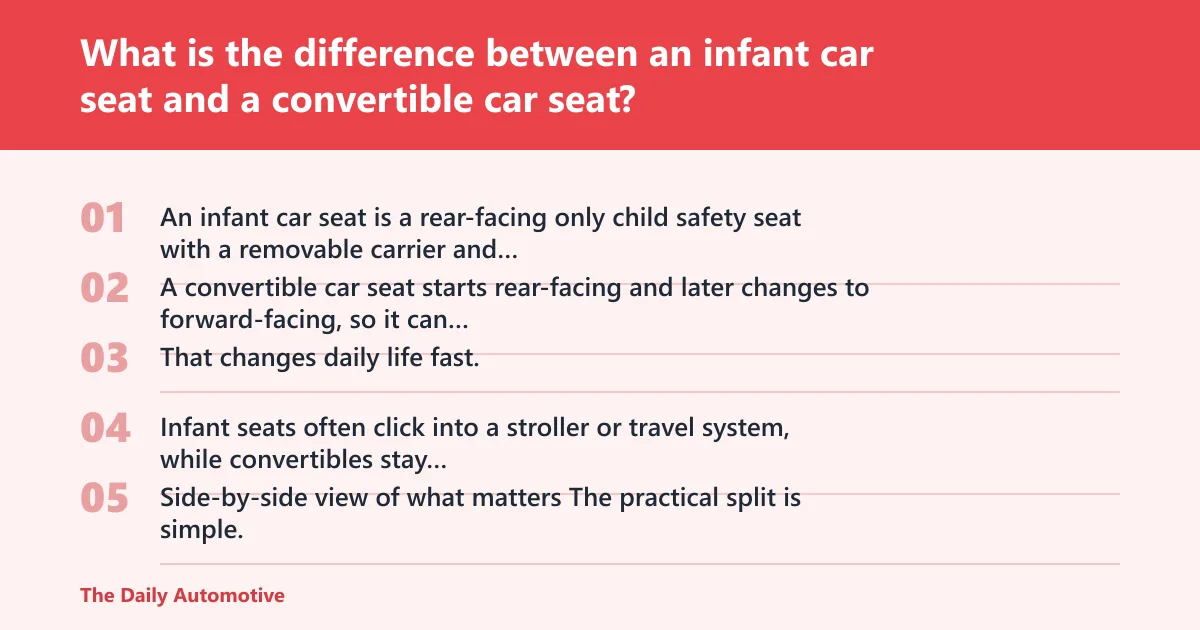
An infant car seat is a rear-facing only child safety seat with a removable carrier and a stay-in-car base. A convertible car seat starts rear-facing and later changes to forward-facing, so it can stay in use longer but does not carry out of the vehicle like a carrier.
That changes daily life fast. Infant seats often click into a stroller or travel system, while convertibles stay installed and are not part of a carry-and-stroll setup.
Side-by-side view of what matters
The practical split is simple. Infant seats are easier for moving a sleeping baby, switching between cars, and handling errands; convertibles are stronger on lifespan and long-term value, especially if the seat will live in one vehicle for years.
Why the base matters
A car seat base is installed in the vehicle and supports click-in, click-out use of the carrier. Base compatibility matters because bases can be vehicle-specific and base-specific, so one seat may not swap cleanly into every car in the household.
Travel systems need matching parts
A travel system is an infant seat paired with a compatible stroller. The carrier can click onto the stroller, but brand and adapter compatibility matter, so a stroller that “works with infant seats” in general may still not fit the exact model in the cart.

Can you put a newborn in a convertible car seat?
Yes, some newborns can ride in a convertible car seat if the manual explicitly allows birth use and the seat fits the baby correctly. The question is not the category itself; it is whether the recline angle, strap position, and minimum size limits work for that child in that vehicle.
What newborn fit actually means
Newborn fit is about body support, not just permission to start at birth. The seat should hold the baby at the right recline, the straps should sit in the correct slot for rear-facing use, and the baby should not slump so far forward that the chin falls toward the chest.
That chin-to-chest position can be a real concern, not just a vague warning. It can narrow the airway and usually shows up when the seat is too upright, the insert is wrong, or the baby is too small for that shell.
Why preemies need extra caution
Preemies and low birth weight babies may not get a good fit in some convertible seats. They may need more head and body support than the shell provides, and the recline angle becomes more sensitive because a small change can make the airway position worse.
Infant seats are often the better match here because they are built for newborns and smaller infants, and they are always used in the rear-facing position.
How do vehicle space and daily use change the choice?
Vehicle shape can matter more than the badge on the box. Small cars, shallow back seats, and steep seat cushions can make some convertibles hard to install at the right angle, while an infant seat can be easier to manage because the carrier comes out of the car.
Small cars and tight back seats
Bulkier convertibles can eat up front-seat space and make rear-facing installation awkward. In a compact car, that can become a daily annoyance if the driver and front passenger both need legroom.
Multiple vehicles and grandparents
Families who move the baby between two parents’ cars, a grandparent’s vehicle, or a nanny car usually feel the difference fast. Infant seats are easier to move between vehicles, while a convertible typically stays installed and may require a second seat for the other car.
Apartment living, rideshares, and stroller transfers
Apartment dwellers and rideshare users often benefit from an infant seat because the carrier can come out with the baby already buckled. If errands usually start with a stroller walk, the click-into-stroller setup also saves time and reduces handling of a sleeping newborn.
Do you need both an infant car seat and a convertible car seat?
Not always. Some families use only a convertible from birth if the manual allows newborn use and the fit checks out, while others start with an infant seat and switch later because, in practice, frequent transfers, stroller use, and vehicle changes can make the carrier more useful in the first months.
When buying both makes sense
Buying both can make sense when a newborn starts in an infant seat and later moves into a convertible once outgrown. It also fits families who want the easiest early months and are willing to spend more overall to get that convenience.
When one convertible from birth is enough
One convertible can be enough if the seat will stay in one car, the baby fits well from day one, and the household does not need frequent click-out use. That path often suits parents with one main vehicle and short, predictable trips.
First-year cost logic
The first-year math usually favors the infant seat only when its daily use is high. If an infant seat costs more up front and is replaced within a year or two, the value depends on how much the family uses the carrier, stroller connection, and extra-base convenience during that short window.
If a convertible costs less overall because it lasts 3 to 10 years, its long-term value can be better. But if newborn fit is poor, the “cheaper” seat can become a false economy once a second seat is needed.
Newborn-fit decision checklist

Use this checklist before shopping by brand or color. If several answers are “yes” in the infant-seat column, that path usually fits daily life better. If most answers point to a stable, single-car setup and the manual clearly allows birth use, a convertible may be the better start.
| Check | Yes or no | What it means |
|---|---|---|
| Baby is a preemie or low birth weight baby | Yes / No | Infant seats often fit better and need less guesswork on support and angle |
| Baby is within the manual’s minimum weight and height limits | Yes / No | If not, the seat is not ready for birth use |
| The seat manual explicitly supports use from birth | Yes / No | Birth use should be stated in the instructions, not assumed |
| Recline space exists in the back seat | Yes / No | Tighter cabins can make newborn recline harder to achieve |
| The straps land at the correct rear-facing slot | Yes / No | Wrong strap position can create a poor fit even if the seat is allowed |
| Baby’s head stays back, not chin-to-chest | Yes / No | Forward flop is a warning that the seat is not fitting well |
| You need to move the seat between vehicles often | Yes / No | Frequent swaps favor an infant carrier with a base |
| You want stroller clicks or a travel system | Yes / No | Infant seats are built for this use when the stroller is compatible |
| A grandparent or second driver will transport the baby often | Yes / No | Extra bases or a second seat can matter more than long-term lifespan |
| The seat will stay installed in one vehicle most days | Yes / No | A convertible’s stay-installed setup may be the cleaner fit |
- Check the baby’s size against the seat manual.
- Check whether the seat allows birth use.
- Check the back seat for recline space.
- Check how often the seat will move between vehicles.
- Check whether a stroller or travel system is part of daily life.
- Choose the seat type that fits those answers, not the one with the biggest marketing claim.
Why get an infant car seat vs convertible car seat
Get an infant car seat when the first months will involve lots of pick-up-and-go movement, rideshares, or a stroller routine that makes the carrier useful every day. It is also the safer practical bet when newborn fit is uncertain, because these seats are built for newborns and smaller infants.
Get a convertible car seat when you want one seat that stays in the car, fits from birth after a real fit check, and can later move forward-facing. That path often makes sense when convenience means fewer installs, not more carry-outs.
Pros and cons of infant car seat vs convertible car seat
An infant seat wins on newborn fit, carrying, and travel-system use, but it is outgrown sooner and usually costs more across the first years if replaced quickly. A convertible seat wins on lifespan and long-term value, but it is bulkier and can be a poor newborn fit if the baby is very small or the vehicle is tight.
Are infant car seats safer than convertible?
Neither type is automatically safer in every case. Correct installation, correct rear-facing use, and a fit that keeps the baby positioned properly matter more than the category label, though infant seats often make that correct newborn fit easier to achieve.
Infant carrier car seat vs convertible car seat
The carrier style changes the whole routine. An infant carrier can leave the car with the baby already restrained, while a convertible stays installed and requires the baby to be carried in and buckled there.
Choose Infant Car Seat if… / Choose Convertible Car Seat if…
Choose Infant Car Seat if your baby is a preemie or small newborn, you expect frequent transfers, you use rideshares, you want stroller clicks, or you have more than one vehicle to juggle. It is also the safer practical choice when you want the easiest path to a correct newborn fit.
Choose Convertible Car Seat if the seat will stay in one vehicle, the manual explicitly allows birth use, the baby fits the recline and strap geometry, and you want one purchase that can last for years. It is the better long-term value when daily carrying is not part of the plan.
Frequently asked questions
infant car seat vs convertible car seat for newborn
For a newborn, the deciding factor is fit, not category labels. Infant seats are built for newborns and smaller infants, while many convertibles need more careful checking of recline, strap height, and minimum size limits before they work well from day one.
what’s the difference between infant car seat and convertible car seat
An infant car seat is rear-facing only, removable, and used with a base. A convertible car seat starts rear-facing and later turns forward-facing, stays in the car, and usually offers longer service life but no carrier function.
can infants go in convertible car seats
Yes, infants can go in some convertible car seats if the manual allows birth use and the fit is correct. The baby still needs the right recline, strap position, and body support; otherwise, the seat may be allowed but still fit badly.
do i need infant car seat and convertible car seat
Not every family needs both. Many parents use an infant seat first for easy transfers and stroller use, then move to a convertible later, while others start with a convertible from birth if it fits the baby and stays in one vehicle.
are infant car seats safer than convertible car seats
Safety depends on correct use more than the category. An infant seat often makes newborn fit easier, which can reduce setup mistakes, but a well-installed convertible that fits the baby correctly can also be a solid choice from birth.
can you put an infant in a convertible car seat
Yes, but only if the seat manual says it can be used from birth and the baby fits the rear-facing setup well. Watch for chin-to-chest posture, wrong strap height, and a seat that sits too upright in the vehicle.
Products related to this article
Sponsored / affiliate links. As an Amazon Associate I earn from qualifying purchases. I may earn additional commission from eligible campaigns.