Best Car Key Shells for Worn Fobs
Choose the replacement shell that matches the failure point: full shell for cracked housings, button-pad repair for worn buttons, a blade-mount fix for broken key cradles, and a cosmetic cover for surface wear. A bad match leaves the fob loose, unresponsive, or unable to start the car. This guide shows how to pick the right shell by damage type, not just by vehicle model.
Verdict
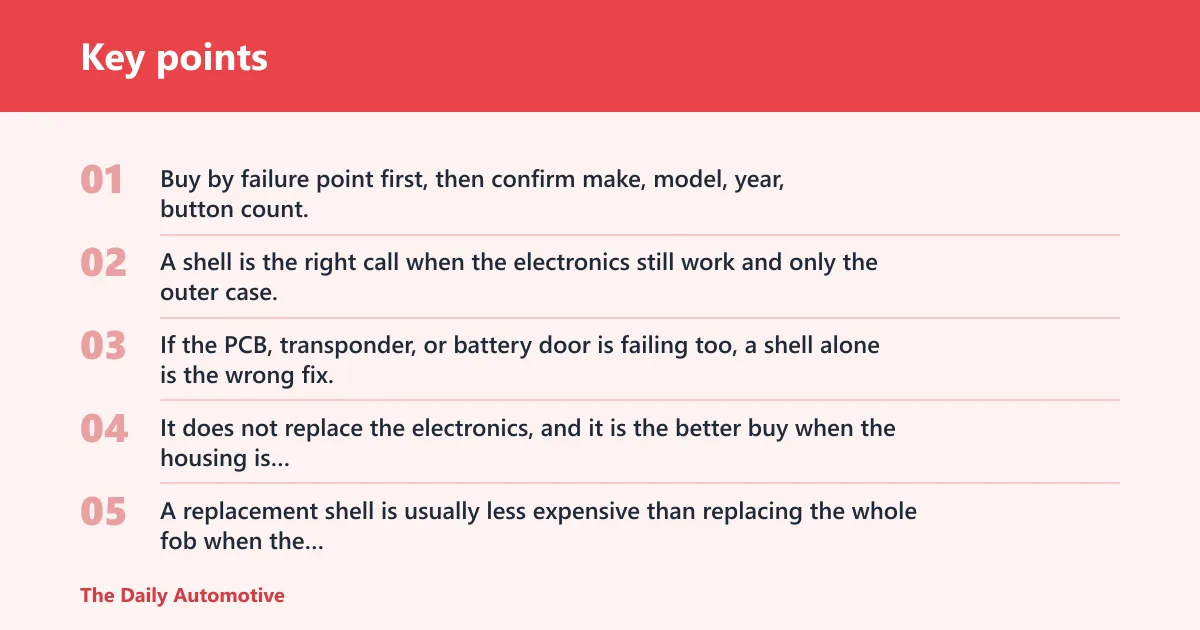

Buy by failure point first, then confirm make, model, year, button count, and side profile. A shell is the right call when the electronics still work and only the outer case, button openings, or blade mount are worn. If the PCB, transponder, or battery door is failing too, a shell alone is the wrong fix.
When a shell is enough
A key fob shell is the outer case only. It does not replace the electronics, and it is the better buy when the housing is cracked, the hinge point is split, or the shell has rubbed smooth but the remote still locks, opens, and starts the car. A replacement shell is usually less expensive than replacing the whole fob when the internal parts still work.
When you need a cover instead
A silicone key fob cover is generally the lighter option for scratch and drop protection. It slips over the existing fob, so it works best when the case is intact and you want to slow down wear from pocket, bag, or console carry. If the shell is already split or the button openings no longer line up, a cover will hide the problem, not solve it.
When a full fob or repair makes more sense
If the board, transponder, battery contacts, or button pad are failing, a shell swap can leave you with the same problem inside a new case. The original electronics stay the same, and blade cutting may be needed depending on the shell. The product boundary excludes emergency locksmith work.
Who it’s for
This is for drivers with cracked cases, loose seams, worn button labels, or a broken emergency blade cradle who still have a working remote inside the shell. It is not for a fob with dead electronics, a water-damaged board, or a battery door that will not stay closed because the shell latch or tabs are worn beyond the outer case.
Drivers with cracked cases
If the shell has split at a corner, around the key ring, or at the hinge point, a replacement shell is usually the cleanest fix. The shell holds the same internals, so the goal is to restore structure without changing the electronics. That keeps costs down and avoids a full replacement when the remote still works.
Drivers with worn buttons or loose seams
When the button icons are rubbed off, the rubber pad feels soft, or the seam opens every time the fob drops, fit quality matters more than the vehicle badge. A shell with the wrong button layout can press poorly or sit proud along the edge. Aftermarket fit can also vary in seam alignment and button feel.
Drivers protecting a fob from daily carry damage
If the fob is still intact and you only want to slow wear in a pocket, bag, or cupholder, a silicone cover is the safer buy. It is cheap to replace and better for scratch and drop protection than a shell swap that is not needed yet. It is also easy to remove when you need access to the battery or buttons.
Pros and cons
Pros
- Less expensive than replacing the whole fob when the electronics still work.
- Lets you replace a cracked shell without changing the original electronics inside.
- Can restore button feel and case strength when the wear is mechanical.
- Silicone covers give low-cost scratch and drop protection.
Cons
- Fit is easy to get wrong if you skip button count, side profile, or year range.
- Aftermarket shells can have weak seam alignment or loose blade-holder tolerance.
- A shell will not fix damaged PCB, transponder, or battery-door issues.
- Some swaps need blade cutting after the transfer.
Shell, cover, or full fob?
The right part depends on what failed. A shell replaces the hard outer housing. A silicone cover slips over the existing fob for surface protection. A remote head key combines the blade and remote housing. A smart key is a keyless-entry format with size and shape that vary by make and model. A Fobik key is a Chrysler-style remote key format with its own shell families.
Key fob shell versus silicone key fob cover
A key fob shell is for structural damage: cracked housings, broken button frames, or a failed blade cradle. A silicone key fob cover is for wear control, not repair. It is brand- and model-specific enough that you still need the correct fit, but its job is protection, not rebuilding the fob.
Remote head key and emergency blade swaps
Remote head keys often need model-specific shell options because the blade and remote body are integrated. If the emergency blade is part of the shell style, the new shell may need the existing blade transferred or a new blade cut after the swap. That depends on the vehicle and the shell design.
Smart key and Fobik key differences
Smart keys are compact and shape-sensitive, so shell size varies by make and model. Fobik keys use dedicated shell categories, and fit depends on button count and profile. In both cases, the wrong shell can leave the buttons shallow, the seam uneven, or the battery door misaligned.
Key fob shell decision table
| Damage type | Recommended part | Compatibility checks | Required tools | Common failure risks |
|---|---|---|---|---|
| Cracked housing or split seam | Shell | Make, model, year range, button count, side profile, blade style | Small screwdriver, pry tool, coin or plastic opener | Wrong seam alignment, loose internals, poor button feel |
| Worn buttons with intact electronics | Shell or button-pad repair | Button layout, rubber pad shape, opening placement | Pry tool, clean work surface, tweezers | Misaligned pad, sticky buttons, shallow press action |
| Broken emergency-blade mount | Shell or repair | Blade-holder style, blade length, head shape, vehicle fit | Pry tool, blade transfer tool if needed | Loose blade fit, holder cracks, cutting needed after swap |
| Surface wear only | Silicone cover | Exact fob shape, button count, keyless or remote style | None beyond clean hands | Cover blocks buttons, wrong fit, trapped debris |
How do you know the fit is right?
The fit is usually right when the shell matches the make, model, year, button count, side profile, and blade mount. Vehicle name alone is not enough. A shell that looks close can still miss the opening for the emergency blade, press the buttons too hard, or leave a visible seam gap.
Match make, model, year, and button count
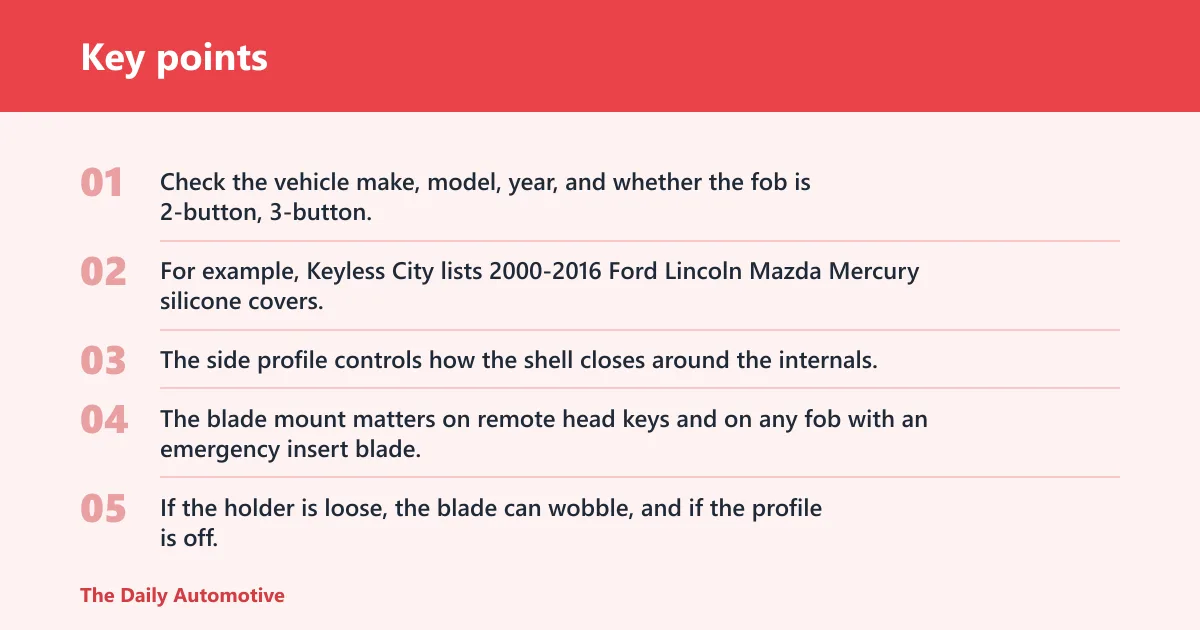
Check the vehicle make, model, year, and whether the fob is 2-button, 3-button, or 4-button before you order. That is the first filter. For example, Keyless City lists 2000-2016 Ford Lincoln Mazda Mercury silicone covers, 1998-2003 Honda Acura silicone covers, and 1995-2003 Toyota Lexus silicone covers, which shows how tight year-range fit can be.
Check side profile and blade mount
The side profile controls how the shell closes around the internals. The blade mount matters on remote head keys and on any fob with an emergency insert blade. If the holder is loose, the blade can wobble, and if the profile is off, the case may not latch cleanly.
Confirm opening, seam, and button placement
Look at the front, back, side, and button photos before buying. That is the fastest way to catch seam shape, button placement, and blade-holder differences. The original key is not modified, which matters because the transfer should preserve the working electronics rather than alter them.
Say your Ford fob has a cracked shell near the key ring, but the lock, open, and panic functions still work. A full shell replacement is the right path if the button count and side profile match, because the electronics can move into the new case without changing the remote function.
Suppose your Toyota key only has worn corners and scuffed buttons, but the case still snaps shut and the battery door holds. A silicone cover is the cleaner fix. It gives protection without forcing a shell swap you do not need yet.
What can go wrong during a swap?
A shell swap is simple only if you respect the weak points. The PCB and transponder can be damaged during transfer, the rubber button pad can sit off-center, and the emergency blade holder can be too tight or too loose. Those are the failure modes that turn a cheap fix into a second purchase.
Damaging the PCB or transponder
The circuit board and transponder are the parts that keep the fob working. Pry too hard and you can crack solder joints, bend contacts, or break the transponder housing. That risk is why a shell swap should be gentle and why a dead board means you need more than a new outer case.
Misaligning the rubber button pad
Loose buttons often trace back to a shifted rubber pad or a shell opening that does not line up. If the pad sits crooked, the remote can feel spongy or fail to register presses. Check the button layout before closing the shell, not after you hear the latch click.
Blade cutting and holder tolerance issues
Some shells need the emergency blade transferred, and some need blade cutting after the swap. That means you should expect part transfer support, not emergency road service.
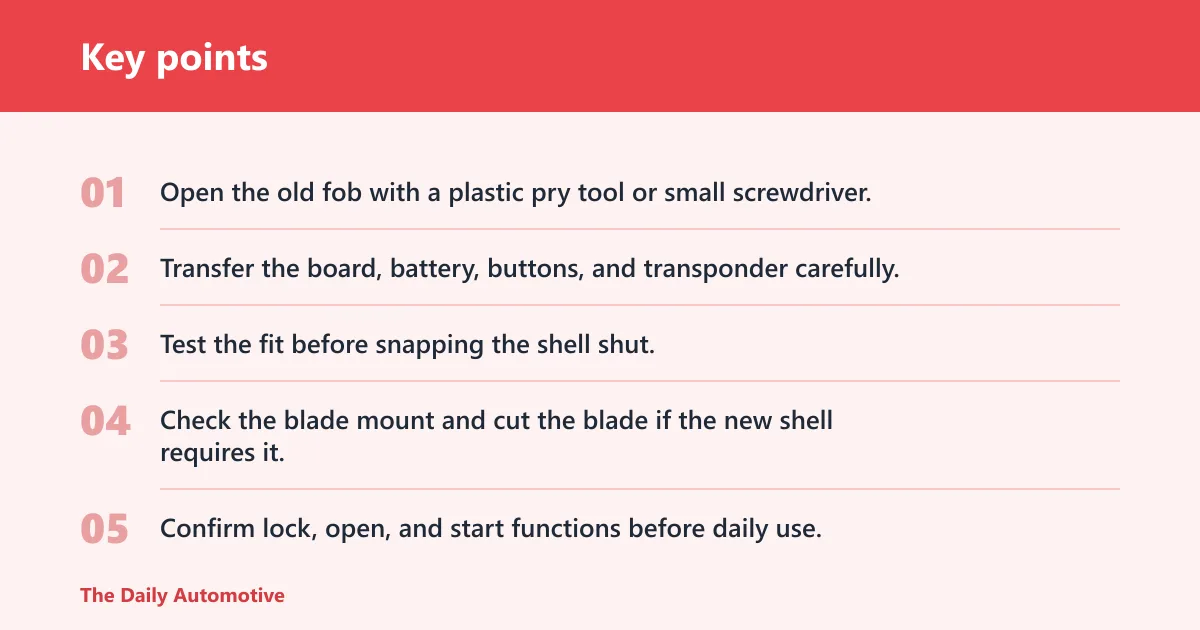
- Open the old fob with a plastic pry tool or small screwdriver.
- Transfer the board, battery, buttons, and transponder carefully.
- Test the fit before snapping the shell shut.
- Check the blade mount and cut the blade if the new shell requires it.
- Confirm lock, open, and start functions before daily use.
A common first-timer mistake is buying a shell for the right brand but the wrong button count. A 3-button shell usually will not behave like a 4-button version, even when the case looks similar from the front. The result is a fob that closes badly or leaves one button unusable.
Use a silicone cover if the fob is already working and you mainly want to guard against scratches, pocket wear, and small drops. For more serious case damage, switch to a shell that matches the fob’s exact shape. If the internal electronics are unstable, protect the car key by fixing the root problem instead of hiding it.
Start by checking the exact Chevy fob style, then compare the make, model, year, button count, and blade style against the shell listing. Open the case, move the internals into the new shell, and make sure the seam closes flush. If the blade is part of the shell style, confirm whether it transfers or needs cutting.
Frequently asked questions
What is the difference between a key fob shell and a key fob cover?
A key fob shell replaces the hard outer case and is used when the housing is cracked or worn out. A key fob cover is a slip-on layer, usually silicone, that protects the existing fob from scratches and drops. The shell repairs structure; the cover adds protection.
Can I replace just the shell on my car key fob?
Yes, if the electronics still work and the damage is limited to the outside case, button openings, or blade mount. That is the main reason to buy a shell instead of a full fob. If the board, transponder, or battery contacts are damaged, shell replacement alone is usually not enough.
Do I need programming after replacing a key fob shell?
Often no, because the shell swap usually keeps the original electronics. Some vehicles can still have immobilizer or transponder-related exceptions, though, and programming becomes relevant when the remote, transponder, or full fob is replaced, or when the vehicle requires re-registration after a component change. Check the listing for your model before you buy.
Which car brands have specific key fob shell replacements?
Many common brand lines, including Ford, Honda, Chevy, Toyota, and BMW, often have model-specific shell options. The year range and button layout still matter. A shell that fits one Honda may not fit another, and the same goes for Toyota, Ford, and other makes with multiple fob formats.
How do I know if my key fob shell is the right fit?
Match the make, model, year, button count, side profile, and emergency blade style. Also check front, back, side, and button photos before ordering. If any of those details differ, the case may close badly, press the buttons poorly, or leave the blade mount loose.
How do key fobs work for cars?
Key fobs send a radio signal to the vehicle, and the car checks that signal before unlocking or starting. On many fobs, the blade is only for the emergency insert function, while the electronic parts handle remote access and authorization. That is why a shell swap must preserve the working internals.
Products related to this article
Sponsored / affiliate links. As an Amazon Associate I earn from qualifying purchases. I may earn additional commission from eligible campaigns.