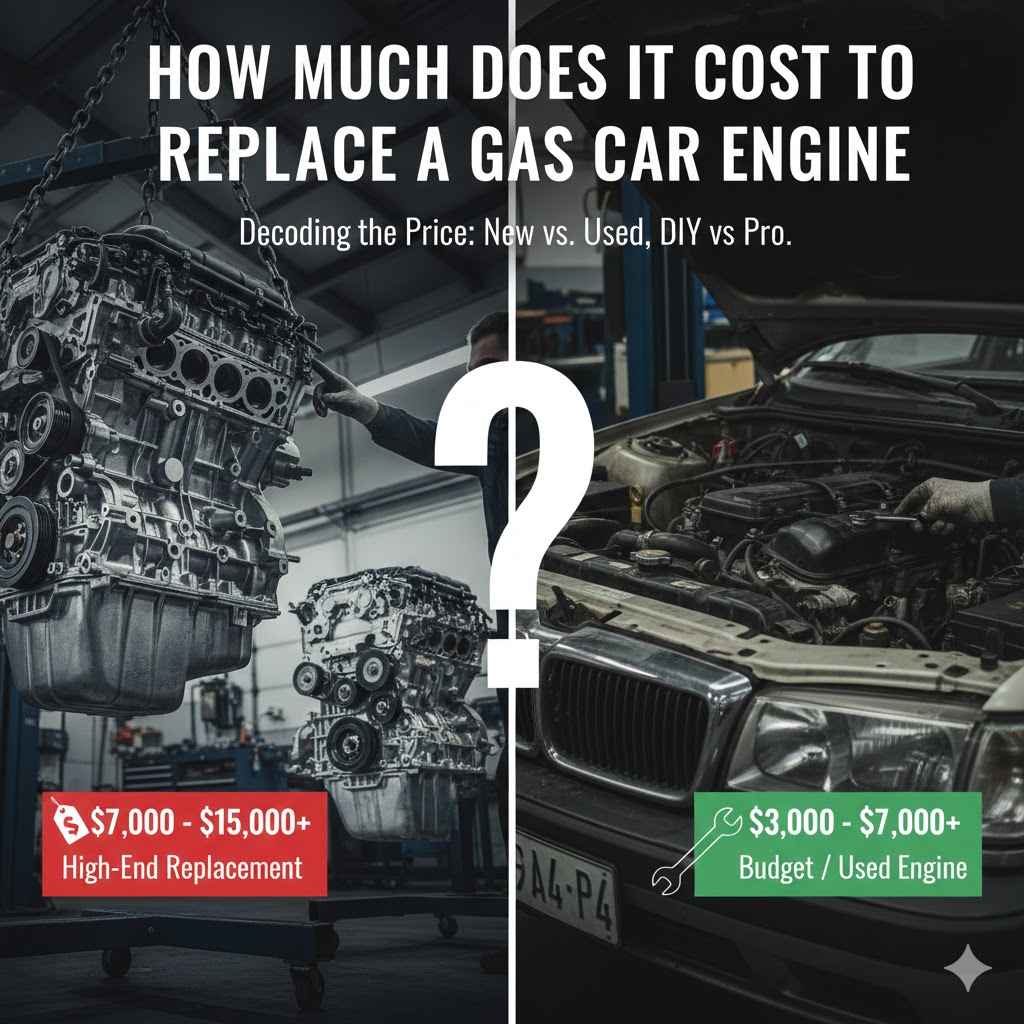
How Much Does It Cost to Replace a Gas Car Engine
So you’re wondering, “How Much Does It Cost to Replace a Gas Car Engine?” It’s a big question, and for many car owners, especially those new to car repairs, it can feel a bit tricky to figure out. You might have heard big numbers or just not know where to start looking for an answer. Don’t worry, we’ve got you covered! We’ll break down all the parts that go into this cost so you can get a clear picture.
The Engine Replacement Cost Breakdown
Figuring out how much it costs to replace a gas car engine involves looking at several key pieces. It’s not just one price. You have to think about the engine itself, the labor to put it in, and any other parts that might need changing while the work is being done. This can really add up, so knowing these parts helps you understand the total expense.
Factors Influencing Engine Replacement Costs
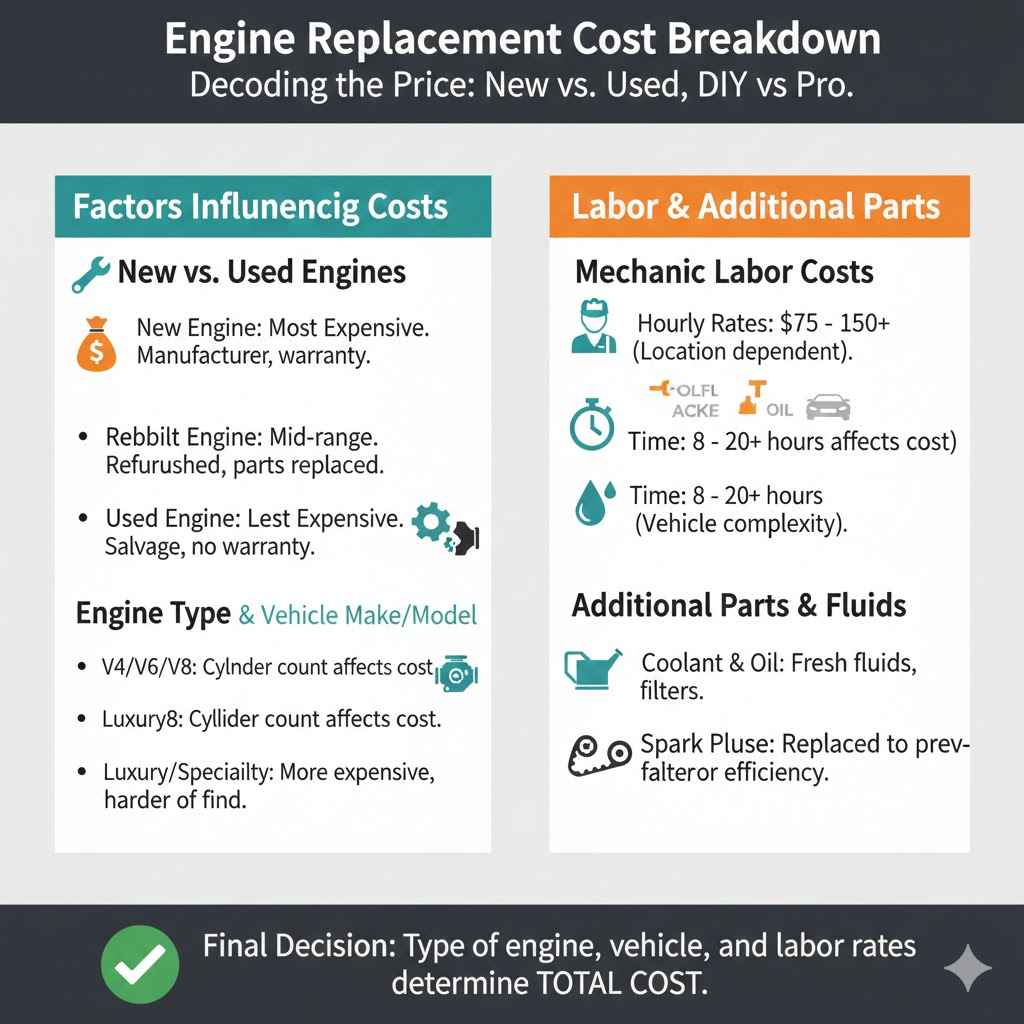
Several things can make the price of replacing your engine go up or down. The type of car you have is a big one. A small car might have a less expensive engine than a large truck or a luxury vehicle. Also, whether you choose a brand-new engine, a rebuilt one, or a used one makes a huge difference.
New vs. Rebuilt vs. Used Engines
A new engine is typically the most expensive option. It comes directly from the manufacturer and has never been used before. This offers the most peace of mind, as it should be in perfect condition and usually comes with a good warranty.
A rebuilt engine has been taken apart, cleaned, and had worn-out parts
Used engines are the least expensive choice. These engines come from other vehicles that have been scrapped. They are sold “as is,” meaning there’s often no warranty, or a very limited one. This is a riskier option, as you don’t always know the full history or condition of the engine.
Engine Type and Vehicle Make Model
Different engines have different costs. A four-cylinder engine is generally less costly than a V6 or V8 engine. High-performance engines or those in specialty vehicles can also be much more expensive.
For example, replacing the engine in a common sedan like a Honda Civic might be less expensive than replacing the engine in a high-performance sports car like a Porsche 911. The availability of parts also plays a role. Engines for popular cars are usually easier to find, driving down costs.
A 2020 report by RepairPal showed that the average cost to replace a car engine can range significantly. For instance, a common repair for a 2015 Ford F-150 might involve an engine replacement costing between $3,500 and $7,000, depending on the specific engine and parts used.
Labor Costs for Engine Replacement
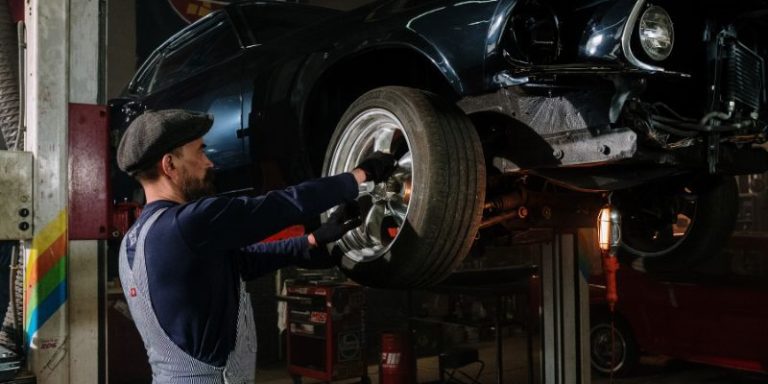
The cost of labor is a major part of replacing an engine. Mechanics charge for their time and expertise. The more complex the engine or the car, the longer it will take to remove the old engine and install the new one. This means higher labor bills.
Mechanic Hourly Rates
Mechanics’ hourly rates can vary widely depending on where you live and the shop’s reputation. Larger cities or dealerships often have higher labor rates than smaller towns or independent repair shops.
You might see hourly rates from $75 to $150 or even more. A job like an engine replacement can take anywhere from 8 to 20 hours of labor. This means labor alone can cost $600 to $3,000 or more.
Time Required for Engine Swap
The actual time it takes to
Here’s a sample of how labor time might be estimated for different vehicles:
Compact Car (e.g., Toyota Corolla): 8-12 hours
Mid-size Sedan (e.g., Honda Accord): 10-15 hours
SUV (e.g., Ford Explorer): 12-18 hours
Truck (e.g., Ram 1500): 15-20 hours
This time estimate is crucial for calculating the total labor cost. Always ask for an estimate of how many hours the mechanic expects the job to take.
Additional Parts and Fluids
When an engine is
Coolant and Oil
New coolant is essential for the engine’s cooling system. Old coolant can become dirty and less effective. Oil is also needed to lubricate the new engine. You’ll need a full change of engine oil and filter.
Belts and Hoses
Belts, like the serpentine belt, and hoses, such as radiator hoses, are often replaced during an engine swap. These parts can wear out over time and are much easier to access when the engine is out. Replacing them prevents potential failures shortly after the new engine is installed.
Spark Plugs and Filters
New spark plugs ensure the engine runs efficiently. Filters, like the oil filter and air filter, are also typically
Other Potential Parts
Depending on the condition of your car, you might also need to replace the clutch or transmission components if they are showing wear. The exhaust system or catalytic converter might also be inspected and potentially replaced if they are damaged or not working correctly.
Average Costs to Replace a Gas Car Engine
Let’s put some numbers to it. When you combine the engine, labor, and additional parts, you get a total cost. This average is a good starting point, but remember that your specific situation can change it.
Cost Ranges by Engine Type
The type of engine is a primary driver of cost. Smaller, simpler engines are naturally less expensive than larger, more complex ones.
Four-cylinder engines: Often fall in the $3,000 to $6,000 range.
Six-cylinder engines: Can range from $4,000 to $8,000.
Eight-cylinder engines: Often start around $5,000 and can go upwards of $10,000 or more.
These ranges include the cost of a rebuilt or used engine and the labor to install it. New engines would push these costs higher.
National Average Cost Estimates
Across the United States, the average cost to replace a gas car engine is often cited between $4,000 and $7,500. This figure can be higher or lower based on the vehicle, location, and the specific engine option chosen.
A study by YourMechanic in 2023 indicated that the average engine replacement cost for popular car models could be around $5,500. However, this varies greatly. For instance, replacing an engine on a luxury SUV could easily exceed $10,000, while a basic compact car might be closer to $3,500.
When Repair Might Be a Better Option
Sometimes, the cost to
If the engine block itself is cracked or severely damaged, then replacement is usually the only practical solution. Your mechanic can assess the damage and tell you whether a repair or a replacement is the best path forward.
Finding a Reliable Mechanic for Engine Replacement
Choosing the right mechanic is as important as choosing the right engine. A good mechanic will be honest, skilled, and charge fair prices. It can save you a lot of money and headaches.
How to Choose a Reputable Shop
Look for shops with good online reviews. Check sites like Google, Yelp, or specialized auto repair review sites. Ask friends, family, or coworkers for recommendations.
A shop that is a certified repair facility for certain car brands can also be a good sign. Look for certifications like ASE (Automotive Service Excellence). This shows that their technicians have passed rigorous tests.
Getting Multiple Quotes
Never settle for the first quote you receive. Get estimates from at least three different reputable shops. Make sure each quote includes a detailed breakdown of parts, labor, and any extra services.
Comparing quotes helps you understand the market price and can help you negotiate a better deal. Be wary of quotes that are significantly lower than others, as they might be cutting corners.
Understanding Warranties
Ask about the warranty on both the engine and the labor. A good warranty on a new or rebuilt engine can be 12 months or 24,000 miles, sometimes more. The labor warranty is also important. It covers any issues that arise from the installation process itself.
A shop that offers a solid warranty is usually confident in their work and the parts they use. This provides valuable peace of mind.
DIY Engine Replacement Considerations
While it might seem like a way to save money, replacing an engine yourself is a massive undertaking. It requires specialized tools, a good understanding of engines, and a lot of physical labor.
Tools and Equipment Needed
You’ll need a wide array of tools, including a comprehensive socket set, wrenches, torque wrenches, screwdrivers, pliers, and various specialized engine tools. You will also need a heavy-duty engine hoist and an engine stand to safely remove and support the engine.
Beyond hand tools, you might need diagnostic equipment to check for issues before and after the swap. Safely lifting and moving a heavy engine requires proper equipment.
Skills and Knowledge Required
An engine replacement involves disconnecting and reconnecting hundreds of parts, including electrical connectors, fuel lines, coolant hoses, exhaust components, and more. You need to know how each system works and how to put it back together correctly.
Mistakes can lead to costly damage or dangerous situations. For most people, it’s safer and more efficient to let experienced professionals handle this job.
Potential Risks of DIY
The biggest risk of a DIY engine replacement is making a mistake that causes further damage to the engine or your vehicle. You could also injure yourself due to the heavy weight of the engine and the awkward positions involved.
Incorrectly installing components, such as electrical connections or cooling system parts, can lead to major failures shortly after you think the job is done. This can end up costing more in the long run than if you had paid a professional from the start.
Cost Comparison: Engine Replacement vs. Buying a New Car
Sometimes, the cost to replace an engine is so high that it makes you consider if it’s worth keeping the car at all. This is a tough decision many car owners face.
When Replacement Makes Financial Sense
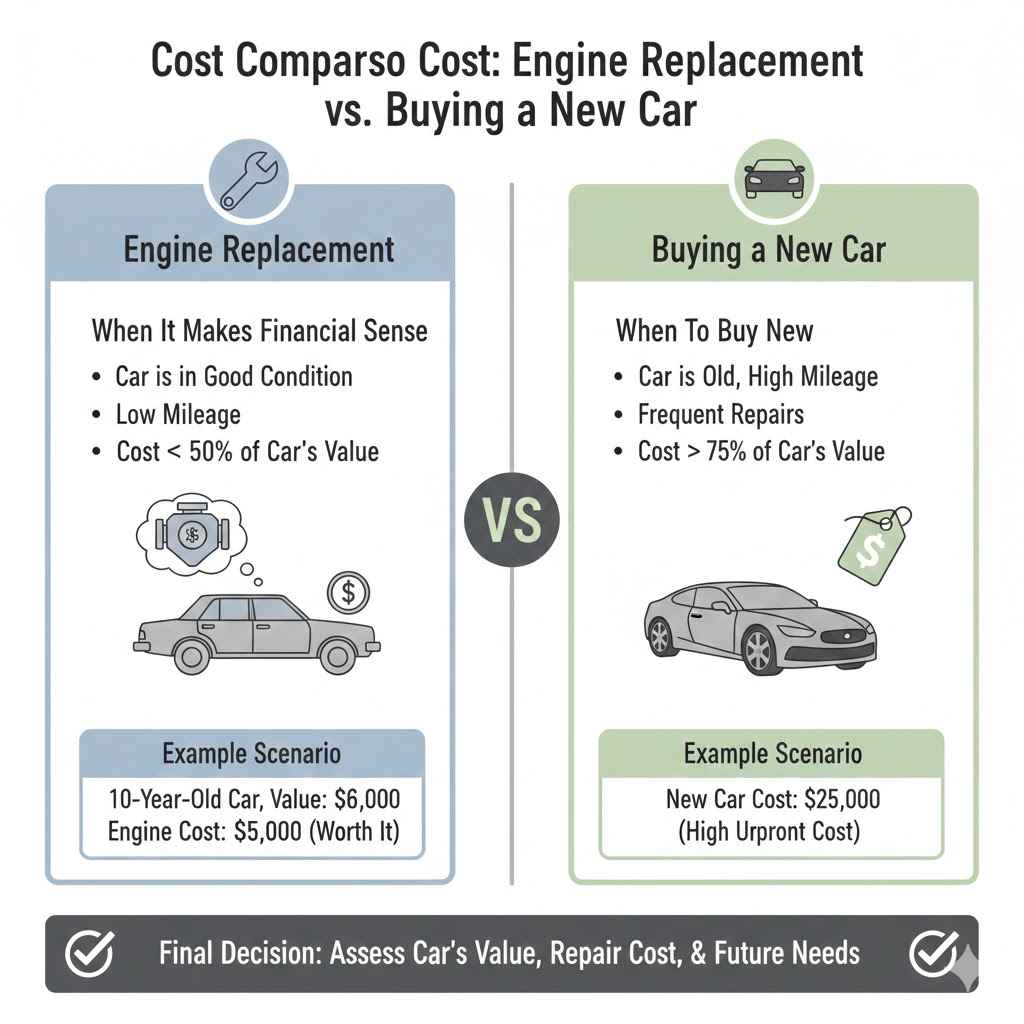
If your car is otherwise in good condition, has low mileage, and you like driving it, then replacing the engine can be a financially sound decision. If the total cost of replacement is less than 50% of the car’s current market value, it’s often worth it.
For example, if your car is worth $10,000 and an engine replacement costs $5,000, you’ve essentially given your car a new lease on life for half its value. This is often cheaper than buying a new car.
When It Might Be Time for a New Vehicle
If your car is old, has many miles on it, and requires frequent repairs, spending a large sum on an engine replacement might not be wise. If the cost of the engine replacement would be more than 75% of the car’s market value, you should seriously consider a new vehicle.
Additionally, if the car has other major issues, like transmission problems or significant rust, an engine replacement might just be delaying the inevitable. A new car offers the latest safety features, better fuel efficiency, and a full warranty.
A survey by J.D. Power found that many consumers consider repair costs relative to the vehicle’s value. If a repair exceeds 50% of a car’s worth, owners tend to lean towards replacing the vehicle, especially if it’s older than 5-7 years.
Example Scenario: Keeping vs. Replacing
Imagine you have a 10-year-old sedan that’s paid off. It runs well except for a failing engine. The market value of the car is $6,000.
Option A: Engine Replacement
Cost: $5,000 (rebuilt engine, labor, fluids)
Result: You have a car worth $6,000 with a new engine, effectively extending its life significantly.
Option B: Buying a New Car
Cost: $25,000 (new car)
Result: You have a new car with a full warranty and modern features, but a much higher upfront cost.
In this scenario, the engine replacement seems like the more economical choice if you want to keep driving the same familiar vehicle.
Frequently Asked Questions
Question: What is the cheapest way to replace a gas car engine
Answer: The cheapest way is to find a used engine from a reputable salvage yard and install it yourself. However, this comes with significant risks and requires a lot of mechanical skill and tools.
Question: How long does a rebuilt engine last
Answer: A well-rebuilt engine can last as long as a new engine, often 100,000 to 200,000 miles or more, depending on its quality and how well it’s maintained.
Question: Does engine replacement affect car value
Answer: Yes, replacing a failed engine with a new or rebuilt one can significantly increase your car’s value and marketability, making it a viable option for keeping the car.
Question: Are there any hidden costs with engine replacement
Answer: Yes, hidden costs can include needing to replace related parts like the radiator, fuel pump, or sensors that are difficult to access or show wear during the swap.
Question: Can a mechanic refuse to install a used engine
Answer: Some mechanics may refuse to install a used engine, especially if it doesn’t come with a warranty, because they don’t want to be responsible for potential issues with parts they didn’t select.
Summary
Replacing a gas car engine involves costs for the engine itself, labor, and extra parts. New engines cost the most, followed by rebuilt and then used ones. Labor rates and the time needed vary by mechanic and car complexity. Expect the total cost to range from $3,000 to $10,000 or more, depending on these factors. Getting multiple quotes and choosing a reliable shop with a good warranty is smart. Weigh this expense against the car’s value and condition to decide if it’s time for a new ride.