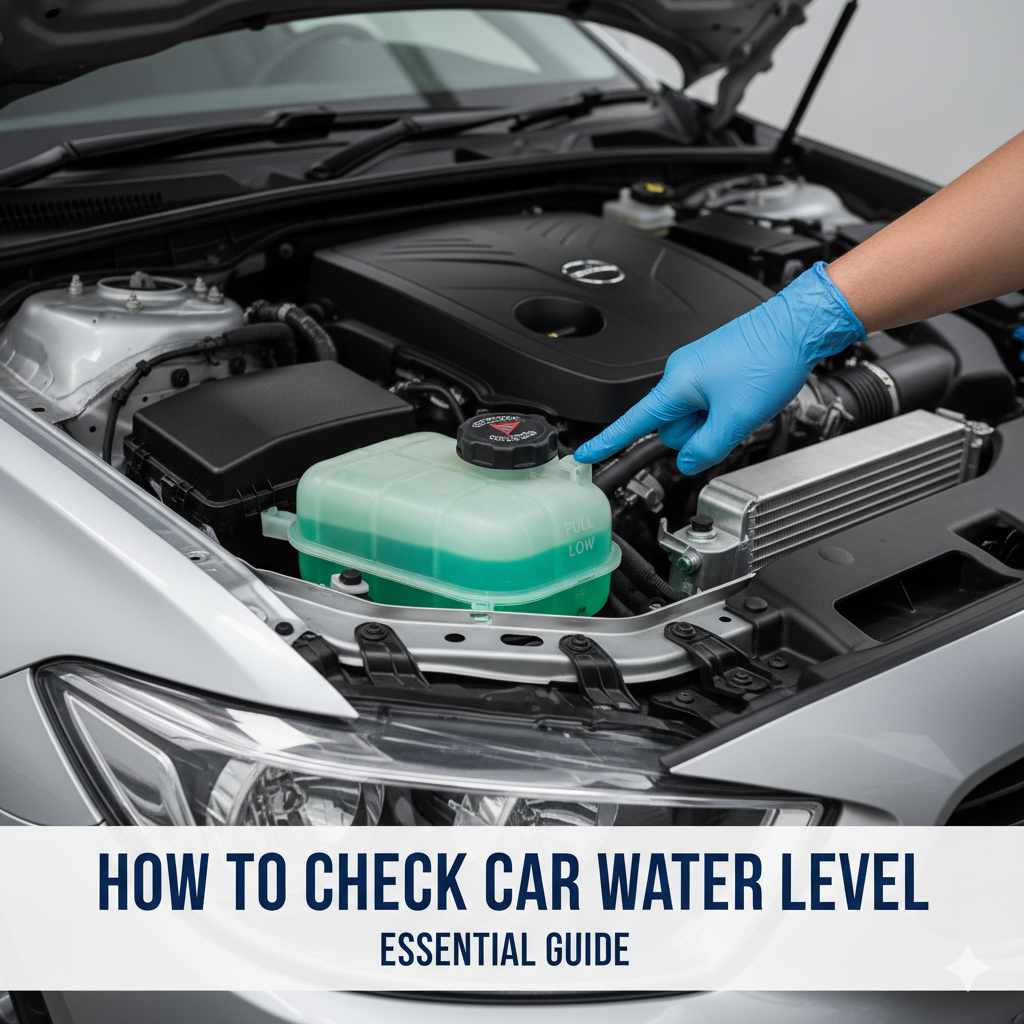
How to Check Water Level in Car: Essential Guide
Checking your car’s water level is simple and crucial for engine health. Follow these easy steps: park on level ground, wait for the engine to cool, locate the coolant reservoir, and check the markings. Top up with the correct coolant if needed. Regular checks prevent overheating and costly damage.
Hey there, fellow drivers! Md Meraj here, your go-to guide for making car care less intimidating and more like a chat with a friendly neighbor. Ever pop your hood and feel a little lost, especially when it comes to those mysterious fluids? You’re definitely not alone! Many car owners wonder about “how to check water level in car,” and it’s a perfectly valid question. Your car’s engine needs a specific type of fluid, often called coolant or antifreeze, to stay at the right temperature. If this level gets too low, your engine can overheat, leading to some seriously expensive repairs. But don’t worry, figuring out your car’s water level is surprisingly straightforward. We’ll walk through it step-by-step, so you can feel confident and keep your ride running smoothly. Let’s get your car’s heart happy and healthy!
Why Checking Your Car’s Water Level Matters
Think of the coolant in your car like the blood in your body – it’s vital for keeping things running smoothly. This special fluid does two main jobs: it prevents your engine from overheating in hot weather and stops it from freezing in cold temperatures. Without the right amount of coolant, your engine can quickly become dangerously hot, leading to warping of metal parts like the cylinder head or even a cracked engine block. These are repairs that no one wants to deal with, and they can cost thousands of dollars.
On the flip side, in freezing weather, low coolant levels mean water can freeze inside your engine, expanding and causing serious damage to the engine block and radiator. Regularly checking and maintaining the correct coolant level is one of the simplest yet most effective ways to protect your investment and ensure your car is reliable, especially during those extreme weather months.
Understanding “Water” vs. Coolant
It’s important to clear up a common point of confusion right away: when we talk about checking the “water level” in a car, we’re almost always referring to the engine’s coolant, not plain water. While plain water can be used in a pinch for an emergency top-up, it’s not ideal for regular use. Engine coolant, also known as antifreeze, is a mixture of antifreeze (typically ethylene glycol or propylene glycol) and distilled water.
This mixture has a much higher boiling point and a lower freezing point than plain water, making it far more effective at regulating engine temperature in a wide range of conditions. Furthermore, coolant contains additives that prevent corrosion and lubricate the water pump. Using only plain water can lead to corrosion inside your cooling system and will offer very little protection against freezing or overheating. So, always aim to use the correct coolant specified in your car’s owner’s manual.
For more detailed information on why specific coolant types are important, you can refer to resources from the U.S. Department of Energy, which discusses vehicle maintenance best practices.
When and How Often Should You Check?
Making a habit of checking your car’s coolant level is a smart move for any driver. As a general rule of thumb, it’s a good idea to check it at least once a month. You should also definitely check the coolant level:
- Before a long road trip: Extra peace of mind for the journey ahead.
- When you notice the temperature gauge climbing higher than usual: This could be a sign of low coolant.
- If you see any brightly colored puddles (usually green, orange, pink, or yellow) under your car: This indicates a leak.
- After any cooling system service or repair: To ensure it was refilled correctly.
- During seasonal changes, especially before winter or summer: To ensure your car is ready for extreme temperatures.
Regular checks prevent small issues from becoming big, expensive problems. It only takes a few minutes and can save you a lot of headaches down the road.
Tools and Materials You Might Need
Fortunately, you don’t need a mechanic’s toolkit to check your car’s coolant level. Most times, you won’t need any tools at all! However, having a few things on hand can make the process smoother and safer:
- Safety Gloves: Coolant can be messy and is toxic if ingested, so gloves are a good idea.
- Clean Rags or Paper Towels: For wiping away any drips or residue from the reservoir.
- Funnel: If you need to add coolant, a funnel helps prevent spills.
- The Correct Type of Coolant/Antifreeze: Always use the type recommended in your car’s owner’s manual. This is crucial! You can find this information in the “Specifications” or “Maintenance” section.
- Distilled Water: If you’re mixing your own coolant, or if your manual specifically allows for a water-coolant mix, use distilled water. Tap water contains minerals that can clog your cooling system over time.
- Owner’s Manual: Your ultimate guide to your specific vehicle’s needs.
Remember, using the wrong type of coolant can cause serious damage to your engine’s cooling system. Always refer to your owner’s manual for the exact type and specifications.
Step-by-Step Guide: How to Check Water Level in Car
Let’s walk through the simple, safe, and effective way to check your car’s coolant level. Follow these steps carefully:
Step 1: Park on a Level Surface and Let the Engine Cool Down
This is the most critical safety step. Never open the radiator cap or coolant reservoir cap when the engine is hot. The cooling system is pressurized, and hot coolant can spray out with extreme force, causing severe burns. Park your car on a flat, level surface. This ensures the coolant level reading will be accurate. Allow your engine to cool completely.
This can take anywhere from 30 minutes to a couple of hours after driving, depending on how long you’ve been running the engine and the ambient temperature. A good rule of thumb is to wait until the engine feels cool to the touch, or at least until the radiator fan has stopped running for a while.
Step 2: Locate the Coolant Reservoir
Pop the hood of your car and look for the coolant reservoir. It’s usually a translucent plastic tank, typically white or translucent, that is connected by a hose to the radiator or the engine block. It’s often located on one side of the engine bay. Sometimes it’s cylindrical, and sometimes it’s more rectangular. You might be able to see the coolant level through the plastic. The words “Coolant,” “Antifreeze,” or a temperature warning symbol might be molded into the tank.
Pro Tip: If you can’t find it, your owner’s manual will have a diagram showing you exactly where it is. In some vehicles, the coolant is primarily checked at the radiator cap itself, though most modern cars have an accessible reservoir.
Step 3: Identify the “Min” and “Max” or “Low” and “Full” Lines
Once you’ve found the reservoir, look closely at its side. You’ll see markings indicating the proper coolant level when the engine is cool. These are usually labeled as “MIN” and “MAX,” or “LOW” and “FULL,” or sometimes just “COLD” and “HOT” lines. When the engine is completely cool, the coolant level should be somewhere between the “MIN” and “MAX” lines, ideally closer to the “MAX” line.
Step 4: Check the Coolant Level
Visually check where the coolant level is within the reservoir. If you can clearly see the fluid is between the two marked lines, your coolant level is likely fine. If the level is at or below the “MIN” or “LOW” line, it’s time to add more coolant.
Important Note: If your car does not have a translucent reservoir and you can’t see the level, you will need to carefully unscrew the radiator cap (only when the engine is COMPLETELY COLD). Look inside; the coolant should be visible, typically up to about an inch below the neck.
Step 5: Add Coolant if Necessary (and Correct Type!)
If the coolant level is low, you’ll need to add the correct type. Again, consult your owner’s manual for the specific type of coolant your car needs. Most modern cars use a specific type of “Long Life” coolant (often orange or pink), and mixing different colors or types can cause the coolant to break down and clog your system. If you’re unsure, it’s always best to buy a pre-mixed 50/50 solution of the specified coolant and distilled water. If you buy concentrated coolant, you’ll need to mix it with distilled water in the ratio recommended on the coolant bottle (usually 50/50).
To add coolant:
- Carefully unscrew the cap of the coolant reservoir.
- Using a funnel, slowly pour in the coolant.
- Add coolant until it reaches the “MAX” or “FULL” line. Be careful not to overfill, as this can also cause problems.
- Replace the reservoir cap securely.
If you had to add a significant amount of coolant, it’s a good idea to monitor the level closely over the next few days. A persistent drop could indicate a leak that needs to be addressed by a mechanic.
Step 6: Close the Hood and Clean Up
Once you’ve checked and potentially added coolant, make sure the coolant reservoir cap is tightened properly. Close your car’s hood securely. Wipe up any spills with a rag. Properly dispose of any used rags or containers according to local regulations, as coolant is harmful to the environment and pets.
Different Vehicle Types and Coolant Checks
While the general principles apply to most vehicles, there can be slight variations, especially between older and newer cars, or between different manufacturers.
Older Cars vs. Newer Cars
Many older vehicles might only have a radiator cap for checking coolant levels. This means you’ll definitely need to wait for the engine to cool completely. Newer vehicles almost universally have an accessible coolant reservoir tank, making the check much easier and often safer as you avoid opening the pressurized radiator directly.
Hybrid and Electric Vehicles
While fully electric vehicles (EVs) don’t have an engine in the traditional sense and thus don’t use coolant for engine temperature regulation, they often have complex battery cooling systems. These systems may use coolant, and their maintenance schedules and checking procedures can be quite different. Always refer to your specific EV’s manual.
Hybrid vehicles, on the other hand, have both a gasoline engine and an electric motor. The gasoline engine will have a conventional cooling system, so the process described above for checking coolant levels applies. Additionally, hybrids may have separate cooling systems for their batteries or power electronics, which would be detailed in the owner’s manual.
Common Coolant Colors and What They Might Mean
Coolant comes in various colors, and while it’s not a foolproof identification method, understanding common colors can be helpful. However, it’s always best to rely on your owner’s manual.
| Coolant Color | Common Type/Brand | Notes |
|---|---|---|
| Green | Conventional IAT (Inorganic Additive Technology) | Older formulations. Can be corrosive to newer engines if not maintained. |
| Orange/Red (often “P-OAT”) | OAT (Organic Acid Technology), P-OAT (Hybrid Organic Acid Technology) | Common in GM, Ford, Chrysler vehicles. Longer life. |
| Yellow/Gold | HOAT (Hybrid Organic Acid Technology) | Common in Asian vehicles (Honda, Toyota) and some European cars. Combines benefits of IAT and OAT. |
| Pink/Purple | Si-OAT (Silicate-based Hybrid Organic Acid Technology) | Common in Volkswagen, Audi, BMW. Considered extended life. |
| Blue | Propylene Glycol based or specific formulations | Less common, often for specific applications or older European cars. |
Crucial Reminder: Never mix coolants of different colors or types, as this can create a chemical reaction that causes the coolant to sludge up and lose its effectiveness, potentially damaging your cooling system. Always use the type specified in your owner’s manual.
Troubleshooting Common Coolant Issues
Even with regular checks, you might encounter a few issues. Here’s how to approach them.
Low Coolant Level
If you are consistently finding your coolant level low, even after topping it up, you likely have a leak. Common places for leaks include:
- Radiator hoses: Cracks or loose clamps can cause leaks.
- Water pump: A leak might appear from the pump’s weep hole.
- Radiator: Corrosion or damage can lead to leaks.
- Heater core: This is located inside the cabin, and a leak might result in a sweet smell or fogging on the inside of your windshield.
- Head gasket: A more serious issue where coolant can leak into the engine oil or combustion chamber.
If you suspect a leak, it’s best to have a mechanic inspect your cooling system. Driving with a significant leak can lead to overheating.
Overheating Engine
If your temperature gauge is in the red zone, pull over as soon as it is safe to do so. Turn off the engine and let it cool completely. Do not open the radiator cap. Once cool, check the coolant level. If it’s very low, this is likely the cause. If the coolant level is fine, the issue could be a faulty thermostat, a malfunctioning radiator fan, a clogged radiator, or a bad water pump. These issues require professional diagnosis.
Sweet Smell Under the Hood
A sweet, syrupy smell often indicates a coolant leak. Even a small leak can produce this aroma as the hot coolant evaporates. Look for any colorful drips or stains around hoses, the radiator, or under the car.
Frequently Asked Questions (FAQs)
Q1: Can I use plain water instead of coolant?
A: In an absolute emergency for a very short, temporary period, you can add distilled water to get you to a service station. However, plain water has a lower boiling point and higher freezing point than coolant, and it lacks corrosion inhibitors. It’s not a long-term solution and can damage your cooling system. Always use the correct coolant specified for your vehicle.
Q2: How much coolant do I need to add?
A: Add coolant until it reaches the “MAX” or “FULL” line on the reservoir when the engine is cool. Do not overfill. If you’re unsure, adding a little at a time and re-checking is safer than pouring in too much.
Q3: What happens if I don’t check my car’s water level?
A: Regularly checking and maintaining your coolant level is vital. If it’s too low, your engine can overheat, leading to severe and costly damage such as a warped cylinder head or a cracked engine block. In cold weather, low coolant can cause the remaining water to freeze, expanding and cracking engine components.
Q4: My car’s temperature gauge is high. What should I do?
A: If your car starts to overheat, pull over safely as soon as possible. Turn off the engine and let it cool down completely. Do not open the radiator cap while hot. Once cool, check the coolant level. If low, add coolant. If the level is fine or the problem persists, it’s best to seek professional help from a mechanic.
Q5: Is it okay to mix different brands of coolant if they are the same color?
A: It’s generally not recommended. While they might be the same color (e.g., two different brands of orange coolant), they could use different additive technologies. Mixing them can cause chemical reactions, leading to sludging, reduced cooling efficiency, and potential damage to seals and metal components. Always stick to the type specified in your owner’s manual, and if possible, use the same brand.
Q6: How long does coolant last?
A: Coolant has a lifespan. Conventional green coolants might last around 2 years or 30,000 miles, while modern “long-life” or “extended-life” coolants (often orange, pink, yellow, or purple) can last anywhere from 5 years or 100,000 miles up to 10 years or 150,000 miles. Always check your owner’s manual for the recommended replacement interval. Over time, the additives in the coolant break down, making it less effective at protecting your engine.
Conclusion
See? Checking your car’s coolant level is a straightforward process that empowers you to take an active role in your vehicle’s maintenance. By making this simple check a part of your regular routine – perhaps once a month or before a big trip – you’re investing in your car’s long-term health and reliability. Staying on top of this essential fluid prevents the costly and frustrating consequences of an overheated engine, ensuring your car serves you well for years to come.
Remember to always prioritize safety, especially by waiting for the engine to cool completely before opening any caps, and always use the correct type of coolant specified in your vehicle’s owner’s manual. With this knowledge, you’ve taken a significant step in boosting your car care confidence. Happy driving, and I’ll see you on the road!