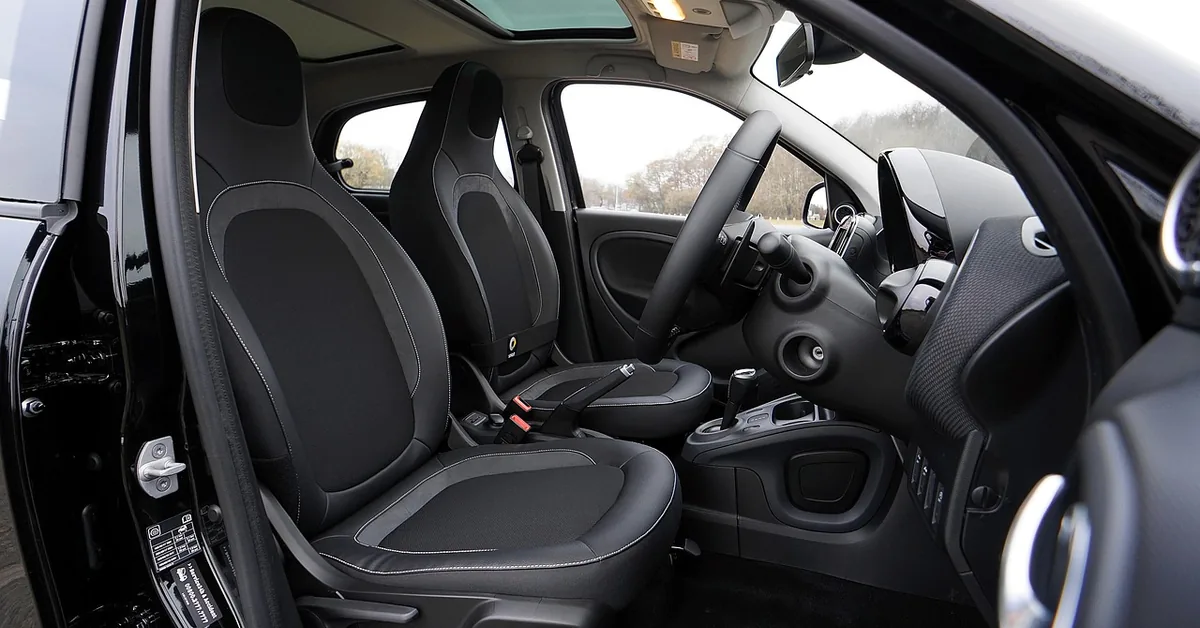
How to Clean a Car Interior: Safe Cleaners by Material
To clean a car interior, work in this order: remove trash, vacuum dry, clean surfaces from the top down, then do the glass last. A full clean takes 1-2 hours. Below: the 8 steps, a chart of safe cleaners by material, and the chemical mistakes to skip.
How to clean a car interior in 8 steps: (1) clear out clutter; (2) vacuum dry, top down; (3) clean the floor mats separately; (4) clean seats with a cleaner made for that material; (5) wipe hard surfaces with a damp cloth, spraying the cloth and not the panel; (6) clean glass last with an ammonia-free cleaner; (7) treat odors at the source to freshen the cabin; (8) finish and protect.
Why Keeping Your Car Interior Clean Matters
A clean interior protects resale value, cuts the dust and grit that wear soft surfaces, and stops spills from reaching the carpet backing where mold can start. Cleaning every 2-3 months, with a quick weekly vacuum, keeps the job small. The bigger risk is not dirt but the cleaner: automaker manuals warn against alcohol, bleach and solvents on several interior materials, which is why this guide organizes the work by material.
| Best Leather Care Kit Pick | |
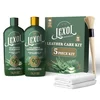 |
Lexol All Leather Care Kit, 5-Piece A leather cleaner, leather conditioner, two cotton cloths and a natural bristle brush in one kit, built for the one interior material where the wrong cleaner does the most damage (Step 4).
|
As an Amazon Associate we earn from qualifying purchases. This is a spec-based pick from the maker’s listing, not a hands-on test.
What You’ll Need to Clean Your Car Interior
Gather the supplies first so you never reach for the wrong bottle mid-job. A longer comparison of products is in our guide to the best car cleaning products for interior, and the complete interior kit looks like this:
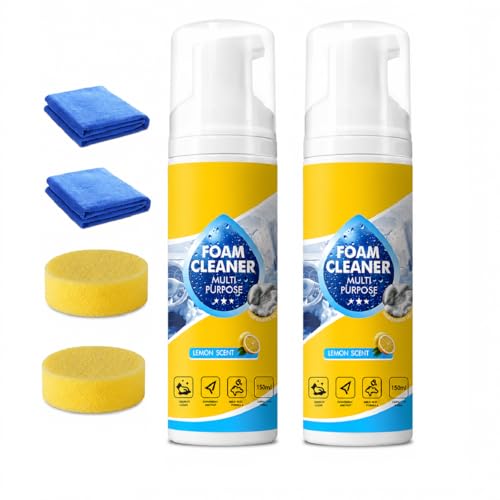
You need a vacuum with crevice and brush tools, several clean microfiber cloths, a soft detail brush, an all-purpose interior cleaner or detailer, an upholstery cleaner for fabric (compare options), a leather cleaner and conditioner (leather care guide), an ammonia-free glass cleaner (tint-safe picks), and a vacuum worth using (detailing vacuums). Add a bucket, mild car wash soap, swabs and a trash bag.
Minimum kit: vacuum, microfiber cloths and one all-purpose cleaner.
Step 1: Clear Out the Clutter
Remove trash, receipts, loose items and anything under the seats. Empty the glove box, console, door pockets and trunk. Check under the seats for old food, a common odor source. This takes 5-10 minutes.
Step 2: Vacuum Every Nook and Cranny
Vacuum before any wet cleaning so liquid cleaners do not turn loose grit into mud. Work from the top down: headliner with the soft brush at low suction, then seats, console, door panels and finally the floor. Slide the front seats forward, then back, to reach the whole floor. Use the crevice tool along seat rails and door seals.
Step 3: Clean the Floor Mats
Take the mats out and clean them away from the car. For rubber or all-weather mats, hose them off, scrub with mild car wash soap and a stiff brush, rinse and let them dry completely. For fabric mats, vacuum, spot-treat with upholstery cleaner, blot and dry in the open air. Never reinstall damp mats: trapped moisture under them is a common cause of musty smells, and our guide to drying wet car carpet covers what to do if the carpet itself got wet. For deep stains in the carpet, see how to shampoo car carpet.
Step 4: Tackle the Seats
Seat cleaning depends on the material, and the safe-cleaner chart below shows exactly what to use. Two rules apply to every seat: spray the cloth or brush, not the seat, and never soak it. Tesla’s Cybertruck service page says never to spray seats directly, and Nissan’s manual warns that wet cleaning can damage seat sensors (see the airbag section).
Fabric seats
Vacuum, then apply a small amount of upholstery cleaner to a brush or cloth and work one section at a time. Let a stain dwell 3-5 minutes, scrub gently with a soft brush and blot with a clean, dry microfiber cloth. The Kia owner’s manual recommends a mild soap solution made for upholstery or carpets and a fabric spot cleaner for fresh spots. Blot spills, do not rub.
Leather seats
Use a cleaner made for automotive leather, applied to a cloth or soft brush, then wipe and condition. Lexol’s directions are one or two sprays on a damp cloth or sponge, one section at a time, then wipe with a clean damp cloth, and they advise testing on a hidden spot first. Hyundai’s manual says to avoid wiping leather with a wet cloth because it can crack the surface, and to use neutral detergents or low-alcohol solutions; Nissan’s manual adds that saddle soap, waxes, polishes, solvents and ammonia-based cleaners can damage the finish.
Step 5: Wipe Down Hard Surfaces
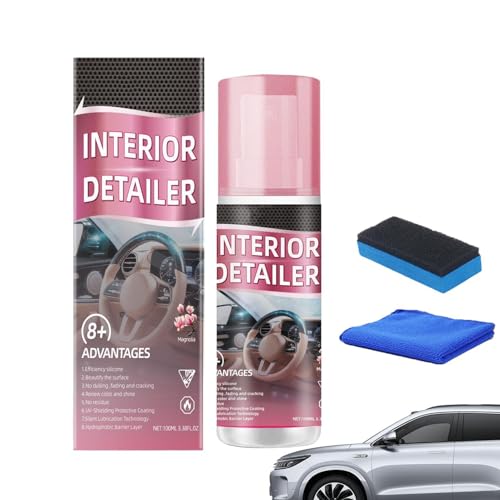
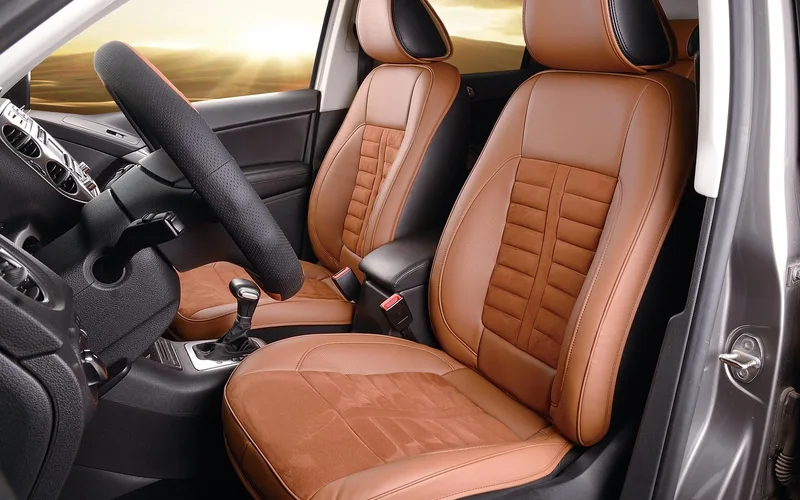
Clean the dashboard, console, door panels and steering wheel with a diluted all-purpose cleaner or an interior detailer, per the label. Spray the cloth, not the panel, because liquid reaches electronics through vents and switch gaps. Hyundai’s manual warns against letting water or other liquids touch electrical components, and Nissan’s says not to spray liquid on the meter lens. Work in overlapping sections, use a soft brush or swab in vents and seams, then dry with a second cloth. Avoid greasy dressings on the dash top, which can add windshield glare. More in our interior cleaner guide and pro detailing walkthrough.
Step 6: Clean the Windows and Mirrors
Do glass last, because every earlier step creates overspray. Use an ammonia-free glass cleaner and spray the cloth, not the glass. Wipe vertically on the first pass and horizontally on the second so streaks show which side they are on. On the rear window, wipe along the defroster lines, not across them (see our rear window guide). If you have tinted windows, confirm the label says ammonia-free, or use a cleaner rated for tinted windows.
Step 7: Tackle Odors and Freshen the Interior
To freshen a car interior, remove the source of the smell instead of covering it. Air fresheners mask odors for a few days; the smell returns if the cause is still in the car. Match the fix to the cause:
- General musty or food smells: sprinkle baking soda on dry fabric and carpet, leave it 15-20 minutes, then vacuum thoroughly.
- Pet or biological smells: use an enzymatic cleaner made for the purpose and follow its label.
- Smoke: clean hard surfaces, replace the cabin air filter and air the car out. See our cabin air filter guide.
- Mildew or damp: find the water source (leaking seal, wet mat, clogged drain), dry everything and follow our mold and smell removal guide.
For scent after cleaning, choose a light one from our best car air fresheners list, and if a freshener itself is the problem, see how to get rid of air freshener smell. Ozone machines are not a casual fix: read our ozone generator safety guide first. Also keep fragrance and cosmetics off interior parts: Kia’s manual warns that perfume, cosmetic oil, sun cream, hand cleaner and air freshener can damage interior surfaces.
Step 8: Add the Finishing Touches
Condition leather if you have not already, wipe the final fingerprints off the screen using the method below, reinstall dry mats and put back only what belongs in the car. Choose a light scent or none.
Safe Cleaner by Material: What to Use and What to Avoid
This chart combines the cleaning sections of several owner’s manuals (Kia, Hyundai, Nissan, Tesla) with the maker directions from Lexol, Chemical Guys and Meguiar’s. Manuals differ by model, so read yours before using a new product.
| Material | Safe starting point | Avoid | Source |
|---|---|---|---|
| Fabric seats and carpet | Vacuum, then a mild soap solution or an upholstery cleaner on a brush or cloth; blot dry | Soaking, bleach, citrus or naphtha products, spraying the seat | Kia and Tesla manuals |
| Leather (seats, wheel) | Neutral or pH-balanced leather cleaner on a cloth, then conditioner; test on a hidden spot | Soaking or wet wiping, high-alcohol cleaners, acid or alkaline cleaners, solvents, ammonia, saddle soap | Hyundai, Nissan, Lexol |
| Vinyl | Vacuum or whisk dust off, then a vinyl or interior cleaner | Harsh solvents | Kia manual |
| Hard plastic and trim | Interior detailer or diluted all-purpose cleaner, sprayed on the cloth | Spraying panels, liquid near switches and vents, greasy dressings on the dash top | Hyundai, Nissan, Meguiar’s |
| Headliner | Vacuum on low suction, then blot with a barely damp cloth | Soaking and scrubbing; wet glue can let the fabric sag (general detailing practice, check your manual) | General practice |
| Touchscreens and instrument lenses | Dry, soft lint-free cloth made for displays; damp with water only if the maker allows | Glass cleaner, alcohol gels, wet wipes, spraying liquid on the screen or gauge lens | Tesla, Nissan, Apple |
| Interior glass | Ammonia-free glass cleaner on a cloth | Ammonia near tint, spraying the glass | Industry guidance |
| Seat belts | Mild soap solution made for upholstery, then air dry | Bleach, dye | Kia manual |
Alcohol, ammonia, solvents and soaking keep showing up in the Avoid column. One conflict is worth knowing: Meguiar’s lists its Quik Interior Detailer as safe on LCD and navigation screens, while Tesla’s manual says not to use glass cleaners or alcohol-based products on its touchscreen. When a product label and your car’s manual disagree about a screen, follow the car’s manual. For displays, Tesla’s interior cleaning page and Apple’s cleaning guidance agree on the basics: a soft, lint-free cloth, no aerosols or abrasives, no spraying liquid directly on the screen.
Never Mix Cleaning Chemicals
The most dangerous interior-cleaning mistake is mixing products in a small, closed space. Poison control guidance is plain: bleach plus ammonia makes chloramine gas, and bleach plus an acid such as vinegar makes chlorine gas, and ammonia is common in glass cleaners (see Poison Control on chlorine gas and chloramine). Leftover bleach on a seat plus a later glass-cleaner pass can combine in a cabin with almost no airflow, so skip bleach in the car. Rules that cover it: use one product at a time, rinse or let it dry before switching, never combine bottles, and keep the doors open while you work. Stop and get fresh air if you cough or your eyes burn, and call Poison Control at 1-800-222-1222 in the US for exposure questions.
Airbags, Sensors and Wet Cleaning
Modern seats can hold side airbags and occupant sensors, and the manuals are specific. Nissan’s Juke owner’s manual says not to use water or acidic cleaners such as hot steam cleaners on the seat, because it can damage the seat or the occupant classification sensors. Tesla’s manual says not to let any substance enter an airbag cover. So skip steam cleaners and heavy wet extraction on seats unless your manual allows it, and never spray into seat seams or airbag covers. If a seat or airbag cover was soaked, have a dealer inspect it. This is general guidance, not a substitute for your vehicle manual.
Maintenance Tips to Keep Your Interior Clean
- Quick vacuum weekly: 10 minutes keeps crumbs from embedding in fabric.
- Use floor mats: see our floor mats for muddy daily drivers for easy-rinse options.
Common Mistakes to Avoid
- Skipping the dry vacuum: wet cleaner over loose dirt spreads it into the fibers.
- Using household cleaners: bleach, dish soap and vinegar are not on the manufacturer lists above for seats; see whether dish soap is safe for cars.
- Soaking seats and carpet: excess moisture reaches foam, sensors and wiring.
- Spraying screens, gauges and panels directly: liquid in electronics is the costliest mistake on this list.
Conclusion
The sequence is simple: declutter, vacuum dry, clean top down, glass last. The part that protects your car is choosing a safe cleaner for each material and using as little liquid as possible. Next, see our car cleaning and detailing guide and the pro-style interior cleaning guide.
FAQs
How often should I clean my car’s interior?
A full clean every 2-3 months suits most drivers, with a 10-minute vacuum and wipe each week.
Can I use household cleaners on my car interior?
Not as a rule. Automaker manuals warn against alcohol, bleach, solvents and ammonia-based products on leather, fabric and screens, and mixing household chemicals can release toxic gas.
What is the best way to remove stains from fabric seats?
Blot fresh spills, then use an upholstery cleaner or a mild soap solution on a brush or cloth, let a set stain dwell 3-5 minutes, and blot dry.
How do I clean leather seats without damaging them?
Use an automotive leather cleaner on a cloth, one section at a time, wipe with a clean damp cloth and condition. Test a hidden spot first.
How do I freshen a car interior?
Find and remove the source of the smell, vacuum, use baking soda on dry fabric, replace the cabin air filter if smells return, and dry any damp areas. Fresheners only mask what is left.
Can I clean a car touchscreen with glass cleaner?
Check the manual first. Tesla and Nissan manuals warn against glass cleaners and liquid sprayed on screens or gauge lenses. Use a dry, soft, lint-free cloth.
Products related to this article
Sponsored / affiliate links. As an Amazon Associate I earn from qualifying purchases. I may earn additional commission from eligible campaigns.