How to Dry Car Interior: Essential Guide
Drying your car interior is simple! Remove standing water, use absorbent towels and fans, and ensure good airflow. This guide provides easy steps and tips to safely and effectively dry your car’s interior, preventing mold and damage.
Water in your car’s interior can be a real headache. Whether it’s from a spilled drink, a leaky window seal, or even a heavy rainstorm, dealing with a wet car cabin is a common frustration. Left unchecked, that moisture can lead to a musty smell, mold growth, and even damage to your car’s electronics and upholstery. But don’t worry! Drying your car interior doesn’t require a mechanic or expensive equipment. With a few simple tools and this step-by-step guide, you’ll have your car’s cabin dry and fresh again in no time. We’ll walk you through everything you need to know, from tackling puddles to ensuring complete dryness to prevent future problems.
Why Drying Your Car Interior is Crucial
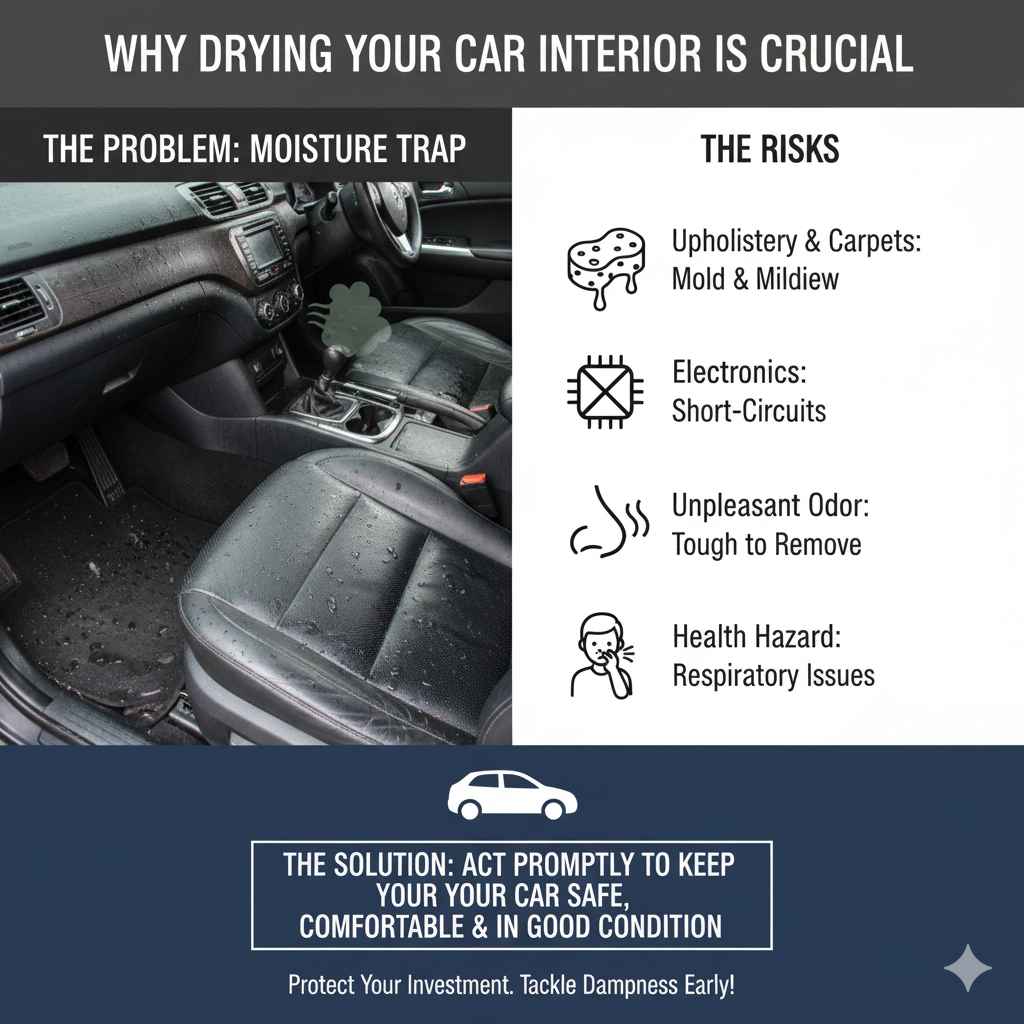
When water decides to take up residence in your car’s cabin, it’s more than just an annoyance. It’s a potential minefield of problems. The upholstery and carpets are like sponges, soaking up every drop. Electronics lurking beneath the dashboard and seats can short-circuit if exposed to prolonged moisture. And then there’s the smell – that unpleasant, damp odor that’s tough to get rid of and a sign that mold and mildew are likely starting to form. Mold isn’t just smelly; it can also be a health hazard. So, tackling interior dampness promptly is key to keeping your car safe, comfortable, and in good condition for years to come.
What You’ll Need: Drying Your Car Interior Tools
Before you dive in, gather these essential items. Having them ready makes the drying process much smoother. Think of this as your car interior drying toolkit!
- Absorbent Towels: Microfiber towels are excellent because they hold a lot of water and are gentle on surfaces. Old cotton towels or rags work too.
- Buckets: For wringing out towels and collecting water.
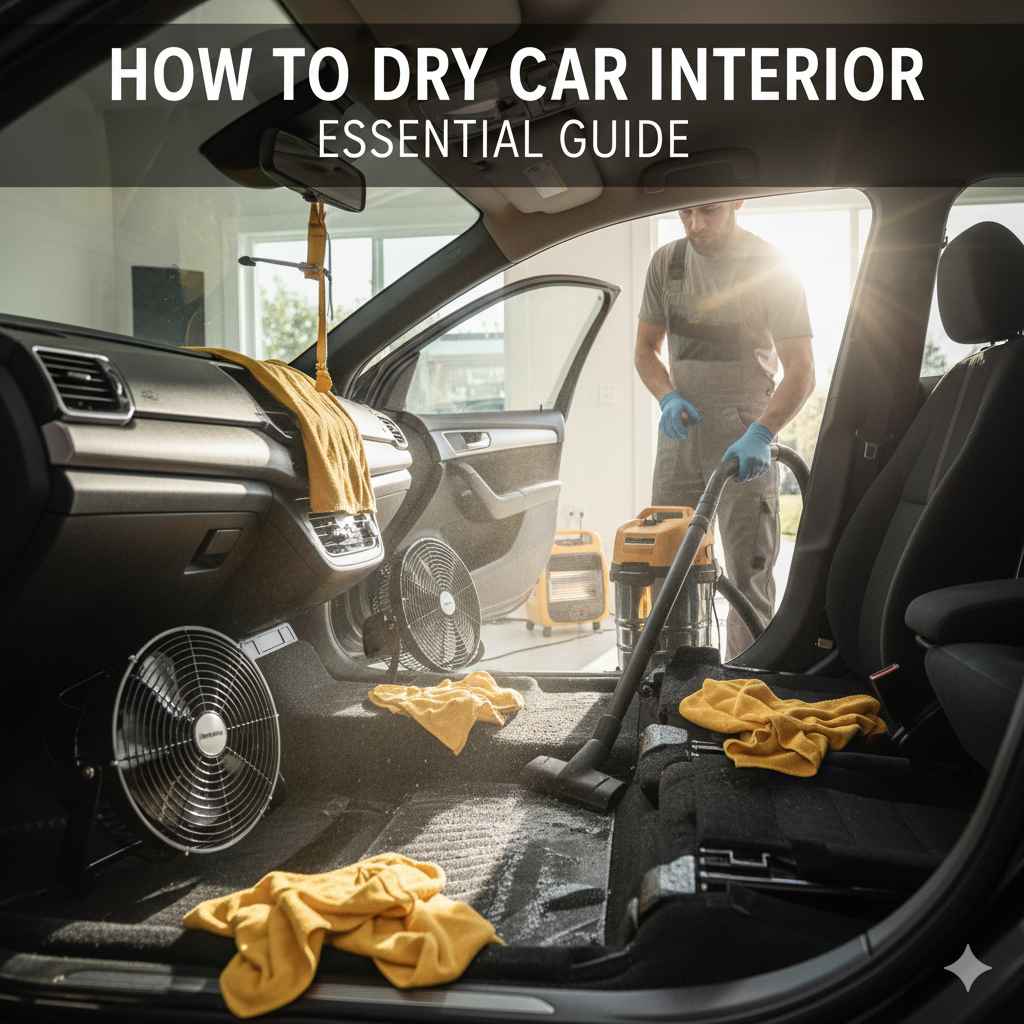
- Wet/Dry Vacuum (Shop-Vac): This is a lifesaver for sucking up standing water and moisture from carpets and upholstery.
- Fans: Household fans or even car-specific fans are crucial for circulating air and speeding up evaporation.
- Dehumidifier (Optional but Recommended): If you have access to one, a dehumidifier is incredibly effective at pulling moisture out of the air.
- Carpet Cleaner or Upholstery Cleaner (if needed): For addressing any stains or lingering odors.
- Baking Soda or Activated Charcoal: For absorbing persistent odors after drying.
- Gloves: To keep your hands clean, especially if the water source was questionable.
- Screwdriver or Trim Removal Tools (optional): If you need to access areas under mats or to remove certain mats for better drying.
Step-by-Step Guide: How to Dry Car Interior Thoroughly
Let’s get your car’s interior back to its dry, fresh state. Follow these straightforward steps:
Step 1: Remove Standing Water
The first and most critical step is to get rid of any puddles. Don’t let water sit and soak deeper into your car’s materials.
- Soak it Up: Grab your absorbent towels and start soaking up as much standing water as you can. Wring them out into a bucket and repeat.
- Use the Wet/Dry Vac: For larger amounts of water or water that has soaked into the carpet, your wet/dry vacuum is your best friend. Go over the wet areas thoroughly, making multiple passes to extract as much liquid as possible.
- Check Under Mats: Don’t forget to lift floor mats and check underneath them, as water can pool there. Remove mats if possible to allow them to dry separately.
Step 2: Blot and Absorb Excess Moisture
Even after vacuuming, your carpets and upholstery will still be damp. It’s time to blot and continue absorbing.
- Blotting Technique: Using dry, absorbent towels (microfiber is great here), firmly press down on the damp areas. Instead of rubbing, which can push moisture deeper or damage fibers, blot repeatedly.
- Strategic Placement: You can even lay dry towels flat on particularly damp sections and place heavy objects (like books or even just your shoes) on top to help them absorb moisture overnight. Change these towels as they become saturated.
Step 3: Ventilate, Ventilate, Ventilate!
This is where air circulation becomes your secret weapon. Moving air helps evaporate trapped moisture.
- Open Doors and Windows: On a dry, breezy day, open all your car doors and windows to allow maximum airflow.
- Use Fans: Place household fans inside the car, pointing them at the damp areas. If you have multiple fans, use them to create a cross-breeze. Consider running your car’s own fan system on a low setting with the windows cracked open (be mindful of security if leaving the car unattended).
- Consider a Dehumidifier: If you have access to a dehumidifier, place it near the car (if you can snake the hose inside) or run it inside the car with the doors closed and fans circulating the air. This is one of the most effective ways to pull moisture out of the cabin. According to the U.S. Department of Energy, dehumidifiers can significantly reduce indoor humidity.
Step 4: Target Specific Areas
Sometimes, moisture can linger in specific spots.
- Seats: Blot thoroughly. If they are cloth seats, ensure fans are directed at them. Leather seats should be wiped down and then allowed to air dry.
- Headliner: Be very gentle with the headliner as it can sag if it gets too wet. Blot very lightly if necessary and focus on ventilation.
- Carpets and Floor Mats: These are the biggest moisture holders. Ensure they are completely dry. If you removed them, let them dry thoroughly in the sun or a well-ventilated area.
Step 5: Address Lingering Odors
Once everything is dry, you might notice a damp smell. This is a sign that mold or mildew spores are present. Take action to neutralize them.
- Baking Soda: Sprinkle baking soda liberally over dry carpets and upholstery. Let it sit for several hours or overnight, then vacuum it up thoroughly.
- Activated Charcoal: Place bags of activated charcoal (available at pet stores or online) in various spots around the car. These are natural odor absorbers.
- Vinegar Solution (Use Sparingly): A diluted white vinegar solution (50/50 with water) can help kill mold spores and neutralize odors. Lightly spray affected areas, let sit for a short while, then wipe with a damp cloth and let dry completely. Test on an inconspicuous spot first to ensure it doesn’t discolor your materials.
- Professional Deep Cleaning: For stubborn odors or significant mold concerns, consider a professional detailing service.
Step 6: Prevent Future Water Intrusion
After the drying process is complete, it’s a good idea to figure out how the water got in to prevent it from happening again.
- Check Seals: Inspect door seals, window seals, and sunroof seals for cracks or damage. Replace any compromised seals.
- Inspect for Leaks: Look for other potential leak sources, like damage to the car’s body or faulty windshield sealant.
- Check AC Drain: The air conditioning system has a drain hose that can become clogged. If you notice water on the passenger side floor, this could be the culprit.
Dealing with Different Types of Interior Water Damage
The approach to drying might differ slightly depending on the source and extent of the water:
Spills (Drinks, Food)
These are usually localized. Blot them up immediately. If a sticky substance was involved, use a mild interior cleaner after the initial water removal. Focus on drying the affected spot thoroughly with fans.
Rainwater Leaks
This can affect larger areas, especially carpets and potentially the headliner, depending on where the leak is. The step-by-step guide above is ideal for this scenario, with a strong emphasis on ventilation and checking seals.
Flooding (Heavy Rain, Driving Through Water)
This is the most serious. If your car filled with a significant amount of water, you’ll need to be very thorough. A wet/dry vacuum is essential here. Removing seats or carpet might be necessary for older cars to dry completely. Be aware that significant water exposure can damage electrical components; if you suspect this, consult a professional. For guidance on flood-damaged vehicles, resources from organizations like the National Highway Traffic Safety Administration (NHTSA) can be helpful, although their advice often focuses on safety and potential write-offs. You can find general tips on car safety from governmental sources like NHTSA’s recall page, highlighting the importance of vehicle integrity.
Drying Mats and Removable Parts
When drying your car interior, don’t forget the components you can remove!
- Floor Mats: Remove rubber floor mats and let them dry completely in the sun or a warm, dry place. For carpet mats, you can follow similar blotting and fan-drying methods as the car’s interior carpet, or even take them outside for sun-drying.
- Seat Covers: If you have removable seat covers, take them off and wash and dry them according to their care instructions.
- Trunk Liner: The trunk is often forgotten but can hold a lot of water. Remove the liner and treat it like a large floor mat.
Table: Moisture Check – What to Look For
After your initial drying efforts, here’s a quick checklist to ensure you haven’t missed anything.
| Area | What to Check | Remediation |
|---|---|---|
| Carpets | Feel for dampness, especially deep down. Smell for mustiness. | Repeat blotting, vacuuming, and fan/dehumidifier use. |
| Seats (Fabric) | Press down on surfaces and seams. | Continue blotting and ensure good airflow to the seats. |
| Seats (Leather) | Wipe with a dry cloth. Check for any dampness seeping out. | Wipe with a clean, dry cloth. Apply a leather conditioner once fully dry. |
| Under Seats/Dashboard | Feel with your hand or a long, thin object if accessible. | Requires careful vacuuming and airflow. Consider removing panels if comfortable. |
| Seatbelts | Pull them out fully and check for dampness. | Retract them slowly to allow airflow. If very wet, let them hang out and dry. |
| Door Pockets | Check for moisture or spills. | Wipe dry and ventilate. |
Tips for Faster Drying
Want to speed things up? Use these pro tips:
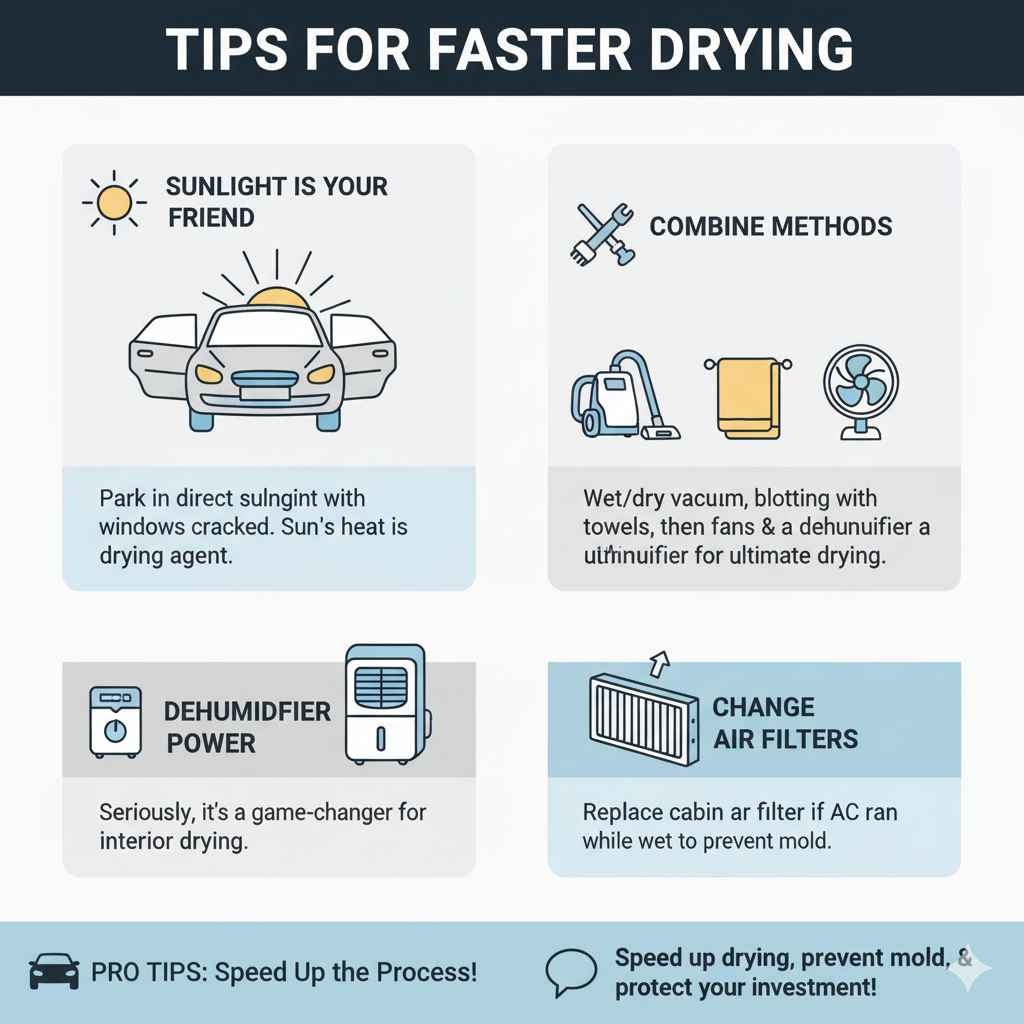
- Sunlight is your friend: Park your car in direct sunlight with the windows cracked open. The sun’s heat is a powerful drying agent.
- Combine methods: Use a wet/dry vacuum, followed by blotting with towels, then fans and a dehumidifier for the ultimate drying power.
- Dehumidifier power: Seriously, if you can get your hands on one, it’s a game-changer for interior drying.
- Change air filters: If your car’s AC system was running while wet, it’s a good idea to replace the cabin air filter afterward to prevent mold from growing in the system.
Frequently Asked Questions (FAQ)
Here are some common questions beginner drivers ask about drying car interiors:
Q1: How long does it usually take to dry a car interior?
A1: It depends heavily on how wet it is and the drying conditions. A small spill might dry in a few hours with good ventilation. A car soaked from rain or a leak could take 24-48 hours or even longer, especially if you’re relying solely on natural air circulation.
Q2: Can driving with wet floor mats damage my car?
A2: Yes, wet floor mats can be a breeding ground for mold and mildew. The constant dampness can also lead to rust on your car’s floor pan over time. It’s best to dry them thoroughly or replace them if they can’t be dried completely after significant water exposure.
Q3: My car smells musty after drying. What should I do?
A3: A musty smell indicates lingering moisture and potential mold or mildew. After drying, thoroughly vacuum the interior, use baking soda as an odor absorber, or consider an odor-eliminating spray specifically designed for car interiors. Ensure the area is completely dry before using any deodorizers.
Q4: Is it safe to use a hair dryer to dry my car interior?
A4: While a hair dryer can work for small, localized damp spots, it’s generally not recommended for large areas. It can take a very long time, and the heat might be too concentrated, potentially damaging delicate upholstery or car electronics if used improperly. Fans and natural airflow are safer and more effective for the whole cabin.
Q5: How do I know if my car’s electronics have been damaged by water?
A5: Signs of water damage to electronics include warning lights on the dashboard, malfunctioning audio systems, issues with power windows or locks, or strange electrical behavior. If you suspect water has significantly affected your car’s electrical system, have it inspected by a qualified mechanic immediately.
Q6: Can I just leave the windows cracked open to dry the car?
A6: Leaving windows cracked open is a good start for ventilation, especially on dry, breezy days. However, it’s usually not enough on its own for heavily soaked interiors. Combine it with fans and absorbents for the best results. Also, be mindful of security and weather changes if leaving windows open.
Conclusion
Dealing with a wet car interior might seem daunting, but as you’ve seen, it’s a manageable task with the right approach. By following these steps—removing standing water, blotting effectively, maximizing ventilation with fans and open doors, and tackling any lingering odors—you can restore your car’s cabin to a dry and pleasant state. Remember, addressing moisture quickly not only prevents immediate discomfort and smells but also protects your vehicle from long-term damage like mold, mildew, and rust. Keep these tips in mind, and you’ll be well-equipped to handle that next unexpected splash or leak with confidence. Your car’s interior will thank you for it!