How To Prevent Keyless Entry Car Theft (Proven Methods)
Losing your car feels like losing a part of yourself. It’s your freedom. It’s your work.
It’s your family’s transport. When cars go missing, it’s not just metal and glass. It’s stress.
It’s a huge headache. Modern car theft can feel scary. Many new cars use keyless entry.
This makes getting in easy. But it can also make them targets. Let’s talk about how to keep your car safe.
We’ll look at ways to stop thieves who use new tricks.
Keyless entry car theft can be prevented by blocking the signal your car key sends. Thieves use devices to extend this signal. Storing your key in a signal-blocking pouch or far from your car can stop them.
Simple steps can make a big difference in protecting your vehicle.
Understanding Keyless Entry and How Thieves Exploit It
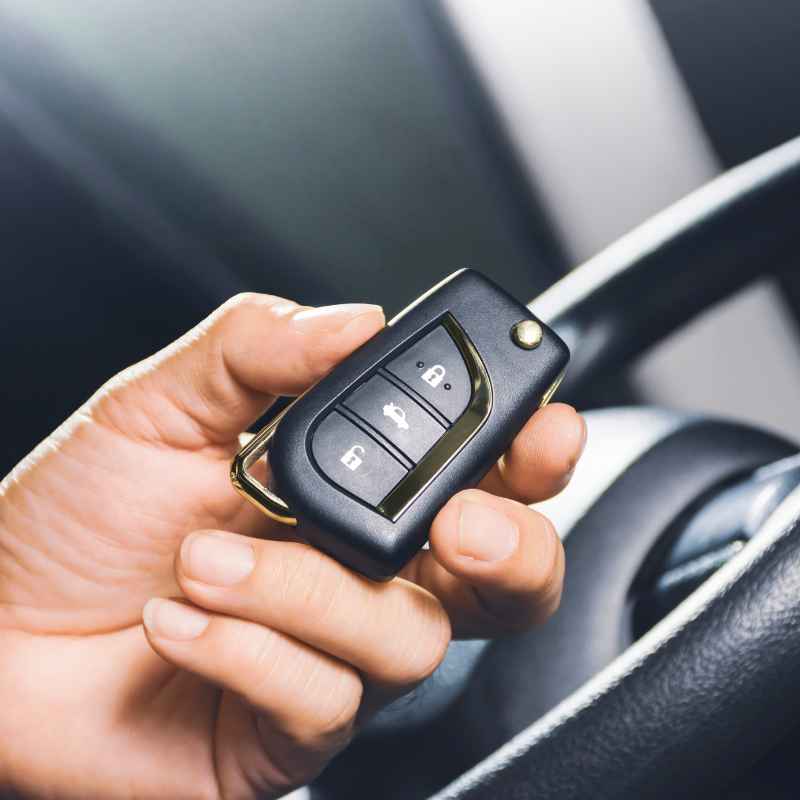
Keyless entry systems are super handy. You walk up to your car with the fob in your pocket. A button press starts the engine.
No fumbling for keys. This is great for us. But thieves have found ways around it.
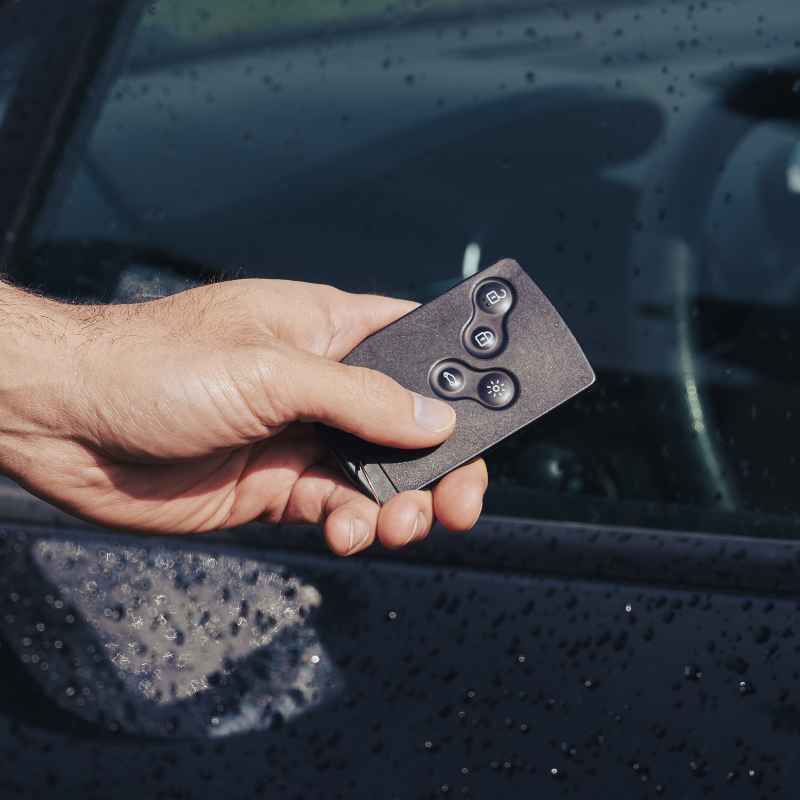
They use devices that can “catch” and boost the signal from your key fob. Imagine your key fob talking to your car. It’s sending a short radio signal.
This signal tells the car, “Hey, it’s me! Let me in.”
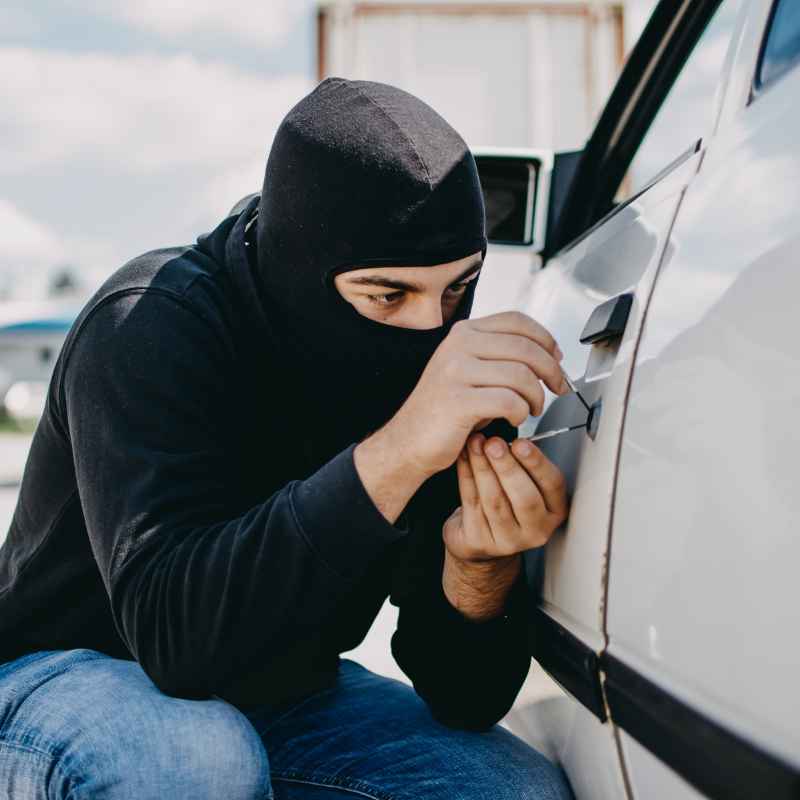
Thieves stand near your house or where you keep your keys. One thief holds a device. This device picks up the weak signal from your fob inside your home.
It makes the signal much stronger. Another thief stands by your car. They have a second device.
This device receives the boosted signal from the first device. Your car thinks the fob is right next to it. It unlocks.
The engine can then be started.
This is often called a “relay attack.” It’s a high-tech way to steal a car. It bypasses many security features. The car’s alarm might not even go off.
This is because the car thinks the legitimate key fob is nearby. It’s a real worry for car owners. Knowing how it works is the first step to stopping it.
We need to think about how our keys talk to our cars.
My Own Close Call with Signal Boosting
I remember one evening, I was just settling in after a long day. I was watching TV. My car was parked right outside my house.
It’s a common situation. I thought my car was safe. I grabbed a snack from the kitchen.
Suddenly, I heard a car door slam. It wasn’t mine. I peeked through the blinds.
A car I didn’t recognize was pulling away fast. My car!
My heart sank. I ran outside. My driveway was empty.
I called the police right away. They said it sounded like a relay attack. They explained how thieves use boosters.
I felt a mix of panic and frustration. How could this happen? My car was supposed to be secure.
They found my car a few days later. It was stripped of parts. That feeling of violation was awful.
It taught me a hard lesson about protecting my car.
Since then, I’ve become very careful. I learned that even parking close to home isn’t enough. Thieves can reach signals from further away than you think.
It’s not just about locking doors. It’s about understanding the technology and how it can be tricked. This experience made me want to share what I learned.
No one should have to go through that.
Keyless Entry Car Theft: The Signal Relay Scam
What it is: Thieves use two electronic devices. One captures your key fob’s signal near your home. The other amploys it by your car.
How it works: Your car thinks the key fob is close. It unlocks and starts.
The risk: It’s fast. It’s quiet. It bypasses typical car alarms.
The result: Your car is stolen in minutes.
Where Does Keyless Entry Theft Happen Most?
This kind of theft isn’t tied to one specific place. It can happen anywhere. But some spots are riskier.
Your home driveway is a big target. Thieves know cars are often parked there overnight. They can stand on the street or a nearby sidewalk.
They can still catch the signal. Garages can also be a problem.
If your garage door isn’t solid, signals can sometimes get through. Even a metal garage door might not block everything. Think about where you keep your keys at home.
If they are near an external wall or window, thieves have an easier job. They don’t need to get close to your car. They just need to be near your keys.
Other places are also targets. Apartment parking lots are common. You might be several floors up.
But the signal can still be boosted. Public parking garages can be risky too. Shopping centers, train stations, and workplaces are all places where cars can be targeted.
Thieves often drive around looking for easy opportunities. They want cars where the key fob is easily accessible to their devices.
The key factor is the proximity of the key fob to the thief’s equipment. It doesn’t matter if your car is in a busy or quiet area. If the signal can be captured and boosted, your car is at risk.
This means we need to be smart about how we store our fobs. Location, location, location matters for key fobs too!
Common Habits That Make Your Car More Vulnerable
We all have habits. Some are good. Some can make us targets.
With keyless entry, some everyday habits can unintentionally help thieves. One of the biggest is where you keep your car keys at home. Many people leave their keys on a hook by the front door.
Or on a small table near the entrance. This is convenient. But it’s also putting your car right next to the entry point.
If your keys are in your coat pocket hanging on a rack near the door, that’s also a risk. Or if they are in a bowl on a hallway table. Anything that places the fob close to the outside of your home makes it easier.
Think about your routine. Do you toss your keys into a bag near the door when you come in? That bag could become an unintentional signal extender.
Another habit is not thinking about your key fob’s battery. If your fob’s battery is weak, it might transmit a weaker signal. While this doesn’t directly help thieves, some systems might behave differently.
But the main issue is where you leave it. Also, some people might not realize how far the signal can travel. They might think their car is safe in the garage.
But if the keys are on the kitchen counter on the other side of the house, it could still be a problem.
We need to break these habits. We need to think of our key fobs as sensitive items. They need protection, just like our cars do.
Making small changes to where we store them can have a big impact. It’s about being mindful of this specific type of threat.
Quick Scan: Key Fob Storage Risks
- Near external walls/windows: Easy signal capture.
- By the front door: Direct access for boosters.
- On hallway tables/hooks: Same as above.
- In open bags/purses near entry: Acts as a signal extender.
- In the garage (if keys are inside house): Signal can still travel.
The Science Behind Signal Blocking: Faraday Pouches and Boxes
So, how do we stop these signals? The answer lies in blocking them. This is where a Faraday cage comes in.
A Faraday cage is an enclosure made of conductive material. It blocks external electric fields. Think of a metal mesh box.
When radio waves hit the cage, they are conducted around the outside. They can’t get inside.
A Faraday pouch or Faraday box for your car keys works the same way. These are designed specifically for key fobs. They are usually made of layers of special fabric or metal.
When you put your key fob inside and close it, it creates a barrier. This barrier stops the fob’s signal from escaping. It also stops outside signals from getting in.
The pouch acts like a shield. It tells the key fob, “You’re not talking to anyone right now.” When the signal can’t get out, thieves’ devices can’t catch it. Your car remains secure.
It doesn’t get the “unlock” command. It’s a simple, effective piece of technology.
When you buy one, look for reviews. Make sure it truly blocks the signal. Some cheaper ones might not be effective.
Test it yourself. Put your fob inside. Try to unlock your car.
It shouldn’t work. Then take it out. It should unlock your car again.
This test confirms it’s working. Using a Faraday pouch is one of the easiest and most effective ways to protect yourself from relay attacks.
Testing Your Faraday Pouch: A Simple Home Experiment
You’ve got your new Faraday pouch. You want to know if it really works. It’s super easy to test.
Grab your car keys. Make sure the fob is inside the pouch. Close the pouch securely.
Now, walk over to your car. Try to open the driver’s door. Push the unlock button on the door handle if your car has that feature.
Nothing should happen.
Your car won’t react at all. It’s like your fob isn’t even there. This is exactly what you want.
It means the pouch is doing its job. It’s blocking the signal. Now, take the fob out of the pouch.
Hold it in your hand. Try the car door again. It should unlock immediately.
This confirms the fob is working fine. The problem was just the signal getting out.
This little test gives you peace of mind. You know your investment is protecting your car. It’s worth the small effort.
If your pouch doesn’t pass this test, it’s not protecting you. You should look for a different one. Don’t take chances with your car’s security.
Testing is simple and important.
Myth vs. Reality: Key Fob Security
Myth: My car alarm will stop them.
Reality: Relay attacks trick the car into thinking the key is present. Alarms often don’t activate.
Myth: Parking in my driveway is safe.
Reality: Thieves can boost signals from the street, not just next to the car.
Myth: My car is too old to be a target.
Reality: Older cars with keyless entry are also vulnerable.
Myth: These devices are very expensive and hard to get.
Reality: Signal boosters are becoming more common and accessible to thieves.
What About Other Car Security Measures?
Faraday pouches are great. But they are not the only line of defense. Combining different methods makes your car much harder to steal.
Think of it like layering your protection. What else can you do?
Physical deterrents are still effective. A steering wheel lock, like The Club, is a visible barrier. It makes thieves think twice.
They are time-consuming to remove. Many thieves prefer easier targets. Wheel clamps are even more secure but can be bulky.
Immobilizers are built into most modern cars. They stop the engine from starting without the correct key. This is what the relay attack bypasses.
Aftermarket immobilizers can add an extra layer of security. Some work by requiring a hidden switch to be flipped before the car can start.
GPS trackers are also valuable. If your car is stolen, a tracker can help police find it. Some trackers are small and hidden.
They can be a lifesaver. Many insurance companies offer discounts for vehicles with approved tracking systems.
Alarms are still useful. Some advanced alarms can detect movement or impact. They might alert you to tampering even if the car is unlocked.
Pay attention to the types of alarms available. Some are much more sensitive than others.
Finally, good old-fashioned awareness helps. Be mindful of your surroundings. If you see suspicious activity, report it.
Don’t leave valuables in plain sight in your car. This attracts opportunistic thieves, though it’s less related to keyless entry theft specifically.
Real-World Scenarios: Protecting Your Car at Home and Away
Let’s look at some specific situations. At home, the best practice is to store your key fob in a Faraday pouch. Then, place that pouch inside a metal box.
A biscuit tin or a metal bread box can work well. Keep this box away from the front door and exterior walls. A drawer in the middle of your house is often a good spot.
If you have a garage, but your keys are inside the house, put them in the pouch and metal box. This double-layer protection is very effective.
When you are out and about, things get trickier. You can’t always have a Faraday pouch with you easily. However, if you are staying overnight somewhere, like a hotel, take your pouch.
Store the keys in it. Some people keep their keys in a metal tin in their hotel room. Or in their suitcase.
If you are in a public parking lot, try to park in a well-lit, busy area. If possible, park near security cameras.
If you have a very old car that doesn’t have keyless entry, you might think you are safe. But thieves can still break into older cars. They might hotwire them.
Or use other methods. The focus on keyless entry theft is because it’s the latest high-tech method. It targets a specific convenience feature.
Consider your car’s design. Some car manufacturers are improving their keyless entry systems. They have made the signals sleep faster.
Or require more interaction. Newer cars might have better built-in defenses. But even these can be targeted.
That’s why manual protection methods are still so important.
Key Fob Signal Strength Test
Test: Place key fob in Faraday pouch.
Action: Try to unlock your car.
Expected Result: Car does not unlock.
Next Step: Remove fob from pouch.
Next Action: Try to unlock car again.
Expected Result: Car unlocks normally.
When Is Your Car’s Signal “Normal” vs. “Concerning”?
Your car’s keyless entry signal is designed to be short-range. It’s meant to work when you are within a few feet of your car. If you are standing right next to your car and it unlocks, that’s normal.
If you have to be quite close for the door to open, that’s also normal.
When it becomes concerning is when the car unlocks unexpectedly. Or when you are far away from your car. For example, if you are inside your house.
And you hear your car alarm go off, or a door unlock. This is not normal. It suggests an external signal is interacting with your car.
Another concerning sign is if your car battery drains very quickly. Sometimes, a constant signal being sent or received can use more power. Though this is less common than the actual theft itself.
The biggest concern is when your car is stolen. And you know you had the key fob at home. You didn’t lose it.
You didn’t leave it in the car.
If you are ever worried about your car’s security, do a quick check. Park your car. Go inside your home.
Put your key fob in a Faraday pouch. Then check your car remotely using its app, if it has one. Or have someone else check it from outside.
If the car remains locked and secure, your protection is working. If it unlocks, something is wrong.
It’s also worth noting that some cars have a setting to turn off the keyless entry temporarily. This is a good failsafe if you are in a high-risk area. Check your car’s manual for this feature.
It might be called “key-away” or “motion lock.”
Simple Checks You Can Do Today
You don’t need to be a tech expert to protect your car. There are simple checks you can do right now. First, locate your car keys.
Where do you usually keep them when you are home? Are they near an outside wall? Are they close to the front door?
If so, decide on a new spot. A drawer in the center of your home is better.
Second, get a Faraday pouch or a metal box. Test it to make sure it blocks the signal from your key fob. Keep your fob in this protected spot whenever you are home.
This is the single most effective step you can take. It directly counters the relay attack.
Third, look at your car. Are there any obvious signs of tampering? Broken windows, forced locks?
If so, get them fixed immediately. Also, check your car’s manual. Learn about its security features.
Does it have a motion sensor? Can you disable the keyless entry if needed? Knowing your car is important.
Fourth, think about your driving habits. Do you often park in isolated areas? Try to park in busier, well-lit spots.
This deters opportunistic thieves. Even if they aren’t targeting keyless entry specifically, fewer targets mean less risk.
These are not complex steps. They are simple habits. They can make a huge difference in keeping your car safe.
Take a few minutes today to implement them. Your future self will thank you.
Quick Fixes & Tips
- Store keys in a Faraday pouch: Always when at home.
- Use a metal box: For extra protection.
- Keep keys away from doors/windows: In the center of your home.
- Park smartly: Well-lit, busy areas.
- Check your car manual: Understand its security features.
- Consider a steering wheel lock: Visible deterrent.
Frequently Asked Questions About Keyless Entry Theft
Will a Faraday pouch stop my car alarm from going off?
A Faraday pouch stops the signal from your key fob. This prevents the car from unlocking in the first place. So, if the car doesn’t unlock, the alarm won’t be triggered by a thief getting in.
The pouch protects against the initial entry, which is what triggers most alarms.
Can thieves still steal my car if I have a steering wheel lock?
A steering wheel lock makes it harder and takes more time to steal your car. Thieves prefer quick jobs. A visible lock like this can deter them.
However, determined thieves might still try. It’s a good layer of security, but not foolproof on its own for keyless entry cars.
How far can the signal from my key fob be boosted?
The signal can be boosted over surprising distances. Devices can extend the signal by hundreds of feet. This is why keeping your keys far inside your home is important.
Thieves don’t need to be right next to your car anymore. They just need to be close to your keys.
What if my car doesn’t have keyless entry? Am I safe?
If your car doesn’t have keyless entry, you are less vulnerable to relay attacks. However, all cars can be targets. Thieves use other methods like breaking windows or hotwiring older vehicles.
Basic security practices like locking doors and not leaving valuables visible still apply.
Are all keyless entry systems equally vulnerable?
No, some car manufacturers are improving their systems. Newer models might have features that make them harder to hack. For example, some systems detect when the key fob is not moving and turn off the signal.
However, even advanced systems can sometimes be bypassed. It’s always best to use preventative measures.
Can I disable keyless entry completely?
Many cars allow you to disable the keyless entry feature through the car’s settings menu. Check your owner’s manual. This will make you use the button on the fob to unlock your car.
This can be a good option when parking in high-risk areas for extended periods. Remember to re-enable it when you need it.
The Takeaway: Simple Steps for Peace of Mind
Protecting your car from modern theft methods isn’t about being paranoid. It’s about being smart. Keyless entry is a convenience we enjoy.
But it has risks. By understanding how thieves operate, we can take simple steps. A Faraday pouch and smart key storage are your best defenses.
They directly stop the signal boost. Layering this with other security tips makes your car a much harder target. Your peace of mind is worth the small effort.
Stay safe out there!
Products related to this article
Sponsored / affiliate links. As an Amazon Associate I earn from qualifying purchases. I may earn additional commission from eligible campaigns.
 ZSZ Smart Locks for Front Door, Keyless Entry Door Lock with Fingerprint, Keypad & Code Unlock, No App/Internet Needed, Auto Lock, Function Setting with Voice, Install in 90 Seconds, Low-Battery Alert
 4G GPS Tracker Car Anti-Theft Long Battery Life 20000mAh Real Time GPS Tracking Device Magnet No Geographic Restriction Car Tracker with Alerts, Geo Fence, History Playback TK905C