How To Read The Fuel Meter In Your Car (What It All Means)
Understanding your car’s fuel meter is key to stress-free driving. This guide breaks down the common symbols, needle movements, and warning lights. It helps you know when to refuel, avoid running out of gas, and understand your car better. Learn what each part of the fuel gauge means for your trips.
What is a Fuel Meter and Why It Matters
Your car’s fuel meter is also called a fuel gauge. It shows you how much fuel, or gasoline, is in your gas tank. This is super important!
Knowing your fuel level helps you plan your trips. It stops you from getting stuck with an empty tank. Most cars have a needle that points to a scale.
Others use lights that fill up or turn on.
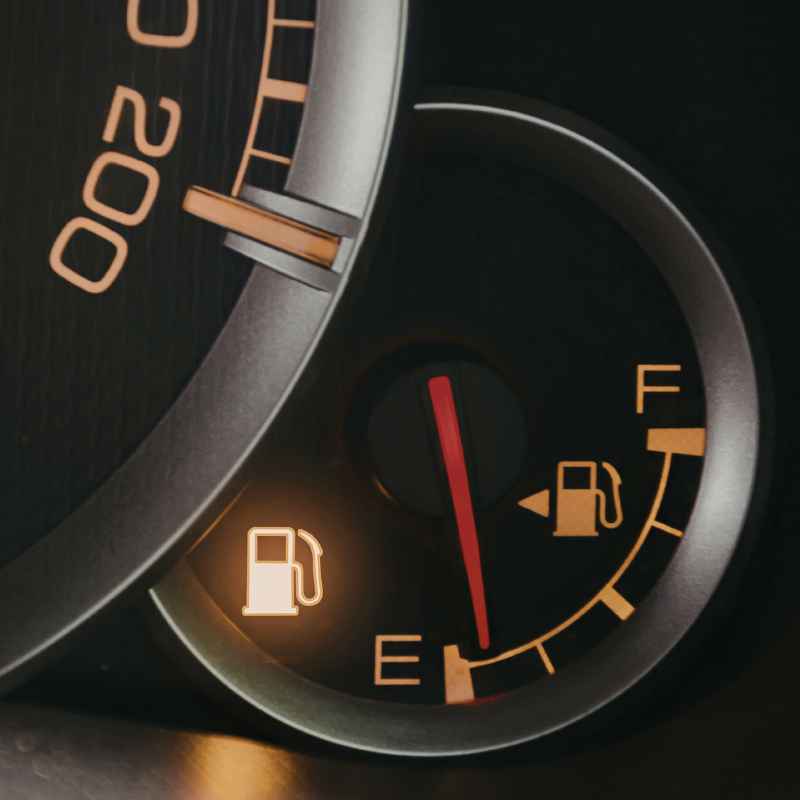
The needle usually moves from ‘F’ (full) to ‘E’ (empty). The scale might have lines or numbers. These show you how much gas is left.
For example, half a tank might be shown by the needle in the middle. Some newer cars have digital displays. They might show a number like “50 miles to empty.”
Why does this matter so much? Well, running out of gas is never fun. It can be dangerous, especially on a busy road.
It can also be bad for your car’s fuel pump. So, learning to read your gauge helps you avoid these problems. It makes driving easier and safer.
We’ll look at the common types and what they really mean.
My Own Fuel Gauge Fiasco
I remember this one time, years ago, I was driving from my parents’ house. It was late, and I was tired. My fuel light had been on for a while.
I thought, “I’ve got plenty of gas.” I’d seen that light before and still driven for miles. So, I ignored it. I was about an hour from home.
Suddenly, my car started sputtering. The engine lost power. I was on a dark stretch of highway with no gas stations for miles.
Panic set in fast. My heart was pounding. I tried to coast, but the car just stopped.
I had to call for a tow truck. It was cold, late, and I felt so foolish. That experience taught me a big lesson.
Never assume you know how much gas is left. Always understand your fuel gauge. Even the little warning light has a purpose.
I learned that day that understanding the simple things about your car makes a huge difference.
Common Fuel Gauge Symbols
The ‘F’ and ‘E’ Marks: These are the most common. ‘F’ means your tank is full. ‘E’ means it’s empty.
The needle or bars move between these.
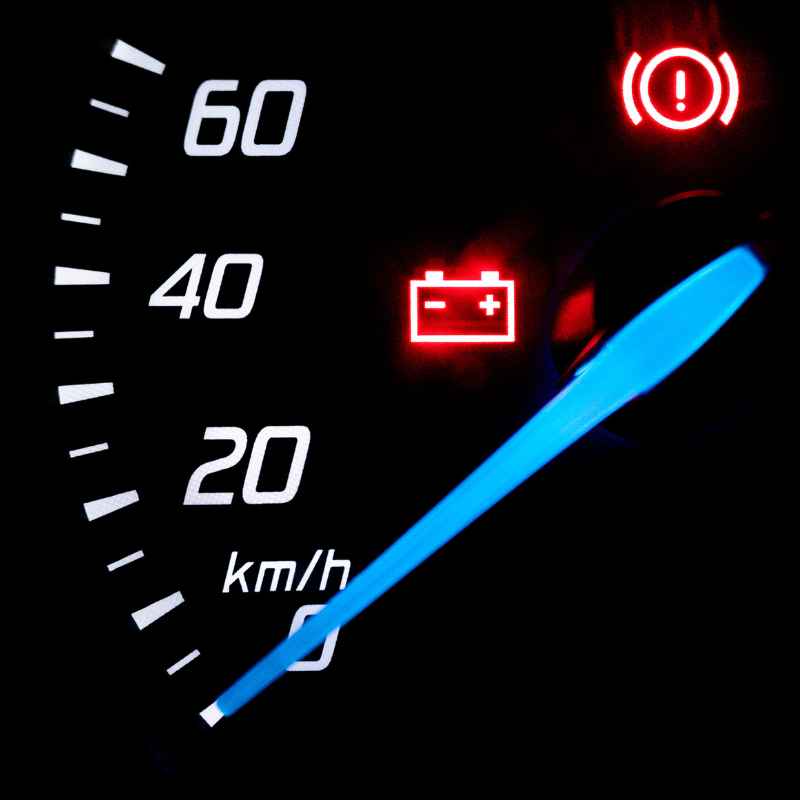
The Needle Gauge: A needle that points to a scale. It’s like a clock hand showing your fuel level.
The Bar Gauge: A series of bars or lights. As you use gas, they disappear. More bars mean more gas.
Low Fuel Warning Light: A small light that turns on. It usually looks like a gas pump. It means you need to get gas soon.
Understanding the Needle Gauge
Most cars use a needle gauge. It’s a simple design. You see a half-circle or a straight line.
On one end is ‘F’ for full. On the other end is ‘E’ for empty. In between, there are marks.
These marks help you see how much gas is left. They are usually in quarters or halves.
When you fill up your tank, the needle should point to ‘F’. As you drive, the needle moves toward ‘E’. The speed it moves depends on how you drive.
Hard acceleration and fast speeds use more gas. This makes the needle drop faster.
Real-World Tip: Sometimes, the needle might not go all the way to ‘F’. This is usually okay. It might mean the tank isn’t completely full.
Or, the gauge might be slightly off. Don’t worry too much if it’s just a tiny bit below ‘F’.
What about when the needle is near ‘E’? This is where the warning light often comes on. We’ll talk more about that light soon.
For now, just know that when the needle is low, it’s time to think about finding a gas station.
Quick-Scan Table: Needle Gauge Reading
| Needle Position | Meaning | Action |
| At ‘F’ | Full Tank | Good to go! |
| Halfway Mark | About half a tank left | Plan your next fill-up soon. |
| Near ‘E’ | Low on fuel | Find a gas station promptly. |
| Needle below ‘E’ | Out of fuel | You need immediate assistance. |
The Digital Fuel Display
Many newer cars have digital fuel displays. These can be part of the main dashboard. Or they might be in a small screen.
Instead of a needle, you might see a series of bars. These bars fill up. As you use gas, the bars disappear from top to bottom.
Some digital displays are even smarter. They estimate how many miles you can drive. This is called “miles to empty” (MTE) or “range.” It calculates this based on your current fuel level and recent driving.
So, it might say “100 miles to empty.”
These digital systems are very helpful. They give you a precise number. But remember, they are estimates.
Your actual miles might vary. This is because of how you drive. If you suddenly drive faster or uphill, the range might drop quickly.
Experience Note: I’ve noticed that when my digital display shows a low range, like under 30 miles, I start feeling a bit anxious. It’s like a mental countdown. I always try to fill up before it gets that low.
It’s just peace of mind for me.
The digital bars work similarly to the needle. More bars mean more gas. Fewer bars mean less gas.
If all the bars are gone, you’re likely out of fuel. The warning light will also usually come on.
Stacked Micro-Sections: Digital Display Insights
Bar Indicators: Full bars mean a full tank. Empty bars mean you need gas.
Miles to Empty (MTE): This is an estimate. It changes based on your driving style.
Accuracy: MTE is usually accurate but can change quickly on hills or with faster speeds.
Warning Threshold: Most systems warn you when MTE is around 20-30 miles.
The Dreaded Low Fuel Warning Light
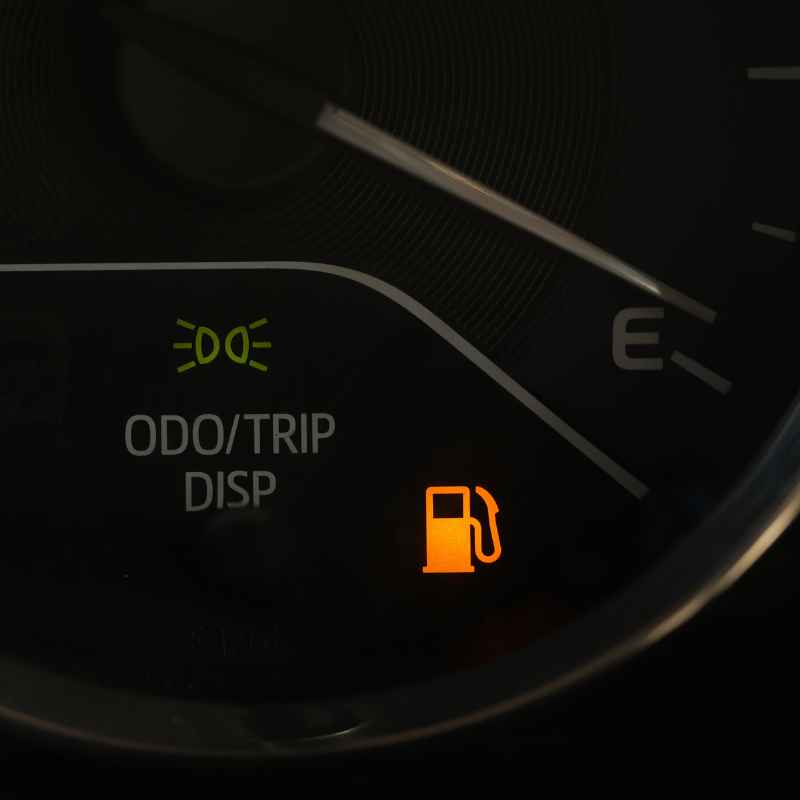
This is the light that makes most drivers pay attention. It usually looks like a small gas pump. It’s often yellow or amber.
When it comes on, it means your fuel level is very low. It’s a signal to find a gas station soon.
How much gas is left when this light turns on? It varies by car model. But typically, it means you have about 1 to 3 gallons left.
For most cars, this is enough to drive about 20 to 50 miles. This gives you some time to find a station.
Why does this light exist? It’s a safety feature. It helps prevent you from running out of gas unexpectedly. It also serves as a backup if your fuel gauge needle is stuck or broken.
Always take this light seriously. Don’t ignore it like I did once!
Some cars might have a blinking light. This is usually a more urgent warning. It means you have even less fuel left.
The exact amount can be found in your car’s owner’s manual. That’s the best place to check for your specific car model.
Contrast Matrix: Low Fuel Light Myths vs. Reality
| Myth | Reality |
| The light means you have almost no gas. | You usually have 1-3 gallons left. Enough for 20-50 miles. |
| It’s okay to drive on the light for a long time. | It can damage your fuel pump over time. |
| All cars have the same amount of fuel when the light comes on. | The amount varies by car make and model. |
| The light means I need to go to the nearest gas station immediately. | It means you should find a station soon, but you have a buffer. |
What Happens When You Run Out of Gas
Running out of gas is more than just an inconvenience. It can cause real problems for your car. The fuel pump in your car works by pumping fuel from the tank to the engine.
This fuel also helps keep the pump cool.
When the tank is empty, there’s no fuel to pump. The pump can overheat. This can damage it.
In some cases, you might need to replace the fuel pump. This can be an expensive repair. It’s definitely not something you want to happen.
Also, when you run out of gas, air can get into the fuel lines. This is called “sucking air.” After you add more gas, you might need to “bleed” the fuel system. This means getting all the air out.
Your car might not start easily at first. It might run rough until the air is gone.
Expert Advice: Mechanics often say it’s best to avoid letting your fuel level drop below a quarter tank. This gives the fuel pump enough fuel to stay cool. It also means you have a buffer.
You don’t have to stress about finding a gas station the moment your light comes on.
So, while the gauge might seem simple, understanding its function protects your car. It saves you from unexpected costs and trouble. Always aim to refuel before the tank is completely empty.
Even the warning light gives you a margin of error. Use it wisely.
The Fuel Sender Unit and Its Role
How does the fuel gauge know how much gas is in the tank? It’s thanks to a part called the fuel sender unit. This unit is located inside your fuel tank.
It’s a float device. Think of it like the float in a toilet tank.
As the fuel level goes up or down, the float moves. This movement changes an electrical signal. This signal is sent to your dashboard.
The fuel gauge then shows this signal as a level. It’s a clever system that translates liquid volume into a visual reading.
Sometimes, the fuel sender unit can go bad. If it does, your fuel gauge might act strangely. It might show the wrong level.
It could jump around. Or it might stay stuck at a certain point. This is another reason why sometimes your gauge might not seem accurate.
My Experience: I had a car once where the fuel sender was faulty. The needle would swing wildly. Sometimes it said I had a full tank, then a moment later it would be near empty.
It was very confusing. I ended up getting it fixed. It was a relief to have a working gauge again.
It made me appreciate how much we rely on these simple car parts.
The sender unit is part of the overall fuel system. It works with the fuel pump and the gauge itself. Together, they give you the information you need to keep driving.
Observational Flow: Fuel Gauge System
1. Fuel Tank: Holds the gasoline.
2. Float Arm & Float: Inside the tank. Moves up and down with fuel level.
3. Variable Resistor (Rheostat): Connected to the float arm. Changes electrical resistance based on float position.
4. Electrical Signal: The changing resistance creates a signal.
5. Dashboard Gauge: Receives the signal and shows the fuel level (needle or bars).
6. Warning Light: Triggers when the signal indicates a critically low fuel level.
Factors Affecting Fuel Gauge Readings
You might have noticed your fuel gauge doesn’t always behave perfectly. Several things can make it read a little differently. Understanding these can help you trust your gauge more.
Car Inclines: If your car is parked on a hill, the fuel will shift to one side of the tank. This can make the gauge read slightly lower or higher than it actually is. When you drive on flat ground, it should correct itself.
Fuel Tank Shape: Fuel tanks aren’t always simple shapes. Some have baffles inside to prevent fuel sloshing. These can sometimes affect the float’s movement slightly.
This means the gauge might not be perfectly linear. The first half of the tank might seem to last longer than the second half.
Temperature Changes: Extreme temperature changes can affect fuel density. This might cause minor fluctuations in the gauge reading. It’s usually very slight, though.
Recent Refueling: After you fill up, it might take a few minutes of driving for the gauge to reach the absolute ‘F’ mark. This is normal. The fuel needs to settle in the tank.
Age of Vehicle: Older cars might have less precise fuel gauges. Components like the sender unit can wear out over time. This can lead to less accurate readings.
My Observation: I always pay attention to how my car behaves on different slopes. If I park on a steep hill, I know the gauge might be a bit off. Once I start driving on a flat road, it usually corrects.
It’s good to be aware of these little quirks.
So, while your fuel gauge is a reliable tool, it’s not always 100% perfect. Use it as a guide, but also use your common sense. Keep an eye on the total miles you can drive and plan accordingly.
When Is It Normal for the Gauge to Be Low?
It’s normal for your fuel gauge to show a low reading when you’ve been driving for a while. Especially after a long trip or many short trips without refueling. If the needle is near ‘E’ or the bars are few, it simply means you’ve used a lot of fuel.
It’s also normal for the low fuel warning light to come on. As we discussed, this usually means you have about 1-3 gallons left. This is your cue to refuel.
It’s not a sign of a problem. It’s the car telling you it’s time for a fill-up.
Normal Behavior: A needle that moves steadily down as you drive is normal. Digital bars disappearing is also normal. The gauge showing less fuel after driving uphill or at high speeds is expected.
If you just filled up and the gauge is already showing low, that’s not normal. If the needle is stuck at ‘E’ or ‘F’ all the time, that’s not normal either. We’ll cover those issues in the next section.
Basically, if the gauge reflects your driving and fuel usage, it’s working as intended. The main thing is to react when it signals “low.”
When to Worry About Your Fuel Gauge
You should worry if your fuel gauge is acting erratically or giving unbelievable readings. Here are some signs that something might be wrong:
Needle Stuck: If the needle stays on ‘F’ even after you’ve driven a good distance, or stays on ‘E’ when you know you have gas, that’s a problem. It could be a faulty sender unit or gauge.
Erratic Readings: If the needle or bars jump around randomly while you’re driving, this is also a sign of trouble. It means the electrical signal from the sender is unstable.
Gauge Doesn’t Move After Refueling: You fill your tank, but the gauge still reads almost empty. This is a clear indicator that the system isn’t registering the fuel correctly.
Low Fuel Light Stays On: If the low fuel light comes on when your gauge shows a full or half tank, there might be an issue with the warning light system or the sender unit.
Inaccurate Readings Consistently: If you consistently run out of gas long before the gauge or warning light indicates you should, the gauge is not reliable.
My Personal Check: When I get gas, I always watch the gauge. I expect it to climb and eventually reach ‘F’. If it stops climbing before ‘F’ or doesn’t move at all, I know there’s something to look into.
It’s a quick way to spot a potential issue.
If you notice any of these problems, it’s best to have your car checked by a qualified mechanic. They can diagnose whether the issue is with the sender unit, the gauge itself, or the wiring.
Split Insight Panel: Gauge Troubleshooting
Symptom: Gauge always reads empty. Possible Cause: Faulty sender unit, broken wire, or bad gauge. Action: Mechanic inspection needed.
Symptom: Gauge always reads full. Possible Cause: Sender stuck at full, bad connection, or faulty gauge. Action: Mechanic inspection needed.
Symptom: Gauge jumps around. Possible Cause: Loose wiring connection, failing sender unit, or dirty contacts. Action: Mechanic inspection needed.
Symptom: Low fuel light stays on. Possible Cause: Faulty sending unit sensor or electrical issue. Action: Mechanic inspection needed.
Tips for Accurate Fuel Reading
To get the most accurate reading from your fuel gauge, follow these simple tips:
Know Your Car: Every car is a little different. Get to know how your specific fuel gauge behaves. Pay attention to how quickly the needle moves.
Note when the low fuel light typically comes on.
Check Your Owner’s Manual: Your car’s owner’s manual is the best source of information. It will tell you exactly what each symbol means. It can also tell you the approximate fuel capacity when the warning light comes on.
Observe After Refueling: Notice how your gauge reacts after you fill up. Does it go to ‘F’ immediately? Does it take a few minutes?
This helps you understand its normal behavior.
Don’t Rely Solely on the Gauge: While the gauge is important, it’s also wise to keep track of your miles. If you know your car gets about 30 miles per gallon, and you have 10 gallons, you have about 300 miles of range. This is a good backup calculation.
Plan Your Refuels: Don’t wait until the light is on to look for gas. It’s a good habit to refuel when your tank is about a quarter full. This gives you plenty of options and reduces stress.
My Habit: I try to fill up my car every Sunday. It’s a routine. I know I’ll have a full tank for the week.
Even if I only use half a tank, I top it off. This way, I never have to worry about the gauge on a busy Monday morning.
By being observant and proactive, you can make sure you always have enough fuel and understand your gauge’s signals better.
Frequent Questions About Fuel Meters
What does the yellow gas pump light mean?
The yellow or amber gas pump light is your low fuel warning indicator. It means your fuel tank is running low, and you should plan to refuel soon. It typically signifies that you have about 1 to 3 gallons of fuel remaining, giving you a range of roughly 20 to 50 miles.
Why does my car’s fuel gauge drop fast at the beginning?
This is common because the upper portion of your fuel tank might be larger than the lower portion. Also, the fuel sender unit’s sensor might not be perfectly linear. So, the first half of the tank can sometimes appear to be used up faster than the second half.
Can I damage my car by driving with the low fuel light on?
Yes, you can. Driving on fumes means there’s no fuel to keep the electric fuel pump cool. The fuel pump circulates fuel from the tank to keep itself lubricated and cooled.
Running the tank dry can cause the pump to overheat and potentially fail, leading to costly repairs.
How accurate is the “miles to empty” display?
The “miles to empty” (MTE) display is an estimate. It calculates your remaining range based on your current fuel level and your recent driving habits. It can change quickly if you start driving faster, drive uphill, or encounter heavy traffic.
It’s a useful guide, but not a precise guarantee.
What should I do if my fuel gauge is not working correctly?
If your fuel gauge is stuck, jumping around, or showing incorrect readings, it’s best to have it inspected by a mechanic. The issue could be with the fuel sender unit in the tank, the gauge itself on the dashboard, or a wiring problem. Ignoring it can lead to running out of gas unexpectedly.
Is it bad to fill my gas tank all the way to the top?
It’s generally not recommended to fill your tank until the gas pump clicks off multiple times. Overfilling can potentially damage the charcoal canister or other components of the evaporative emissions system (EVAP). It’s usually best to let the pump stop naturally when it clicks off the first time.
How do I know if my fuel gauge is broken?
Signs of a broken fuel gauge include it always reading empty, always reading full, or the needle/bars jumping erratically. If you fill up your tank and the gauge doesn’t move, or if the low fuel light comes on when the tank is full, your gauge is likely malfunctioning.
Final Thoughts on Your Fuel Meter
Your car’s fuel meter is more than just a dial or a few lights. It’s a vital tool for safe and efficient driving. Understanding how it works helps you plan better.
It also prevents you from facing uncomfortable situations like running out of gas.
Pay attention to the needle or bars. React to the low fuel warning light. Know that your gauge might have slight quirks.
By keeping these simple points in mind, you can drive with more confidence. You’ll also help keep your car in good condition. Happy driving!
Products related to this article
Sponsored / affiliate links. As an Amazon Associate I earn from qualifying purchases. I may earn additional commission from eligible campaigns.