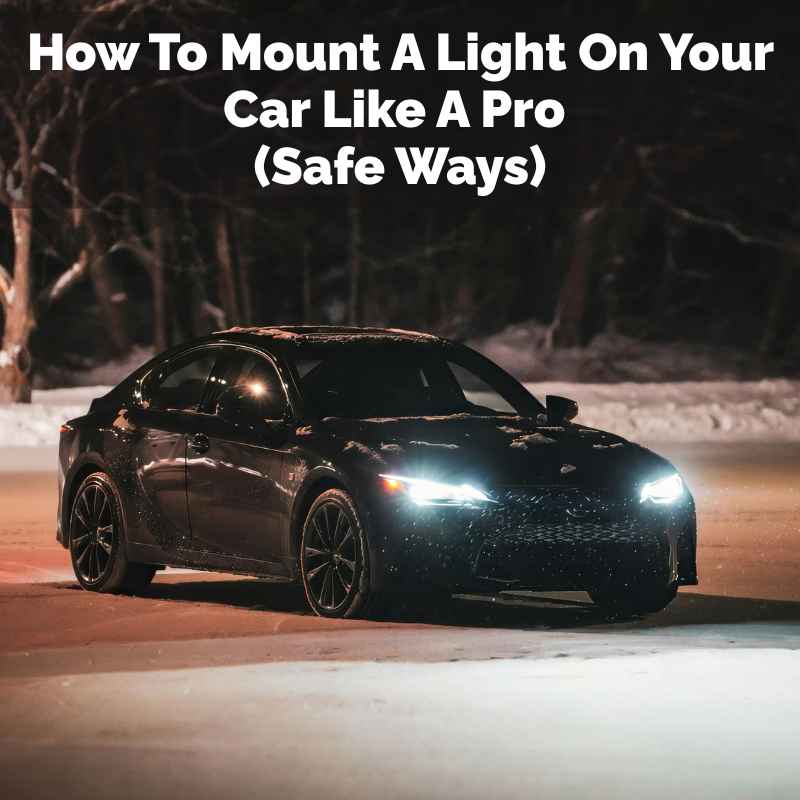
How To Mount A Light On Your Car Like A Pro (Safe Ways)
Mounting lights on a car involves choosing the right type of light, a secure mounting location, proper wiring, and ensuring all connections are protected. Safety and legal compliance are key.
Understanding Your Light Options
First, what kind of lights are we talking about? Lights for cars aren’t all the same. There are fog lights.
They help you see in misty or foggy weather. Then there are driving lights. These are brighter and meant for open roads.
You might want rock lights for off-roading fun. Or maybe you need work lights for a truck bed. Each type has a different job.
Knowing this helps you pick the right one.
Spotlights shine a narrow beam far ahead. Floodlights spread light over a wide area. Some lights are small and discrete.
Others are big and bold. Always check what the light is designed for. Using a light for the wrong purpose can be unsafe.
It might even be against the law in some places.
The brightness of a light is measured in lumens. More lumens mean more light. The color of the light is measured in Kelvin.
A lower Kelvin number (like 3000K) is more yellow. A higher number (like 6000K) is more white or blue. For driving, a natural white light (around 4000K to 5000K) is often best.
It causes less eye strain.
You also need to think about power. Lights use electricity. They draw power from your car’s battery.
Some small lights use very little power. Big, bright lights can use a lot. You need to make sure your car’s electrical system can handle the extra load.
This is a very important step.
Choosing the Right Spot
Where you put the lights matters a lot. It needs to be a strong place. The spot must hold the light steady.
You don’t want it shaking or falling off. Think about where the light needs to shine. For fog lights, they usually go low on the front bumper.
This gets the light under the fog. Driving lights often go higher up. This helps light up the distance.
Many people mount lights on their car’s roof rack. Others put them on a bull bar or nudge bar. Some trucks and SUVs have special mounting brackets.
These attach to the hood or fender. Always check if the spot you choose is strong enough. It should not vibrate loose when you drive.
Consider the angle. You want the light to point where you need it. You might need to adjust it.
Make sure the mounting hardware lets you do this. Some mounts are fixed. Others allow for up and down movement.
Side-to-side movement is also useful.
It’s also smart to protect the lights. If they are low on the bumper, they can get hit by rocks. Some lights come with protective covers.
You can also buy them separately. This helps keep them safe from damage. Think about how often you drive on rough roads.
This will help you decide how much protection you need.
Mounting Location Ideas
Front Bumper: Great for fog lights. Gets light low where fog is.
Grille Guard/Bull Bar: Common spot for extra driving lights. Offers some protection.
Roof Rack: Good for wide-area lighting or very long-range beams. Check rack strength.
Hood Mounts: Often used for smaller lights or to angle them outwards.
Truck Bed/Tailgate: Useful for work lights or reverse lights.
Wiring It Up Safely
This is where many people get nervous. Wiring needs to be done right. Bad wiring can cause fires or damage your car.
Most new lights come with a wiring harness. This is a set of cables with connectors. It usually includes a switch and a relay.
A relay is a small switch. It uses a little bit of power from your car to control a lot of power for the light. This protects your car’s original wiring.
It’s a really important part of the setup. You connect the light to the relay. The relay then connects to your battery.
Your car’s main power goes to the switch.
The switch is what you turn on and off. It should be connected to a fused power source. A fuse is a safety device.
It melts and breaks the circuit if too much power flows. This stops damage to your car. Always use the correct fuse size.
The light’s instructions will tell you what to use.
You need to run wires carefully. Keep them away from moving parts. Avoid sharp edges.
Use zip ties or wire loom to keep them neat and safe. You can run wires through existing holes in the car’s firewall. This is a thick wall between the engine and the cabin.
If you can’t find a hole, you might need to drill one. Always seal any new holes you make.
Make sure all connections are waterproof. Use crimp connectors with heat shrink tubing. Or use solder and heat shrink.
This stops moisture from getting in. Moisture can cause corrosion. Corrosion leads to bad connections and light failures.
Important: If you’re not comfortable with car wiring, it’s best to get help. A mechanic or an auto electrician can do it for you. This ensures it’s done safely and correctly.
It’s worth the cost to avoid bigger problems later.
Wiring Basics
- Relay: Controls high power with low power.
- Fuse: Protects against too much electricity.
- Switch: Turns the light on and off.
- Wire Loom/Zip Ties: Keep wires neat and protected.
- Waterproof Connectors: Prevent corrosion and failure.
My Own Wiring Scare
I remember one time I was adding some extra lights to my old pickup truck. It was a freezing December evening. I had just gotten the lights mounted on the new brush guard.
I felt pretty proud of myself. Then came the wiring. I thought I knew what I was doing.
I skipped the relay at first. I just connected the lights straight to a switch and then to the battery. I figured they were just small lights.
Everything seemed fine for a few days. I’d flick them on, and they lit up. Then one morning, I noticed a faint burning smell.
It was coming from the dashboard. My heart sank. I quickly turned off the lights.
The smell got a little stronger. I spent the next hour pulling apart my dashboard. I found a melted wire where I had made my connection.
It was hot to the touch.
That was a wake-up call. I learned a big lesson that night. Never skip the relay and fuse.
Those safety steps are there for a reason. I ended up buying a proper wiring harness. I re-did the whole thing correctly.
It took longer, but I felt so much safer knowing it was done right. It was a good reminder that sometimes taking the easy way isn’t the smart way.
Legal and Ethical Considerations
Adding lights to your car isn’t just about mechanics. You also need to think about the rules. Laws about car lights vary by state.
Some states have strict rules on what kind of lights you can have. They also say where you can put them. And how bright they can be.
For example, flashing colored lights are usually only for emergency vehicles. Red and blue lights are often illegal for regular drivers. White headlights need to be a certain height.
Some places don’t allow lights to shine forward of the car’s center line. Or they might restrict how many extra headlights you can use.
Fog lights are usually okay. But they must be used only in fog. Using them on a clear night can blind other drivers.
This can be dangerous. It’s always a good idea to check your local laws. A quick search online for ” vehicle lighting laws” should help.
Beyond laws, there’s courtesy. Don’t use lights that blind oncoming traffic. This includes your high beams.
It also includes very bright auxiliary lights. Think about other drivers. We all share the road.
Being considerate makes driving safer for everyone.
Quick Legal Checks
- Color Restrictions: Red/blue usually reserved for emergency.
- Beam Direction: Many laws about where lights can point.
- Brightness Limits: Some areas cap light output.
- Usage Rules: Fog lights only in fog.
- Number of Lights: Limits on total number of forward-facing lights.
Always check your local Department of Motor Vehicles (DMV) or equivalent.
Types of Mounts and Brackets
Getting the right hardware is key. You need mounts that fit your car. And they need to be strong.
There are many types available.
Universal Brackets: These are made to fit many vehicles. They often clamp onto existing parts of your car. Like a license plate bracket or a roof rack.
They are a good option if you don’t want to drill holes.
Vehicle-Specific Brackets: These are designed for a particular make and model. They bolt into factory locations. They often look cleaner and are more secure.
You might find them for popular trucks and SUVs.
Grille Guards and Bull Bars: These are larger metal structures. They mount to the front of your vehicle. They provide a strong platform for multiple lights.
They also offer some protection to the front end.
Roof Rack Mounts: If you have a roof rack, there are many ways to attach lights. Some racks have built-in light mounts. Others require separate brackets that clamp onto the rack bars.
Underhood/Fender Mounts: Some specialized brackets attach near the hood hinges. They allow you to mount lights that can swing outwards. Or they can be positioned to light up the sides of the vehicle.
When choosing a mount, consider the weight of the light. A small LED pod is very light. A large off-road light bar can be quite heavy.
Make sure the mount and the car part it attaches to can support the weight. Also, think about vibration. Rough roads can shake things loose.
Look for sturdy construction and tight-fitting bolts.
Mounting Hardware Styles
Style: Universal Brackets
Pros: Easy to install, no drilling needed, fits many cars.
Cons: Can look less integrated, may vibrate more.
Style: Vehicle-Specific Brackets
Pros: Clean look, secure fit, uses factory points.
Cons: Only fits one model, might require some disassembly.
Style: Grille Guards / Bull Bars
Pros: Very strong, can hold multiple lights, adds front protection.
Cons: Can be expensive, changes vehicle appearance significantly.
Protecting Your Lights and Wiring
Beyond the initial installation, think about long-term care. Your lights and their wiring need protection. Especially if you drive in harsh conditions.
Wire Protection: Use split loom tubing or corrugated conduit. This covers the wires. It shields them from road debris.
It also prevents them from rubbing against metal parts. Zip ties are great for keeping bundles of wires tidy. But make sure they don’t pinch the wires.
Waterproofing: As mentioned, waterproof connections are vital. Silicone sealant can add an extra layer of protection. You can use it around grommets where wires pass through metal.
Or seal any gaps in the housing of the lights themselves.
Physical Guards: For lights mounted low on the bumper, consider rock guards. These are wire cages. They fit over the light.
They stop stones and other objects from hitting the lens. Some aftermarket lights come with these. You can often buy them separately.
Regular Checks: Make it a habit to inspect your lights and wiring. Do this maybe once a month. Look for any loose connections.
Check for frayed wires. See if any protective tubing has come loose. Ensure the lights are still aimed correctly.
Cleaning: Keep the lenses clean. Dirt and grime can reduce light output. Use a soft cloth and a mild cleaner.
Avoid harsh chemicals that could damage the plastic or coatings.
Long-Term Care Tips
- Inspect Monthly: Check wires, connections, and aim.
- Clean Lenses: Use soft cloth and mild soap.
- Seal Gaps: Use silicone sealant for extra protection.
- Replace Damaged Parts: Don’t ignore frayed wires or loose mounts.
Adding Lights: A Step-by-Step Overview
Let’s walk through the general process. This assumes you have your lights, mounts, and wiring kit ready. Always read the specific instructions for your lights and hardware.
Step 1: Plan Your Placement. Decide exactly where the lights will go. Consider visibility and aesthetics. Mark the locations.
Step 2: Mount the Lights. Attach the lights to your chosen brackets. Or attach the brackets to your car. Make sure they are snug and secure.
Tighten all bolts firmly.
Step 3: Run the Wiring. Route the wiring harness from the lights towards the battery and switch location. Use zip ties to secure the wires neatly. Avoid pinch points and hot areas like the exhaust.
Step 4: Connect the Relay and Fuse. Mount the relay. Connect it according to the harness instructions. Install the fuse holder.
Make sure it’s close to the battery connection.
Step 5: Install the Switch. Find a good spot for the switch in your car’s cabin. Drill a small hole if needed. Feed the switch wires through.
Connect them to the harness and the car’s ignition power or accessory power. This ensures the lights turn off when the car is off, saving the battery.
Step 6: Connect to Power. Connect the main power wire from the harness to the positive (+) terminal of your car’s battery. Make sure the fuse holder is in line. Connect the ground wire to a clean metal part of the car’s chassis.
Step 7: Test Everything. Turn on your car. Flip the switch for the lights. Do they turn on?
Do they work correctly? Check for any unusual noises or smells.
Step 8: Final Checks and Tidying. Once you’re sure everything works, secure all wires completely. Clean up your workspace. Make sure no tools or parts are left behind.
Installation Checklist
- Measure Twice, Drill Once: Ensure precise placement.
- Secure Mounts: Tighten all bolts firmly.
- Neat Wiring: Use zip ties and loom for protection.
- Relay & Fuse: Essential for safety and system protection.
- Ignition Power: Connect switch to accessory power to avoid draining battery.
- Test Thoroughly: Check function before final cleanup.
When Are Extra Lights Necessary?
Sometimes, adding lights is more than just a style choice. It can be about safety. In many parts of the U.S., winters mean short days.
Rural areas might have unlit roads. If you live in a place with frequent fog, heavy rain, or snow, extra lights can be a game-changer.
For example, if you often drive on deer paths or animal trails, better lights can help you see hazards sooner. This gives you more time to react. It can prevent accidents.
This is especially true for people who work night shifts or have long commutes. They might spend a lot of time driving in the dark.
Off-roaders rely on extra lights. They need to see rocks, roots, and dips in the trail. These lights are often more robust.
They need to withstand bumps and vibrations. They also need to provide wide and powerful illumination.
Work trucks often benefit from lights. A mechanic who needs to work on a vehicle at night needs good lighting. Farmers might need lights to work fields after sunset.
Construction workers often use powerful, portable lights for job sites.
The key is to use the right light for the right situation. Don’t use a super-bright spot beam on a winding, two-lane road at night. It will blind other drivers.
Instead, use a good quality set of headlights and maybe some fog lights if needed. Always think about how your lights affect others.
What If My Lights Flicker or Don’t Turn On?
It can be frustrating when new lights don’t work right. Flickering lights are often a sign of a loose connection. Or it could be a bad ground.
Make sure the ground wire is attached to clean metal. Scrape away any paint or rust at the connection point.
If the lights don’t turn on at all, check the fuse first. Is it blown? If so,
Check the switch. Is it getting power? Sometimes switches can be faulty.
Also, check the relay. Sometimes a relay can fail. You can often test a relay by swapping it with an identical one from a less critical system (like a horn relay, if it’s the same type).
If the lights work then, you know the relay was the problem.
Another common issue is insufficient power. If you have too many lights on one circuit, or if the wiring is too thin, the lights might be dim or flicker. Always use the correct gauge wire for the amperage.
The wiring harness kit usually specifies this.
If you’ve checked all the basics and still have problems, don’t be afraid to ask for help. Auto parts stores often have knowledgeable staff. Online forums for your specific car model can be a great resource.
Sometimes, a professional installer can spot a problem in minutes.
Troubleshooting Quick Guide
Problem: Flickering Lights
Possible Causes: Loose connection, bad ground, low voltage.
Problem: Lights Won’t Turn On
Possible Causes: Blown fuse, switch issue, relay failure, wiring short.
Problem: Dim Lights
Possible Causes: Undersized wiring, weak ground, not enough power from battery.
Frequently Asked Questions About Mounting Car Lights
How do I know if my car’s electrical system can handle extra lights?
Most modern cars can handle a few small LED lights. For larger or multiple lights, check your car’s alternator output. You can usually find this in your owner’s manual or a sticker under the hood.
Compare that to the total amperage draw of your new lights. If the lights’ draw is more than about 75% of the alternator’s capacity, you might need an upgrade.
Can I just connect new lights directly to my headlights?
No, this is generally a bad idea. Your headlight circuits are designed for a specific load. Adding extra lights can overload them.
This could blow fuses, damage wires, or even damage your car’s computer. Always use a separate relay and fuse for auxiliary lights.
What is the difference between LED and Halogen lights for cars?
LED (Light Emitting Diode) lights use much less power than halogen lights. They are also more durable and last much longer. LEDs produce a brighter light for the same amount of energy.
Halogen lights use a filament that heats up, which uses more power and generates more heat.
Are there specific regulations about auxiliary light colors in the US?
Yes, regulations vary by state, but generally, the use of red and blue lights is restricted to authorized emergency vehicles. White lights are typically allowed for forward-facing auxiliary lights, but their placement and brightness can be regulated. Always check your state’s specific laws.
How do I aim my new driving lights correctly?
Driving lights should illuminate the road ahead without blinding oncoming drivers. Park your car on a level surface facing a wall about 25 feet away. Turn on your lights.
Adjust them so the beam is focused on the road, slightly higher than your headlights, but not so high that it blinds others. For spot beams, the goal is distance. For flood beams, it’s width.
What size fuse should I use for my new car lights?
The fuse size depends on the power draw of your lights. Your light manufacturer or wiring harness kit will specify the correct fuse size. If not, a general rule is to choose a fuse that is 25% higher than the expected amperage draw of the lights.
For example, if your lights draw 4 amps, use a 5-amp fuse.
Final Thoughts on Safe Light Mounting
Adding lights to your car can be a rewarding project. It improves your visibility and can even customize your vehicle’s look. The most important thing is to do it safely.
Take your time. Plan your steps. Use the right parts.
If you’re unsure about wiring, get professional help.
By understanding your lights, choosing good mounting spots, and wiring them correctly, you can enjoy your new lights for years. Drive smart, drive safe, and happy lighting!
Products related to this article
Sponsored / affiliate links. As an Amazon Associate I earn from qualifying purchases. I may earn additional commission from eligible campaigns.