How to Maintain a Car Battery: Service Checklist & Test Schedule
Maintaining a car battery comes down to four routine jobs: keep the terminals clean, check the voltage, keep the battery secure and charged, and get it load tested before it fails. AAA says most batteries last three to five years with regular care, and a neglected one can strand you sooner. This checklist covers the schedule, the cleaning steps, the voltage numbers, charging and when to hand the job to a shop.
Car Battery Maintenance Schedule: How Often to Do Each Task
AAA and Interstate Batteries agree on the routine but not on every interval. The table shows what each says.
Best Terminal Cleaning Tool Pick
 |
Steelman 4-Way Battery Terminal Post Cleaner Best for: The terminal cleaning step of a routine battery service on a top-post battery. Why we picked it: The listing describes a 6-bladed tapered reamer for the cable clamps plus angled post cleaners that clean and reshape the posts, so one tool covers both contact surfaces. Main drawback: The listing says it fits top-post style batteries, so check where your terminals are first. It cleans only; it does not test or charge anything. |
As an Amazon Associate we earn from qualifying purchases. Spec-based pick from the listing, not a hands-on test.
| Task | Interval | Source |
|---|---|---|
| Clean terminals, check corrosion | Every 3 to 6 months, or when buildup shows | AAA: 3-6 months. Interstate: about every six months. |
| Test the battery | At least twice a year, or each oil change | Interstate: semiannually or every oil change. AAA’s article cites every six months or 6,000 miles from age three. |
| Test before extreme seasons | Before summer and winter | Interstate, for very hot or cold places. |
| Check the hold-down | Regularly | AAA. |
| Electrolyte level (removable caps only) | Regularly if you can | AAA: distilled water only. Interstate, stored flooded batteries: every 45 to 60 days. |
| Drive the car | About 20 minutes weekly | AAA: a battery lasts only a month or two unused. |
Car Battery Servicing Steps at a Glance
- Gear up: eye protection, gloves, closed-toe shoes, good airflow.
- Inspect: cracks, swelling, wetness, corrosion.
- Disconnect: negative cable first, then positive (AAA and Interstate).
- Clean: baking soda paste, wire brush on posts and clamps, dry everything.
- Reconnect: positive first, then negative, then protect the metal.
- Check the hold-down and, on removable-cap batteries, the electrolyte.
- Test the voltage, and book a load test from three years of age.
Safety First
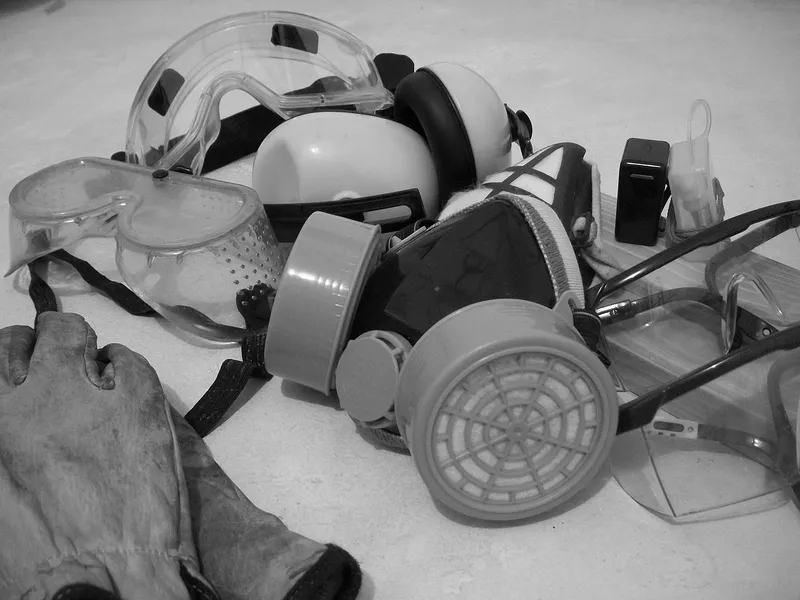
Interstate Batteries lists gloves, eye protection and closed-toe shoes as the basic precautions, and says to work with good airflow around the battery. It also says a battery that swells and gets hot to the touch has been overcharged and can be dangerous and even explode, so use the correct charger.
Before disconnecting, Interstate recommends connecting a memory saver, because disconnecting without one can cause expensive electrical problems. The battery is not always under the hood: Interstate notes it can be in the trunk, under a seat or in the fender well, so check the owner’s manual. For a hybrid or electric vehicle, follow the manual for the 12-volt battery and leave anything high voltage to a professional. Our guide to disconnecting car battery terminals covers that step alone.
Inspecting The Battery
A visual check takes two minutes. Interstate’s testing video lists the warning signs: a dashboard battery icon, a rotten-egg smell (which it ties to overcharging), a clicking noise at start, and a case swollen “like a football.”
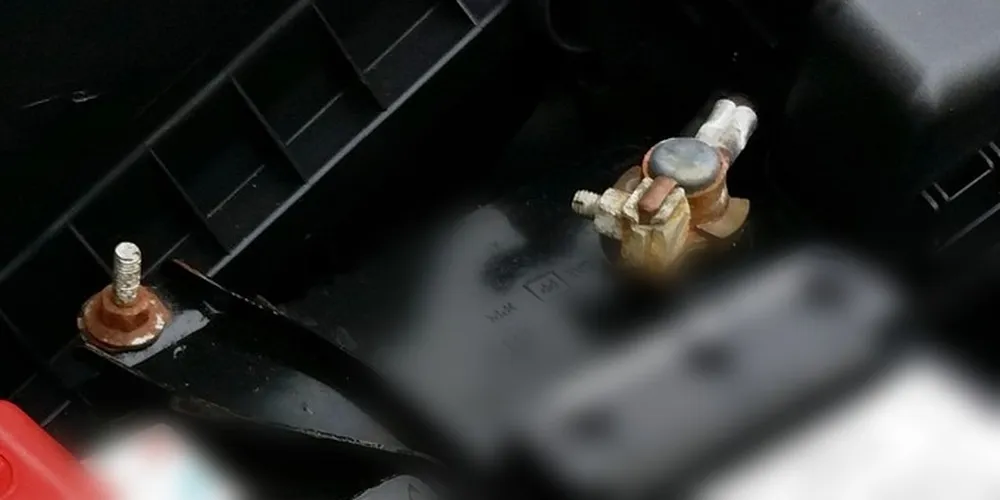
Corrosion is the most common sight. Interstate’s cleaning guide says blue-green deposits point to corroded copper such as the clamps, white to lead, zinc or aluminum, and brown or red to iron or steel, and that corrosion alone does not mean the battery is bad. If it returns within weeks, see why a car battery keeps corroding.
For cracks, wetness at the terminal or bubbling liquid, Interstate advises taking the car, battery still in it, to a mechanic. AAA says a cracked, bulging or leaking battery should be replaced immediately. When a shop sells a battery service, Interstate’s video describes it as checking wetness, water levels and connectors, plus tests of internal condition and reserve capacity.
What’s a Normal Car Battery Voltage Reading?
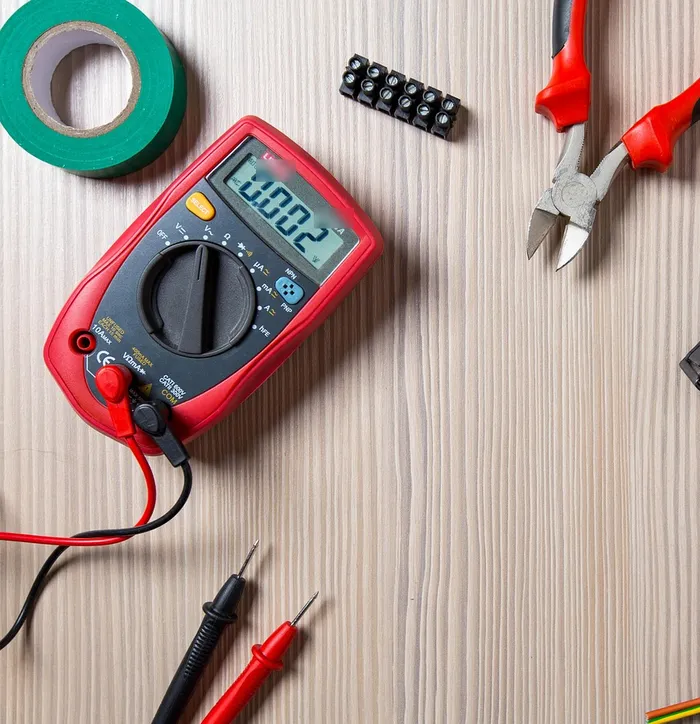
Interstate’s procedure: run the headlights about two minutes to clear surface charge, switch them off, set the multimeter to a 0 to 20 volt range, and touch the leads to the positive (usually red, plus sign) and negative terminals. Then start the engine and read again.
| Reading | What it means | Source |
|---|---|---|
| 12.6 V or higher, engine off | A charged battery | Interstate FAQ |
| About 12.5 V, engine off | Resting target | Interstate video |
| 11.9 V or below | Considered dead | Interstate FAQ |
| 13.7 to 14.7 V, engine running | Normal charging range | Interstate FAQ |
| Under 13 V, engine running | Possible bad alternator or battery | Interstate video |
The two Interstate pages round the resting figure differently, so treat anything near 12.5 to 12.6 V as charged. Voltage shows charge, not full health; only a load test does that, which is why AAA’s mobile battery service uses one. For the deeper diagnosis, see how to check car battery health.
Cleaning The Battery
AAA recommends cleaning every 3 to 6 months or whenever buildup shows. Interstate’s video and cleaning guide add the detail.
- Disconnect the negative cable, then the positive. Interstate suggests covering the positive terminal so the cable cannot touch the post.
- Mix baking soda and water into a paste. Interstate’s video uses one part baking soda to five parts water; its guide says distilled water, mixed in a cup or on the brush, never on the case.
- Brush it onto the corrosion with a plastic brush or old toothbrush, sweeping away from the vent caps.
- Use a wire brush on the posts and clamps, even where you see no corrosion.
- Rinse lightly and dry the terminals and case top. None of the mixture should get inside.
- Reconnect the positive first, then the negative.
- Protect the metal: AAA uses petroleum jelly; Interstate lists corrosion spray or dielectric grease applied after reconnecting, not between post and clamp.
Interstate warns against cola, which it says leaves a gummy residue, and calls WD-40 not ideal. For the cable side, see how to clean car battery cables.
Securing The Battery
AAA says vibration from rough roads or engine movement can damage a battery’s internal connections, so use a hold-down. At each service, push the battery by hand; if it moves, tighten the hold-down first. See how to secure a car battery.
Fluids And Ventilation
Only a battery with removable caps has an electrolyte level to check. AAA says low levels can point to a leak or cause overheating, and that the fix is distilled water only, never tap water, without overfilling. See whether car batteries have water.
Is a Sealed (AGM or EFB) Battery Different to Maintain?
Yes. AAA says AGM and EFB batteries are sealed and maintenance-free and should not be opened or topped off. You still clean the terminals, check the hold-down and test the voltage. Confirm the type in the owner’s manual, and replace like with like: Interstate says a flooded battery where an AGM is needed, or the reverse, requires a compatible charging system. See what AGM car batteries are.
Charging The Battery
AAA recommends a maintainer (smart charger) for a car that makes short trips or sits, because it stops when the battery is full, unlike a basic trickle charger. It also advises limiting trips under 10 miles and avoiding accessories with the engine off.
Interstate’s FAQ order for a regular charger: ignition and charger off, red clamp to positive, black to negative, set the charger per its directions, then after charging disconnect the negative clamp before the positive. It estimates 2 to 4 hours to start the engine and 10 to 24 hours for a full charge. See how to charge a car battery.
Professional Testing And Service
A multimeter is a good home check, but AAA’s mobile battery service runs a load test, which it says assesses real-world performance better than a voltage check. This table sorts jobs by who should do them, using only what the sources say.
| Job | DIY or shop | What the source says |
|---|---|---|
| Visual inspection, cleaning terminals | DIY | AAA: basic maintenance can be done yourself; if in doubt, use a trusted shop. |
| Voltage check | DIY | Shows charge, not full health (Interstate). |
| Load test | Shop or mobile service | AAA: more accurate than a voltage check. |
| Cracked, bulging or leaking case | Shop | AAA: replace immediately. Interstate: take the car to a mechanic. |
| Rotten-egg smell | Shop | Interstate: stay away and get it checked. AAA: replace promptly. |
| Repeated jump-starts | Shop | AAA: the battery may be losing its ability to hold a charge. |
AAA lists three to five years for lead-acid batteries and five to seven for AGM; Interstate says a battery is at its best for about three years. See how long a car battery lasts.
Long-term Battery Care
AAA’s advice: shade or a car cover in heat, a garage or battery blanket in cold, a weekly drive of about 20 minutes, and fewer short trips. For storage, Interstate says to clean the case, scrub the terminals, charge if needed, and check the charge every 45 to 60 days. A discharged battery can freeze at about 15 degrees F; a full one not until roughly 75 degrees F below zero. More in how to store a car battery.
Troubleshooting Common Issues
These are the service mistakes the sources warn about.
| Mistake | Why it matters | Source |
|---|---|---|
| Topping off with tap water | Dilutes the electrolyte; distilled only | AAA |
| Opening an AGM or EFB battery | Sealed and maintenance-free | AAA |
| Mixing cleaner on the case or in the vent caps | Keep it out of the battery | Interstate |
| Disconnecting with no memory saver | Can cause expensive electrical problems | Interstate |
| Cleaning with cola | Leaves gummy residue | Interstate |
| Using the wrong charger | Overcharging can swell and overheat a battery | Interstate |
If a battery keeps going flat, AAA lists slow cranking, dim idle headlights and a lit warning lamp as signs it is dying, and Interstate says a running voltage under 13 V can mean a bad alternator or battery. A shop test saves guesswork.
Proper Disposal And Recycling
Battery Council International says many states require retailers to accept used lead-acid batteries, and a refundable core charge is allowed in all 50 states and required by law in over 30. Interstate says to return the old battery with the new purchase or you will likely be charged a fee.
Frequently Asked Questions
How Do You Service a Car Battery at Home?
Wear eye protection and gloves, inspect the case, disconnect the negative cable then the positive, clean with baking soda paste and a wire brush, dry, reconnect positive then negative, protect the terminals and check the voltage. If the case is cracked, swollen or leaking, stop and see a shop.
What Maintenance Does a Car Battery Need?
Per AAA and Interstate: clean terminals every 3 to 6 months, test at least twice a year, keep the hold-down tight, check electrolyte only on removable-cap batteries, and drive regularly.
How Often Should You Clean Car Battery Terminals?
AAA says every 3 to 6 months or when buildup shows. Interstate says about every six months.
Do Sealed or AGM Batteries Need Maintenance?
No fluid checks. AAA says AGM and EFB batteries are sealed and should not be opened, but you still clean terminals and test the battery.
How Do You Know When to Replace Instead of Service the Battery?
AAA lists age, repeated jump-starts, a cracked, bulging or leaking case, electrical problems and a rotten-egg smell. A load test confirms it.
Is It Illegal to Throw Away a Car Battery?
Battery Council International says many states require retailers to accept used lead-acid batteries. Check your state’s rules and return old batteries to a retailer.
Conclusion
Inspect, clean every 3 to 6 months, test at least twice a year, keep the battery secure and charged, and replace it on the evidence of a load test, not voltage alone. Treat a cracked, swollen or smelly battery as a shop job, and follow the owner’s manual for anything specific to your vehicle.
Products related to this article
Sponsored / affiliate links. As an Amazon Associate I earn from qualifying purchases. I may earn additional commission from eligible campaigns.