How to Use the Air Recirculation (Circulation) Button in a Car
Press the button with the car-and-curved-arrow icon, usually right next to the AC controls, to turn on air recirculation. It seals off outside air and recycles the air already inside your cabin, which cools the car faster in traffic, heat, or dust.
Most drivers call it the “recirculation button,” but it is also commonly searched as the air circulation button, the recycle-air button, or just “that button with the car and the arrow.” All of those point to the same control. Below is exactly how to find it, when to use it, and when you should switch it back to fresh air instead.
Quick Answer
Look for a button showing a car outline with a curved arrow looping back inside it, usually on or near the climate control panel. Press it once to recirculate cabin air (light turns on); press again for fresh outside air. Use recirculation in traffic, heat, dust, or bad smells. Switch to fresh air on long drives, when only one person is in the car, or if the windows start fogging up — recirculated air holds onto passenger breath, and that raises humidity and CO2 levels the longer it runs.
What Does the Recirculation Button Actually Do?
The recirculation button is part of your car’s climate control (HVAC) system. In its default “fresh air” setting, the system pulls air in from outside the car, through a vent near the windshield base, cools or heats it, then pushes it into the cabin. Pressing the recirculation button closes off that outside intake with a flap or door inside the HVAC housing, so the system instead pulls air from inside the cabin and cycles it back through the vents.
Because the system is only re-cooling or re-heating air that is already close to your target temperature, it reaches a comfortable cabin faster and with less strain on the AC compressor. It also stops new outside air, and whatever is in it, from entering the car at all. For a closer look at the mechanics behind this, see our full breakdown of what the air recirculation button actually does inside your car’s AC system.
KEEP TABS ON CABIN AIR
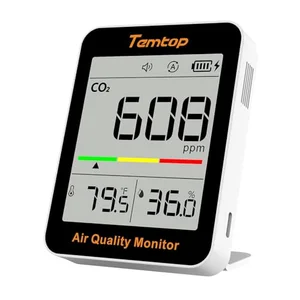 |
Temtop Portable CO2 Air Quality Monitor – $32.99 A small plug-in or battery monitor that shows real-time CO2 levels, so you know exactly when recirculated cabin air has gone stale instead of guessing.
|
How to Turn On the Recirculation Button
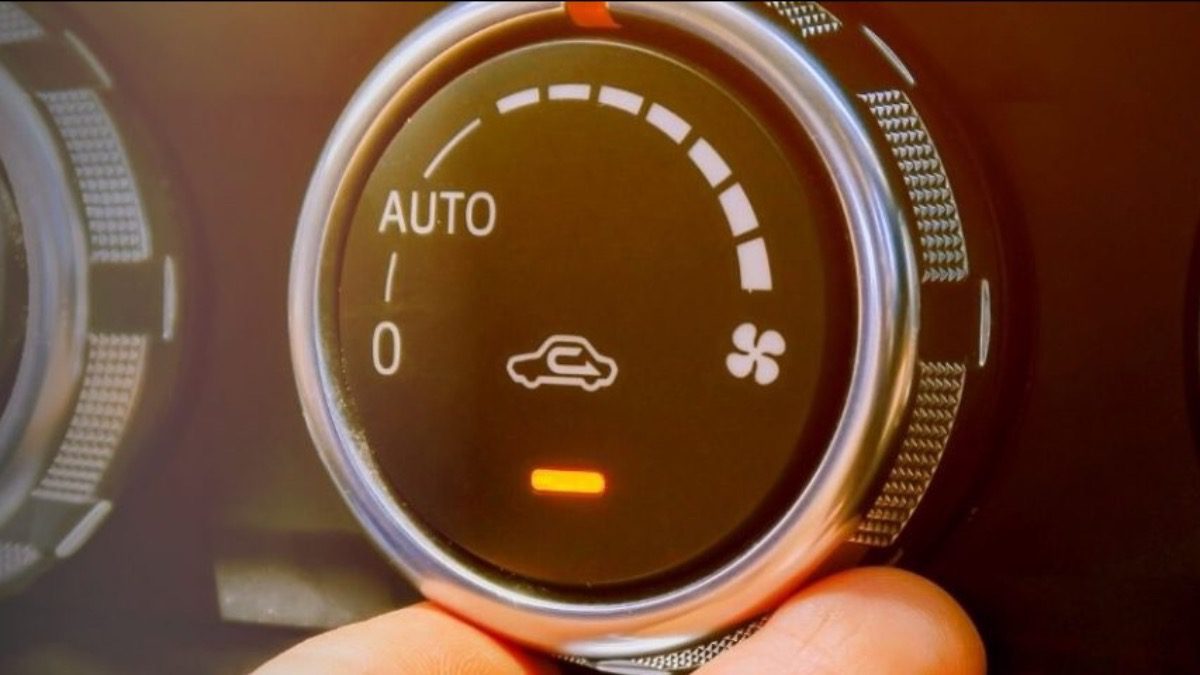
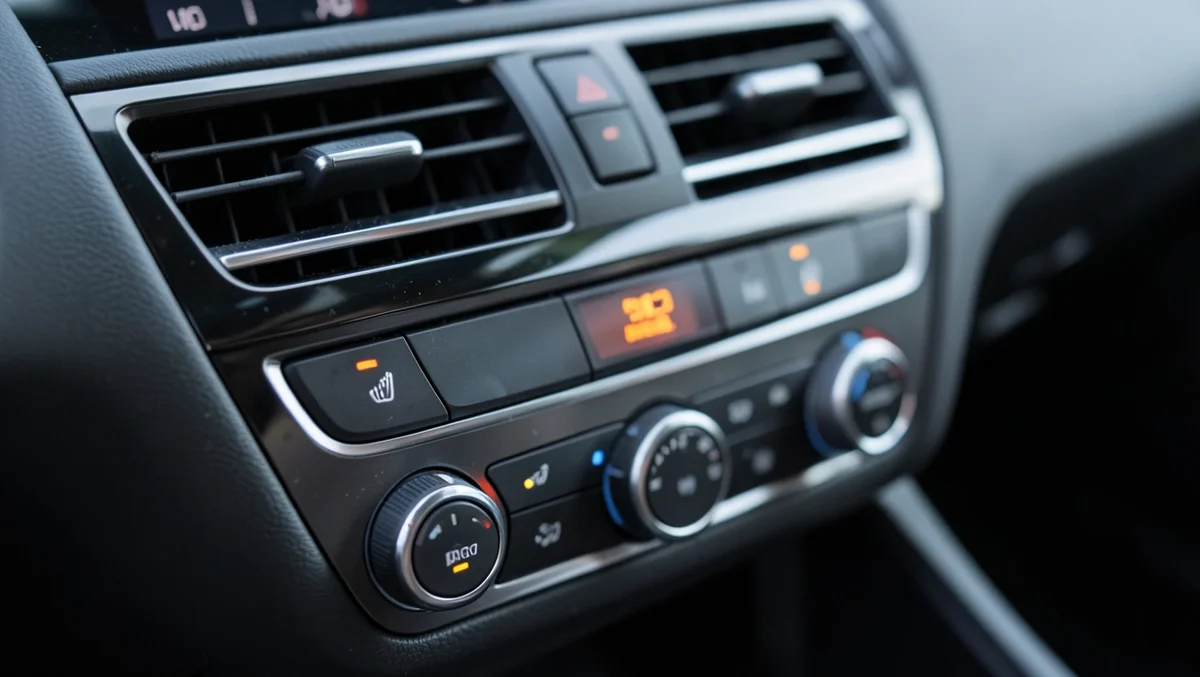
The recirculation symbol is fairly standard across brands: a car outline seen from the side or rear, with an arrow that curves in a loop inside it. It usually sits on the dashboard center stack, close to the fan speed and temperature dials, though the exact spot varies by make and model.
- Start the car (or turn the key/press start to accessory mode).
- Find the button or touchscreen icon showing the car-with-a-looping-arrow symbol, near the AC controls.
- Press it once. A small indicator light next to the icon (or on a touchscreen, a highlighted icon) turns on to confirm recirculation is active.
- Press it again to switch back to fresh outside air; the light turns off.
Some newer vehicles with automatic climate control switch recirculation on and off by themselves, based on outside air quality sensors or the auto-defog system. If you cannot find a manual button at all, check your owner’s manual; a few trims only expose the setting inside the touchscreen climate menu.
When to Use Air Recirculation
Recirculation is most useful any time you want to keep something specific out of the cabin, or cool the car down as fast as possible.
| Situation | Why Recirculation Helps |
|---|---|
| Stop-and-go or heavy traffic | Blocks exhaust fumes, dust, and smoke from other vehicles |
| Hot weather / just got in a parked car | Cools the existing cabin air faster instead of pulling in hot outside air |
| Driving behind a smoky truck or through a construction zone | Keeps smoke and dust out of the cabin |
| Passing through a tunnel | Reduces exhaust buildup from surrounding traffic |
| Bad odors outside (farms, landfills, wildfire smoke) | Stops the smell from entering the car |
When to Switch Back to Fresh Air
Recirculation should not stay on all the time. Once the immediate reason for using it has passed, switch back to fresh air.
- Long drives: the cabin needs a supply of fresh oxygen, not just recycled air.
- Windows fogging up: recirculated air traps passenger breath and moisture, which makes fogging worse, not better.
- Only one person in the car: there is less benefit and less need to block outside air for a short, low-traffic trip.
- Defrosting the windshield: most cars automatically force fresh air during defrost for exactly this reason (more on that below).
Why You Should Not Leave Recirculation on for Long Trips
Recirculation keeps pollutants out, but it also keeps carbon dioxide (CO2) in, since it is only cycling the air your passengers are already breathing in and out. Researchers studying vehicle cabin air have measured CO2 levels rising past the commonly cited comfort threshold of around 1,200 parts per million (ppm) within about 10 minutes with two occupants and recirculation on; with four adults in the cabin, one study measured levels climbing to roughly 2,500 ppm after 5 minutes and around 6,000 ppm after 22 minutes. Elevated cabin CO2 has been linked in this research to drowsiness, headaches, and slower reaction times — not something you want behind the wheel.
The fix is simple: use recirculation for the specific situation that calls for it (traffic, heat, smoke, smell), then switch back to fresh air once you are past it. Cracking a window briefly or cycling to fresh air mode for a minute or two every 10 to 15 minutes resets the cabin air if you need to keep recirculation on for an extended stretch, such as sitting in stalled traffic.
Why Defrost Mode Turns Off Recirculation Automatically
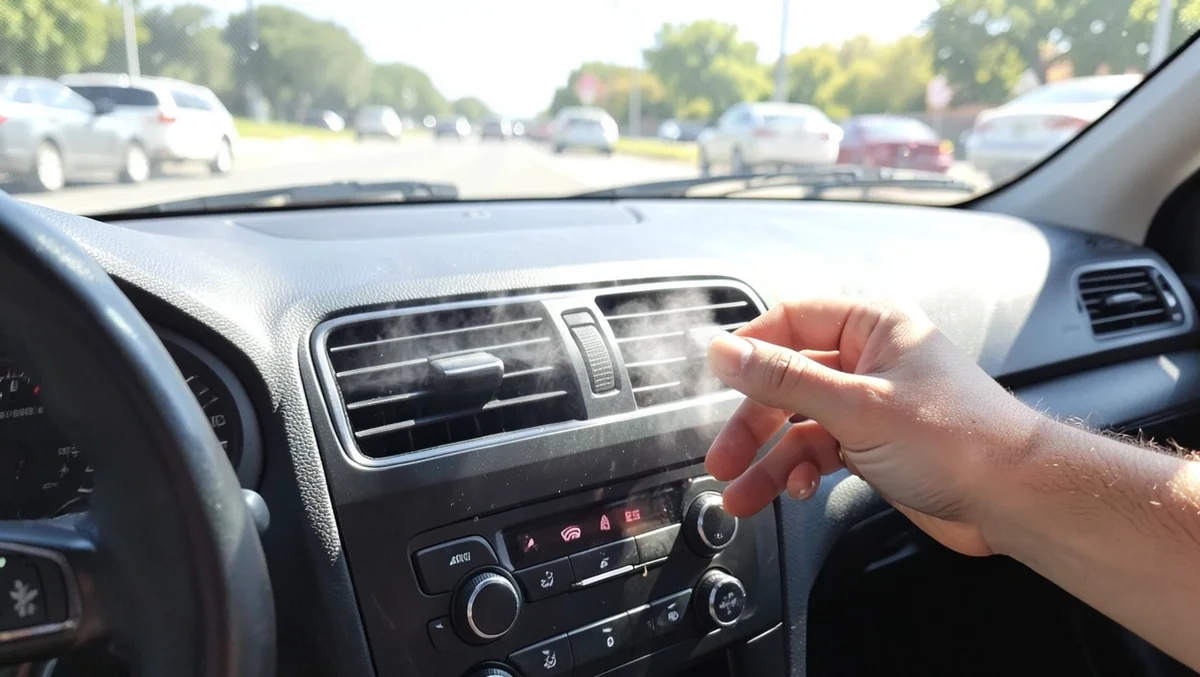
If you have ever noticed the recirculation light switch off by itself the moment you hit the defrost button, that is not a glitch. Passengers add moisture to cabin air just by breathing, and recirculated air is already more humid than the air outside. Recirculating that humid air onto a cold windshield makes fogging worse, not better, so most manufacturers wire the defrost setting to automatically pull in drier outside air instead. If your car lets you force recirculation back on during defrost, it is best to leave it off until the windshield has cleared.
Common Recirculation Button Problems
The Button or Light Does Not Respond
If pressing the button does nothing, check the fuse box first; a blown climate control fuse is a common, cheap cause. If the fuse is fine, the actuator motor that moves the recirculation flap, or the switch itself, may have failed and typically needs a mechanic to diagnose.
Airflow Feels Weak in Recirculation Mode
Weak airflow is usually a clogged cabin air filter, which most manufacturers recommend replacing roughly every 12,000 to 15,000 miles, or sooner in dusty climates. Clean the dashboard vents with a soft brush, and if airflow is still weak with a fresh filter, the blower motor itself may be wearing out.
Frequently Asked Questions
Is the Air Circulation Button the Same as Air Recirculation?
Yes. “Air circulation button” and “recirculate button” both refer to the same control, the one with the car-and-looping-arrow icon. Recirculation is the correct technical term, but many drivers describe it as the circulation button.
When Should I Use the Recirculation Button in My Car?
Use the recirculation button during heavy traffic, to keep out pollutants, dust, and smoke, or in hot weather to cool the cabin down faster.
Should the Recirculation Button Be on or off for AC?
Turn it on in hot weather to help the AC cool the cabin faster. Turn it off for fresh air once the cabin has cooled down, or on a long drive.
Is It Good to Recirculate Air in a Car?
Yes, in short bursts. Recirculating air blocks outside pollutants and helps the AC or heater reach a comfortable temperature faster. Used continuously for a long trip, it lets CO2 and humidity build up inside the cabin.
How Long Can You Recirculate Air in a Car?
Around 10 to 15 minutes at a time is a reasonable limit. Research on cabin air has measured CO2 rising past comfortable levels within about 10 minutes with two occupants, so switching briefly to fresh air every 10 to 15 minutes helps reset cabin air quality.
Why Does Recirculation Turn off by Itself When I Use Defrost?
Most cars automatically switch to fresh air during defrost because outside air is drier than recirculated cabin air, and drier air clears windshield fog faster.
Conclusion
The recirculation button, whatever you call it, is a simple tool: press it to seal off outside air and cool the cabin faster, press it again when you want fresh air back. Use it for traffic, heat, dust, and smells; switch it off for long drives, foggy windows, and defrosting. A quick habit of cycling back to fresh air every 10 to 15 minutes keeps the cabin comfortable without letting CO2 build up.
Products related to this article
Sponsored / affiliate links. As an Amazon Associate I earn from qualifying purchases. I may earn additional commission from eligible campaigns.