Traditional Car Lock vs Keyless Door Lock: Key Differences
Traditional car locks win on simplicity, lower repair cost, and backup certainty. Keyless door locks win on convenience. If you park in harsh weather, keep an old-style key or mechanical override, because dead batteries and sensor faults can strand you. I have seen a dead fob turn a normal stop into a tow bill, and sometimes a broken window. This guide weighs cost, convenience, theft risk, cold-weather behavior, and emergency access so you can pick the system that fits how you drive.
A traditional car door lock is typically a mechanical cylinder with a physical key blade. No battery is required, and a locksmith can often service the hardware with ordinary tools. A keyless door lock is usually fob-based or proximity-based, may use advanced encryption, and often needs programming after replacement.
Traditional car lock vs keyless door lock: the real trade-off
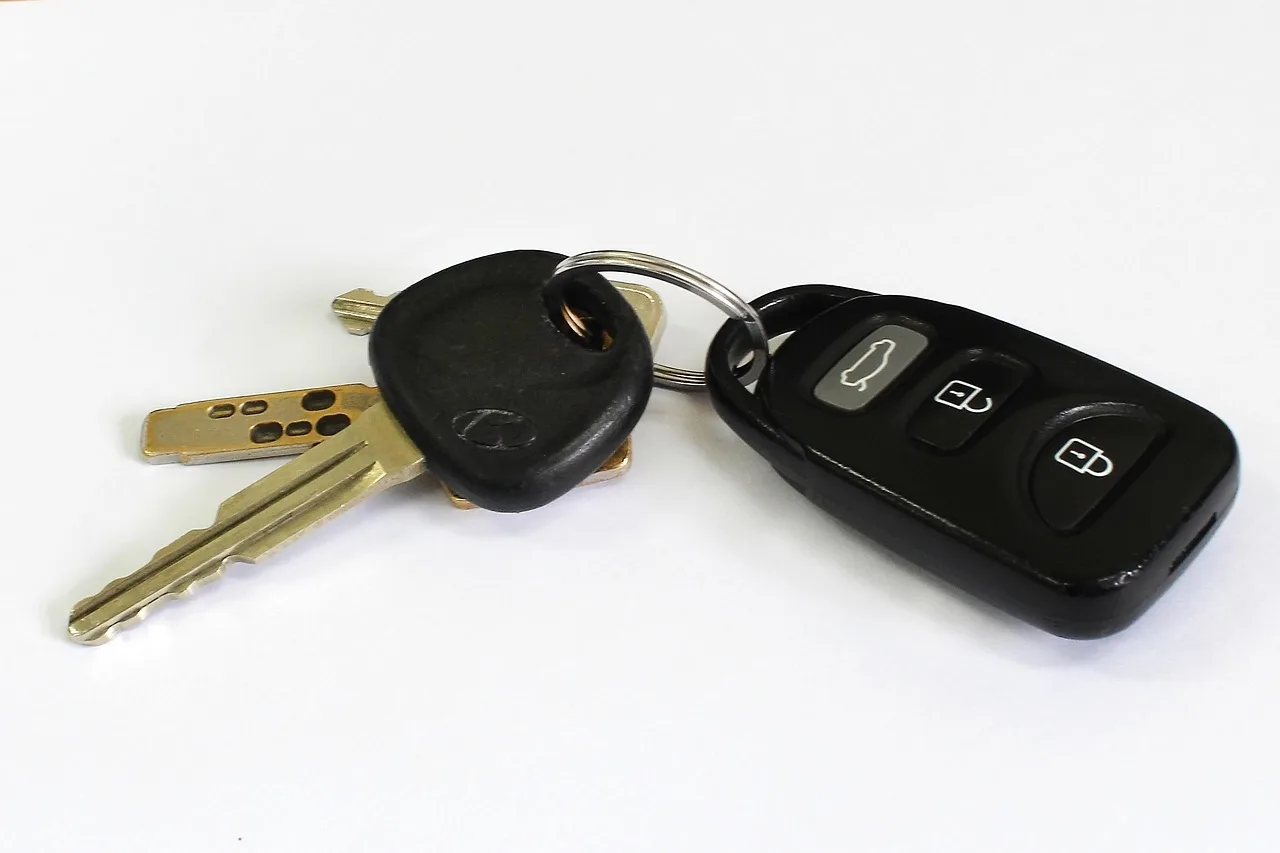


The useful question is not which one sounds newer. It is which one still works when the battery dies, the key breaks, the latch freezes, or someone needs emergency access right now.
📊 Auto key duplication for traditional keys can cost as little as $10–$30. Source: Keyless Entry Vs. Traditional Keys: Which Is Better?.
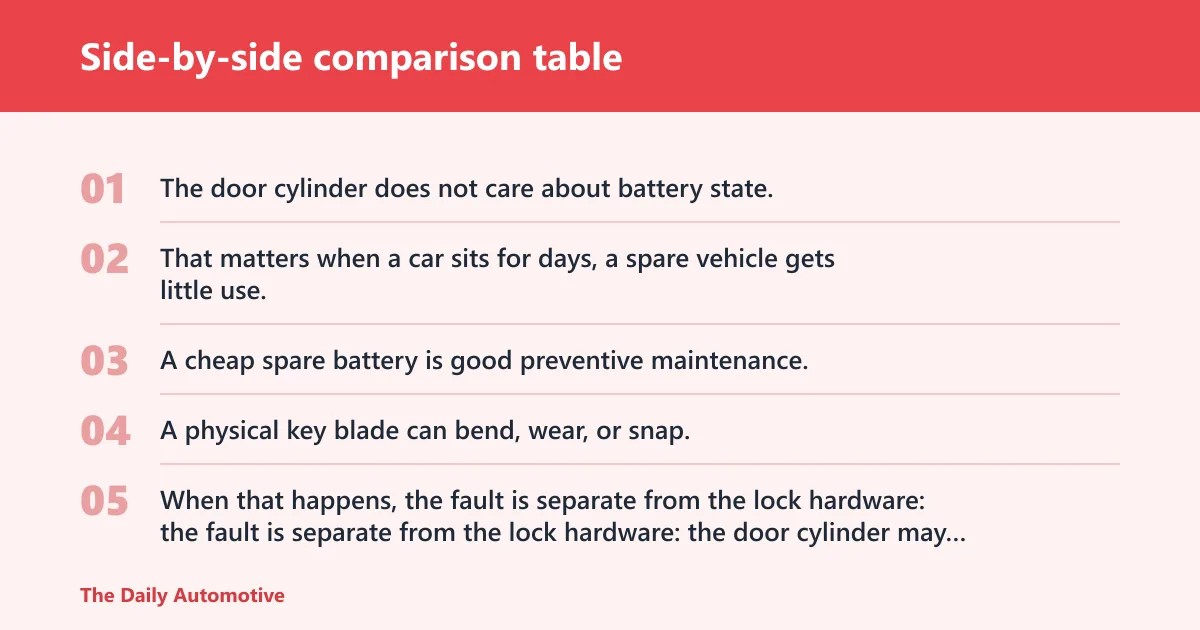
Side-by-side comparison table
| Decision factor | Traditional Car Lock | Keyless Door Lock | Winner |
|---|---|---|---|
| Dead battery | No battery required for the door lock itself; mechanical opening still works. | Depends on the fob or vehicle power for normal entry; a dead fob battery can disable convenience access. | Traditional Car Lock |
| Lost key | Mechanical key duplication is usually low cost and fast. | Replacement often means new fob hardware plus programming labor. | Traditional Car Lock |
| Frozen latch | Mechanical action can still work, though the latch itself may freeze. | Electronic unlocking does not stop a frozen latch from binding. | Tie |
| Broken key blade | Physical wear is a real issue, and broken key extraction should not be DIY. | No blade to snap during normal entry, though emergency inserts can still exist. | Keyless Door Lock |
| Relay-theft exposure | No relay attack path tied to fob proximity. | Relay attack is a keyless-specific theft risk. | Traditional Car Lock |
| Programming cost | Usually none for a basic cut key. | Often needs key programming, which adds labor and may require dealer or automotive locksmith tools. | Traditional Car Lock |
| Emergency unlock speed | Often straightforward for a lockout service or a spare mechanical key. | Can be quick if a working fob is present, but dead-battery or lost-fob cases slow things down. | Traditional Car Lock |
| Backup-access ease | Mechanical key duplication is simple and cheap compared with smart systems. | Backup access often depends on spare fob storage, battery state, and programming status. | Traditional Car Lock |
Why the mechanical lock wins on battery failure and cost
The door cylinder does not care about battery state. That matters when a car sits for days, a spare vehicle gets little use, or a driver finds the fob battery dead in a cold parking lot. A cheap spare battery is good preventive maintenance, but it does not beat a system that works with no power at all.
Why keyless wins on broken blade risk
A physical key blade can bend, wear, or snap. When that happens, the fault is separate from the lock hardware: the door cylinder may still be fine, while the key is the failure point. Keyless entry avoids that failure mode during normal use, though some systems still hide a mechanical insert for emergencies.
Why relay exposure changes the security conversation
Keyless systems may include encryption, but encryption is not the same thing as immunity from theft. Relay attack is a keyless-specific risk because thieves can extend the signal from a nearby fob. A signal-blocking pouch is a practical countermeasure, especially when the fob lives near the front door or in a bag by the car.
Which system holds up better when things go wrong?
Traditional car locks usually hold up better when the problem is power loss, long storage, or a dead fob battery. Keyless systems can feel easier on good days, but the failure chain is longer: battery, fob electronics, programming, and vehicle-side recognition all have to line up before the door opens normally.
Dead battery and dead fob problems
A dead car key fob battery can disable the convenience features first, then the whole entry routine if there is no backup method. Cheap spare batteries are worth keeping on hand because they turn a stranded driver into a five-minute fix in many cases. Still, the need to maintain power is a real ownership task that traditional keys do not ask for.
Lost key versus lost fob cost and downtime
Mechanical key duplication is usually the fastest backup path. Traditional key duplication is often low-cost, and auto key duplication can sometimes be in the $10–$30 range. By contrast, keyless entry systems can cost $200–$500+ to replace depending on make, and the replacement often needs programming before it works.
Frozen latch, broken key blade, and physical wear
Cold weather can freeze the latch itself, which means neither system gets a free pass. Traditional hardware does have wear points in the cylinder, and those failures are serviceable by a locksmith, but a broken key blade is more annoying at the curb than on a workbench. Broken key extraction should not be DIY.
Are keyless door locks more secure than traditional car locks?
Keyless door locks can be more secure in some everyday theft scenarios, but they are not hack-proof. Traditional locks face physical picking and forced-entry risk; keyless systems reduce some old-school attacks yet introduce relay attack exposure. The real answer depends on which threat matters more in the parking lot you actually use.
Physical picking and forced entry risk
Traditional car door lock cylinders can be picked or damaged with physical tools, though the exact difficulty varies by vehicle and cylinder design. The upside is serviceability: a basic locksmith can often work on the hardware without software access. That makes diagnosis and repair more direct when the problem is mechanical.
Relay attack exposure and signal behavior
Relay attack is the standout keyless risk because the thief does not need the fob in hand. The car is fooled into thinking the fob is close. Signal-blocking storage helps because it interrupts that proximity logic when the car is parked at home or left overnight.
What encryption and immobilizers do and do not prevent
Advanced encryption can make casual copying harder, and many vehicles also rely on immobilizers that stop the car from starting without the proper credential. That helps against simple drive-away theft. It does not make the system immune to theft methods that target the signal path, nor does it remove the need for a backup access plan.
What replacement really costs
Replacement cost is where the ownership picture changes fast. A traditional key can be cheap to duplicate, while a keyless fob may require hardware, battery, and programming labor. When a driver is locked out, lockout service may be the cheapest fix of all if the goal is to open the car without replacing parts.
Traditional key duplication cost and turnaround
Traditional keys are usually the least expensive to copy, and many can be cut quickly. That lower cost is one reason fleet managers and low-mileage backup-car owners still like them. The cost still varies by vehicle and key type, but the simple metal key remains the easiest backup-access method.
Keyless fob replacement, battery, and programming
Keyless entry systems can cost $200–$500+ to replace depending on make. That figure is only part of the bill if programming is required, because key programming syncs the fob to the vehicle computer and often adds labor cost. A cheap battery does not erase the cost of the fob itself or the time spent getting it recognized.
When a lockout service call is the cheapest fix
Lockout service matters because both systems can strand a driver. A lost key, keys locked inside, or a dead fob can all send the owner to the same endpoint: emergency unlock response. If the goal is simply to get back in without damaging the car, paying for a lockout service call may beat replacement parts and programming.
Can you switch an older car from traditional locks to keyless entry?
Yes, retrofitting older cars with keyless systems is possible, but the job is not universal or trivial. Feasibility depends on the vehicle generation, the existing wiring, and whether the car already has compatible central locking or immobilizer hardware. Older cars usually need more adaptation than late-model vehicles.
Retrofit reality for older vehicles
Some older vehicles can accept add-on keyless entry modules, but that is not the same as full factory-style proximity entry. A retrofit may give remote locking without delivering the same factory security or convenience logic. The closer the vehicle is to modern electronics, the more realistic the upgrade tends to be.
When a traditional key stays the better fit
Cold climates can be a good argument for mechanical backup because batteries may lose performance and frozen mornings can expose weak points. Fleet use also favors traditional keys when multiple drivers need fast handoff and low replacement cost. Valet workflows and low-mileage backup cars are other cases where simplicity beats feature count.
When keyless makes sense despite the added cost
Drivers who want hands-free access and accept battery and programming costs will usually prefer keyless entry. It fits hands-full errands, frequent stop-and-go use, and households that tolerate a spare battery plan. The trade is ongoing attention: power, programming, and signal security need maintenance.
Choose Traditional Car Lock if… / Choose Keyless Door Lock if…
Choose Traditional Car Lock if you want the simplest failure mode, low duplication cost, and the strongest backup certainty when power is gone. Choose Keyless Door Lock if convenience matters more than battery maintenance and you are willing to manage programming, replacement cost, and relay-theft precautions.
Choose Traditional Car Lock if you drive in these conditions
- You live in a cold climate where dead batteries and frozen latches are common annoyances.
- You run a fleet, backup car, or valet-heavy workflow that values cheap duplication and fast handoff.
- You want a door system that basic locksmith tools can service without software access.
- You need the lowest-cost backup path when a spare key is kept outside the vehicle.
Choose Keyless Door Lock if you want these benefits
- You value hands-free entry more than the added cost of fobs, batteries, and programming.
- You are willing to keep spare batteries and a signal-blocking pouch as routine maintenance.
- Your vehicle is already equipped for keyless access, so replacement and programming are straightforward enough to manage.
- You accept that security is better in some areas, weaker in others, and still not complete.
For most drivers, the decision is less about style and more about failure handling. Traditional keys are cheaper and simpler to duplicate. Keyless entry is more convenient, but it asks for more money and more maintenance before it asks for nothing at all.
Frequently asked questions
Traditional car lock vs keyless door lock: which is better?
The better system depends on what failure you want to avoid. Traditional locks can be better for simplicity, backup certainty, and lower-cost duplication. Keyless locks are better for convenience and hands-free entry. If reliability in bad weather matters most, the old-style key usually has the edge.
Are keyless door locks more secure than traditional car locks?
Sometimes, but not in every threat model. Keyless systems can reduce some physical-pick and start-the-car theft issues, especially when immobilizers are involved, but they also create relay attack exposure. Traditional locks avoid that specific signal risk, yet they can still be picked or forced.
What are the pros and cons of keyless entry compared with a metal key?
Keyless entry is more convenient, especially for hands-free access, but it brings battery dependence, programming cost, and extra theft concerns. A metal key is simpler, cheaper to duplicate, and works without software. The trade is convenience today versus fewer surprise problems later.
How much does it cost to replace a keyless car fob vs a traditional key?
Keyless entry systems can cost $200–$500+ to replace depending on make, and programming may add labor cost. Traditional auto key duplication can cost as little as $10–$30. The gap grows wider when a replacement fob also needs dealer- or locksmith-level programming.
Can you switch an older car from traditional locks to keyless entry?
Yes, but only some older cars are realistic candidates. Retrofitting is possible, yet the work depends on the car’s electrical setup, existing locking hardware, and the quality of the conversion kit. A basic remote-lock upgrade is easier than a full factory-style proximity system.
What happens when a keyless fob battery dies?
The convenience features may stop first, and on some vehicles the car may not unlock normally without a backup method. A spare battery is a cheap preventive part to keep in the glove box or home drawer. If the battery is dead and no backup exists, a lockout service may be needed.
Do I need a backup key with keyless entry?
Yes. A backup key or spare access plan matters because keyless systems can fail for reasons that have nothing to do with the door hardware. A dead fob battery, lost fob, or programming issue can leave a driver outside the car, and the cheapest rescue is usually the one planned in advance.
Products related to this article
Sponsored / affiliate links. As an Amazon Associate I earn from qualifying purchases. I may earn additional commission from eligible campaigns.