Meguiar’s Leather Conditioner Review: Worth the Money?
Meguiar’s Leather Conditioner is worth buying if your leather is lightly soiled and you want one quick step. Use a separate cleaner plus conditioner when the seats are dirty, shiny from buildup, or need deeper correction. Skip the wrong routine and grime stays in the grain, or the surface gets soft without getting clean.
Verdict

This is a maintenance product, not a repair product. Meguiar’s Gold Class fits finished leather, pigmented leather, and leather-adjacent interiors that need light upkeep, a natural finish, and a fast wipe-down routine. It is the wrong call for neglected, oily, cracked, or restoration-level seats, where a dedicated cleaner or a restoration product does the real work.
📊 Zbozi lists Meguiar’s Gold Class Rich Leather Cleaner/Conditioner at 473 ml. Source: Meguiar’s Gold Class Rich Leather Cleaner/Conditioner čistič a….
Specs at a glance
| Item | Meguiar’s Gold Class Rich Leather Cleaner/Conditioner |
|---|---|
| Format | Spray-on cleaner and conditioner |
| Use case | All-in-one maintenance for finished leather seats and leather items |
| Finish | Natural matte / non-greasy appearance |
| Formula notes | Aloe vera in the formula |
| Surface fit | Suitable for natural and synthetic leather, per product listings |
| Common application tools | Microfiber applicator pad, microfiber cloth |
| Maintenance cadence | Every one to three months, adjusted for climate and use |
| Product size reference | 473 ml listing size appears in third-party catalog data |
Who it is for
Meguiar’s fits the driver who wants one product for routine leather care, especially on a daily driver with light dust, small transfers, or seats that look dry but are not damaged. It is also a practical pick for people who want a low-fuss wipe-on, wipe-off routine and a natural finish instead of a glossy dressing.
It is not for neglected interiors that need a real clean, nor for seats that are already cracked, oily, or coated with old product buildup. If the leather feels sticky, looks shiny in patches, or has embedded grime, a separate cleaner or a restoration-grade product makes more sense.
Pros and cons
- Pros: One-step cleaner/conditioner saves time.
- Pros: Natural, non-greasy finish suits daily use.
- Pros: Better match for finished leather than heavy oil-based dressings.
- Cons: Not strong enough for deep soil or neglected buildup.
- Cons: All-in-one convenience usually means less correction power than a two-step system.
- Cons: It cannot repair cracks or reverse worn topcoats.
What works
Meguiar’s strength is convenience. The all-in-one cleaner/conditioner format makes sense when the leather is already in decent shape and you want to remove light dirt while leaving behind a conditioned, natural-looking finish. That is where an all-in-one product saves time without asking you to build a full maintenance kit.
The brand’s Gold Class leather care line is positioned for finished leather, and third-party product data describes a naturally matte finish with aloe vera in the formula. That matters for drivers who dislike oily sheen on seats, especially in cabins where the front row gets touched every day.
What the formula type implies
Compared with oil-based conditioners, Meguiar’s style of cleaner-and-conditioner combo is less likely to leave a heavy residue on well-kept seats. The Drive notes that oil-based conditioners can darken leather and leave a greasy finish. That is exactly why a lighter maintenance formula is easier to live with on modern interiors.
It also sits between a cream and a wax. Cream products often need more frequent application, while wax conditioners are built more for a protective barrier against spills and stains. Meguiar’s is the middle-ground option when your goal is routine care, not maximum protection or deep restoration.
How to apply it
- Vacuum the seat first.
- Remove loose surface dirt with a dry microfiber cloth.
- Test the product in an inconspicuous area.
- Dispense a few sprays onto a microfiber applicator pad or microfiber cloth, then spread it across a small section at a time.
- Work one section at a time.
- Level the finish with a clean microfiber cloth until no wet film remains.
A common first-timer mistake is skipping the vacuum step and rubbing dust into the grain. That turns a quick maintenance job into a dirty smear, especially on bolsters and seat creases.
Who benefits most from the all-in-one approach
Say your commuter sedan has two front seats that are dusty, slightly dry, and otherwise in good shape. Meguiar’s is the kind of product that fits that job: quick prep, light cleanup, and a more even finish without a second bottle.
Suppose the vehicle parks outside every day. In that case, UV protection matters more, because constant sun exposure is one of the main reasons leather fades and stiffens. That is where a maintenance product with UV protection claims has more value than a plain wipe-down cleaner.
What does not
Meguiar’s is the wrong tool for leather that is heavily soiled, oily, cracked, or already shiny from years of buildup. It can only do so much if the top layer is contaminated. A cleaner/conditioner can maintain a seat, but it cannot rescue a seat that needs correction.
It is also not the best answer for matte, coated, or stitched surfaces when the surface is already sensitive to residue. Too much product can sit in seams and perforations, then leave a patchy look if you do not buff carefully.
Residue and finish risk
Does Meguiar’s Leather Conditioner leave a greasy residue? It should not if you use a small amount and buff it off, but any leather product can leave a film when overapplied. The natural-finish goal is a plus, yet it also means you need restraint on the spray and a clean microfiber cloth for the final wipe.
The risk rises on seats with perforations, textured grain, or a matte coated finish. Those surfaces hold product in the openings and can look blotchy until you remove the excess.
When to skip it
If the seat is dry, cracked, or stiff to the touch, conditioning alone is not enough. Cracks mean material loss or finish failure, not a simple moisture problem. That is the point where a restoration product, a dedicated cleaner, or professional refinishing becomes the more honest answer.
If the surface is oily from old dressings or body transfer, a cleaner-only step often has to come first. Putting a conditioner over contamination just seals in the problem.
What is in the bottle, and what does that mean for your seats?
Meguiar’s Gold Class is an all-in-one cleaner and conditioner, so the trade-off is speed versus depth. It is designed to clean light soil while conditioning finished leather in the same pass, which is useful for routine upkeep but less effective than a separate cleaner and conditioner on neglected interiors.
For a finished leather seat, that usually means a cleaner touch, a more uniform surface, and less chance of a greasy film than with heavier dressings. The product’s non-greasy, natural finish claim is the main reason it works as a maintenance item instead of a cosmetic dressing.
Finished leather versus other surface types
Finished leather, often called pigmented leather, has a protective topcoat. That makes it the safest target for Meguiar’s Gold Class. Natural leather, suede, nubuck, and unfinished hides are different surfaces and should not be treated as interchangeable.
Shade-matched vinyl and leatherette are closer to the vinyl side of the chart. They may tolerate a light wipe, but they do not absorb conditioner the way leather does. That means the “conditioner” half of the formula is mostly irrelevant there.
UV protection and outdoor parking
UV protection matters most when the car sits outside a lot or sees strong sun through large glass areas. It helps slow fading and cracking, though it is not a cure for heat damage or old age. Think of it as preventive support, not armor.
Can you use Meguiar’s Leather Conditioner on vinyl?
Yes, in many vinyl-adjacent interiors a light application is acceptable, but vinyl does not need conditioning the way leather does. Use it only when the trim behaves like coated leather or leatherette and you want a mild cleaner with a natural finish. Avoid heavy application on plain vinyl panels.
The safer rule is simple: if the surface is shade-matched vinyl, test first and keep the amount small. If it is a slick plastic-like surface, a dedicated interior cleaner is the better fit because conditioner adds little value and can leave an unwanted film.
How to check the surface first
Check the owner’s manual or trim description if it is available. If not, look at the grain, sheen, and edge construction. Finished leather often has a more natural grain and feel, while vinyl and leatherette can look more uniform and plastic-like.
Always test in an inconspicuous area first. That is the only honest way to see whether the trim darkens, streaks, or feels tacky after drying.
Decision table: when Meguiar’s fits, and when to switch
| Product | Badge | Best for | Price | ||
|---|---|---|---|---|---|
|
Meguiar’s Gold Class Rich Leather Cleaner & Conditioner –Meguiar’s | Our pick | 15.2 Oz Spray Bottle, 6 Pack | $54.99
Price as of 11 Oct 2026
|
View |
 |
Leather Honey Leather Conditioner – Non-Toxic & Made in theLeather Honey | Also great | Non-Toxic & Made in the USA | $19.99
Price as of 11 Oct 2026
|
View |
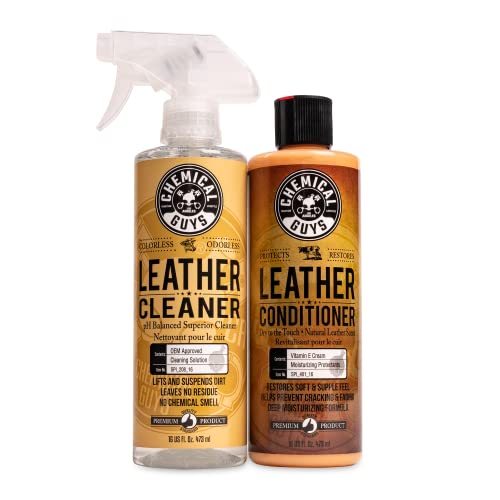 |
Chemical Guys, Leather Cleaner & Conditioner Kit for Cars &Chemical Guys | Pair with it | 2 x 16 oz Cleaner and Conditioner Kit | $27.99
Price as of 11 Oct 2026
|
View |
| Leather or trim scenario | Use Meguiar’s Gold Class? | Application steps | When to switch products |
|---|---|---|---|
| New finished leather | Yes, for light maintenance | Vacuum, wipe dust, apply a small amount, buff dry | Switch only if the seats already have heavy dealer dressing or transport grime |
| Lightly soiled daily-driver leather | Yes, this is the best fit | Clean loose dirt first, then use the all-in-one product in sections | Switch to a dedicated cleaner if the soil is visible in seams or grain |
| Dry leather with no cracking | Maybe, as maintenance | Use sparingly and follow with a thorough buff | Switch to a dedicated cleaner plus conditioner if the seat feels rough or very stiff |
| Cracked leather | No | Skip conditioning-only maintenance | Use a restoration product or professional repair path |
| Oily or neglected leather | No, not first line | Clean first with a dedicated leather cleaner | Move to a separate conditioner only after the surface is truly clean |
| Shade-matched vinyl or leatherette | Sometimes, with a test spot | Use a minimal amount and wipe away the residue with a dry microfiber cloth | Use a plain interior cleaner if the trim is slick, coated, or plastic-like |
What should you use on dry or cracked leather seats?
Dry leather can sometimes benefit from a conditioner, but cracked leather needs more than moisture. If the topcoat is failing or the hide is split, Meguiar’s is not the answer. Use it only when dryness is the problem and the surface is still structurally sound.
For cracked seats, a restoration product, repair compound, or professional refinishing is the better move. Conditioning after the fact may improve feel a little, but it will not close cracks or rebuild the surface.
Who is Meguiar’s Leather Conditioner for?
Meguiar’s is for owners who want simple maintenance on finished leather, especially in cars that are already reasonably clean. It works well for daily drivers, family vehicles, and leased interiors where the goal is to keep the seats looking cared for without turning leather care into a project.
It is not for neglected cars, show-level restoration jobs, or interiors with oily buildup. If your car needs correction before protection, start with a dedicated cleaner and move up only after the surface is clean.
Price and value context
The Drive named Meguiar’s Gold Class the best all-in-one, while naming Mothers VLR best overall and Lexol Leather Cleaner and Conditioner best value in its test. That lineup is useful because it shows where Meguiar’s fits: strong convenience, but not the most complete fix when you compare it with separate or more targeted systems. (thedrive.com)
The same test also used a 1987 Mitsubishi Starion with pigmented leather and shade-matched vinyl, which is a reminder that real interiors often mix materials. That is why one-size-fits-all claims can be shaky; the right product depends on the surface and the problem.
What is the best leather cleaner conditioner?
The best leather cleaner conditioner is the one that matches your seat condition and how much effort you want to spend. For light upkeep, Meguiar’s Gold Class is a sensible all-in-one. For dirtier seats or a clearer two-step routine, a dedicated cleaner plus conditioner is the better answer.
If you want convenience, Meguiar’s makes sense. If you want more control, a separate cleaner and conditioner usually gives better results on older interiors and problem areas.
What is the best auto leather cleaner and conditioner?
The best auto leather cleaner and conditioner depends on whether you want a one-bottle solution or a full maintenance system. Meguiar’s Gold Class is the convenience pick. A separate kit is more flexible when the seats need stronger cleaning before conditioning.
For drivers choosing by use case rather than brand loyalty, the safer approach is simple: all-in-one for maintenance, two-step for neglected leather, and restoration products for damage.
Frequently asked questions
Is Meguiar’s Leather Conditioner safe for finished leather seats?
Yes, it is intended for finished leather and works best there. Finished or pigmented leather has a protective topcoat, so a light cleaner/conditioner is usually appropriate. Test first, use a small amount, and buff off excess to avoid residue in seams and perforations.
Does Meguiar’s Leather Conditioner leave a greasy residue?
It should not when used correctly, because the product is positioned for a natural, non-greasy finish. Greasy residue usually comes from overapplication or poor buffing, not from the idea of the product itself. A clean microfiber cloth is the fix.
How often should I condition leather car seats?
A common rule is every one to three months, then adjust for climate and use. Hot, sunny, or heavily used vehicles may need attention more often. Garaged cars or lightly used interiors can usually stretch the interval a bit longer.
Is Meguiar’s better as a cleaner, conditioner, or all-in-one?
It is best as an all-in-one when the leather is already fairly clean and only needs maintenance. If the seats are dirty or oily, a separate cleaner does a better job first. If the leather is dry but clean, a dedicated conditioner can give you more control.
Can I use Meguiar’s leather conditioner on vinyl?
You can use it carefully on some vinyl-adjacent or leatherette surfaces, but vinyl does not need conditioning the same way leather does. Test first, keep the application light, and avoid using it as a substitute for a proper interior cleaner on plain vinyl panels.
What should I use on dry or cracked leather seats?
Dry leather may respond to conditioning, but cracked leather needs repair, not just moisture. If the surface is still intact, a conditioner can help slow further drying. If cracks are already visible, move to a restoration product or professional repair solution.
Products related to this article
Sponsored / affiliate links. As an Amazon Associate I earn from qualifying purchases. I may earn additional commission from eligible campaigns.