Chemical Guys Leather Cleaner Review: Is It Worth It?
Chemical Guys Leather Cleaner and its conditioner fit factory leather when you want a spray-and-wipe routine and the seats only need light soil removal, but a dedicated pH-balanced interior cleaner is the better call for heavy grime or perforated seats. Clean leather badly and body oils, sunscreen, and dye transfer can keep building up, which dulls the surface and can shorten the life of the clear topcoat. This review explains where Chemical Guys fits, when it is too much, and which leather-cleaning format suits everyday factory seats better.
Verdict

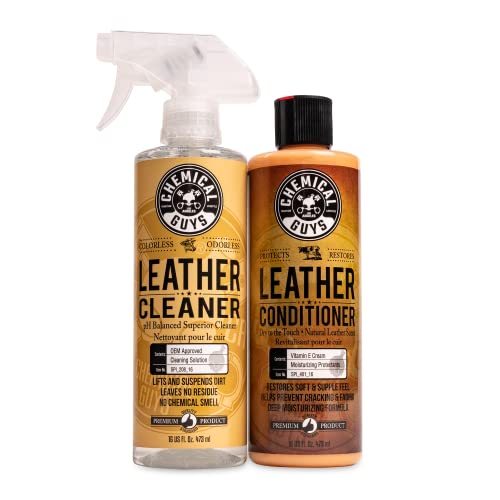


The cleaner makes the most sense on coated automotive leather that sees daily-driver dirt, hand oils, and light transfer. It is less convincing when the seat needs moisture control, seam-safe cleaning, or real stain removal from a neglected bolstering edge. In that case, the pair can still help, but only if you use a light hand and accept that the cleaner is not a degreaser.
📊 Chemical Guys Leather Conditioner is sold in a 16 oz bottle. Source: Chemical Guys Leather Cleaner in Chemical Guys.
Specs at a glance
| Item | What matters |
|---|---|
| Chemical Guys Leather Cleaner | Spray cleaner for car interiors; Walmart lists it as colorless and odorless |
| Chemical Guys Leather Cleaner price | 16 oz; $10.99; 68.7 cents per fluid ounce |
| Chemical Guys Leather Conditioner | Sold separately; 16 oz; pH-balanced positioning; used after cleaning |
| Chemical Guys Leather Conditioner price | $19.97; $1.25 per fluid ounce |
| Leather Quick Detailer | 16 oz; touch-up format for light contamination |
| Leather Quick Detailer price | $11.97; 74.8 cents per fluid ounce |
| Total Interior Cleaner & Protectant Spray | 16 oz; mixed-surface cabin cleaner |
| Total Interior Cleaner & Protectant Spray price | $11.97 |
Tools you should plan to use
Plan on a microfiber towel, a soft-bristle leather brush, and a second dry towel for the final wipe. The towel handles cleanup and buffing. The brush is for light agitation on seams, bolsters, and grain texture, not for grinding wear marks into the finish.
Who it is for
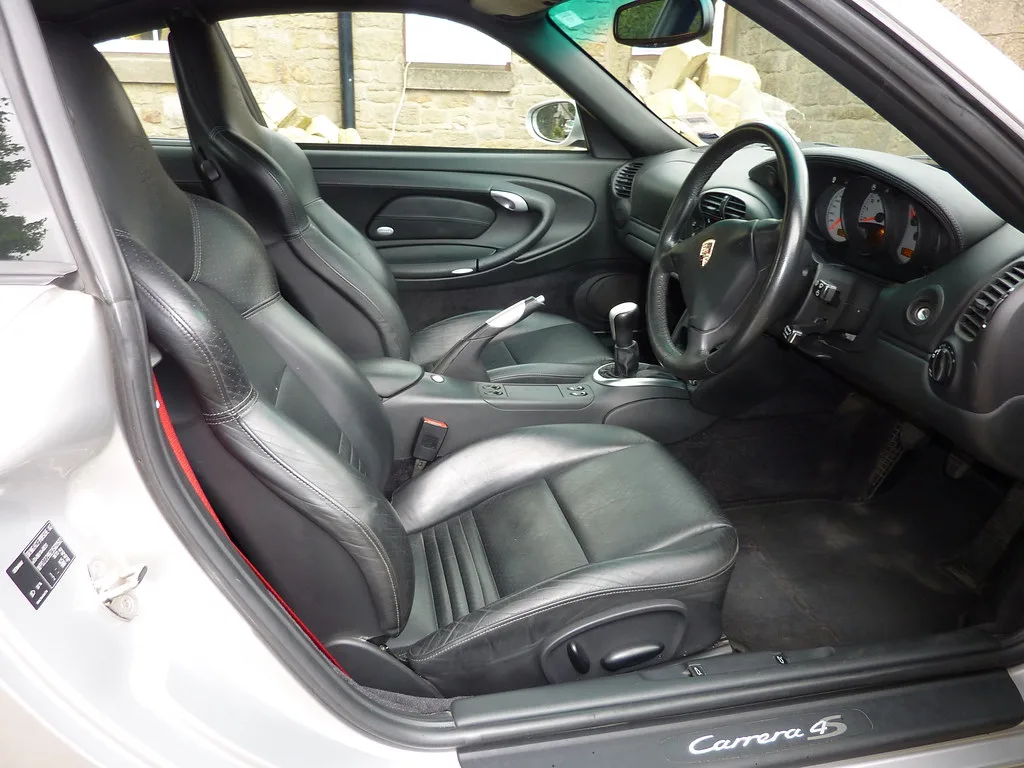
It is for drivers with factory-coated leather who want a simple maintenance routine, not a restoration project. If your seats are mostly clean but pick up body oils, dust, sunscreen residue, and a little denim transfer, the cleaner fits that job well.
It also suits owners who want a spray cleaner paired with conditioner instead of mixing products from different brands. That matters on daily drivers, where a seat can look tired long before it is truly damaged.
Who should skip it
Skip it if you need a one-bottle solution for mixed cabin materials or if you want the fastest possible touch-up for a lightly dirty seat. A cleaner-wipe or all-purpose interior cleaner is often smarter when the cabin has leather, plastic, vinyl, and screens that all need attention.
It is also a weak match for aniline leather, suede, nubuck, or furniture leather that does not have the same protective topcoat as factory automotive leather. Those materials need more caution and a tighter spot test before anything touches the surface.
What works
The cleaner’s best use case is routine maintenance. On coated automotive leather, a pH-balanced cleaner is usually safe enough for surface cleaning when you use it lightly and wipe it off before it sits on the panel.
That is the right level of aggression for most daily-driver seats. You want to remove grime without stripping the clear layer or leaving a greasy film that attracts more dirt.
Where the cleaner-and-conditioner pair makes sense
Use the cleaner first, then the conditioner. The cleaner lifts soil sitting on top of the leather, while the conditioner comes after to help keep the surface feeling right once it is clean.
That sequence matters. Conditioner on a dirty seat can trap grime. Cleaner alone can leave older leather looking dry if the seat already has some age on it.
What it is likely to remove
In real use, this type of cleaner is aimed at light dirt, body oils, and fresh surface grime. It can help with sunscreen residue and denim transfer when those marks are still on the surface, but it is not the right tool for heavy staining or old, embedded buildup.
Say your driver seat has a dark patch on the side bolster from hands and jeans after a week of commuting. A light cleaner pass may lift that film. If the mark has been there for months, you may only reduce it rather than erase it.
Why the brush and towel matter
A soft leather brush helps lift grime from grain texture without cutting through the topcoat. Pressure should stay light. If the surface starts to look shiny where you scrubbed, the brush was too aggressive or too dry.
The microfiber towel does the cleanup. Use clean towels as you go so you are not smearing removed soil back across the panel. A low-lint cloth also reduces the chance of leaving fibers in seams or perforations.
What does not
It is not a strong degreaser, and that is the main limit. Heavy contamination, old transfer marks, and greasy buildup need more than a mild cleaner if you want a real reset.
Over-application is the other problem. Too much liquid can leave residue, make the finish look shiny, and create streaks that are harder to clear than the original dirt.
Perforated panels and seam control
Perforated leather needs careful spray control because excess liquid can migrate into the holes and sit where a towel cannot reach. Stitch lines and bolsters have the same problem, though for a different reason: product pools in the seam and dries slowly.
Picture a perforated center panel on a commuter sedan. A heavy spray pass can leave the holes damp for too long and make drying uneven. A lighter application on the towel or brush is the safer move.
Failure modes to avoid
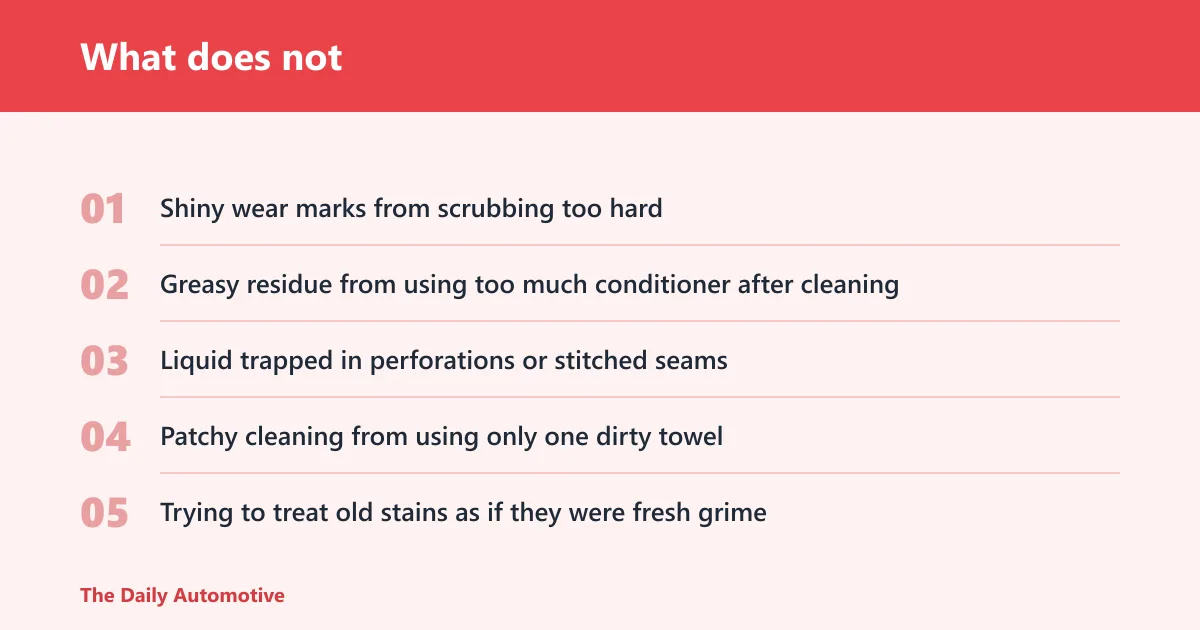
- Shiny wear marks from scrubbing too hard
- Greasy residue from using too much conditioner after cleaning
- Liquid trapped in perforations or stitched seams
- Patchy cleaning from using only one dirty towel
- Trying to treat old stains as if they were fresh grime
How to use Chemical Guys Leather Cleaner
Start with a spot test and make sure the seat is factory automotive leather, not an untreated or specialty hide. Then spray a small amount onto a microfiber towel or soft brush, work one section at a time, and wipe dry with a clean microfiber towel. Do not soak the panel.
Step-by-step routine
- Vacuum loose grit from seams, bolsters, and seat creases.
- Spot test on a hidden area and wait for the finish to dry.
- Apply a small amount to the towel or brush, not the seat.
- Gently agitate one panel at a time.
- Wipe away loosened soil with a clean microfiber towel.
- Use a second dry towel for the final buff.
- Follow with conditioner only after the surface is fully dry.
How to handle perforated leather, bolsters, and seams
For perforated inserts, spray the towel lightly instead of the seat. Wipe across the surface with minimal liquid. If the panel looks damp in the holes, stop and dry it with a separate microfiber towel before moving on.
For bolsters and stitched seams, use the brush sparingly. Short, gentle passes are enough. The goal is to loosen dirt, not force cleaner deep into the seam construction.
Cleaner versus conditioner
They are not interchangeable. Cleaner removes dirt and oily film. Conditioner is the follow-up product that helps restore feel and protection after cleaning. One does the cleaning job; the other supports the finish after that job is done.
If the seat already feels dry or has a slightly sticky, worn texture, conditioner matters more. If the seat mainly needs dust, oil, and light transfer removed, cleaner is the first step and may be enough for a quick maintenance pass.
Is the conditioner good?
Chemical Guys Leather Conditioner is a separate 16 oz product with pH-balanced positioning and a Walmart price of $19.97, or $1.25 per fluid ounce. Based on the spec sheet and reviews, it looks best as a routine follow-up product, not a fix for severe dryness or neglected leather.
That is the honest tradeoff. It is priced above the cleaner, and the extra cost only makes sense if you plan to use it after actual cleaning. If you skip the cleaning step, you are paying for a finish product without giving it a clean base.
Alternatives to consider
There are cases where a different format is smarter. If your goal is a quick touch-up, a cleaner-wipe or detailer can be faster than a full spray-clean-and-buff routine. If the whole cabin needs attention, an all-purpose interior cleaner may be the better buy.
Light touch-up: Leather Quick Detailer
Chemical Guys Leather Quick Detailer is the easier choice for a fast, light clean on seats that are only dusty or slightly marked. Walmart lists it in a 16 oz size at $11.97, or 74.8 cents per fluid ounce. The drawback is simple: it is for lighter contamination, so it will not replace a real cleaner on grimy bolsters or old transfer marks.
Mixed-surface cabin: Total Interior Cleaner & Protectant Spray
Chemical Guys Total Interior Cleaner & Protectant Spray fits a cabin with leather, plastic, and vinyl when you want one product for more than one surface. Walmart lists the 16 oz bottle at $11.97. The drawback is that a general interior product is rarely as targeted as a leather-specific cleaner on stubborn seat grime.
Full cleaner-and-conditioner bundle
The Chemical Guys Leather Cleaner & Conditioner Kit is the neatest purchase if you know you want both steps from the same brand. Chemical Guys’ 2 x 16 oz kit is priced at $27.99 and includes both products in one box. The downside is cost: you pay for the pair up front, even if you only needed the cleaner.
Other category to avoid for this job
The Chemical Guys Leather Care Essentials Kit includes 6 items and is priced at $24.97. That makes it broader than a simple seat-cleaning buy. It is useful if you want a bundle, but it is not the most direct answer when all you need is a cleaner and a towel.
Practical decision table
| Seat condition | Leather type | Contamination level | Best Chemical Guys product | Tool | Application amount | Drying time | Main failure mode |
|---|---|---|---|---|---|---|---|
| Weekly wipe-down | Factory coated leather | Light dust and body oils | Leather Quick Detailer | Microfiber towel | Light mist on towel | Wipe dry immediately | Using more liquid than needed |
| Routine maintenance | Factory leather with topcoat | Light-to-moderate grime | Leather Cleaner | Soft leather brush plus microfiber towel | Small amount on towel or brush | Air-dry briefly, then buff dry | Shiny wear marks from scrubbing |
| Perforated center insert | Perforated factory leather | Light contamination | Leather Cleaner | Towel-dampened application | Minimal liquid | Dry immediately with a second towel | Liquid sitting in holes |
| Older seat with light dryness | Factory leather | Clean but aged finish | Leather Cleaner, then Conditioner | Microfiber towel | Cleaner first; conditioner sparingly after | Wait until fully dry between steps | Trapping dirt under conditioner |
| Heavier cabin-wide cleanup | Mixed interior surfaces | Light-to-moderate mixed grime | Total Interior Cleaner & Protectant Spray | Microfiber towel | Light spray, section by section | Wipe dry right away | Expecting leather-specific stain removal |
Should you buy it
Buy it if your leather is factory-coated, your seats see normal daily use, and you want a straightforward cleaner-and-conditioner routine. It is a sensible fit for routine maintenance, especially when you are cleaning before the seat starts to look gray, dry, or uneven.
Skip the cleaner if you mainly need a quick touch-up, a mixed-surface cabin product, or help with heavy staining. For those jobs, the better choice is often a faster wipe, a different interior cleaner, or a more focused leather-care approach. The right product depends on the seat condition, not the logo on the bottle.
Frequently asked questions
how to use chemical guys leather cleaner
Vacuum first, spot test in a hidden area, then spray the cleaner onto a microfiber towel or soft brush. Work one panel at a time, loosen the soil gently, and wipe dry with a clean towel. Do not soak perforations, seams, or stitched edges.
is chemical guys leather conditioner good
It looks like a sensible follow-up product for routine factory-leather care, especially because it is sold separately in a 16 oz bottle and positioned as a pH-balanced conditioner. Its main limit is that it is a maintenance product, not a fix for neglected, cracked, or heavily dried seats.
what does chemical guys leather cleaner actually remove?
It is aimed at light dirt, body oils, fresh grime, and some surface transfer such as sunscreen or denim marks. It is not a heavy degreaser, so old embedded stains and greasy buildup may only lighten, not disappear. That is normal for a routine leather cleaner.
can chemical guys leather cleaner be used on perforated leather?
Yes, but only with careful control. Spray the towel or brush, not the seat, and use as little liquid as possible. Perforations trap excess product, so the main goal is light cleaning followed by immediate drying with a second microfiber towel.
do i need a separate conditioner after cleaning leather seats?
For routine maintenance, a separate conditioner is usually the better sequence after cleaning. Cleaner removes the dirt; conditioner helps restore feel and protection after the surface is clean. If the seat is nearly new and only lightly soiled, cleaner alone may be enough for that session.
is chemical guys leather cleaner better than an all-purpose interior cleaner?
It is better when the job is specifically leather and you want a product aimed at coated automotive seats. An all-purpose interior cleaner is more convenient for mixed materials, but it is less targeted for leather-specific maintenance. The better choice depends on what else is in the cabin.
what ingredients are in chemical guys leather cleaner?
The brand positioning here matters more than a full ingredient list, which is not always stated plainly on retail pages. What can be checked is that Walmart lists it as colorless and odorless. That suggests a low-profile cleaner meant to avoid added scent or obvious residue.
how often should i clean leather car seats with it?
For daily-driver factory leather, a light cleaning interval of every few weeks is a practical starting point, with conditioning less often unless the seat feels dry. Heavily used seats may need more frequent attention. The right pace depends on climate, sweat, sunscreen use, and how often the car is driven.
Products related to this article
Sponsored / affiliate links. As an Amazon Associate I earn from qualifying purchases. I may earn additional commission from eligible campaigns.