Microfiber Car Towels Cost
Microfiber car towels usually cost about $3 to $20 each, with multipacks often lowering the per-towel price, and premium paint-safe drying towels may be worth the higher cost if you wash often. Cheap towels can shed lint, streak trim, or leave water behind, which adds drying time and raises the chance of paint marring. This guide breaks down price by towel type, pack size, GSM, and use case so you can judge value before buying.
What determines microfiber towel cost
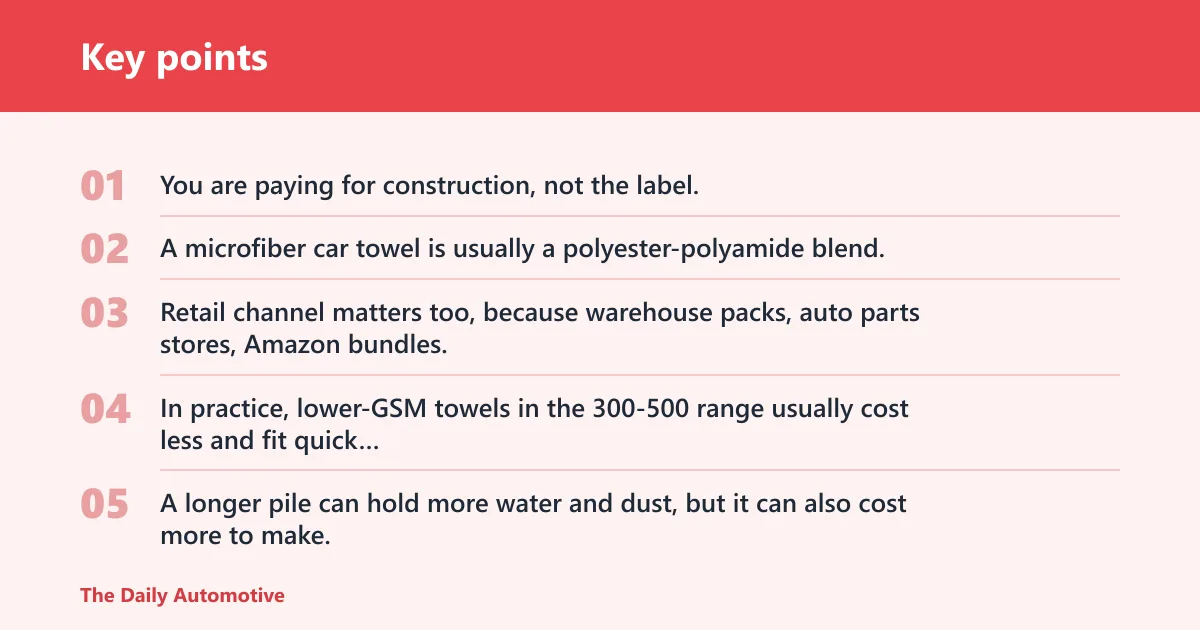


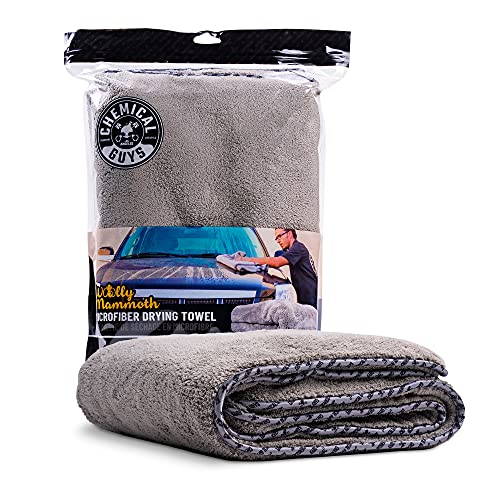
You are paying for construction, not the label. A microfiber car towel is usually a polyester-polyamide blend, and price moves with pile length, GSM, edge finish, size, and how tightly the fibers are made. Retail channel matters too, because warehouse packs, auto parts stores, Amazon bundles, and detailing brands usually sit in different price bands.
What you are actually buying
GSM means grams per square meter. In practice, lower-GSM towels in the 300-500 range usually cost less and fit quick interior work, while 600-1200 GSM towels often cost more because they are thicker, softer, and more absorbent for drying and paint-safe detailing. A longer pile can hold more water and dust, but it can also cost more to make.
Edge construction changes risk on delicate paint. Edgeless towels and silk-banded towels usually cost more than a basic microfiber hem because they reduce the chance of a firm edge dragging across clear coat. A stitched hem is fine for many interior jobs, but the safer edge treatment often costs extra on paint-facing towels.
What makes a microfiber towel cost more?
More expensive towels usually cost more because they use denser fibers, higher GSM, better edge finishing, larger sizes, and tighter quality control. Price also rises when the towel is built for a narrow task, such as glass cleaning or sealant removal, rather than a general-purpose bundle. A premium towel often cuts waste and replacement frequency.
GSM, pile length, and absorbency
GSM is a useful price clue, but it is not the only one. A 16×24-inch drying towel with around 800 GSM and a plush pile will usually cost more than a 16×16-inch 380 GSM all-purpose towel, since the drying towel generally has more fiber mass and is designed for stronger water pickup. That extra cost can pay back if you need fewer passes.
Edge construction and paint safety
Edgeless towels reduce the number of hard contact points on paint. Silk-banded edges usually sit between basic stitched hems and fully edgeless designs in price. A microfiber hem can still be useful for interior trim, but for black paint, polished panels, or fresh sealant, many buyers pay more for the safer edge treatment.
Size and weave type
Common sizes are 16×16 and 16×24 inches. Smaller towels suit interior panels, dressing removal, and polish removal. Larger towels are better for drying because they cover more area and hold more water. Weave matters too: plush towels suit drying and buffing, while waffle-weave towels often cost less and work well on glass because they leave less drag.
Microfiber towel price tiers by use
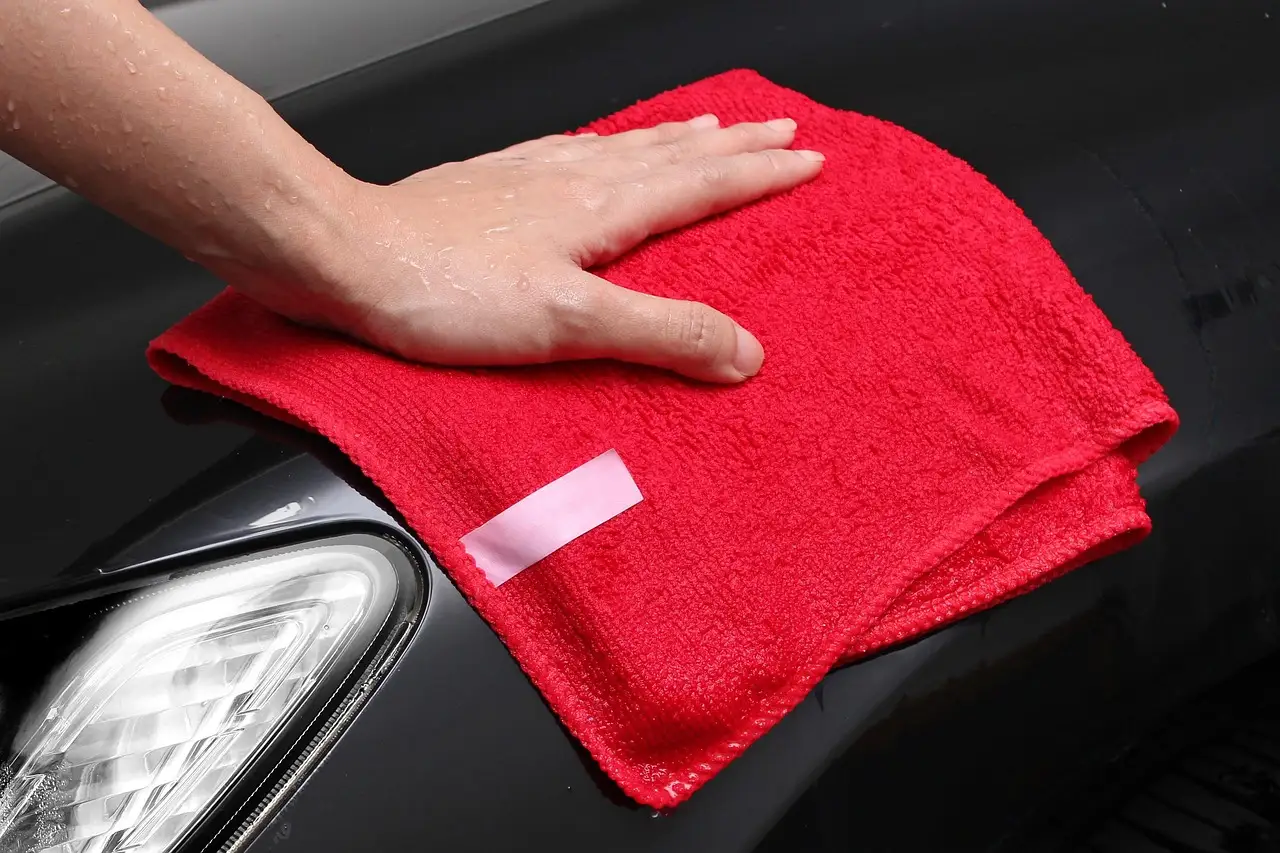
Budget multipacks make sense for dirty jobs, quick interior wipe-downs, and general cleanup where a slight lint risk does not matter. Midrange towels usually offer better edge treatment and more consistent absorbency. Premium drying and paint-safe towels cost more up front, but they can save money if they dry faster, streak less, and last longer before replacement.
Budget multipack towels
These are often sold in 6-packs or 12-packs at auto parts stores, Amazon, or warehouse clubs. They usually land in the lowest per-towel price band and are common in the 300-400 GSM range. They are fine for wheels, door jambs, interior plastics, and general wipe-downs, but they may shed lint or leave trails on dark paint.
Midrange all-purpose towels
Midrange towels often use a better pile, tighter weave, and a cleaner edge finish. They are a strong fit for washing, sealant removal, and interior work when you want less lint and better feel without paying premium detailing-brand pricing. This tier often gives the best balance for most owners.
Premium drying and paint-safe towels
Premium towels often sit in roughly the 600 to 1200 GSM range, and they may also feature edgeless or silk-banded construction and a larger size. They cost more because they hold more water and are less likely to leave streaks or hard edge marks. If you wash the car often, that higher price can be cheaper than replacing cheap towels sooner.
Detouring? No. Specialty towels only
Specialty detailing towels are built for one job, such as glass, wax removal, or final buffing. A glass towel may be a waffle-weave design that costs less than a thick drying towel but performs better on windows. A polish-removal towel may be low-lint and short-pile so it does not load up with residue too fast.
How many microfiber towels do you need?
For one full car session, a common rule of thumb is to use more than one towel because the tasks are different. A wash, dry, and interior pass can use 4 to 8 towels depending on vehicle size, dirt level, and how much you separate by job. The right count depends on whether you want to reuse towels in the same session or keep each task separate.
For washing and drying
For washing, 1 to 2 towels can be enough if you use them only for rinsed panels or drying assist, but many owners keep separate mitts and towels for safer paint work. For drying, 1 large towel may cover a small car, while 2 are safer for a midsize SUV or a vehicle that starts with a lot of standing water.
For interior cleaning
Interior work usually needs 2 to 3 towels: one for dusty plastics, one for cleaner residue, and one for final dry wipe. Use smaller 16×16 towels here because they are easier to control around vents, switches, and screens. Keep interior towels away from paint towels so grit does not move back onto exterior panels.
For glass, wax, and sealant removal
Glass cleaning often takes 1 dedicated towel, sometimes 2 if the windows are heavily soiled or the streaks are persistent. Wax and sealant removal usually works best with 1 to 2 clean, low-lint towels. A common first-timer mistake is using one cheap towel for every step; that often causes smearing and extra passes.
Say your sedan has light dust, clean wheels, and a quick water rinse after washing. A 3-pack of decent all-purpose towels may cover the interior and final buffing, but a separate large drying towel still makes sense if you want to avoid water spots on black trim.
Microfiber car towels cost table
The table below turns microfiber car towels cost into a cost-per-task question. It compares five common tiers by price range, GSM, pack size, likely use case, and how many towels a full wash, dry, and interior session usually needs.
| Towel tier | Typical price range | GSM | Pack size | Likely use case | Towels needed per full session |
|---|---|---|---|---|---|
| Budget general-purpose | $1 to $3 each in bulk | 300-400 | 12-pack or bulk bundle | Interior plastics, wheels, jambs, basic wipe-downs | 5 to 8 |
| Budget all-purpose | $2 to $5 each | 350-500 | 6-pack | Wash assist, interior, light polish removal | 4 to 6 |
| Midrange plush | $4 to $8 each | 500-700 | 3-pack or 6-pack | Drying, final wipe, sealant removal | 3 to 5 |
| Premium drying | $8 to $15 each | 700-1000 | Single towel or 2-pack | Large-panel drying, streak reduction | 2 to 3 |
| Specialty paint-safe | $10 to $20 each | 600-1200 | Single towel | Delicate paint, final buffing, glass, premium detailing | 2 to 4 |
Can microfiber towels scratch paint?
Yes, but the risk usually comes from contamination, bad washing, or poor construction rather than microfiber alone. A clean, high-quality towel used on a rinsed surface has low risk. A dirty towel with trapped grit, a hard stitched edge, or a towel that sheds lint can leave marring, especially on dark paint.
When the risk is low
The risk is lower when the towel is clean, the surface is washed first, and the towel matches the job. Edgeless or silk-banded towels are a safer choice on paint. A plush, high-GSM towel used lightly on a clean panel is less likely to leave visible marks than a thin towel dragged across dry dust.
When the risk goes up
Risk rises when you reuse the same towel on wheels, lower doors, and then paint. It also rises when towels are overloaded with detergent, dried on high heat until they feel rough, or used after they have picked up sand. Cheap towels can also shed fibers that streak glass and trim.
Picture a black hood that has been rinsed but still carries fine road film. A low-cost towel with a stitched edge may leave light haze if it is pressed hard and reused after touching the lower panels. A cleaner, higher-GSM towel with a safer edge finish lowers that risk, but only if it stays clean.
How washing habits affect lifespan
Microfiber lasts longer when you wash it correctly. Use warm water, skip fabric softener and bleach, and wash towels separately from cotton lint and greasy shop rags. Dry on low heat or air dry. If the fibers start to feel flat, the edge frays, or lint keeps showing up on glass, it is time to retire the towel.
How to choose the right size and pack count
Size and pack count should follow the task, not the sale sticker. A larger towel can reduce the number needed for drying, while smaller towels are easier for interior work and polish removal. Buying more towels at once lowers unit price, but only if you will actually separate them by job.
16×16 versus 16×24 inches
Use 16×16 towels for interior panels, glass, and sealant removal where control matters more than coverage. Use 16×24 towels for drying because the extra area covers more panel space and holds more water. If you only buy one size, 16×24 is the more flexible pick for car care.
Single towel versus multipack buying
Single towels make sense when you want to try a premium drying or glass towel before buying more. Multipacks make sense for everyday work because the per-towel cost usually drops. The tradeoff is quality spread: a cheap 12-pack may cost less, but one good 3-pack can do the same job with less lint and fewer replacements.
When warehouse club packs make sense
Warehouse club packs are good for owners who need many towels for wheels, interiors, and dirty jobs. They are not always the best buy for paint safety. If the towels are used for lower-risk tasks, the low per-towel cost is hard to beat. For drying black paint, a premium single towel may be cheaper over time.
- Match towel type to task: drying, glass, interior, or polish removal.
- Pick a size: 16×16 for control, 16×24 for drying.
- Check GSM and edge finish, not only the pack price.
- Buy more towels only if you can separate them by job.
- Wash and store paint towels apart from wheel towels.
How should you wash and replace microfiber towels?
Wash microfiber in warm water with a liquid detergent that does not contain fabric softener. Dry on low heat or hang dry. Keep paint towels separate from wheel and engine towels. Replace towels when they shed, lose absorbency, drag on the surface, or leave lint that does not come out after proper washing.
Wash temperature and detergent basics
Most microfiber care instructions call for warm water, not hot, and a small amount of detergent. Use enough to clean the fibers, not enough to coat them. Separate laundering matters because lint from cotton can load the fibers and reduce performance on glass and paint.
What to avoid in the laundry
Do not use fabric softener. Do not use bleach unless the manufacturer allows it, and many do not. Avoid washing towels with towels or clothes that shed lint. Also avoid high heat that can melt or harden the fibers. If a towel loses softness after one bad wash, it may still work for wheels, but not for paint.
Signs a towel needs replacing
Retire a towel when it starts to shed, the edge pulls loose, the pile mats down, or it keeps streaking glass after normal cleaning. If a towel has been used on heavy grime and never quite feels clean again, move it to dirty work only. A cheaper towel that needs replacement every few months can cost more than a better one that lasts longer.
Frequently asked questions
How much do microfiber car towels cost?
Most microfiber car towels cost $3 to $20 each, depending on size, GSM, edge finish, and where you buy them. Bulk packs can bring the price below $2 per towel. Premium drying or paint-safe towels cost more up front, but they often reduce streaking, lint, and replacement frequency.
Are microfiber towels worth it for car detailing?
Yes, if you choose the right towel for the job. The value comes from lower lint, better absorbency, and less waste when compared with bargain towels that streak or shed. For frequent washing and drying, a better towel often pays back through fewer passes and fewer replacements.
How many microfiber towels do I need to wash a car?
A full wash and dry session usually needs about 4 to 8 towels, depending on vehicle size and how you separate tasks. Use different towels for paint, glass, interior, and wheels. If you are drying a larger vehicle, add one or two more to avoid overloading a single towel.
Can microfiber towels scratch your car?
Yes, if they are dirty, poorly made, or used on contaminated paint. The risk is much lower with clean, high-quality towels and proper washing. Edgeless or silk-banded towels are safer on delicate finishes, while worn or gritty towels can leave marring and haze on clear coat.
What makes one microfiber towel more expensive than another?
Higher price usually comes from higher GSM, better pile, larger size, cleaner edge finishing, lower lint, and more consistent quality control. Specialty towels for glass or paint removal can also cost more because they are built for a narrower task. Retail channel matters too, since detailing brands often price higher than warehouse packs.
What size microfiber towel is best for drying a car?
For drying, 16×24 inches is usually the better starting point because it covers more area and holds more water than a 16×16 towel. On larger vehicles, a bigger plush towel or two drying towels can reduce streaks and the number of passes needed. Smaller towels are better for interior work.
Products related to this article
Sponsored / affiliate links. As an Amazon Associate I earn from qualifying purchases. I may earn additional commission from eligible campaigns.