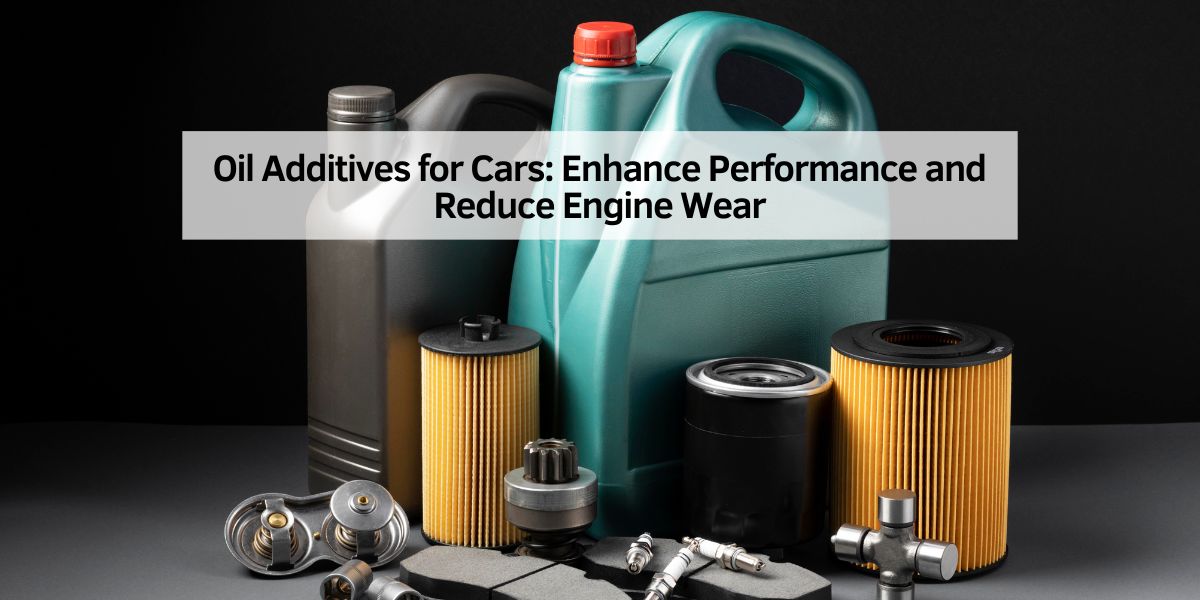
Oil Additives for Cars: Enhance Performance and Reduce Engine Wear
Oil additives can reduce friction, quiet engine noise, and slow a minor oil leak — but they are not a fix-all, and not every car needs one. They work best as a supplement for older or high-mileage engines, not as a substitute for the right oil or a real repair.
Most modern full-synthetic motor oils already ship with a complete additive package (friction modifiers, detergents, anti-wear agents) engineered by the oil’s own formulator. Adding a separate bottle on top of that isn’t automatically dangerous, but it can be redundant, and dumping in more than the label’s dosage can do more harm than good. Below we look at three specific products — an anti-friction treatment, an all-purpose oil treatment, and a stop-leak conditioner — what they actually do, what they don’t, and when each one is worth buying.
Do You Actually Need an Oil Additive?
Oil additives make the most sense for older engines, engines with 75,000+ miles, or anyone still running conventional (non-synthetic) oil. If your car is newer and already runs a quality full-synthetic oil, you’re generally already getting the friction-modifier and anti-wear protection an aftermarket bottle promises — see how long that oil is actually designed to last before you assume it needs help. In that case, an additive is optional insurance rather than a necessity.
It’s also worth knowing the difference between an oil leak and oil consumption (burning). A stop-leak product only addresses oil dripping from a seal or gasket — if your oil level keeps dropping with no puddle underneath, that’s oil consumption, and no bottle poured into the fill cap will fix it.
A common concern is whether using one voids your car’s warranty. Under the federal Magnuson-Moss Warranty Act, a manufacturer cannot void your warranty just because you used an oil additive — they would have to prove the additive actually caused the specific damage they’re refusing to cover. In practice, sticking to the dose printed on the bottle and not layering multiple additives on top of each other is the safest way to avoid any dispute.
Liqui Moly MoS2 Anti-Friction Engine Treatment
BEST FOR OLDER ENGINES ON CONVENTIONAL OIL
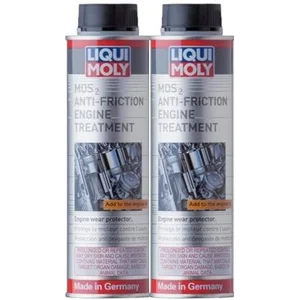 |
Liqui Moly 2009 MoS2 Anti-Friction Engine Treatment (2-pack) – $24.85 A one-per-oil-change bottle that coats moving engine parts in a molybdenum disulfide (MoS2) film to cut metal-to-metal friction.
|
Liqui Moly’s MoS2 treatment works by suspending molybdenum disulfide, one of the slipperiest solid lubricants known, directly into your engine oil. As the oil circulates, MoS2 clings to metal surfaces and forms a thin protective film that keeps parts from grinding directly against each other, even for a moment right after startup when oil pressure hasn’t fully built yet.
Pros
- Cuts friction and wear at startup, when engines see the most unprotected metal-to-metal contact
- Long, well-documented history as a friction modifier in both gas and diesel engines
- One bottle per oil change is a low, simple dose
Cons
- MoS2 is a suspended micro-powder, not a liquid that fully dissolves — using more than the recommended amount can settle out and add sediment load
- Many modern full-synthetic oils already include an oil-soluble molybdenum friction modifier (MoDTC), making a second MoS2 dose less necessary
- Not a fix for existing wear, leaks, or worn seals
Because MoS2 doesn’t fully dissolve the way a soluble additive does, stick to exactly one bottle per oil change as the label directs rather than “doubling up” for extra protection — overdosing is the one real way this specific type of product can cause a problem instead of preventing one.
Prolube Oil Treatment (16 oz)
SOLIDS-FREE, WORKS IN GAS OR DIESEL
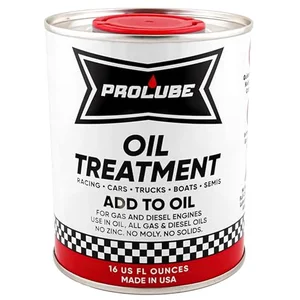 |
Prolube Oil Treatment (16 oz) – $28.99 A no-zinc, no-moly, no-solids treatment the label markets for gas and diesel engines, transmissions, and differentials alike.
|
Prolube is pitched as a broader treatment than a single-purpose friction modifier: the same bottle is labeled for gasoline and diesel engine oil, manual and automatic transmissions, and differentials — worth weighing against a dedicated transmission fluid or additive if the transmission is your main concern. Its “no zinc, no moly, no solids” label claim is worth noting on its own — it means the formula isn’t relying on a suspended particulate like MoS2, which lowers the risk of the sediment buildup a solid-additive product can create if overdosed.
Pros
- One product covers engine oil, transmissions, and differentials
- Solids-free formula avoids the particulate-sediment concern of MoS2-based treatments
- Works in both gasoline and diesel oil
Cons
- Marketed horsepower and fuel-economy gains are the manufacturer’s claims, not independently verified figures
- Costs more up front than doing nothing and simply keeping to your regular oil-change interval
- Not designed for or marketed toward electric vehicles
Lucas Oil Engine Oil Stop Leak
BEST FOR MINOR SEEPAGE, NOT ACTIVE LEAKS
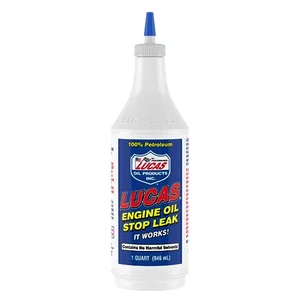 |
Lucas Oil 10278 Engine Oil Stop Leak (1 quart) – $11.95 A 100%-petroleum conditioner that swells and softens old, hardened rubber seals to slow minor oil seepage.
|
“Stop leak” is a slightly misleading name for what this product actually does. It doesn’t patch a hole or seal a crack; it conditions old rubber seals and gaskets that have shrunk and hardened with age, causing them to swell back toward their original size so they seat more tightly again. That can genuinely slow a slow, minor seep for a while. It does nothing for a gasket that’s physically torn, a pan that’s cracked, or any leak significant enough that you’re topping off oil between every fill-up — those need an actual repair, not a bottle poured into the fill cap.
Pros
- Inexpensive way to try conditioning an old seal before committing to a repair
- Petroleum-based formula with no harsh solvents that could damage other rubber components
- Simple to use — pour it in with your next oil change
Cons
- Does nothing for a torn gasket, a cracked oil pan, or a significant active leak
- A temporary conditioner, not a permanent repair — treat it as buying time, not solving the problem
- Masking a leak instead of fixing it can let a small problem grow before you notice
How to Choose the Right Oil Additive for Your Situation
The right product depends entirely on what problem you’re actually trying to solve — friction reduction, general protection, or an old leak — not on which one has the flashiest marketing claims.
| Your situation | Best-fit product type | What to expect |
|---|---|---|
| Older engine, conventional oil, no leaks | MoS2 anti-friction treatment (e.g. Liqui Moly) | Reduced startup friction and wear over time |
| Want one product for engine + transmission + differential | All-purpose solids-free treatment (e.g. Prolube) | Broad coverage; treat the marketing claims as optimistic, not guaranteed |
| Small, slow oil seep from an old, hardened seal | Stop-leak seal conditioner (e.g. Lucas) | Possible temporary reduction in seepage — not a repair |
| Newer car on quality full-synthetic oil, no symptoms | None needed | You’re likely already covered by the oil’s built-in additive package |
| Active drip, puddle under the car, or a torn gasket | None — see a mechanic | No additive repairs a physically damaged seal or cracked component |
Frequently Asked Questions
What Do Oil Additives Actually Do?
Oil additives supplement your engine oil’s existing formula to reduce friction, wear, and noise, and in some cases to condition old seals to slow a minor leak. They work alongside your oil, not as a replacement for it, and they can’t undo mechanical wear that’s already happened.
How Does the Liqui Moly Mos2 Additive Work?
Liqui Moly’s MoS2 additive suspends molybdenum disulfide, a solid lubricant, in your engine oil. As oil circulates, MoS2 coats moving parts and forms a protective film that reduces metal-to-metal contact, particularly during the moment right after startup before oil pressure fully builds.
Do Prolube-Style Treatments Really Boost Fuel Economy?
Manufacturers market reduced friction as translating into better fuel economy and more usable horsepower, and less friction can plausibly help at the margins. Treat the specific numbers on the label as the manufacturer’s marketing claim rather than an independently verified figure, since these products aren’t dyno-tested by a neutral third party.
Does Lucas Oil Stop Leak Actually Stop Engine Leaks?
It can slow a small, minor seep by conditioning old, hardened rubber seals and gaskets so they swell back and seat more tightly. It will not stop a leak caused by a torn gasket, a cracked oil pan, or any active drip significant enough that you’re regularly topping off oil — those require an actual repair.
Will an Oil Additive Void My Car’s Warranty?
Not automatically. Under the federal Magnuson-Moss Warranty Act, a manufacturer cannot void your warranty simply because you used an oil additive — they would have to prove the additive caused the specific damage in question. Following the product’s label dosage and keeping documentation of your regular maintenance is the safest approach.
Can You Mix Multiple Oil Additives Together?
It’s not recommended. Combining several additives at once (for example, an MoS2 treatment plus a separate stop-leak product) can push you past a safe total dose and change your oil’s properties in ways neither manufacturer tested for. If you want to add a treatment, pick one product for the specific problem you’re solving rather than stacking several.
Are Oil Additives Safe for All Engines?
Most are formulated to work safely in both gasoline and diesel engines when used at the labeled dose. Always check the specific product against your owner’s manual, avoid combining multiple additives, and skip aftermarket treatments entirely on modern engines your manufacturer has flagged as sensitive to non-OEM fluids.
Conclusion
Oil additives are a targeted tool, not a universal upgrade. The Liqui Moly MoS2 treatment earns its place in older engines and conventional-oil cars looking to cut startup friction, dosed exactly as the label says rather than doubled up. Prolube’s solids-free formula is a reasonable all-purpose pick if you want one bottle covering engine, transmission, and differential, as long as you treat its fuel-economy claims as marketing rather than fact. Lucas Oil Stop Leak is worth the low cost as a stopgap for a minor, slow seep — but it’s not a substitute for fixing a real leak.
If your car is newer, already runs full-synthetic oil, and shows no symptoms of wear or leaks, the honest answer is that you probably don’t need any of these — your oil already carries a complete additive package. Save the money and put it toward keeping your regular oil-change schedule instead.
Products related to this article
Sponsored / affiliate links. As an Amazon Associate I earn from qualifying purchases. I may earn additional commission from eligible campaigns.