Rain-X Interior Glass Anti-Fog Review
Verdict: Rain-X Interior Glass Anti-Fog is worth considering if your problem is light-to-moderate windshield fog on otherwise clean glass, but it is not the right fix for a damp cabin, dirty interior glass, or a ventilation problem. The 6.5 out of 10 score and second-place ranking fit that middle ground: useful, but conditional.
This guide is part of our Car cleaning and detailing guide series.
When to buy the spray and when to skip it
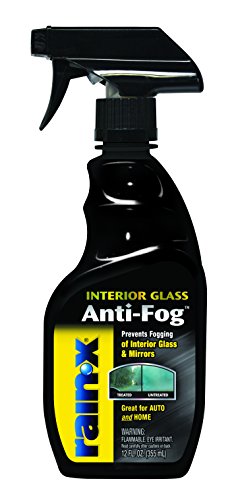


Rain-X Interior Glass Anti-Fog is a reasonable buy if you want a consumer spray that cuts interior fog on windshields and side windows, and you are willing to prep the glass properly. It works best as a fog-control layer, not a cleanup product, and it can leave a minor nighttime smear pattern if the buffing step is weak.
Score and bottom-line judgment
The current page score is 6.5 out of 10, and it ranks second in its category. That fits a product that can help for two to four weeks, takes about five minutes for a full windshield, and still depends heavily on glass condition and cabin humidity.
Main strengths and weak points
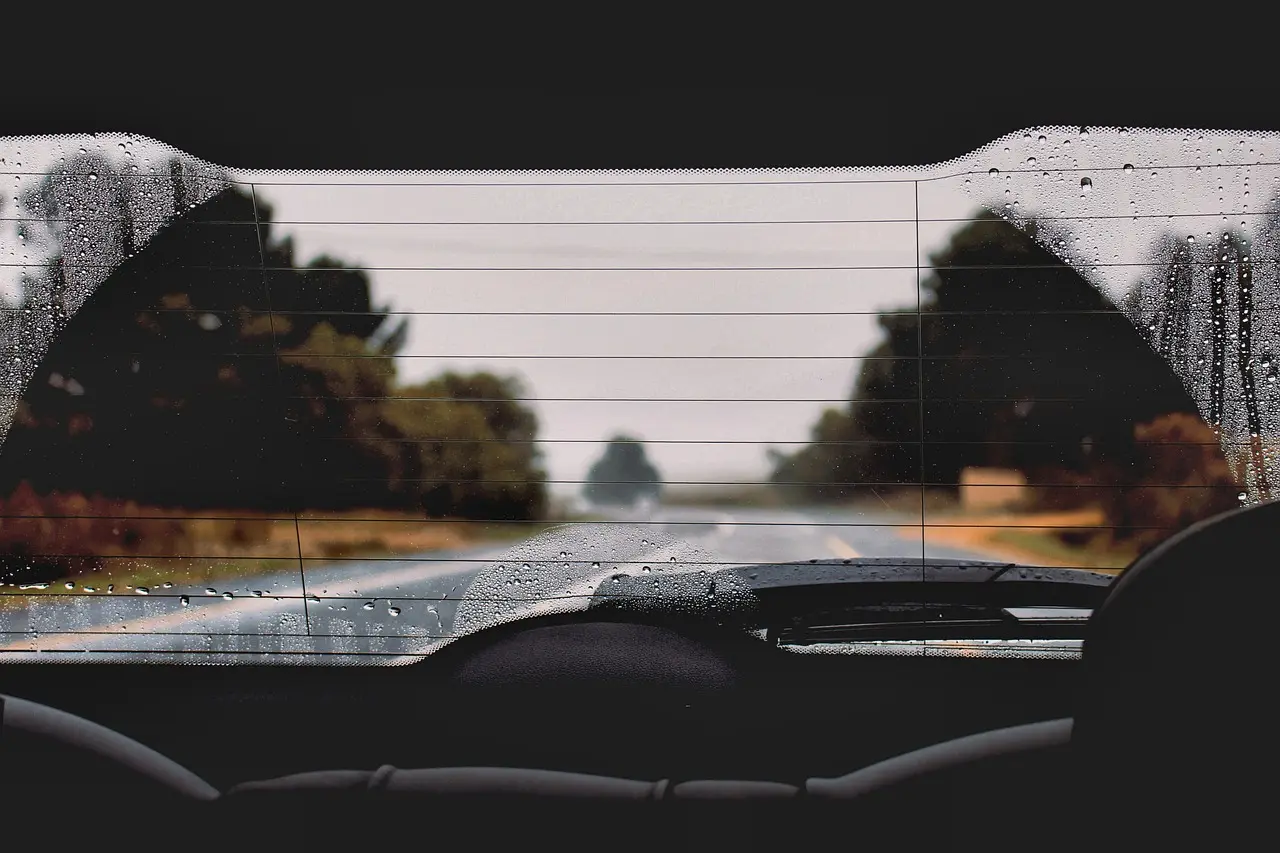
The main strength is the hydrophilic anti-fog film. Instead of letting moisture bead up, it spreads condensation into a clear layer that is less likely to turn into a blind spot on the interior windshield.
The main weak point is that it is easy to blame the spray for problems caused elsewhere. Dirty glass, weak defrost settings, and moisture sources inside the cabin can overwhelm it fast.
Short recommendation
Start with this product if your glass already looks clean and your fogging is moderate, especially in winter starts. Skip it as a first move if you can see oily film, if the cabin smells damp, or if the windshield fogs up even after the HVAC system is set correctly.
What rain-X interior glass Anti-Fog
Rain-X Interior Glass Anti-Fog is a spray-format consumer product for interior glass use, including the windshield and side windows. It is positioned to reduce fog formation on the inside of the glass, not to replace glass cleaner or to solve moisture problems in the vehicle.
How the anti-fog film works
The page describes the product as depositing a hydrophilic film. That matters because a hydrophilic layer changes how moisture behaves on the glass: it spreads condensation into a clear sheet instead of allowing fog beads to scatter light.
That mechanism is useful on the interior windshield, which usually fogs first. The windshield sees your breath, dashboard heat, and cold outside glass at the same time, so it often needs better fog control than side windows.
Where it fits in the anti-fog category
Compared with anti-fog wipes, Rain-X sits in the spray category that usually requires more careful application but can cover more area. FogTech DX Anti-Fog Wipes are convenient for quick touch-ups, while EK USA Cat Crap Anti-Fog Spray is another spray-format option in the same general use case.
For fog control alone, the deciding factors are residue, durability, and how much prep each product needs. Rain-X is more suited to a windshield-and-windows routine than to a one-swipe emergency fix.
Does Rain-X Interior Glass Anti-Fog actually work?
Yes, it can work, but only under the right conditions. Clean glass, moderate fog, and normal winter condensation are the best use case; heavy cabin moisture, oily film, or bad ventilation can cut the effect sharply.
Best-case conditions for success
The product does best on a clean interior windshield that fogs from overnight temperature swing, short commutes, or breath condensation. In that setting, the hydrophilic film can keep the moisture from forming opaque beads.
Suppose a sedan sits outside overnight at 28°F and the cabin is dry except for normal breath moisture. A treated windshield is a better match for this spray than one with winter grime and dust film.
When results are weak or uneven
Results are weaker when the glass has fingerprints, nicotine film, dashboard residue, or old cleaner buildup. Results are also uneven if the car has a wet floor mat, a leaking hatch seal, or defrost airflow that never reaches the lower windshield.
A common first-timer mistake is using the spray on fog that is really a cabin moisture problem. If the source is a wet interior, the glass treatment may help for a short time and then fail again the next morning.
What fog types it handles best
It is best against condensation fog, not dirt haze. That means it helps most when the problem is moisture turning into visible fog on the inside of the glass, rather than contamination already stuck to the glass surface.
How do you apply Rain-X Interior Glass Anti-Fog correctly?
Use it on clean glass, spray it onto a microfiber cloth, then wipe and buff in small sections. That sequence matters because the product is designed to leave a thin film, and weak buffing is the fastest way to create haze instead of clarity.
Clean the glass first
Start with interior glass that has been cleaned of visible film and dust. If the windshield still looks cloudy before the spray goes on, the anti-fog layer will sit on top of contamination and can create a smeared finish.
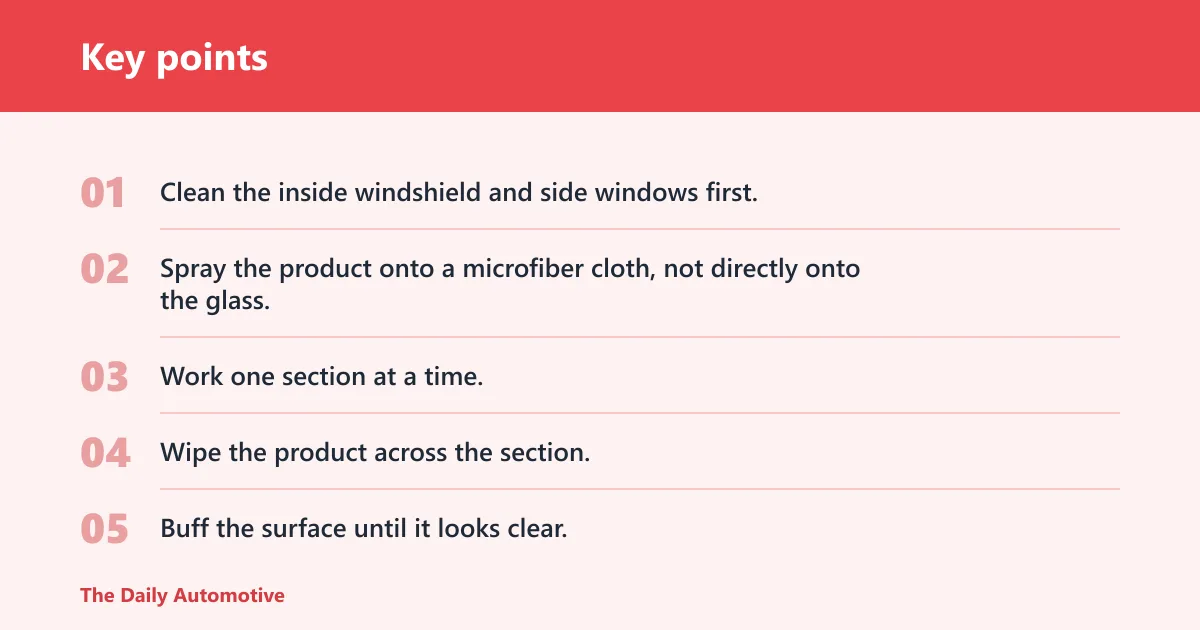
- Clean the inside windshield and side windows first.
- Spray the product onto a microfiber cloth, not directly onto the glass.
- Work one section at a time.
- Wipe the product across the section.
- Buff the surface until it looks clear.
Spray, wipe, and buff in small sections
The page describes about five minutes for a full windshield, which is realistic only if the work is broken into sections. Small passes help you keep track of coverage and make it easier to catch missed haze before it dries.
Use enough pressure to spread the film evenly, then buff with a separate clean part of the microfiber cloth. That second pass is what usually keeps the finish clear.
Common application mistakes that cause haze
Over-application, skipping the buff step, and using a dirty towel are the usual causes of streaks. The page notes a minor nighttime smear pattern that can be corrected, which fits a product that is workable but sensitive to technique.
How long does Rain-X anti-fog last on a windshield?
The page says it can prevent fog for two to four weeks, but actual durability depends on where the glass sits and how the car is used. The interior windshield usually needs attention sooner than side windows because it gets the heaviest fog load.
Interior windshield versus side windows
The interior windshield sees the strongest temperature gradient and the most airflow from your breath and defrost system. Side windows often last longer because they are less central to your forward view and may see less repeated condensation.
Reapplication timing by driver type
Commuters in a temperate winter climate may be able to follow a roughly monthly schedule. Cold-climate drivers, especially those making early-morning starts, may need to reapply closer to the lower end of that two to four week range.
Rideshare drivers face a different pattern: frequent door opening, passenger breath, and cabin humidity can shorten the useful window. For that use case, the safest rule is to inspect the windshield weekly and reapply as soon as haze or fog control drops.
What shortens durability
Residue from interior cleaners, heavy handprints, and constant use of the wipers on a fogged window can shorten the coating’s life. Cabin moisture leaks and poor defrost settings can also make the product look weaker than it really is.
Safety and cabin use
Use the spray with airflow in mind. A Safety Data Sheet from 2021 lists an eye irritation hazard classification of H319, and the formula is reported to include IPA at about 7-13% and DPGME at about 3-7%, so ventilation is advisable in a closed cabin.
SDS hazard note: H319 and ventilation
The SDS points to eye irritation risk and recommends ventilation. That fits an alcohol-solvent product meant for interior use, where vapor can build up more quickly than it would on exterior glass.
Open the windows while applying it, and avoid lingering in a closed car with the product freshly applied. That is the practical meaning of the SDS guidance.
Prop 65 warning versus SDS disclosure
The Amazon listing carries a California Prop 65 warning, which is not the same thing as the SDS hazard line. Readers may notice that mismatch because one disclosure is broader and consumer-facing, while the SDS is the more specific handling document.
That difference does not make the product unsafe by itself, but it does mean you should read the label carefully and treat the interior application as a ventilated task.
Gloves, airflow, and enclosed-cabin cautions
The SDS also supports glove use for prolonged contact. That is most relevant if you are handling the product repeatedly or cleaning multiple vehicles in a row.
Because the formula uses alcohol solvents, enclosed-cabin vapor exposure is the main practical concern. If the car feels stuffy during application, stop and open it more before continuing.
Rain-X anti-fog decision matrix
This matrix separates glass-treatment problems from cabin-condition problems. It also shows when the right move is to clean first, when to apply anti-fog, and when the spray is the wrong tool for the symptom.
| Symptom | Likely cause | Recommended fix | Reapplication interval | Risk of haze |
|---|---|---|---|---|
| Light morning fog on a clean windshield | Normal condensation | Apply anti-fog after cleaning | About monthly | Low if buffed well |
| Fog returns within a day or two | Dirty glass or weak buffing | Clean glass first, then reapply | After deep cleaning | Moderate |
| Persistent fog after rain or snow | Wet floor mats, damp carpet, or leaks | Fix moisture source and improve ventilation | Do not rely on spray alone | High |
| Smear at night from oncoming headlights | Too much product or weak buffing | Reclean and apply thinner | Only after cleanup | High |
| Fog on side windows but not windshield | Uneven cabin airflow | Check HVAC settings and treat windows | Two to four weeks | Low to moderate |
Who it
This product fits drivers who want a fog-control spray for clean glass and normal winter condensation. It is a good match for commuters who park outside, riders who want a quick windshield treatment, and cold-climate drivers who are willing to maintain it on a schedule.
Commuters
If your drive is short and the windshield fogs during the first few minutes, this is a sensible product to try. A monthly reapplication may be enough if the cabin stays dry and the glass is cleaned properly.
Rideshare drivers
Rideshare use is harsher because passenger breath and repeated door opening add humidity all day. That means more frequent inspection, more careful buffing, and a lower tolerance for any streaks on the driver’s side of the windshield.
Cold-climate drivers
Drivers in freezing weather will benefit most when the product is paired with strong defrost airflow and a dry cabin. If the car regularly carries snow melt on the mats, anti-fog alone will not hold up for long.
Pros and cons
Pros
- Helps prevent interior fog on windshield and side windows.
- Uses a hydrophilic film that spreads condensation into a clearer layer.
- Can last two to four weeks under the right conditions.
- About five minutes for a full windshield is a workable application time.
- Fits a consumer spray routine with a microfiber cloth.
Cons
- Does not fix leaks, wet carpets, or poor HVAC setup.
- Can leave a minor nighttime smear pattern if buffing is weak.
- Needs careful prep; dirty glass reduces results fast.
- Alcohol solvents make ventilation important inside the cabin.
- Prop 65 warning can raise transparency questions for shoppers.
Frequently asked questions
Does Rain-X anti-fog leave streaks or haze?
It can, especially if the glass was not fully cleaned or if the buffing step was rushed. The page notes a minor nighttime smear pattern that can be corrected, which points to a product that is effective but technique-sensitive. Thin application is the safer path.
Is Rain-X Interior Glass Anti-Fog safe to use inside a car?
It is meant for interior use, but the SDS dated 2021-10-06 lists eye irritation hazard class H319 and supports ventilation and glove use for prolonged contact. The alcohol solvents also make enclosed-cabin vapor exposure a real issue, so keep air moving while applying it.
What’s the difference between Rain-X anti-fog and anti-fog wipes?
Anti-fog wipes like FogTech DX are usually faster for quick use and smaller surfaces, while Rain-X is a spray product that you apply with a microfiber cloth. The spray can be more flexible for full windshields, but wipes may be easier when you want less mess and less residue risk.
When should I reapply Rain-X Interior Glass Anti-Fog?
Reapply when fog control starts to fade, not by the calendar alone. For many drivers, that will land somewhere in the two to four week range. Cold-climate drivers and rideshare drivers may need to check it more often because humidity and passenger load shorten the useful interval.
Will Rain-X anti-fog help with winter windshield fogging?
Yes, if the windshield is clean and the fog is from normal winter condensation. It will not solve heavy moisture buildup, failed seals, or a dirty interior surface. For winter driving, the best results come from pairing the spray with good defrost settings and a dry cabin.
Products related to this article
Sponsored / affiliate links. As an Amazon Associate I earn from qualifying purchases. I may earn additional commission from eligible campaigns.