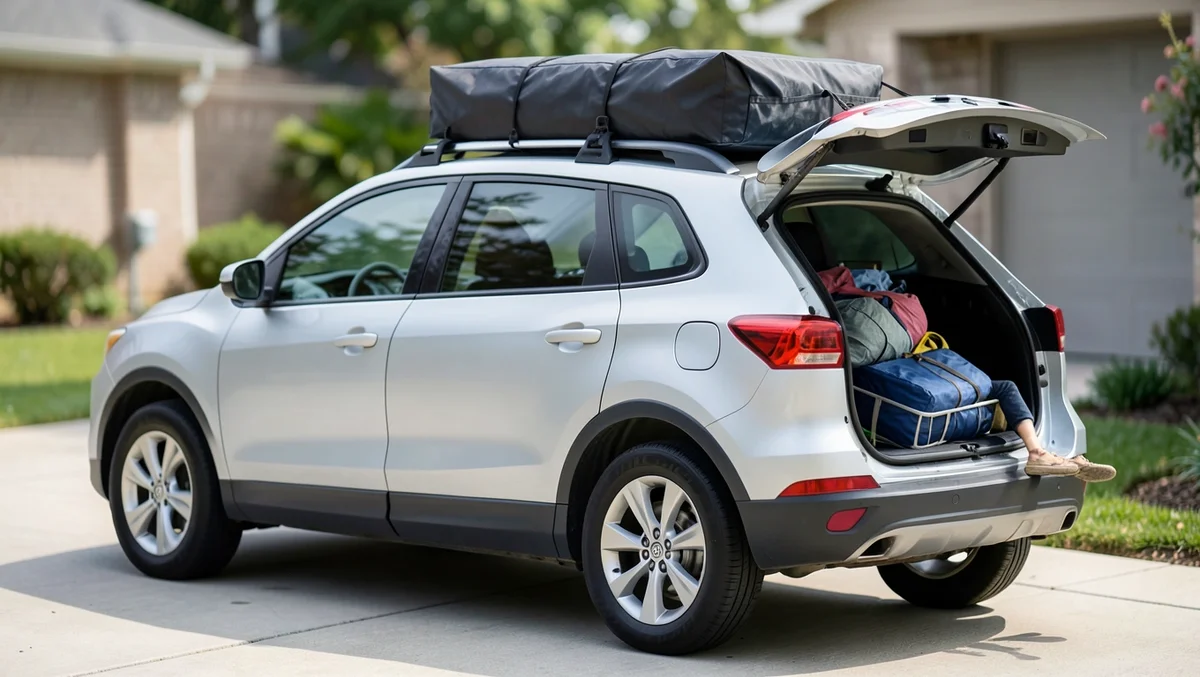
Roof Rack Storage for Car: Capacity, Weight Limits & MPG Impact
Roof rack storage typically adds 8 to 28 cubic feet of extra cargo space, but your car’s own roof rating — not the carrier’s size — sets the real limit, and it will cut highway fuel economy by roughly 6% to 25% while it’s loaded.
Before you buy a cargo box, basket, or soft-sided bag, it helps to know how much space you actually need, how much weight your roof can safely carry, and what it will cost you in gas mileage. Here’s what the numbers say.
How Much Storage Does Roof Rack Storage Actually Add?
Rooftop storage is sold by cubic feet, and the range is wider than most shoppers expect. A small soft bag might hold 8 cubic feet — enough for a couple of duffels — while an oversized bag or hard-shell box can hold nearly 30 cubic feet, enough for a family of five’s luggage plus camping gear.
| Storage Type | Typical Capacity | Good For |
|---|---|---|
| Soft rooftop cargo bag | 8–28 cu. ft. | Occasional trips, works with or without crossbars |
| Hard-shell roof box | 14–21 cu. ft. | Frequent use, better security and aerodynamics |
| Roof basket + cargo bag | 8–16 cu. ft. | Bulky or oddly shaped gear, coolers, firewood |
| Hitch-mount cargo carrier | ~16–20 cu. ft. | Heavier loads (up to 300–500 lb), no roof access needed |
As a rough packing guide, 15 cubic feet holds about 4–6 suitcases, and 21 cubic feet fits closer to 6–8 along with soft duffels or sleeping bags. If you’re only hauling skis, a duffel, or overflow from a full trunk, buying more capacity than you need just adds weight, wind drag, and cost.
21 CU. FT. ALL-AROUND PICK
 |
Sailnovo 21 Cu. Ft. Rooftop Cargo Bag – $68.37 Sits right in the capacity sweet spot from the table above — enough room for a family’s luggage without pushing most cars’ dynamic roof rating.
|
Static vs. Dynamic Weight Limits: How Much Can You Actually Load?
Every vehicle has two separate roof ratings, and mixing them up is the most common overloading mistake. Dynamic weight capacity is the limit while the car is moving — it accounts for bumps, wind, and braking — and for most vehicles it’s only 100 to 165 lb, including the weight of the rack itself. Static weight capacity is the much higher limit that applies only while the car is parked; roof racks generally handle two to six times their dynamic rating when the car isn’t moving.
Two numbers matter here, and you always use the lower one: your vehicle manufacturer’s rated roof load (check the owner’s manual or the sticker inside the door jamb) and the roof rack’s own dynamic weight rating. Whichever figure is smaller is your real, safe driving limit — and it already includes the carrier’s own weight, not just what you pack inside it.
How Roof Rack Storage Affects Your Gas Mileage
Roof storage doesn’t just add weight — it adds drag, and drag is what actually costs you the most fuel. According to the U.S. Department of Energy, using a cargo box on top of a vehicle can reduce fuel economy by around 25% at highway speeds. Independent testing backs that up: a hatchback lost as much as 25% at 65 mph with a box on top, while a midsize SUV lost closer to 10–13%. Real-world estimates generally put the highway penalty for any rooftop carrier at 6% to 25%, and crosswinds make it worse — drag can climb another 13% for every 10 mph of headwind or crosswind.
If fuel economy matters more than roof access, a hitch-mount or rear cargo carrier is the better trade: mounted low behind the bumper, it typically only costs 1% to 5% in highway mpg. Either way, the fix for rooftop storage is simple — take the empty carrier off when you’re not using it. An empty box still creates drag even with nothing inside.
Which Type of Roof Rack Storage Should You Choose?
The right type depends on how often you’ll use it and what your car already has:
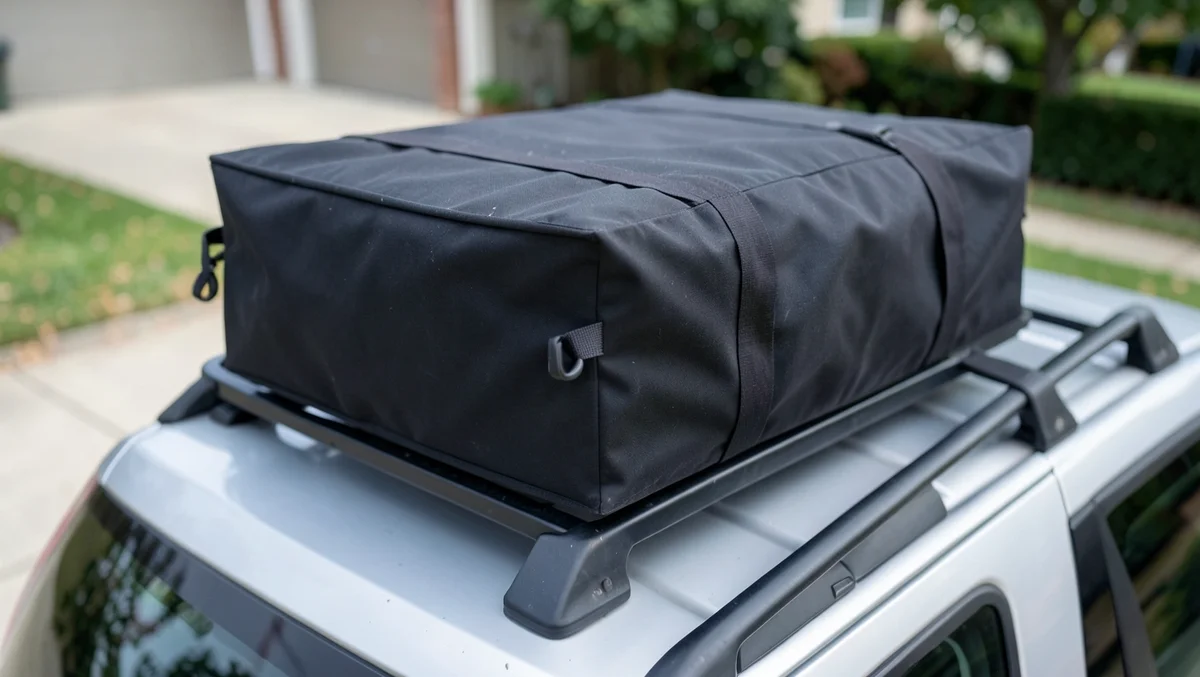
- Soft rooftop bag — cheapest option, folds flat for storage, and many models fit cars with no crossbars at all using door-hook straps.
- Hard-shell roof box — better security (lockable), sheds rain and snow completely, and its shaped design cuts wind drag more than a boxy soft bag — but it requires factory or aftermarket crossbars and needs garage space to store when it’s off the car.
- Roof basket — open-air, so it’s built for bulky or wet gear (firewood, coolers, muddy boots) rather than luggage, and it’s usually paired with a separate waterproof bag for anything that needs to stay dry.
- Hitch-mount carrier — the best pick if you don’t want anything on the roof at all; it rates for heavier loads and barely touches your mpg, but it needs a hitch receiver and can block rear visibility or a tailgate camera.
For a full side-by-side breakdown of all four types — including exact weight ratings and pricing — see our roof bag vs. hitch carrier comparison.
How to Load and Secure Roof Rack Storage Safely
- Weigh your gear (a bathroom scale works) and confirm the total, including the empty carrier’s weight, is under your vehicle’s dynamic roof rating.
- Load heavier items low and toward the center of the carrier, over the roof rack’s crossbars rather than hanging past them.
- Distribute weight evenly side to side so the carrier doesn’t pull to one side at highway speed.
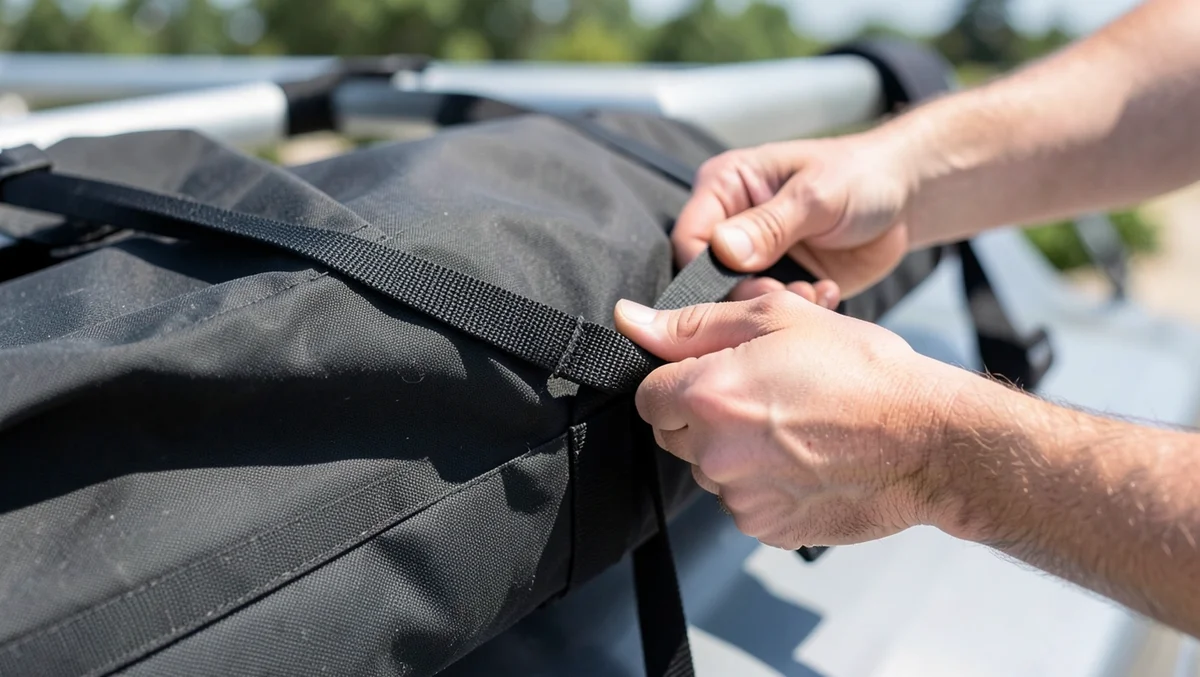
- Cinch every strap tight, then drive a short distance and re-check them — straps loosen slightly as soft bags settle.
- Recheck straps again after about 30–50 miles on your first real trip, and periodically after that on long drives.
- Remove the carrier when it’s empty — it still adds drag and a small overhead-clearance risk (garages, drive-throughs, low parking structures) even with nothing inside.
Frequently Asked Questions
How much weight can roof rack storage hold?
Most vehicles have a dynamic (while-driving) roof load rating of just 100 to 165 lb, including the weight of the carrier itself. Parked and stationary, the same roof can typically hold two to six times more. Always check your owner’s manual for the exact number and use the lower of that figure or the rack’s own rated capacity.
Does roof rack storage reduce gas mileage?
Yes. The U.S. Department of Energy estimates a rooftop cargo box can cut highway fuel economy by about 25%, and real-world tests generally show a 6% to 25% penalty depending on the vehicle’s shape and speed. A hitch-mount or rear carrier typically costs far less, around 1% to 5% on the highway.
What is the difference between a rooftop cargo bag and a rooftop cargo box?
A cargo bag is a soft, foldable waterproof bag that straps to the roof or roof rack and folds flat for storage; a cargo box is a rigid, lockable hard-shell container that bolts to crossbars. Boxes cost more and need garage space when removed, but they seal out weather completely, lock for security, and cause slightly less wind drag than a boxy soft bag.
Can you use roof rack storage without a roof rack?
Yes, for soft rooftop bags. Many are designed to strap directly to the roof itself using an anti-slip mat and straps that hook through the door frames, no crossbars required. Hard-shell boxes and roof baskets, on the other hand, need factory or aftermarket crossbars to mount.
How many cubic feet of roof rack storage do I need?
For a weekend trip for two, 8–15 cubic feet is usually enough. For a family trip with 4–6 suitcases, look for 15–21 cubic feet. For a longer trip with camping gear on top of luggage, 21–28 cubic feet gives the most breathing room — just confirm the loaded weight still fits under your vehicle’s dynamic roof rating.
Is it safe to leave a rooftop cargo carrier on all the time?
It’s not dangerous to leave an empty carrier mounted, but it isn’t ideal either. An empty box or bag still adds wind drag and cuts fuel economy, adds a small clearance risk in garages and drive-throughs, and soft bags exposed to constant sun and weather wear out faster. Most manufacturers recommend removing rooftop storage when it isn’t in active use.
The Bottom Line
Roof rack storage genuinely expands what your car can carry, but two numbers decide whether it works for you: your vehicle’s dynamic roof rating (usually 100–165 lb) and the mpg hit you’re willing to accept (typically 6–25% on the highway). Match the carrier’s capacity to what you actually pack, load it heavy-items-low and centered, cinch and re-check every strap, and take it off the roof when it’s empty.
Products related to this article
Sponsored / affiliate links. As an Amazon Associate I earn from qualifying purchases. I may earn additional commission from eligible campaigns.