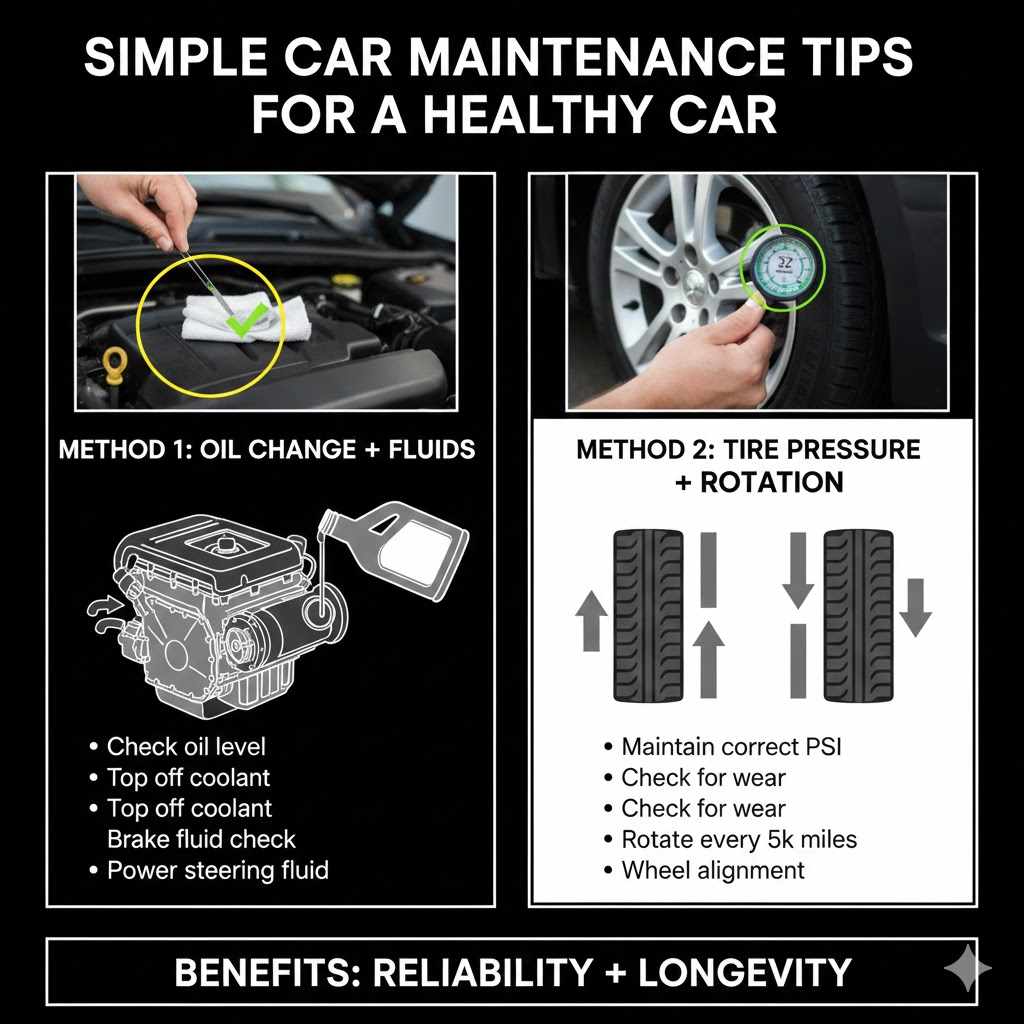
Simple Car Maintenance Tips for a Healthy Car
Lots of people find taking care of their car a bit confusing. You hear about all sorts of checks and fluids, and it can seem like a big job. But it doesn’t have to be hard!
You can easily keep your car running well with just a few simple habits. This guide will walk you through Simple Car Maintenance Tips to Keep Your Car in Top Shape without any confusing jargon. Let’s make car care easy!
Regular Checks Simple Car Maintenance Tips to Keep Your Car in Top Shape
Keeping your car in good working order doesn’t require a mechanic’s degree. Simple, regular checks can save you a lot of trouble and money down the road. Think of it like a quick health check-up for your car.
These small habits ensure your vehicle runs smoothly and safely, preventing bigger issues from cropping up. We’ll explore the most important checks you can do yourself.
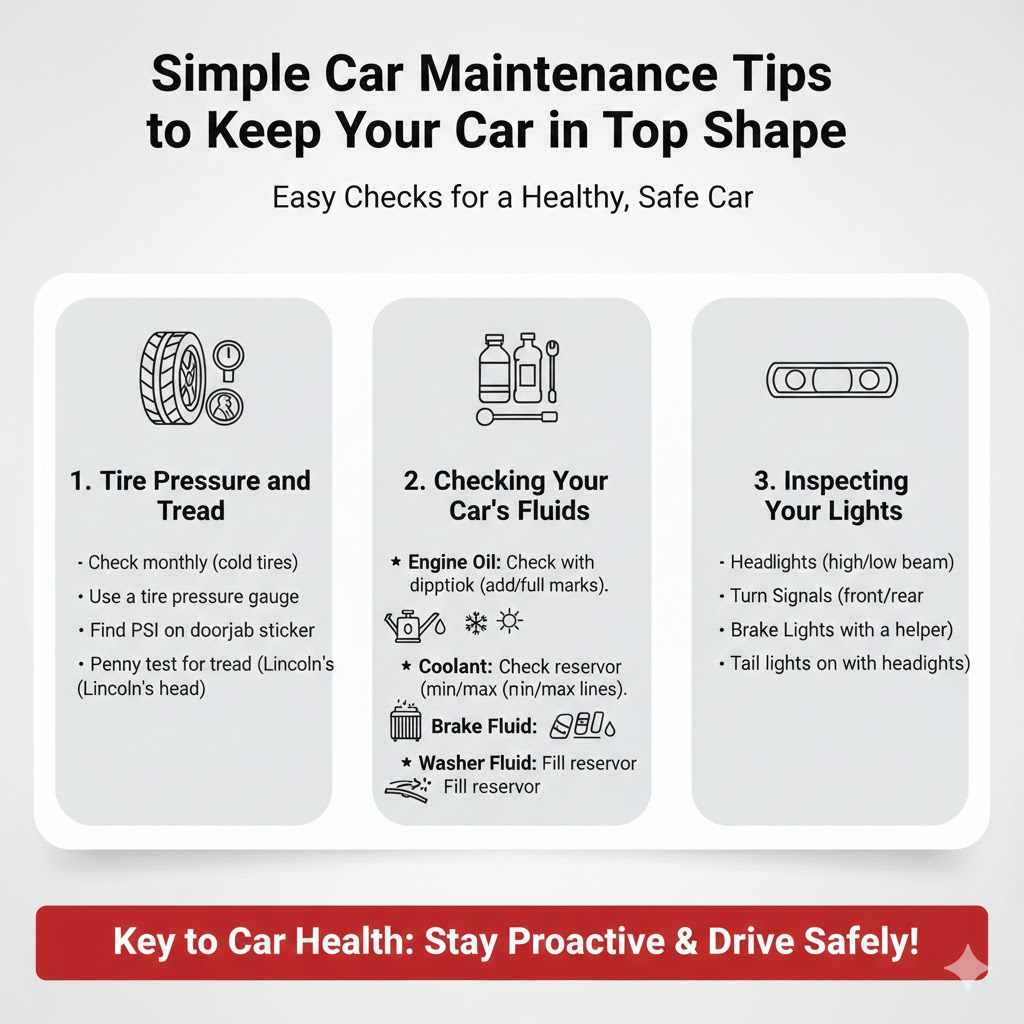
Tire Pressure and Tread
Your tires are the only part of your car that touches the road. Keeping them in good shape is super important for safety and how well your car drives.
Tire pressure is how much air is inside your tires. If the pressure is too low, your tires can get too hot, which is dangerous. It also makes your car use more gas.
If the pressure is too high, your tires might not grip the road as well, especially in wet conditions. You can find the right tire pressure for your car on a sticker inside the driver’s side doorjamb or in your car’s manual. You’ll need a tire pressure gauge, which is a small, inexpensive tool.
To check the pressure, unscrew the cap on one of your tires. Push the gauge firmly onto the valve stem. It will show you the pressure.
Do this for all four tires when they are cold (meaning the car hasn’t been driven for a few hours). Compare the reading to the recommended pressure. If it’s too low, add air at a gas station or with a portable air compressor.
If it’s too high, press the little metal pin in the center of the valve stem to let some air out.
Tread is the pattern on the outside of your tires that helps them grip the road. Over time, treads wear down. If your treads are too low, your tires can’t push water away effectively, making it easy to slip on wet roads.
A simple way to check is the “penny test.” Take a penny and stick it into the deepest part of your tire’s tread with Lincoln’s head facing down. If you can see the top of Lincoln’s head, your tread is getting low, and it’s time to think about new tires.
- Checking tire pressure regularly (at least once a month) helps ensure safe driving, better fuel economy, and longer tire life.
- Low tire pressure can lead to uneven tire wear, making your tires wear out faster. This means you’ll have to buy new tires sooner than you would otherwise.
- Worn tire treads are a major safety hazard, especially in rain or snow. They reduce your car’s ability to grip the road, increasing stopping distances and the risk of accidents.
A study by the National Highway Traffic Safety Administration (NHTSA) found that underinflated tires can be a factor in thousands of crashes each year. Properly inflated tires can also improve your car’s gas mileage by up to 3%, saving you money at the pump. Imagine saving a few dollars every time you fill up, just by paying attention to your tires.
Checking Your Car’s Fluids
Your car relies on many different fluids to keep its parts working smoothly. These fluids help cool the engine, lubricate moving parts, and keep your brakes working. Checking them is one of the easiest and most important Simple Car Maintenance Tips to Keep Your Car in Top Shape.
Engine Oil is the lifeblood of your engine. It reduces friction between moving parts, which prevents wear and tear. It also helps cool the engine and keeps it clean by carrying away dirt and debris.
Over time, oil breaks down and gets dirty, so it needs to be changed regularly. Most cars need an oil change every 5,000 to 7,500 miles, but check your owner’s manual for the exact recommendation for your car.
To check your oil, make sure your car is parked on a level surface and the engine has been off for at least 10 minutes. Open the hood and find the oil dipstick. It usually has a brightly colored handle, often yellow or orange.
Pull the dipstick out, wipe it clean with a rag, and then push it back in all the way. Pull it out again and look at the oil level. There will be markings on the dipstick, usually two dots or lines, labeled “Add” or “Low” and “Full” or “Max.” The oil level should be between these two marks.
If it’s low, you’ll need to add more oil. Check the type of oil recommended in your car’s manual. Adding the wrong type can cause damage.
Coolant (also called antifreeze) keeps your engine from overheating in the summer and freezing in the winter. It circulates through the engine, absorbing heat and then releasing it through the radiator. If your coolant level is low, your engine can overheat, which can lead to serious and expensive damage.
You can usually check the coolant level in a translucent reservoir tank under the hood. It’s marked with “Min” and “Max” lines. Make sure the level is between these lines.
Never open the radiator cap when the engine is hot, as the pressurized hot liquid can spray out and cause severe burns.
Brake Fluid is what allows your brakes to work. When you press the brake pedal, the fluid pushes the brake pads against the rotors, slowing your car down. If your brake fluid is low, your brakes might not work effectively, which is extremely dangerous.
The brake fluid reservoir is usually a small, clear or translucent plastic container located near the driver’s side of the engine compartment. It will have “Min” and “Max” markings. If the fluid level is low, it might indicate a leak in your brake system, and you should have it checked by a mechanic immediately.
You can also sometimes check the color of the brake fluid; it should be clear or slightly yellowish. Dark or murky fluid might need to be replaced.
Windshield Washer Fluid might seem minor, but it’s vital for visibility. You need it to clean your windshield so you can see the road clearly, especially in bad weather. It’s simple to refill.
Just find the cap that usually has a windshield wiper symbol on it and pour in the washer fluid. You can buy pre-mixed washer fluid at any auto parts store or gas station. Don’t just use water, as it can freeze in cold weather and won’t clean as effectively.
- Regularly checking your engine oil prevents excessive wear and tear on your engine, which is its most important and expensive part.
- Ensuring your coolant is at the correct level prevents your engine from overheating, a common cause of major engine damage that can cost thousands to repair.
- Low brake fluid can lead to brake failure, a serious safety risk. Many modern cars also have sensors that will warn you on the dashboard if brake fluid is low.
Think of your car’s fluids like the blood in your body. They are essential for its operation. According to RepairPal, neglecting basic fluid checks can lead to more than 30% of common car problems.
Making these simple checks a part of your routine is one of the best ways to practice Simple Car Maintenance Tips to Keep Your Car in Top Shape.
Inspecting Your Lights
Your car’s lights are crucial for safety, both for you and for other drivers. They help you see the road at night and signal your intentions to others. Checking them is quick and easy.
Walk around your car with a helper or when you get out at night. Turn on your headlights and check if both are working. Then, turn on your turn signals (blinkers) one at a time and check if they blink correctly.
Your brake lights are a bit trickier to check. You’ll need someone to stand behind your car while you press the brake pedal, or you can carefully back up close to a wall or reflective surface to see if they light up. Don’t forget your taillights, which should be on whenever your headlights are on.
If you notice a bulb is out, replacing it is often a simple DIY task. Many auto parts stores can help you find the correct bulb for your car. If you’re unsure, a mechanic can replace them quickly.
- Functional headlights are essential for driving safely at night or in low-visibility conditions.
- Working turn signals clearly communicate your intentions to other drivers, reducing the risk of accidents when changing lanes or turning.
- Brake lights are critical for warning drivers behind you that you are slowing down or stopping, preventing rear-end collisions.
The Insurance Institute for Highway Safety (IIHS) has noted that poor headlight performance can contribute to nighttime crashes. Ensuring all your lights are working properly is a direct way to improve your car’s safety performance.
Basic Cleaning and Care
Keeping your car clean inside and out isn’t just about looks; it also helps protect its various components and makes driving more enjoyable.
Keeping the Interior Clean
A clean interior makes your driving experience much more pleasant. It also helps preserve the materials inside your car.
Regularly vacuuming your car’s carpets and floor mats removes dirt, dust, and debris that can wear down the fabric over time. For spills or stains on seats or carpets, use an appropriate interior cleaner. Test any cleaner on an inconspicuous spot first to make sure it doesn’t damage the material.
Wipe down your dashboard, door panels, and steering wheel with a damp cloth or an interior protectant spray. This removes dust and grime and can help prevent UV damage that can cause these surfaces to crack or fade over time. Don’t forget to clean your windows from the inside; smudges can be distracting and make glare worse.
Remove trash regularly to prevent odors and keep the car tidy. Small trash bags or containers can be very helpful for this.
- Regular vacuuming prevents dirt and grit from becoming embedded in your car’s upholstery, which can cause premature wear.
- Cleaning and protecting surfaces like the dashboard and steering wheel helps maintain their appearance and prevents them from drying out and cracking due to sun exposure.
- Keeping the interior free of clutter and trash reduces distractions and makes the driving environment more comfortable and safe.
A survey by AAA found that drivers are often distracted by a cluttered car. Keeping your interior tidy can help you focus more on the road.
Washing and Waxing the Exterior
Washing your car removes dirt, mud, bird droppings, and other contaminants that can damage the paint finish over time. Bird droppings, in particular, are acidic and can eat through paint quickly if not removed.
When washing, use a car-specific soap, not dish soap, which can strip the wax and protective coatings from your car’s paint. Use a soft wash mitt or sponge and plenty of water. Always start washing from the top of the car and work your way down, so the dirt you rinse off doesn’t run over clean areas.
Rinse your car thoroughly. After washing, drying the car with a clean, soft microfiber towel is important to prevent water spots. If you leave water to air dry, mineral deposits in the water can leave marks on your paint.
Waxing your car provides an extra layer of protection for your paint. It helps shield the paint from UV rays, acid rain, and other environmental pollutants. Wax also makes the paint look shinier and can make it easier to wash the car in the future, as dirt and grime will have a harder time sticking to the surface.
Waxing doesn’t need to be done as often as washing, typically every few months. Apply a thin, even coat of wax with an applicator pad, let it haze over according to the product instructions, and then buff it off with a clean microfiber towel.
- Regular washing removes corrosive elements like salt (from winter roads) and acidic contaminants that can degrade your car’s paint.
- Applying wax creates a protective barrier that shields your car’s paint from the damaging effects of the sun’s UV rays, which can cause fading and oxidation.
- A clean and well-maintained exterior not only looks good but can also help maintain your car’s resale value, as cosmetic damage can significantly lower a car’s worth.
According to the Automotive Aftermarket Industry Association (AAIA), regular cleaning and protection of a vehicle’s exterior can significantly extend the life of the paint and prevent costly repairs later on.
Simple Checks for Under the Hood
Beyond the fluids, there are a few other easy checks you can do under the hood to catch potential problems early.
The Air Filter
Your engine needs air to run, and the air filter makes sure that air is clean. A dirty air filter can reduce your engine’s performance and fuel efficiency because it restricts airflow. Think of it like trying to breathe through a dirty mask; it’s harder work.
You can usually find the air filter in a black plastic box under the hood, connected to a large hose going into the engine. The box is typically held together with clips or screws. Open the box and carefully take out the air filter.
Hold it up to a light. If you can’t see much light through it, or if it looks heavily soiled with dirt and debris, it’s time for a new one.
Replacing an air filter is usually a very straightforward process. Most filters can be swapped out in just a few minutes without any special tools. New air filters are relatively inexpensive and can be purchased at auto parts stores.
Putting in a clean air filter helps your engine run more efficiently, which can save you money on gas.
- A clean engine air filter allows your engine to breathe easily, improving combustion efficiency and overall performance.
- A clogged air filter forces your engine to work harder, which can lead to a decrease in fuel economy and potentially increase emissions.
- Replacing your air filter according to your car’s maintenance schedule is a low-cost way to maintain engine health and prevent more serious issues down the line.
Some sources suggest that a clogged air filter can reduce acceleration by as much as 10%. This shows how even small components like an air filter play a big role in your car’s overall performance.
Belts and Hoses
Your car has several rubber belts and hoses that are essential for various systems to function. These include the drive belts that power your alternator, power steering pump, and air conditioning compressor, as well as hoses that carry coolant and other vital fluids.
Inspect the belts for any signs of cracking, fraying, or excessive wear. If you see any of these, the belt could be close to breaking, which would cause a system to stop working (e.g., your battery wouldn’t charge, or your steering would become difficult). You should also check if the belts seem loose; they should have a bit of tension but not be rock-hard.
Inspect your hoses for cracks, bulges, or leaks. Squeeze them gently; they should feel firm but not brittle or mushy. If a hose feels unusually soft or is bulging, it could be about to burst.
Check the connections at each end of the hoses to ensure they are secure and not leaking.
If you find any issues with belts or hoses, it’s best to have them replaced by a mechanic as soon as possible. A broken belt or burst hose can leave you stranded.
- Regularly inspecting drive belts helps prevent unexpected breakdowns caused by a failed alternator or power steering pump.
- Checking coolant hoses for signs of wear is vital for preventing leaks and potential engine overheating.
- A burst hose can lead to a rapid loss of engine coolant, causing severe engine damage if the car is driven further.
According to mechanics, belt and hose failures are common reasons for roadside assistance calls, especially during extreme weather conditions. Proactive checks can prevent these inconvenient and potentially costly situations.
When to Visit a Mechanic
While these simple maintenance tips can keep your car in great shape, there are times when professional help is needed. Knowing when to call a mechanic is also a key part of keeping your car running well.
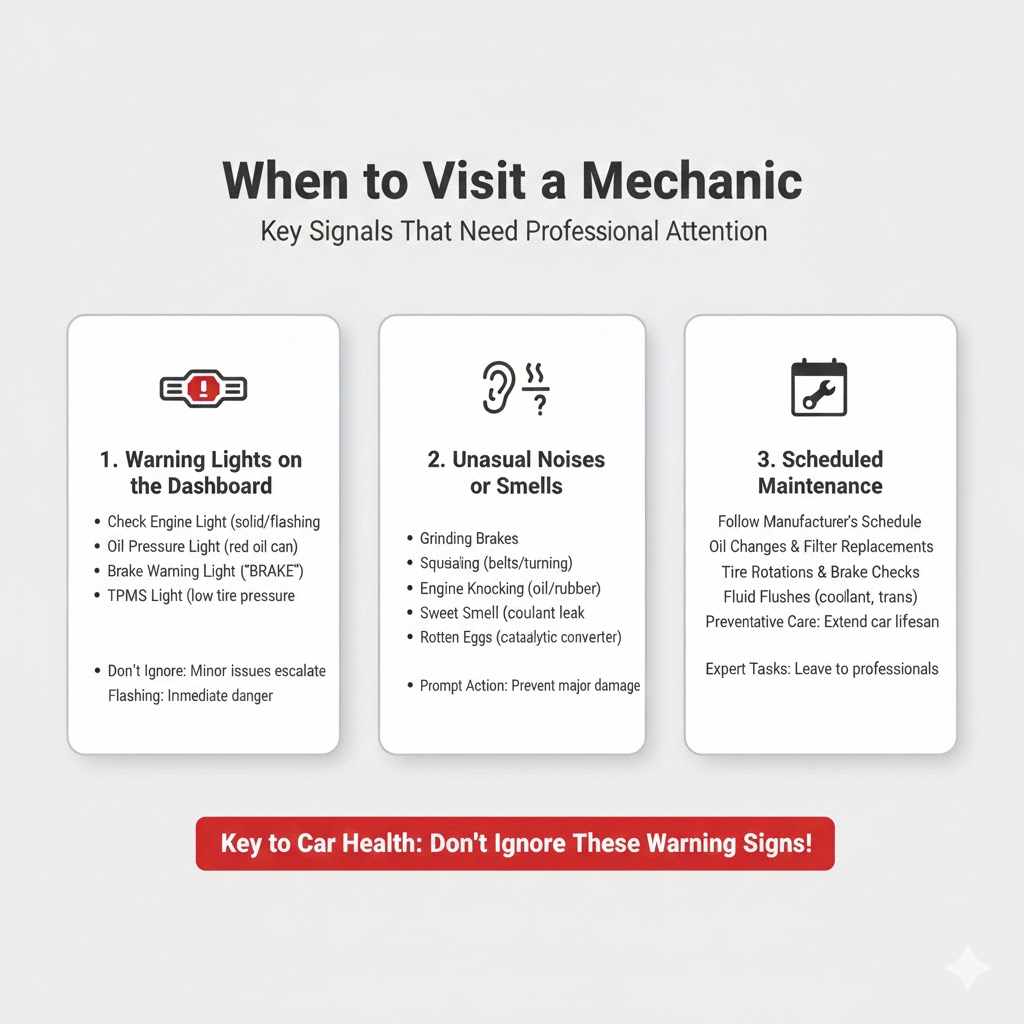
Warning Lights on the Dashboard
Your car’s dashboard has a series of warning lights that illuminate to alert you to potential problems. These lights are designed to give you advance notice of issues that require attention.
The most common warning lights include the check engine light, oil pressure light, battery light, brake warning light, and tire pressure monitoring system (TPMS) light. If any of these lights come on, it’s important not to ignore them.
The check engine light, often shaped like an engine outline, can indicate a wide range of issues, from something as simple as a loose gas cap to more serious engine or transmission problems. While it might not always mean an immediate emergency, it should be checked out by a mechanic fairly soon. If the light is flashing, it usually indicates a more serious problem that requires immediate attention to prevent damage.
The oil pressure light, which often looks like an oil can, signals a critical issue with your engine’s lubrication system. If this light comes on, you should pull over safely and turn off the engine immediately. Continuing to drive can cause catastrophic engine damage.
The brake warning light, often red and accompanied by a “BRAKE” message, can indicate low brake fluid, a problem with the anti-lock braking system (ABS), or that the parking brake is engaged. As with oil pressure, brake issues are a significant safety concern.
If any of these lights appear, consult your car’s owner’s manual for more information on what the specific light means. Then, schedule an appointment with a trusted mechanic.
- Ignoring dashboard warning lights can turn minor issues into major, expensive repairs.
- Lights related to critical systems like oil pressure or brakes indicate an immediate safety hazard and require prompt attention.
- Modern vehicles have complex computer systems that monitor performance, and warning lights are the primary way they communicate potential problems to the driver.
According to J.D. Power, a significant percentage of vehicle owners experience warning light illumination during their ownership. Addressing these lights promptly can save owners an average of $400 in repair costs compared to those who delay service.
Unusual Noises or Smells
Your car will often let you know it has a problem through sounds or smells before a warning light comes on. Paying attention to these signals is crucial.
Strange noises can include grinding when you brake, a squealing sound when you turn, a knocking or pinging from the engine, or a humming noise that changes with speed. For example, a grinding sound when braking almost always means your brake pads are worn out and need immediate
Unusual smells can also be indicators of trouble. A burning smell could mean your brakes are overheating, or there’s an oil leak. A sweet smell might indicate a coolant leak.
A smell of rotten eggs often points to an issue with the catalytic converter. A burning rubber smell could mean a belt is slipping or has broken.
If you notice any new or unusual noises or smells, try to pinpoint where they are coming from and when they occur. This information will be very helpful for your mechanic. It’s always better to have a mechanic check out a strange sound or smell than to wait for it to become a bigger problem.
- Unusual noises, like grinding during braking, are often direct indicators of worn-out safety components that need immediate attention.
- Distinct smells, such as a sweet odor of coolant or a burning rubber smell, can signal fluid leaks or failing parts that require urgent inspection.
- Promptly addressing these sensory cues can prevent minor issues from escalating into severe mechanical failures, saving you significant repair costs.
Data from automotive repair shops shows that drivers who report unusual noises or smells early often face lower repair bills than those who wait until a component fails completely.
Scheduled Maintenance
Even if your car seems to be running perfectly, it’s important to follow the manufacturer’s recommended maintenance schedule. This is often outlined in your car’s owner’s manual.
This schedule typically includes things like oil changes, filter replacements (oil, air, cabin), tire rotations, brake inspections, and spark plug replacements. These are preventative measures designed to keep your car in optimal condition and prevent problems before they start.
For example, tire rotations help ensure your tires wear evenly, extending their lifespan and improving handling. Replacing spark plugs at the recommended intervals ensures your engine is firing efficiently, which can improve fuel economy and reduce emissions.
While you can perform some of these tasks yourself, others, like checking the transmission fluid or flushing the cooling system, are best left to professionals. Adhering to the schedule is a key part of Simple Car Maintenance Tips to Keep Your Car in Top Shape.
- Following the manufacturer’s maintenance schedule ensures that all systems are checked and serviced at the optimal times, preventing wear and tear.
- Regularly scheduled services, like oil changes and filter replacements, are crucial for keeping your engine clean and running efficiently.
- Preventative maintenance identified in the schedule helps catch minor issues early, often saving you from more costly repairs down the line.
A study by the Bureau of Transportation Statistics indicated that vehicles that are consistently maintained according to the manufacturer’s schedule tend to have a longer lifespan and experience fewer major mechanical failures.
Frequently Asked Questions
Question: How often should I check my car’s tire pressure?
Answer: You should check your car’s tire pressure at least once a month, and also before any long trips. It’s best to check when the tires are cold.
Question: What is the most important fluid to check in my car?
Answer: All fluids are important, but engine oil and brake fluid are critical. Engine oil keeps your engine running smoothly, and brake fluid is essential for stopping your car safely.
Question: Can I really do simple car maintenance myself?
Answer: Yes, absolutely! Checking tire pressure, fluid levels, lights, and air filters are all easy tasks for most people. Many online videos can show you how.
Question: What should I do if my check engine light comes on?
Answer: First, don’t panic. Check your gas cap to make sure it’s tight. If the light stays on or flashes, it’s best to get your car checked by a mechanic soon.
Question: How often should I wash my car?
Answer: Washing your car at least once a month helps protect the paint from dirt and environmental damage. More often is better if you live in an area with harsh weather or salt on the roads.
Summary
Taking care of your car doesn’t need to be difficult. Simple checks of your tires, fluids, and lights, along with basic cleaning, make a big difference. Knowing when to listen for strange sounds or check warning lights helps you stay ahead of problems.
These easy steps help keep your car safe, reliable, and running smoothly for a long time.