Sixt vs Hertz: Which Costs Less and Works Best for You?
Choose Sixt if its quoted rate is at least $15–$20 lower and you can inspect the car at pickup; choose Hertz if you want broader station coverage and usually less pickup friction. Bad fuel policies, airport fees, and rushed checkouts can add a noticeable amount to the final bill, sometimes enough to wipe out a deal. This guide compares fuel rules, fees, fleet age, pickup speed, and damage traps in the US and Europe.
| Decision factor | Sixt | Hertz | Winner |
|---|---|---|---|
| Base rate pressure | Often sharper on headline quotes, especially in Europe and for premium classes | Often higher on the quote, but can bundle better with airport convenience | Sixt |
| Fuel and refueling-fee exposure | Comparison page lists $11.75 per gallon refueling charge | Fuel rules vary by location, but airport counters also push prepaid fuel and post-return charges | Depends on location |
| Pickup friction | Can be fast at some airports, but smaller US footprint limits options | Usually easier at major US airports, with deeper inventory and more desks | Hertz |
| Damage-claim risk | Comparison page flags aggressive damage-dispute reputation | Also needs careful photos, but the pickup process is often more standardized | Hertz |
| Europe fit | Strong fit; Sixt is a European premium brand with a niche luxury fleet | Present in Europe, but less naturally matched to some routes than Sixt | Sixt |
| US airport fit | Smaller footprint in the US can mean fewer fallback locations | Heavy airport presence in many markets and stronger inventory depth | Hertz |
Sixt vs Hertz: which costs less in the real world?
Sixt usually wins on the quote, but Hertz often wins on the trip that ends with fewer surprises. The lower-cost brand is the one with the smaller total after taxes, fuel, one-way charges, and pickup friction. On short rentals, a modest base-rate gap can disappear quickly.
Quick verdict by traveler type
Price-sensitive travelers who can return a car full and inspect it carefully should lean Sixt. Travelers flying into a busy US airport, or anyone who wants a wider counter network and less pickup drama, usually gets a cleaner outcome with Hertz.
Side-by-side cost drivers at a glance
Sixt’s corporate profile matters here: founded in 1912, headquartered in Pullach, Munich, Germany, with about 2,000 locations in more than 100 countries. Its services include car rental, car sharing, ride-hailing, and subscription. Hertz is the more airport-heavy choice in many US markets, which matters when a long line costs real money.
📊 Sixt was founded in 1912. Source: Sixt.
How the final bill changes after the base rate
The base rate is the opening number, not the bill. Taxes, airport surcharges, under-25 fees, extra driver charges, toll devices, refueling, and one-way fees can move the total more than the daily price itself. That is why a low quote can still cost more at checkout.
Base rate versus out-the-door price
The base rate is the daily rental price before taxes and add-ons. It can sit far below the all-in cost, especially at airport counters where location fees and optional products get attached quickly. A renter comparing Sixt vs Hertz should compare the final payable total, not the teaser number.
Taxes, airport fees, and add-ons that move the total
Airport rentals are where the gap widens. Hertz often has the advantage in inventory depth at major US airports, but the counter can push upsells hard. Sixt can quote well, especially in Europe, yet the small-print fees still decide the final bill.

Fuel policy and refueling fees: where travelers get surprised
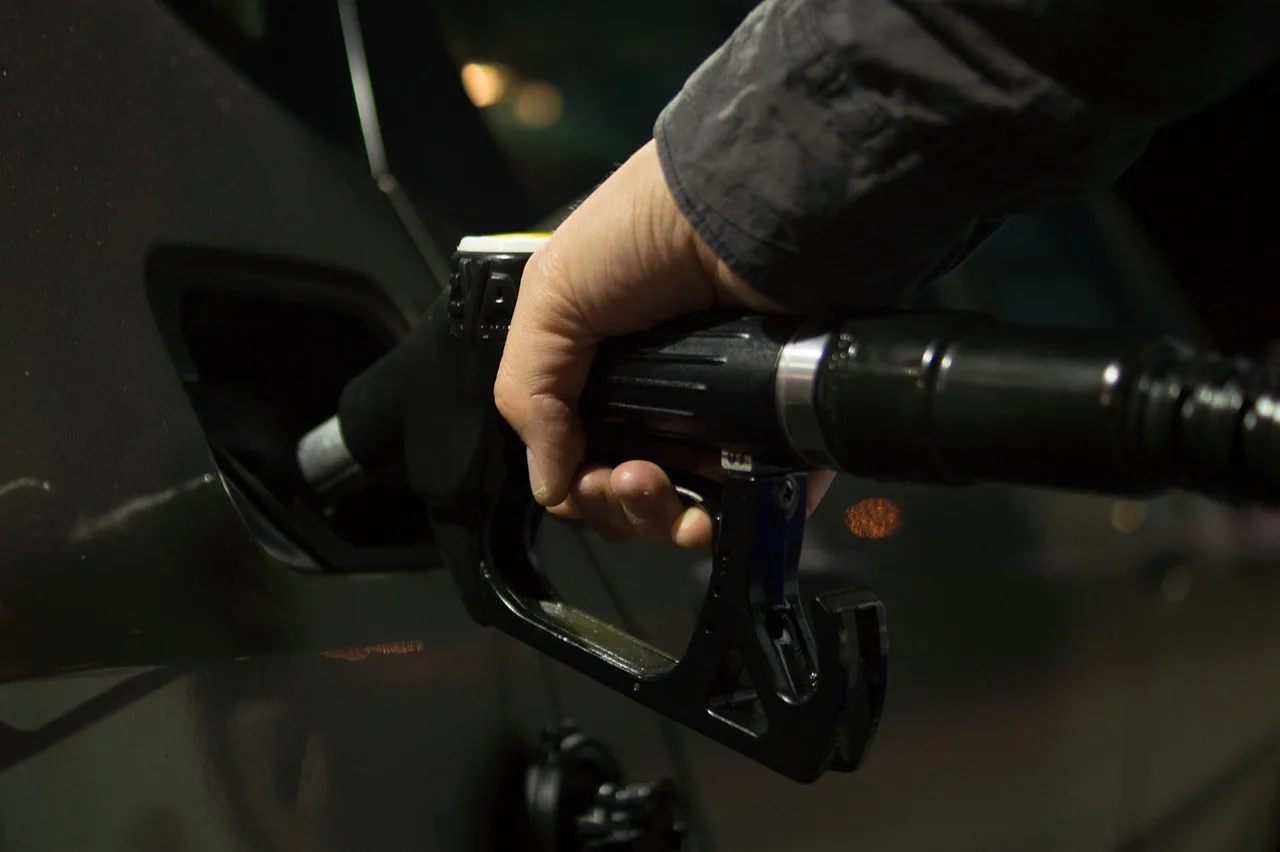
Fuel is one of the easiest ways to turn a cheap rental into an expensive one. If you return the car short on fuel, the per-gallon refueling charge can sit far above local pump prices. The safest money move is still the oldest one: return the tank full and keep the receipt.
How per-gallon refueling charges work
A refueling fee is charged after you return the car below the agreed fuel level, usually per gallon or per liter. The comparison page lists Sixt’s refueling charge at $11.75 per gallon, which is steep enough to punish a missed fill-up hard. Hertz also uses fuel-policy charges that can make a half-empty return expensive.
Tank-size math for common rental scenarios
Here is the practical math. If a compact car uses around a dozen gallons and you return it several gallons short, the fuel charge can add a substantial amount before taxes and admin fees. If you return the car a few gallons short, the same policy can still add a sizable fee, which may erase a bargain quote.
| Scenario | Sixt cost effect | Hertz cost effect | Practical read |
|---|---|---|---|
| Return full | No refueling fee exposure | No refueling fee exposure | Best outcome for both |
| Return 3 gallons short | About $35.25 at $11.75 per gallon | Charge depends on local policy, but the surprise is still real | Usually cheaper to refuel yourself |
| Return 6 gallons short | About $70.50 at $11.75 per gallon | Can become a major add-on at airport counters | Rental rate savings disappear fast |
When returning full is cheaper than prepaying
Prepay fuel only makes sense when the price per gallon is competitive and the return will be genuinely inconvenient. In most normal trips, filling up near the airport and returning full costs less than taking the rental company’s post-return fuel bill.
Which brand is better in Europe and which is better in the US?
Sixt can be a stronger option in Europe, while Hertz can be a stronger option at US airports. Region matters more than brand name because station density, counter habits, and fleet mix change the real cost. The same booking can feel completely different on each side of the Atlantic.
Sixt in Europe: what usually changes
Sixt’s European strength is not only fleet image. With a German base and broad continental coverage, it is often easier to find a route that fits your schedule, and premium-class availability can line up better with city-to-city travel. That said, pickup inspection still needs care.
Hertz in US airport markets: what usually changes
Hertz’s airport-heavy inventory matters most in the US. More desks and more cars usually mean fewer dead ends when flights run late or plans change. That convenience can be worth paying for when a missed connection or long shuttle ride would cost more than the rate difference.
When location matters more than the brand
A single branch can beat the national brand story. Small city offices, hotel counters, and airport satellite lots each have their own rules for fuel, returns, and damage checks. If one location has weak hours or limited inventory, the cheaper brand can become the pricier trip.
Fleet freshness, car quality, and damage-claim risk
Newer cars can feel better, but they can also trigger more inspection disputes because defects are easier to spot. Sixt is often described as having a newer-feeling premium fleet, while Hertz’s mix is broader across airport and non-airport inventory. Freshness helps comfort, not always your final bill.
What newer cars can mean for inspection expectations
Newer vehicles often have tighter trim tolerances and more visible wheel or bumper marks. That can be good for the drive and bad for the return if the handoff is rushed. A fresh car can still become a dispute if the pickup record is sloppy.
Pickup photos that help if a charge appears later
Take timestamped photos before leaving the lot. Capture all four corners, each wheel, the windshield, the roof edge, and the fuel gauge. If the car already has scuffs, make the agent note them before you sign. This matters more with Sixt, given the comparison page’s aggressive damage-dispute reputation note.
How do Hertz Gold Plus Rewards and Sixt Plus compare?
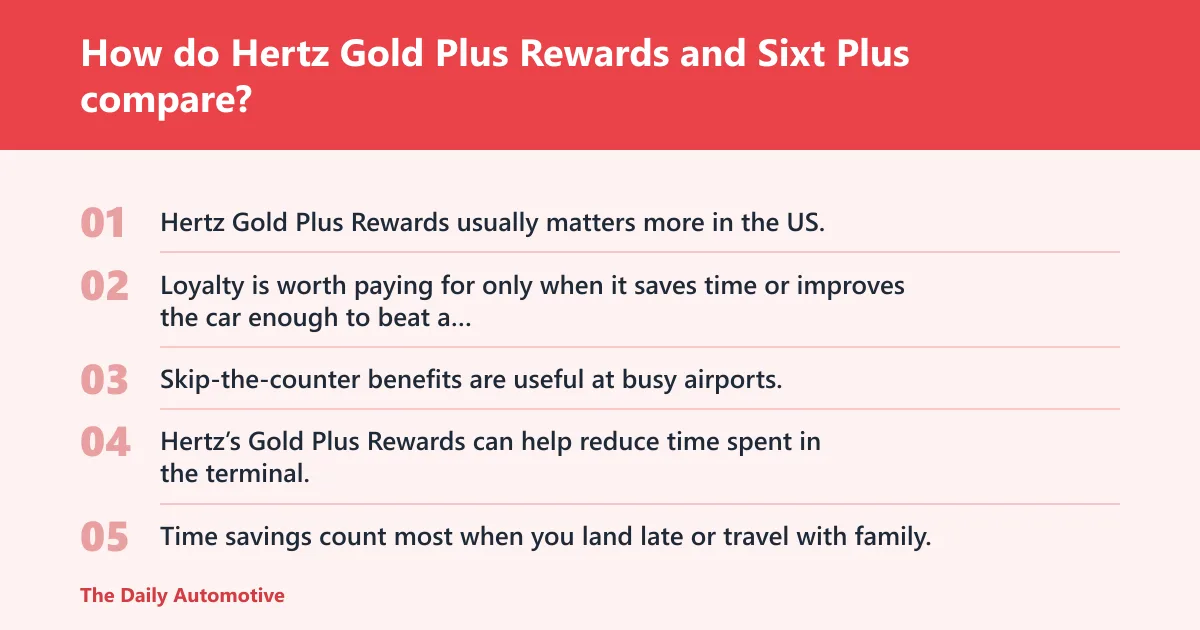
Hertz Gold Plus Rewards usually matters more in the US, while Sixt Plus can help travelers who use Sixt often enough to want faster pickup and better car access. Loyalty is worth paying for only when it saves time or improves the car enough to beat a small rate gap.
Fast-pickup and skip-the-counter value
Skip-the-counter benefits are useful at busy airports. Hertz’s Gold Plus Rewards can help reduce time spent in the terminal, while Sixt Plus may help frequent renters move through pickup faster in locations where the brand has a stronger presence. Time savings count most when you land late or travel with family.
Upgrade chances and when they matter
Upgrade chances matter most on long trips, business travel, or when you need a larger trunk. A better class can change comfort, but only if the upgrade is real and not offset by a higher insurance or fuel package. Do not pay extra for status if the route itself is cheap to cover.
When loyalty is worth more than a small rate difference
Paying a little more can make sense when loyalty gives a cleaner pickup, a more reliable car class, or a faster exit from the lot. If the rate difference is large, loyalty should not rescue a bad quote. Use it as a time-saving tool, not a price shield.
Airport pickup, one-way fees, and other trip friction
Airport convenience is part of the price. One-way fees can dwarf the base rate, and counters often try to add fuel, toll, and protection products at the same moment. Hertz tends to be easier in major US airports; Sixt can be smooth when its station fits the route, but its smaller US footprint narrows the options.
Counter upsells and inventory depth
More inventory usually means fewer surprises if the car class you booked is gone. Hertz’s stronger airport presence often helps here. Sixt can still move quickly at the right airport, but if you need a last-minute replacement car in the US, the choice set is thinner.
One-way fee risk by route
One-way fees are route dependent and can wipe out a low daily rate. A cheap Sixt quote from one city to another can become expensive once drop-off fees land. Hertz can do the same thing, so the quote needs a full origin-and-destination check before booking.
Use this Sixt vs Hertz cost worksheet before you book
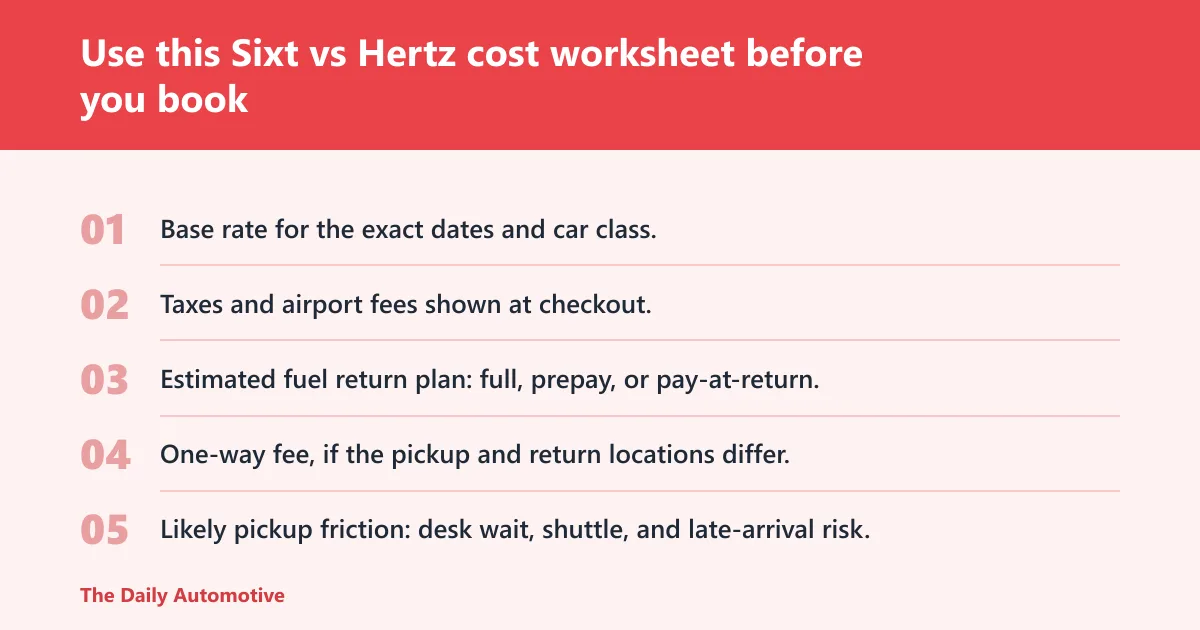
This worksheet forces both quotes onto the same page. Fill in the real trip details, then compare the final number. The cheapest base rate is not the cheapest trip if the fuel, one-way, or pickup risk is worse.
What to enter before checkout
- Base rate for the exact dates and car class.
- Taxes and airport fees shown at checkout.
- Estimated fuel return plan: full, prepay, or pay-at-return.
- One-way fee, if the pickup and return locations differ.
- Likely pickup friction: desk wait, shuttle, and late-arrival risk.
| Cost worksheet item | Sixt | Hertz | What to compare |
|---|---|---|---|
| Base rate | Enter quote total before add-ons | Enter quote total before add-ons | Use identical dates and car class |
| Refueling fee exposure | High if the tank is returned short; comparison page lists $11.75 per gallon | Use local fuel-policy estimate for the branch | Assume full-tank return unless you know otherwise |
| One-way fee risk | Check route-specific drop charge | Check route-specific drop charge | Do not compare without the return city |
| Pickup friction | Score lower if the lot needs a shuttle or long inspection | Score lower if the airport is busy but inventory is deep | Time has a cost |
Pickup checklist for the lot
- Photograph the car from every side before moving it.
- Photograph each wheel and the windshield.
- Record the fuel level and odometer on your phone.
- Check the roof, bumpers, mirrors, and door edges.
- Ask the agent to note pre-existing marks on the contract.
Choose Sixt if… / Choose Hertz if…
Choose Sixt if the quote is clearly lower, your route is in Europe or another strong Sixt market, and you have time to inspect the car before leaving. Choose Hertz if you are flying into a busy US airport, want broader station coverage, or need a faster, more predictable pickup. The better brand is the one that lowers the final bill on your route.
Choose Sixt if your route and budget fit it
Consider Sixt when its daily rate is clearly lower than Hertz for a similar car, you can return the car full, and you have enough time to inspect and photograph the pickup. It is also a strong fit for Europe trips where its network lines up more naturally with the route.
Choose Hertz if your airport, loyalty status, or return plan fit it
Pick Hertz when your trip starts at a major US airport, you care about a wider station network, or your Gold Plus Rewards status helps you skip the counter. It is also the safer choice when you need a one-way rental and want a more established airport process.
Frequently asked questions
sixt vs hertz reddit
Reddit threads usually track the same money traps this comparison covers: fuel charges, damage disputes, and pickup speed. The useful takeaway is not the brand fan vote. It is whether the poster booked an airport rental, returned the tank full, and documented the car before driving away.
sixt vs hertz vs avis
Against Avis, the decision still comes down to total trip cost, pickup line, and fee structure. Sixt often looks sharper on the quote in Europe, Hertz often feels easier at major US airports, and Avis usually enters the comparison as a middle path on coverage and pricing. Check the route, not the logo.
sixt vs hertz vs enterprise
Enterprise often wins for neighborhood convenience, while Hertz tends to be stronger at major airports and Sixt can be the better European premium play. If the trip is airport-based and time-sensitive, Hertz usually has the edge. If local pickup or a city return matters more, Enterprise deserves a close look.
sixt vs hertz in italy
In Italy, Sixt often fits better because its European setup usually lines up well with continental routes and city pickups. Hertz is still fine where its stations are convenient, but the real check is the branch, fuel policy, and return location. In Italy, one bad pickup process can cost more than a small rate gap.
sixt vs hertz europe
In Europe, Sixt is often the cleaner first quote to check because it is built around that market. Hertz can still be competitive, especially near major airports, but the gap often shows up in pickup convenience and local availability. Compare all-in price, then inspect the fuel and one-way terms carefully.
hertz standard vs intermediate
Hertz standard versus intermediate is mostly a space-and-comfort decision, but it affects price and sometimes fuel use too. Standard is usually the safer pick for urban trips and tighter parking. Intermediate makes more sense when you need a larger trunk or a calmer highway drive.
Products related to this article
Sponsored / affiliate links. As an Amazon Associate I earn from qualifying purchases. I may earn additional commission from eligible campaigns.