Steering Wheel Cover vs Driving Gloves
Choose a Steering Wheel Cover if your wheel runs hot, cold, or slick; choose Driving Gloves if you want grip and control without changing wheel thickness. Pick the wrong option and you can lose feel, add bulk, or make sweat worse. This comparison covers grip, comfort, heat relief, steering feedback, and climate fit.
Grip, feedback, comfort, fit, and maintenance trade-offs
| Decision factor | Steering Wheel Cover | Driving Gloves | Winner |
|---|---|---|---|
| Grip on a slick wheel | Adds a new rim surface with more traction, especially with a contoured design | Improves hand-to-wheel contact and can help dry, sweaty, or cold hands | Steering Wheel Cover |
| Steering feedback | Can dull rim feel if the cover is thick | Keeps the wheel’s original thickness and texture closer to stock | Driving Gloves |
| Heat and cold management | Helps when the rim is hot or cold to the touch | Helps hands stay comfortable, but does not change the wheel surface | Steering Wheel Cover |
| Setup and fit risk | Needs wheel sizing and a snug install | Needs correct glove sizing, but no wheel installation | Driving Gloves |
| Maintenance | Needs regular cleaning with a soft cloth and mild soap | Needs fabric or leather care, depending on material | Driving Gloves |
How each option changes grip and feel
Steering wheel cover
A Steering Wheel Cover changes the surface your hands touch. That can improve grip, add comfort, and make a bare wheel easier to hold in hot or cold weather. A snug fit matters because a loose cover can rotate and cut control.
Driving gloves
Driving Gloves change the hand-to-wheel interface without altering the rim itself. They can improve grip, reduce hand fatigue on long drives, and help when sweat or cold makes the wheel feel less secure. The tradeoff is that the wheel can feel less direct if the glove material is thick or loose.
When the choice matters most
This decision matters most when your current wheel surface is the problem. A worn leather wheel, a slick synthetic rim, or a wheel that bakes in summer pushes you toward a cover. If you want better feel for city driving or spirited road use, gloves usually preserve more steering feedback.
Which gives better grip?
Both can improve grip, but they do it differently. A Steering Wheel Cover adds texture and can make a slick rim easier to hold, while Driving Gloves help when your hands are sweaty, cold, or dry enough to slip on the wheel. The better pick depends on where the slip starts.
How a cover changes traction on the rim
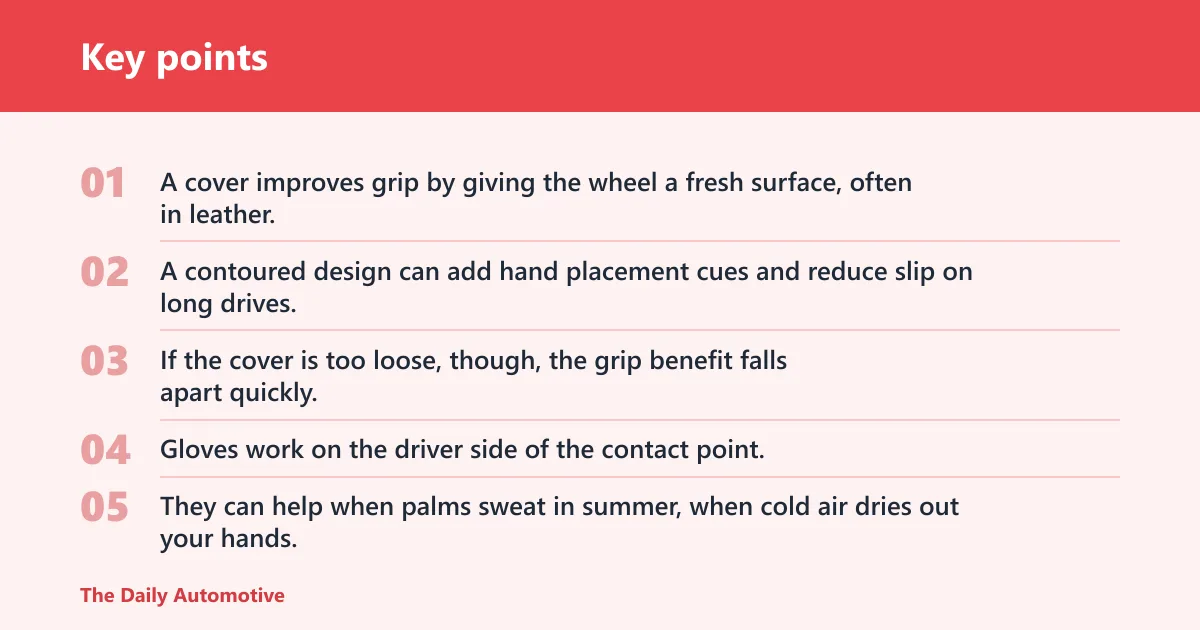
A cover improves grip by giving the wheel a fresh surface, often in leather, synthetic leather, or fabric. A contoured design can add hand placement cues and reduce slip on long drives. If the cover is too loose, though, the grip benefit falls apart quickly.
How gloves help with sweat and slip control
Gloves work on the driver side of the contact point. They can help when palms sweat in summer, when cold air dries out your hands, or when a wheel feels smooth enough to slide under load. Breathable materials matter here, because a hot, sweaty glove can make grip worse.
When grip gets worse instead of better
A thick cover can dull the wheel and make small steering inputs feel delayed. Gloves can also hurt grip if the fingers bunch, the palm panel is too slick, or the fit is too large. In both cases, the wrong size creates more slip risk than the original wheel.
Which feels better in your hands?
Driving Gloves usually preserve more steering feedback because they do not add bulk to the rim. A Steering Wheel Cover can feel softer and more comfortable, especially on longer drives, but thicker versions can mute the road feel that some drivers want. Comfort and precision pull in opposite directions here.
Steering feedback with a thicker cover
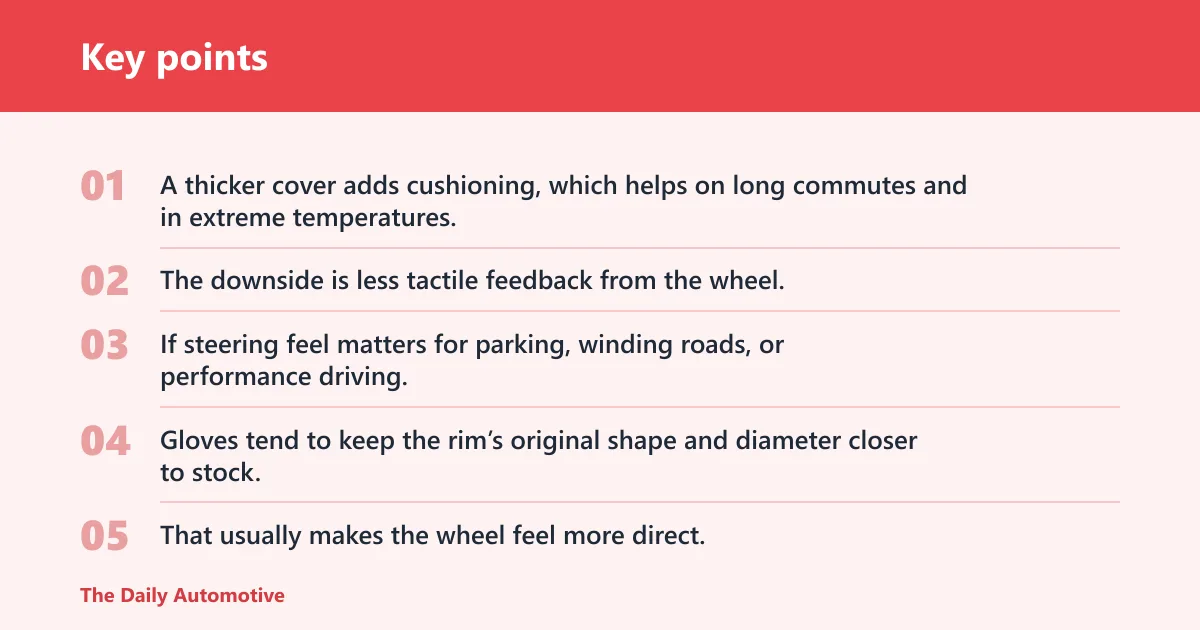
A thicker cover adds cushioning, which helps on long commutes and in extreme temperatures. The downside is less tactile feedback from the wheel. If steering feel matters for parking, winding roads, or performance driving, keep the cover slim and snug.
Tactile feel with gloves on the wheel
Gloves tend to keep the rim’s original shape and diameter closer to stock. That usually makes the wheel feel more direct. The main risk is poor glove sizing, because extra material at the fingertips or palm can blur fine inputs and make the wheel feel less precise.
Long-drive comfort and hand fatigue
A cover can soften pressure points on a hard rim. Gloves can reduce fatigue by improving hold without forcing you to squeeze as hard. For example, if your hands tire on a commute of about 45 minutes in a hot car, a contoured cover may feel better. If the wheel already feels fine, gloves may be the cleaner fix.
How do fit and sizing compare?
Steering wheel size matters before you buy either option. A cover has to match the wheel diameter and fit snugly, or it can shift during use. Gloves need the right hand size and finger length, or they can bunch, twist, or reduce steering precision.
Measuring the wheel before purchase
For a cover, check the vehicle-specific wheel size in the owner’s manual or measure the rim before buying. Fit affects safety and slip risk. If the cover is made for the wrong diameter, it may be hard to install, easier to rotate, or too loose to trust.
Snug fit, rotation risk, and slip risk
A snug fit is not optional. A cover that moves on the wheel can interfere with control, especially during quick corrections. A contoured design can help grip, but only if the cover stays put. If it rotates, it is a bad fit, not a minor nuisance.
Glove sizing and finger fit mistakes
Gloves can fail in quieter ways. Too loose, and the palm slides. Too tight, and finger movement suffers. The right size should let you hold the wheel without excess material at the fingertips or across the knuckles. A common first-timer mistake is buying by general clothing size instead of hand measurements.
How do installation and maintenance compare?
A Steering Wheel Cover needs installation, while Driving Gloves need only correct sizing and regular care. Covers should be installed on a clean wheel and according to the manufacturer’s instructions. Both options last longer with mild cleaning and care away from harsh chemicals and extreme temperatures.
- Clean the steering wheel with a soft cloth before fitting the cover.
- Check the wheel size and confirm the cover matches the vehicle.
- Follow the manufacturer’s instructions for stretching or positioning the cover.
- Seat the cover evenly so it does not twist or bunch.
- Confirm the fit is snug and does not rotate during steering input.
Cleaning steps for covers and gloves
For a cover, use a soft cloth and mild soap, then dry it fully before driving. For gloves, follow the material label; leather and synthetic leather need different care than fabric. Regular cleaning helps the material last, but heavy cleaners can damage texture and grip.
What to avoid
Avoid harsh chemicals and avoid extreme temperatures. Heat can dry out materials, and cold can make some surfaces stiff or brittle. For safety, follow the vehicle and product manual, and do not keep using a cover that slips after installation.
Which works better for your climate?
Climate often decides the winner. A Steering Wheel Cover is usually better for a wheel that gets painfully hot in summer or uncomfortably cold in winter. Driving Gloves are usually better when the problem is hand sweat, long-drive fatigue, or a desire to keep the factory wheel feel intact.
Hot weather and sweaty hands
Hot weather often favors a cover if the wheel itself is the problem, because it changes the surface temperature you touch. If your hands are what sweat first, gloves can still help by improving friction. In very hot cars, a breathable glove matters more than a thick one.
Cold weather and dry grip
Cold weather often favors a cover because bare rims can feel harsh right away. Gloves help too, especially for drivers who hate gripping a cold wheel. If you want warm hands without adding thickness to the rim, gloves are the more direct fix.
Daily commuting vs spirited driving
For commuting, comfort usually matters more than crisp steering feel, so a cover can make sense. For spirited driving, the cleaner road feel of gloves is often better. Aggressive driving also raises the need for a stronger grip, so fit and surface quality matter more in that use case.
Grip decision table
| Scenario | Climate | Hand sweat | Steering feedback | Installation effort | Maintenance | Fit risk | Better choice |
|---|---|---|---|---|---|---|---|
| Hot daily commute | High heat | Moderate to high | Moderate | Higher | Moderate | Cover sizing risk | Steering Wheel Cover |
| Cold morning start | Cold | Low | High | Low | Low to moderate | Glove sizing risk | Driving Gloves |
| Long highway drive | Mild | Moderate | High | Low | Low | Low if sized well | Driving Gloves |
| Slick worn rim | Any | Any | Moderate | Higher | Moderate | High if loose | Steering Wheel Cover |
- Bad-fit cover symptom: the rim shifts under your hands or turns with the wheel.
- Cover rotation fix: stop using it, reinstall on a clean wheel, and verify the size before driving again.
- Glove sizing mistake: fingertips bunch, palms slide, or the wheel feels vague.
- Glove fit fix: choose a different size or a thinner material with better finger length.
Choose Steering Wheel Cover if… / Choose Driving Gloves if…
Choose a Steering Wheel Cover if you want to change the wheel surface, hide a worn rim, or make a hot or cold wheel more comfortable. Choose Driving Gloves if you want grip, sweat control, and better steering feel without adding thickness or altering the wheel itself.
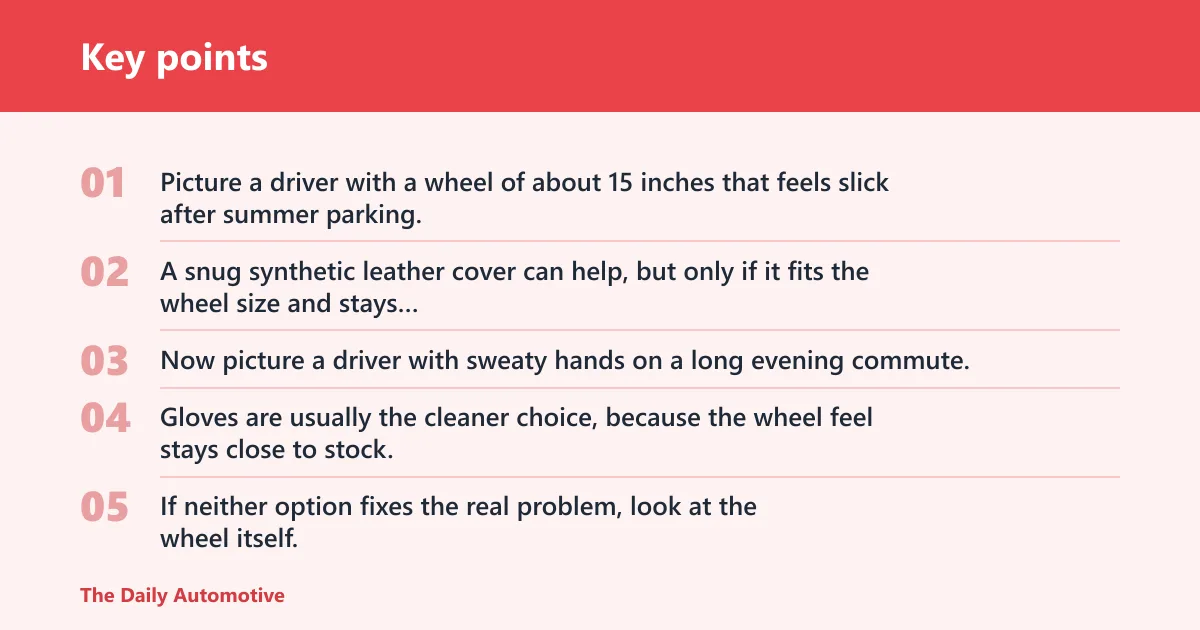
Picture a driver with a wheel of about 15 inches that feels slick after summer parking. A snug synthetic leather cover can help, but only if it fits the wheel size and stays fixed. Now picture a driver with sweaty hands on a long evening commute. Gloves are usually the cleaner choice, because the wheel feel stays close to stock.
If neither option fixes the real problem, look at the wheel itself. A loose or damaged rim, a cover that rotates, or gloves that fit badly are all signs to stop and choose a better size or a different material. Safety and control come first.


Frequently asked questions
Are steering wheel covers safe?
They can be safe when they fit snugly, are installed correctly, and do not rotate on the wheel. A loose cover can reduce control and create slip risk. Follow the vehicle and product manual, and replace any cover that shifts, bunches, or loosens during normal steering.
Are steering wheel covers legal?
Laws vary by location, so local rules control. In general, a cover is not a problem if it does not block airbags, controls, or the driver’s view and it does not create a safety issue. Check local laws and your vehicle manual before using one.
Do steering wheel covers help with grip?
Yes, they often do, especially on worn, slick, hot, or cold wheels. A contoured design can improve hand placement and traction. But a poor fit can erase that benefit, and a thick cover can reduce steering feedback even if grip feels better.
Do steering wheel covers make driving more comfortable?
Often, yes. Comfort is one of the main reasons drivers use them. A cover can soften a hard rim and make extreme temperatures easier to handle. The tradeoff is bulk, which can reduce tactile feedback if the cover is too thick.
Do I need a steering wheel cover or driving gloves?
Choose a cover if the wheel itself is the problem: heat, cold, wear, or slickness. Choose gloves if you want better grip and control without changing the wheel surface. For drivers who care most about steering feel, gloves usually preserve more of the original feedback.
Products related to this article
Sponsored / affiliate links. As an Amazon Associate I earn from qualifying purchases. I may earn additional commission from eligible campaigns.