3 Best Car Underglow Kits (2026): Based on Specs and Reviews
The best underglow kit for cars depends on what you want from it: choose an app-controlled kit for precise color control, a sealed IP67-style kit for tougher use, or a budget kit if price comes first. Cheap or poorly sealed strips can fail early, look uneven, or create wiring headaches. This guide compares three top picks for app polish, toughness, and low-cost installs.
Quick comparison
| Product | Badge | Best for | Price | ||
|---|---|---|---|---|---|
 |
Govee Underglow Car Lights, 4pcs, RGBIC, Smart LED Lights,Govee | Our pick | 4pcs · RGBIC · app control | $42.99
Price as of 24 Oct 2026
|
View |
 |
OPT7 Aura Pro RGB Aluminum Car Underglow Kit with App &OPT7 | Upgrade pick | Rigid bars · app + remote · waterproof | $89.97
Price as of 24 Oct 2026
|
View |
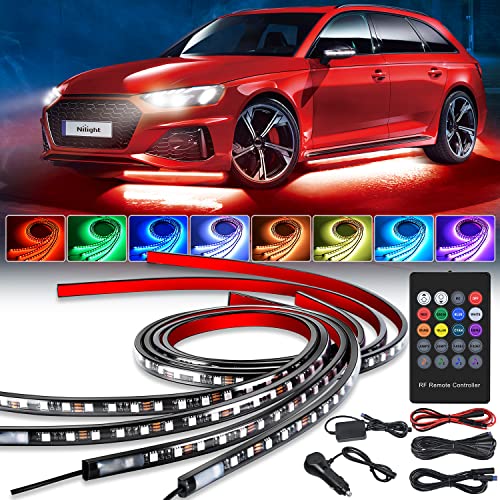 |
Nilight 4PCS RGB LED Underglow Lights for Cars withNilight | Budget pick | 4pcs · 252 LEDs · wireless remote | $35.99
Price as of 24 Oct 2026
|
View |
The real trade-off is control and finish against durability and cost. A flexible RGBIC kit gives the strongest color control and app polish, while a rigid aluminum-bar kit is the better long-term option for rough roads and wash exposure, and a budget strip kit keeps the entry price low.
The table below turns that into a buying decision. It matches vehicle size, control method, and durability risk to the kit type that fits best.
| Vehicle size | Desired effect | Control method | Durability risk | Install difficulty | Best-fit pick |
|---|---|---|---|---|---|
| Compact car or sedan | Gradient color, scene presets, cleaner visual motion | Bluetooth app control, music sync through phone mic | Medium; adhesive and connector sealing still matter | Moderate | Govee RGBIC underglow kit |
| Truck or SUV | Longer coverage, tougher hardware, fewer exposed weak points | App plus handheld remote for quick changes | Lower with rigid bars and better sealing | Moderate to harder | OPT7 Aura Pro RGB Aluminum Kit |
| Daily driver on a tight budget | Simple color modes and sound-active effects | Wireless remote | Higher; adhesive and sealing need attention | Easier | Nilight 4PCS RGB LED Underglow Lights |
How we chose
These picks are ranked by four buyer priorities: control quality, durability, coverage for the vehicle size, and ownership cost. The list favors real trade-offs, not brightness claims alone.
We also weighed waterproof ratings, mounting style, and whether the kit needs hardwiring or can work with a lighter-socket-style setup. Over time, sealing and mounting matter as much as the LED count.
And because underglow is mainly for style, not visibility, legality and local rules stay part of the decision. Laws vary by state or region, especially on color, flash patterns, and whether the lights can be on while driving.
Govee RGBIC underglow kit: best for app polish
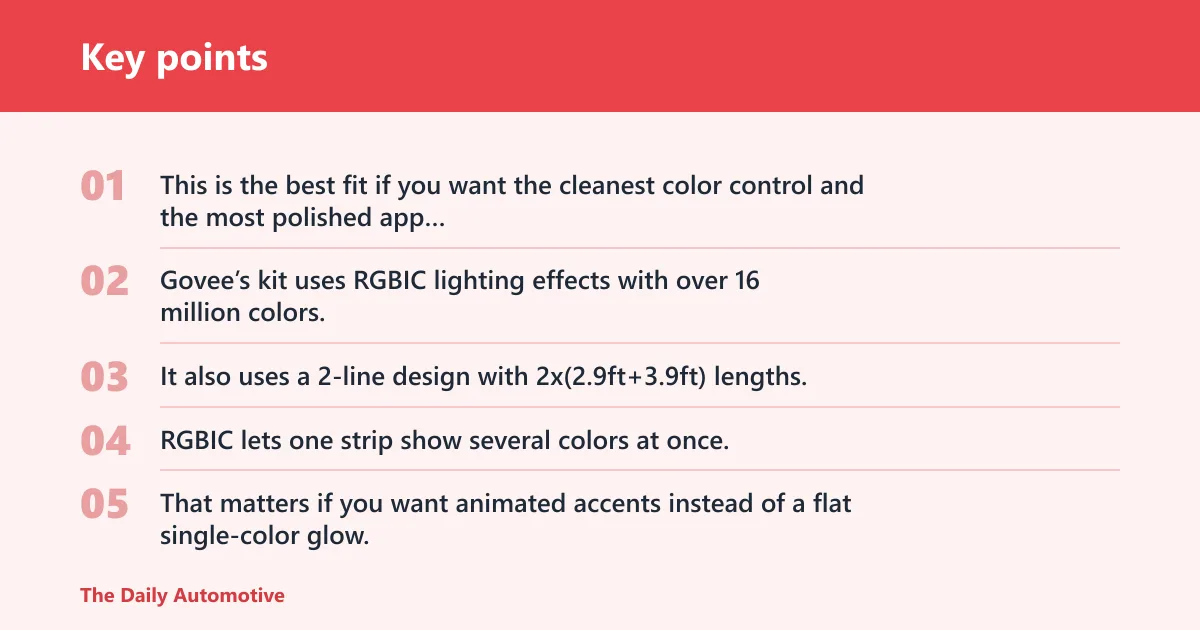
This is the best fit if you want the cleanest color control and the most polished app experience. Govee’s kit uses RGBIC lighting effects with over 16 million colors, plus music sync through the Govee Home app. It also uses a 2-line design with 2x(2.9ft+3.9ft) lengths, which helps on smaller and medium-size vehicles.
Why RGBIC matters
RGBIC lets one strip show several colors at once, which creates chasing and gradient effects that plain RGB cannot match. That matters if you want animated accents instead of a flat single-color glow. It also adds more scene options in the app.
Who it fits best
This kit fits daily drivers, show-oriented builds, and owners who want easy color changes from a phone. App control also makes it a good pick if you change scenes often or want DIY colors without cycling through a handheld remote.
Honest drawback
The trade-off is that app polish does not remove install realities. Flexible strips still depend on clean mounting, and the sleeve helps, but connector sealing and control-box sealing still matter. For rough-use trucks or winter road spray, a bar kit is the safer bet.
OPT7 Aura Pro RGB Aluminum Kit: best for durability
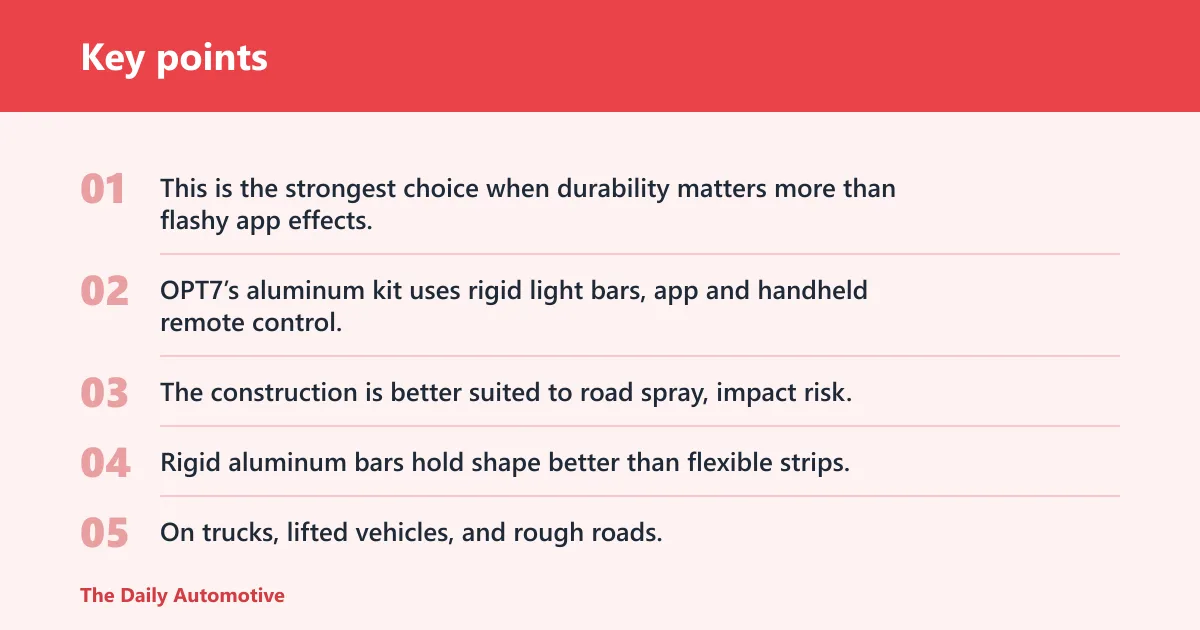
This is the strongest choice when durability matters more than flashy app effects. OPT7’s aluminum kit uses rigid light bars, app and handheld remote control, and a 1-year warranty. The construction is better suited to road spray, impact risk, and frequent wash exposure than a soft strip kit.
Why bar construction lasts longer
Rigid aluminum bars hold shape better than flexible strips, which means they depend less on adhesive alone. They also help with heat dissipation. On trucks, lifted vehicles, and rough roads, that extra structure cuts the chance of sagging or misalignment.
Weather and wash resistance
OPT7 rates the kit IP67, which helps, but that rating only tells part of the story. Connector sealing, control-box sealing, and wire-entry points are common failure spots. A sleeve rating can look good on paper while a weak connector still lets water in.
Honest drawback: rigid bars usually take more
Rigid bars usually take more planning to mount cleanly, and they are less forgiving on tight curves. They can also cost more up front than a basic strip set. If you want the cheapest install, this is not it.
Nilight 4PCS RGB LED Underglow Lights: best for budget buyers
This is the budget-first pick for buyers who want a simple underglow setup without spending much. Nilight’s kit uses four pieces, 252 LEDs, wireless remote control, and IP68 waterproofing. It also includes 8 colors and sound-active mode, which covers the basics well for a low entry price.
Lower entry price
For a first underglow setup, this kit is the least expensive route into exterior accent lighting. It can suit compact cars and mild weekend builds where the goal is visual impact, not top-tier hardware.
Adhesive risk and reinforcement
The weak point is long-term mounting. Flexible strip kits are easier to install, but they depend more on adhesive quality. Add clips, screws, or zip ties where the chassis allows it. Do not trust tape alone under road spray and heat cycles.
Honest drawback: budget kits can deliver
Budget kits can deliver the look, but they usually give up some app polish and physical toughness. This Nilight model uses a remote instead of app control, so quick changes are less refined. It is also more dependent on careful mounting for survival.
What should you look for in underbody lights for cars?
Start with control, sealing, and coverage. A good underbody kit should match your vehicle size, give you the control method you actually want, and survive rain, road spray, and wash cycles without loose connectors or a failing control box. LED count matters, but fit and sealing matter more.
IP67 vs IP68
IP67 and IP68 both signal water resistance, but neither one excuses sloppy installation. Connector sealing matters more than sleeve rating alone. The control box and wire entry points are common weak spots, so inspect those before you trust a waterproof claim.
LED count and strip count
LED count affects brightness and evenness, while strip count affects coverage. A 4-piece kit can work on smaller cars, but larger sedans, SUVs, and trucks often need 6 or 8 pieces to avoid dark gaps. OPT7’s 252 LEDs and the Nilight 252-LED kit show how dense output can be packaged differently.
App control vs remote control
Bluetooth app control gives scene presets, DIY modes, and finer color control. A physical remote is still useful when the phone is out of reach or the app is acting up. Dual-control kits offer the most flexibility, especially for owners who want both convenience and a backup method.
Music sync behavior
Music sync can use a phone mic or a dedicated mic. Phone-mic sync is convenient, but response depends on app access and cabin noise. Dedicated mic systems can be simpler for quick use, but beat response varies with sensor placement and audio volume.
How many strips do you need?
Coverage depends on vehicle length, ground clearance, and how complete you want the glow to look. Four-piece kits fit many compact cars. Six-piece kits improve side and corner coverage on larger sedans. Eight-piece layouts are more likely to cover SUVs and trucks without obvious dark spots.
4-piece kits
Four-piece kits are the easiest place to start. Govee’s 4pcs setup and Nilight’s 4PCS kit both aim at simpler installs, though their control styles differ. For a small car, four pieces can be enough if the strips are placed close to the visible edges of the rocker area.
6-piece kits
Six pieces give you more flexibility around wheelbase and side length. That usually helps with mid-size sedans and crossover builds, especially if you want even side wash without leaving the center sections dim.
8-piece kits
Eight pieces are more useful on larger vehicles where one or two short strips would leave gaps. The extra pieces also help if you want separate front, side, and rear placement without stretching short sections beyond their comfortable run.
Coverage by sedan, SUV, and truck
Picture a mid-size sedan with short overhangs and lower ride height. Four pieces may be enough. Now picture a crew-cab truck with longer doors and a taller chassis. That same kit can look incomplete, even if the LEDs are bright. Bigger vehicles usually need more sections, not just more brightness.
How should you power and mount them?
Many underglow kits run on 12V power, but how that power is connected can affect reliability and convenience. A switched hardwire setup turns the lights on with the vehicle. Cigarette-lighter power is simpler, but it can limit placement and may not suit a clean permanent install.
12V hardwiring basics
A hardwired install uses positive and negative leads tied into a 12V source. A switched power source is preferred if you do not want the kit live all the time. That keeps the lights tied to ignition rather than a constant feed.
Cigarette-lighter power
Cigarette-lighter power is easier for temporary installs, but it can be awkward for underbody lighting because of cord routing and outlet availability. It may suit a budget kit or a leased vehicle, but it is not the cleanest permanent solution.
Mounting hardware and adhesive backup
Adhesive is only a starting point. Use clips, screws, or zip ties where the chassis allows it, especially on rough roads or in wet climates. A common first-timer mistake is trusting tape alone, then finding a loose strip after a few heat cycles and wash passes.
Which one should you buy?
Choose the Govee RGBIC kit if app control, scene quality, and color effects matter most. Choose the OPT7 aluminum kit if you want the strongest hardware and expect more road abuse. Choose the Nilight kit if you want a lower-cost setup and can accept a simpler remote-first design.
If you own a truck or SUV, start with the OPT7 bar kit unless you specifically want app effects more than toughness. If you drive a compact car and care most about lighting animations, Govee is the cleaner match. If your budget is tight, Nilight is the least expensive path into underglow.
Say your sedan sits low and you want a crisp gradient sweep for weekend meets. The RGBIC Govee kit fits that brief better than a plain remote strip because the color transitions look more deliberate. Now suppose you drive a lifted truck through wet roads often. The OPT7 bar kit makes more sense because the hardware itself is better suited to abuse.
Choose Govee if… / Choose OPT7 if… / Choose Nilight if…
Choose Govee if you want app control, music sync through the phone mic, and the most colorful effects. It is the better pick for show-oriented styling and quick scene changes. It also suits smaller and mid-size vehicles where a 4-piece layout can cover the visible zones cleanly.
Choose OPT7 if you care more about durability than animation polish. Pick it for trucks, rough roads, frequent wash exposure, or any build where rigid bars are a better match than soft strips. The app plus remote setup is a useful fallback when convenience and reliability both matter.
Choose Nilight if you want the lowest entry price and can live with a simpler wireless-remote setup. It works best when the install is straightforward and reinforcement is added to help the adhesive hold. It is the least refined choice, but it keeps costs down.
Frequently asked questions
What are the lights under cars called?
They are generally called underglow lights or underbody lights. In styling use, the goal is accent lighting rather than driving illumination. Buyers usually compare them by color control, waterproofing, strip layout, and how cleanly they mount under the vehicle.
What are the lights under cars called for styling?
For styling, people usually call them underglow, accent lights, or neon-style underbody lights. The practical differences come down to RGB versus RGBIC effects, app or remote control, and whether the kit is built as flexible strips or rigid bars.
What is the difference between RGB and RGBIC underglow lights?
RGB underglow shows one color across a strip at a time. RGBIC can show multiple colors on the same strip, which creates chasing and gradient effects. That is why RGBIC is the better choice if you want more animated scenes and layered color looks.
Are underglow lights legal on cars?
Legality varies by state or region, and the rules can change based on color, flashing, and whether the lights are on while driving. Before installing them, check local vehicle lighting rules. A kit can be physically fine and still be restricted on public roads.
Do underglow lights work in rain and car washes?
They can, if the sealing is good enough and the install is done carefully. IP67 and IP68 ratings help, but connector sealing, control-box sealing, and wire-entry points matter just as much. Cheap adhesive and loose mounting are common failure points in wet use.
What’s better: app control or remote control for underglow?
App control is better for scene presets, DIY colors, and finer adjustments. Remote control is faster when you want a simple change without opening an app or dealing with Bluetooth issues. Dual-control kits are the most practical because they give you both options.
Products related to this article
Sponsored / affiliate links. As an Amazon Associate I earn from qualifying purchases. I may earn additional commission from eligible campaigns.